





 Portuguese
  English
  Spanish
  4 min of reading
  11 comments


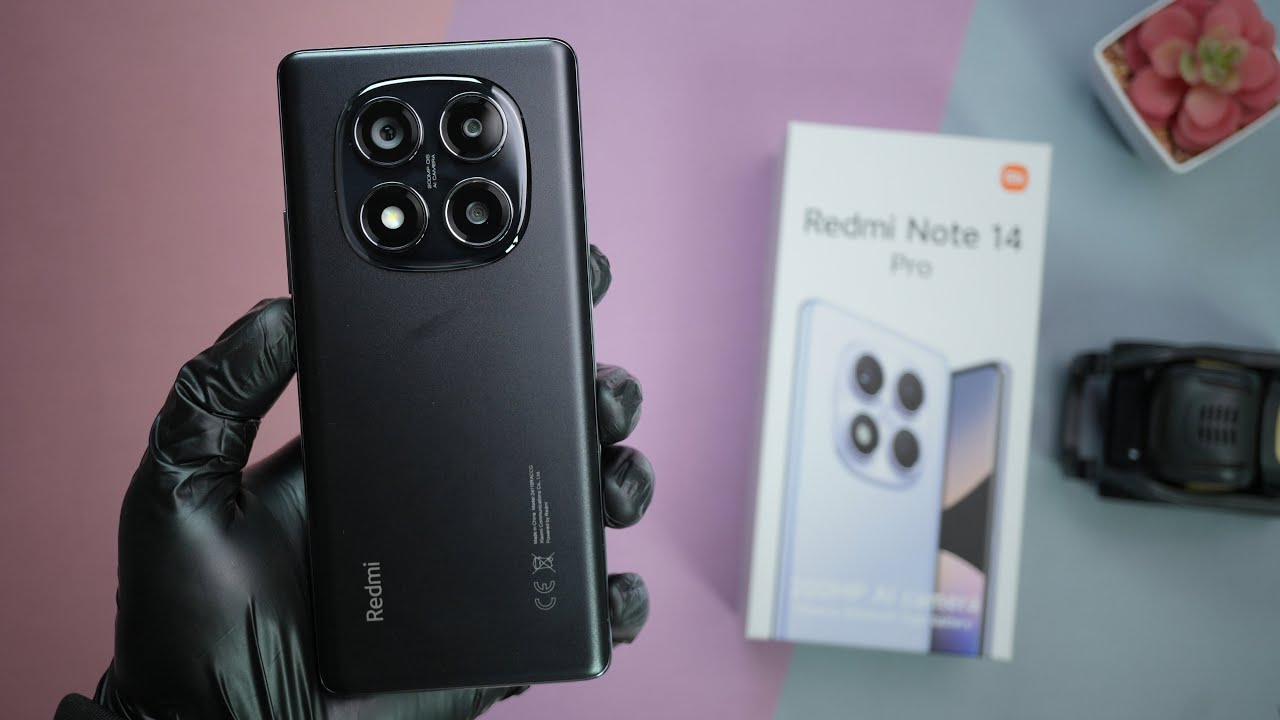


Xiaomi Prepares Redmi Note 14 Pro with Snapdragon 7s Gen 3, 200 MP Camera, and 120 Hz AMOLED Display. Meet the Premium Mid-Range That Promises to Compete With Flagships in 2025.
Xiaomi is about to change the game again in the premium mid-range segment. The highly anticipated Redmi Note 14 Pro, which is set to launch globally in the coming months, promises to bring flagship-worthy hardware, a refined design, and a powerful camera — all at a price that may challenge even the more expensive models from the brand itself. With Snapdragon 7s Gen 3, 200 MP main camera, high-refresh-rate AMOLED display, and ultra-thin body, the new Note aims to leave behind the mid-range label and firmly step into flagship territory — but without breaking the bank.
The formula, which has already succeeded in previous generations, now bets on an even bolder approach: flagship appearance, robust specifications, and affordable price.
-
They were going to build a highway, but they ended up finding in the Czech Republic an entire Celtic city buried for more than 2,000 years, with hundreds of gold and silver coins, precious amber, and one of the largest archaeological treasures ever discovered.

-
Archaeologists find lost medieval city in Poland with a central square, cemetery, forge, and more than 500 buried artifacts.

-
A massive warm air mass stretched from Brazil to near Antarctica and caused something that almost never happens: lightning and thunderstorms in Ushuaia, in the Falkland Islands, and in the South Georgia Islands.

-
Larger than a football field, with a wingspan of 117 meters, six Boeing 747 engines, and a capacity of 250 tons, the Stratolaunch Roc turns the sky into a gigantic hypersonic launch ramp and accelerates the way the U.S. tests weapons from Mach 5 to Mach 10.


Snapdragon 7s Gen 3: The Mid-Range Chip with a Premium Soul
The processor chosen by Xiaomi for the Note 14 Pro is the Snapdragon 7s Gen 3, a direct evolution of the chip already found in models like the Poco X6. Built on a 4 nm process, it delivers a solid balance of performance, efficiency, and support for local AI, without overheating or draining the battery.

In early leaked tests, the chip scores over 700,000 points on AnTuTu, placing it above many competitors in the R$ 2,000 range. In practice, this means smooth daily use, games running at medium to high graphics, and plenty of performance for multitasking, social media, and heavy apps.
Combined with up to 12 GB of LPDDR5 RAM and UFS 3.1 or 4.0 storage, the Note 14 Pro promises real-world speed in daily tasks — not just pretty numbers on paper.
200 MP Camera: The New Calling Card
The star of the specifications is the main sensor with 200 MP, featuring a generous aperture and optical stabilization (OIS). This type of specification was previously seen only in ultra-premium models, but is now starting to appear in ambitious mid-range devices.
Although more megapixels don’t always mean better photos, Xiaomi has been improving its image processing software, especially in the Note and Poco lines. The expectation is that the Note 14 Pro will deliver detailed photos even with zoom, good nighttime performance, and 4K video recording with competent stabilization.
The setup is expected to be complemented by an ultra-wide lens and either a macro or depth sensor — standard for the category — but the real focus is to offer outstanding photography without relying on filters or heavy editing.
High-Brightness AMOLED Display and 120 Hz: Flagship-Level Fluidity and Contrast
The display of the Redmi Note 14 Pro is expected to follow the pattern Xiaomi has adopted in its advanced models: 6.67-inch AMOLED panel, Full HD+ resolution, and 120 Hz refresh rate.
In addition to fluidity, the brightness may exceed 1,500 nits, ensuring visibility under bright sunlight and compatibility with HDR content. The touch sampling rate is expected to reach 240 Hz, which is also appealing to gamers.
The bezels are likely to be thin, with a high screen-to-body ratio, featuring a renewed design possibly inspired by the Xiaomi 14 — enhancing the visual appeal of the model.
Ultra-Thin Body and Refined Build
Another highlight in the leaks is the ultra-thin design of the Note 14 Pro, which is expected to be less than 8 mm thick even with a large-capacity battery. The back is expected to come with a matte or glossy glass finish, metallic sides, and a new, more discreet camera module.
All of this contributes to what Xiaomi is aiming for in 2025: making its mid-range devices look and feel like premium devices, enhancing the user experience and visual appeal without increasing the price.
Battery, Charging, and System: The Complete Package
The battery is expected to be 5,000 mAh, with support for fast charging of 67W or 90W, technology that is already common in the brand’s devices. A full charge is expected to take less than 40 minutes — ideal for those who are constantly connected.
The system will be HyperOS based on Android 14, with improvements in fluidity, smoother animations, and integration with Qualcomm’s AI features, such as image editing, automatic transcription, and performance optimization.
Xiaomi is also expected to maintain its commitment to updates for at least 3 years, following the trend of prolonging the lifespan even in the most affordable models.
Based on rumors and Xiaomi’s strategies in previous years, the Redmi Note 14 Pro is expected to launch globally at the end of 2024, with an initial price between US$ 280 and US$ 350. This would position it directly against competitors like the Galaxy A55, Moto G85, Poco X6 Pro, and even the Realme 12 Pro+.
However, with a combination of current chip, 200 MP camera, 120 Hz AMOLED display, and slim body, the Note 14 Pro could easily become the new benchmark for the premium mid-range segment in 2025.








Eo valor quanto ?
SE QUER TIRAR FOTOS PROFISSIONAIS: CÂMERA PROFISSIONAL
JOGAR : UM PC POTENTE
NO MAIS TODO CELULAR DE HOJE EM FAZ, MUITO OU POUCO.🤔
Mediatek G100 ultra , a única coisa boa neste aparelho é o IP68 só isso e nada mais o 13 PRO 5G É MELHOR EM TUDO, Este sim tem Snapdragon 7s Gen2 só faltou IP68… Pra quem está desenformado a MEDIATEK é aquela empresa que vendia processadores falsos para colocar nos RÉPLICA da Samsung em meados de 2009, 2010 etc, nos Samsung Galaxy S3, S4, S5….. E várias marcas de celular a qualidade dos processadores MEDIATEK são muito inferiores as da Qualcomm e Exynos……….