





 Portuguese
  English
  Spanish
  5 min of reading
  2 comments


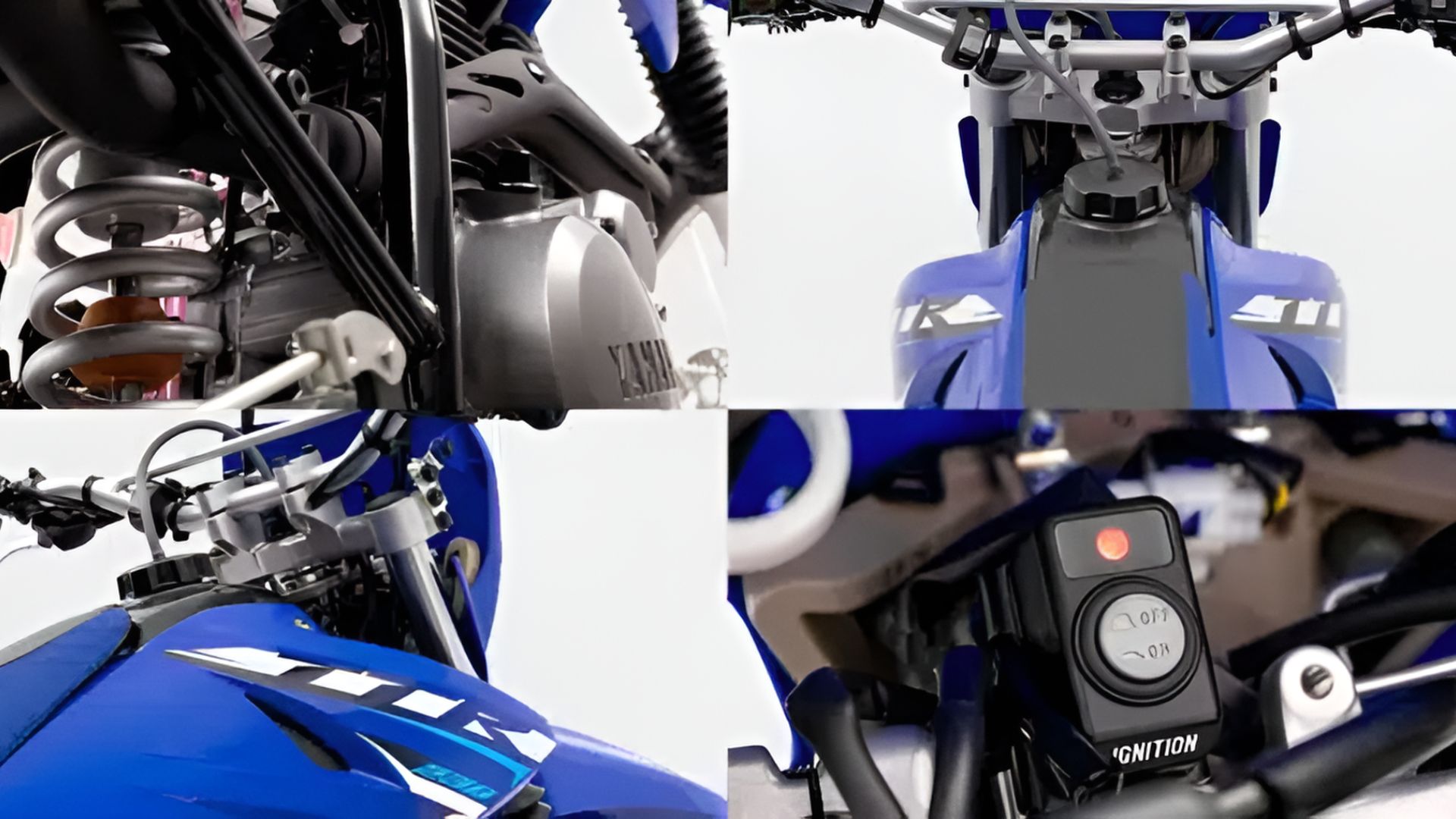


Off-Road Model Combines 223 cm³ Engine, Lightweight, Simple Maintenance, and Features Identified by Experts as Suitable for Beginners, Making It an Accessible Option Within the Recreational Segment.
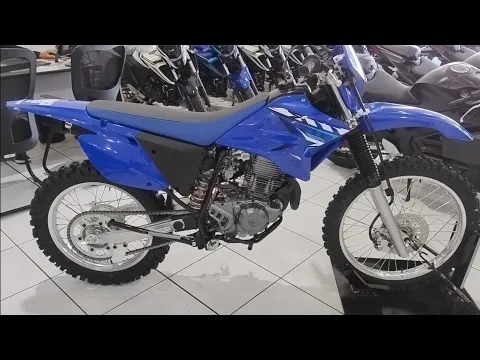
The Yamaha TT-R 230 has established itself as one of the main gateways to the off-road world in Brazil.
With a single-cylinder engine of 223 cm³, 6-speed transmission, a weight of around 115 kg, and a manufacturer’s suggested retail price starting at R$ 19,990, the model is presented by the manufacturer as a simple and robust alternative for recreational trails, a characteristic frequently highlighted by instructors and professionals in the segment.
Engine and Technical Characteristics of the Yamaha TT-R 230
The TT-R 230 uses a 4-stroke engine, single overhead camshaft (SOHC), air cooling, and two valves, fed by a carburetor.
-
The car stored for 38 years: when opening the barn door, what appears is breathtaking and looks like a scene from a movie!

-
Fiat works miracles in the Brazilian market, lowers the price of its 0 km hatch to R$ 69,990, reestablishes the model as the cheapest car in the country, and reignites the battle against Kwid and C3.
-
Chevette with cooking gas: How the gas cylinder ends up being used in cars clandestinely and why this makeshift solution can result in leaks, explosions, damaged engines, and seized vehicles.

-
Fiat launches the new 2027 Toro hybrid with 48V, 176 hp, an electric motor of 15.5 hp, a 0.85 kWh battery, up to 7% fuel savings, 8% fewer emissions, and possible exemption from IPVA.

Experts describe this set as suitable for those looking for predictable torque delivery and operation geared towards recreational use off the pavement.
The term “cc,” common in industry communication, refers to cubic centimeters (cm³) and indicates the engine’s total displacement.
In the case of the Yamaha TT-R 230, the 223 cm³ places it in the intermediate category of bikes for non-competitive trails, where the priority is typically durability and ease of maintenance.
Although the manufacturer does not disclose official power and torque data, evaluations published in specialized newspapers indicate that performance meets the demands for climbs, sand, and technical sections within the recreational proposal.

For more demanding practices, such as competitions, industry professionals observe that riders generally seek larger displacements or models with specific preparations.
8-Liter Tank and Range on Trails
The model comes from the factory with an 8-liter tank, designed to withstand the typical impacts of trails and light falls.
Industry publications consider this capacity sufficient for short to medium-duration off-road trips, as long as there is prior trajectory planning.
Yamaha does not provide the official fuel consumption of the TT-R 230.
Independent tests often record averages lower than the highest estimates informally cited by users, varying according to terrain, weight carried, and riding style.
Thus, practical range directly depends on the type of trail and intensity of use, a factor frequently highlighted by instructors who recommend additional planning on long or remote routes.
Suspension, Chassis, and Handling on Uneven Terrain
The suspension set uses telescopic forks in the front and a Monocross with link system in the rear.
Technicians working in specialized shops report that this system prioritizes impact absorption and control of travel on uneven surfaces, a characteristic aligned with the entry-level off-road segment.

The diamond-type chassis and the approximate weight of 115 kg are noted by instructors as factors that facilitate maneuvers on narrow trails and quick direction changes.
Professionals observe, however, that heavier models tend to offer superior stability at high speeds, which reinforces the TT-R 230’s usage profile for low to medium-speed terrains.
Braking System and Use Off-Road
The bike combines front disc brake and rear drum brake.
Specialized shops assert that this arrangement is common in recreational off-road motorcycles, due to the ease of maintenance in environments with mud and water.
The front disc provides most of the braking capacity, allowing better control on descents.
The rear drum is considered sufficient for the proposed type of use.
The absence of electronic systems like ABS follows the standard of the category and requires the rider’s attention in brake modulation on low-traction terrains, as emphasized by instructors.
Ergonomics, Seat, and Rider Profile
The ergonomics are designed to facilitate standing control over the footpegs, a typical posture for trails.
The seat height of approximately 870 mm allows some users to place their feet down relatively easily, according to evaluations from riding instructors.
The narrower front of the seat favors body movements over obstacles.

Experts note that very tall riders sometimes prefer handlebar or footpeg adjustments to improve comfort during extended use.
The presence of electric start is often highlighted by owners for practicality, especially after falls or in more cramped sections.
Maintenance, Parts, and Market Price
Industry professionals claim that one of the differentials of the TT-R 230 is its relatively simple maintenance, a result of the traditional engine construction, the use of a carburetor, and low electronic complexity.
Replacement parts are widely available in specialized stores, according to mechanics consulted in industry reports.
This contributes to more controlled costs over time.
In the 0 km market, the suggested retail price remains around R$ 19,990, which may vary depending on the region and dealer.
On second-hand sales platforms, it’s common to find models priced between R$ 18,000 and R$ 21,000, depending on overall condition, mileage, and year.

Retailers state that the TT-R 230 typically has good liquidity among recreational off-road motorcycles.
Direct Competitors and Position in the Segment
Among the main competitors of the TT-R 230 are the Honda CRF 230F and the Kawasaki KLX 230.
Experts emphasize that each occupies closely-knit niches, varying in technical solutions, weight, and price.
The XR 200R, available only in the used market, also appears in comparisons made by instructors catering to beginners.
The TT-R 230 is frequently cited by professionals for its combination of mechanical simplicity and low maintenance costs.
The KLX 230 is often remembered for featuring electronic fuel injection and more modern solutions.
The final choice, according to industry consultants, depends on the type of trail, budget, and the rider’s familiarity with each proposal.

Frequently Asked Questions About Usage and Features
- Is the TT-R 230 Suitable for Beginners?
Riding instructors affirm that it is, due to its relatively low weight, progressive power delivery, and accessible ergonomics.
- Can the TT-R 230 be Used on Urban Roads?
The bike is marketed as an exclusively off-road model.
Legalizing it for urban use depends on each state’s legislation and the necessary adaptations to mandatory equipment, according to traffic authorities consulted in industry reports.
- What is the average fuel consumption?
Independent tests show wide variations depending on terrain and riding style, with no official numbers disclosed by Yamaha.
- What are the main competitors?
Honda CRF 230F, Kawasaki KLX 230, and in the used market, Honda XR 200R, according to comparisons in specialized press.
- Does the TT-R 230 Require Frequent Maintenance?
Mechanics working with trail bikes report that the model follows the standard care routine, as long as it is used within its proposed framework.
- What is the seat height?
The seat is about 870 mm, according to technical data released to the market.
- Does the model come with an electric start?
Yes, according to Yamaha specifications.
With so many differences between mechanical simplicity and more modern resources of competitors, which aspect weighs most heavily in the choice of those looking to start off-road?







ESSA MOTO ELES APRESENTAM COMO UMA INOVAÇÃO, A MOTO TEM UM MOTOR BOM, MAS É DA ÉPOCA DOS TIRANOSSAURUS E FAZ MATÉRIA COMO FOSSE UMA INOVAÇÃO, VÃO TOMAR NO C*.
Eu já tive a XT 225 tamanha esse praticamente e a mesma motorização, só mudou a parte da estética onde ou seja aumento de 70% em cima dum modelo antigo de Carcaça de moto isso jamais poderia ser Dessa forma esse modelo , ela tinha que ter pelo menos 250 CC com toda tua estética pra uso urbano e Pista , nesse valor compensa mais comprar CRF 250 da Honda , a engenharia da Yamaha tinha que ter feito toda medicação de tamanho maior e potência do cilindro ainda pra Rua e não uma moto de baixa Cilindrada pra uso Off Rod, Ou seja quem é Fam de. Yamaha compensa comprar uma XT 225 e por na trilha onde vc paga em torno de R$ 8.000,00 em estado de uso Urbano .