





 Portuguese
  English
  Spanish
  6 min of reading
  0 comments


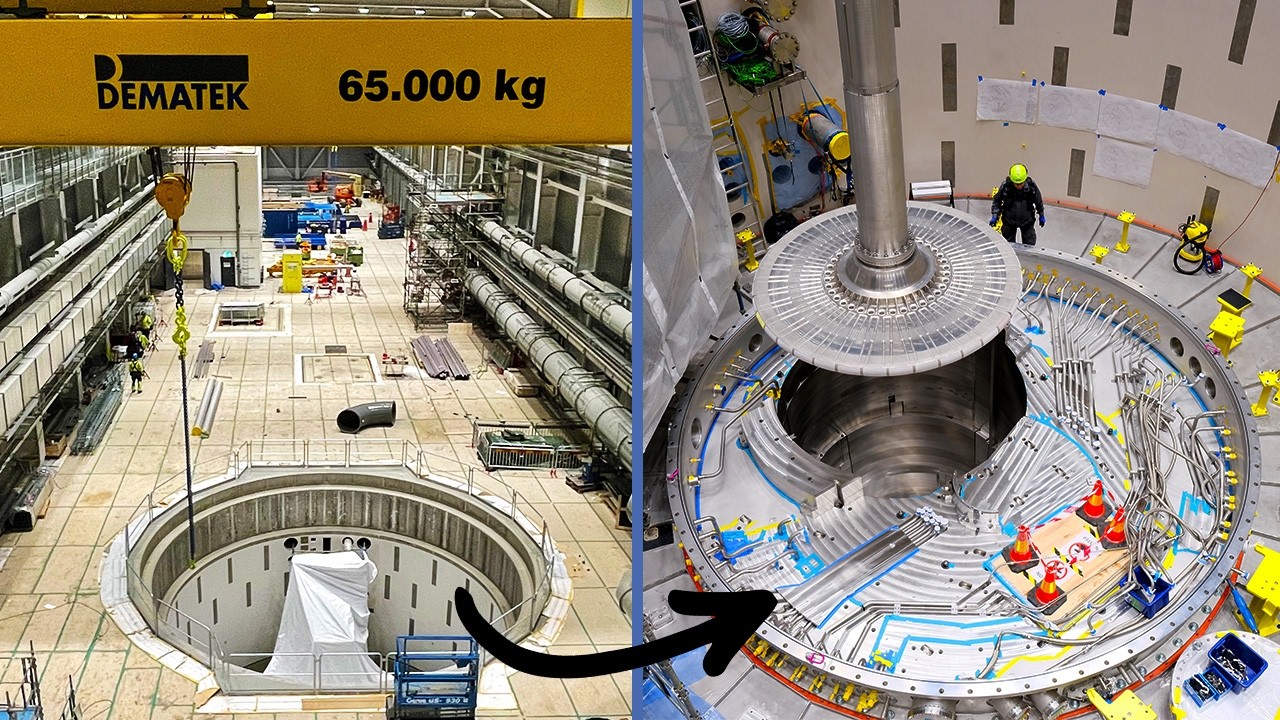
US$ 3 Billion Installation and 13 Countries in Sweden Investigate Materials at the Atomic Level, Driving Batteries, Pharmaceuticals, and Strategic Technologies of the 21st Century.
In the southernmost part of Sweden, far from major European industrial centers and near the quiet university town of Lund, one of the largest scientific projects of the 21st century is being quietly built. It is the European Spallation Source (ESS), a cutting-edge facility that brings distinct countries together around a common ambition: to understand matter at levels that current technology cannot yet decipher. The investment exceeds US$ 3 billion, involves 13 countries, and has a long-term implementation timeline. Even so, the project remains practically invisible to the general public. The inevitable question is: why are so many nations investing so much money in something that almost no one knows about?
Materials Science: The Hidden Engine of the 21st Century
To understand the ESS, one must first grasp the strategic importance of materials science.
Today, geopolitical disputes focus on advanced technology: chips, superconductors, batteries, pharmaceuticals, biotechnology, quantum computing, and clean energy. All these areas depend on one capability: designing and manipulating materials at the atomic and molecular level.
-
A British startup creates tires that generate electricity in electric vehicles when passing over potholes, speed bumps, and cracks.

-
Scientists have created robots made with living cells that have their own nervous system, swim on their own, explore the environment, and self-organize without any genetic engineering, and now they want to do the same with human cells.

-
Students create a solar-powered ambulance that operates without a plug, without fuel, and still keeps medical equipment running in remote areas.

-
French “ghost” submarine lost in World War II reappears after more than 80 years on the seabed near the coast of Spain.


- It’s not enough to manufacture a better battery; you need to understand how ions move through electrolytes.
- It’s not enough to produce a drug; you need to verify how molecules interact at a subatomic level.
- It’s not enough to design a chip; you need to study crystal defects that alter electronic transport.
Every modern technological advancement is born from this invisible layer.
This is precisely where the world’s great scientific infrastructures come into play: synchrontrons, neutron sources, accelerators, research reactors, cryogenics centers. They function like “invisible eyes” capable of revealing the intimate structure of matter.
What Is the ESS and Why Doesn’t It Look Like a Conventional Laboratory?
The ESS is commonly referred to, in simplified terms, as a “giant microscope”. However, this analogy does not reveal its scale.

The facility encompasses various industrial buildings, a linear accelerator (LINAC) spanning hundreds of meters, a tungsten target, instrumentation lines, data centers, cryogenic cooling systems, and dedicated electrical infrastructure.
Its main objective is to generate intense beams of neutrons, neutral particles that serve as probes to study materials without destroying them and with atomic resolution.
The difference between ordinary microscopes and the ESS lies in the type of radiation used. While an optical microscope uses light, the ESS uses neutrons. This completely changes the type of information available.
Why Use Neutrons to See Materials?
Neutrons have very specific properties:
• they have no electric charge — they penetrate deeply into materials;
• they interact with atomic nuclei, not with electrons — revealing structures invisible to X-rays;
• they detect hydrogen with extreme precision — crucial for biology, catalysis, and energy;
• they capture magnetic phenomena — essential for spintronics, superconductors, and quantum materials.
These characteristics make the ESS ideal for studying everything from proteins to solid-state batteries, including advanced polymers, metal alloys, magnetic materials, and industrial catalysts.
How This “Neutron Source” Works
The ESS operates through a process called spallation. The mechanism is as follows:
- A linear accelerator fires protons at relativistic speeds.
- These protons collide with a tungsten target, releasing a shower of neutrons.
- The neutrons are moderated, filtered, and sent to scientific instruments.
- The instruments analyze how neutrons interact with samples.
From scattering patterns, mathematical models reconstruct how atoms are organized and how they move. It is a type of indirect vision, but extremely powerful.
International Consortium: A Project That No Country Would Fund Alone
The ESS is not a Swedish initiative, even though it is located in Sweden. It is governed by a multinational consortium of 13 countries, including:
• Germany
• France
• United Kingdom
• Sweden
• Denmark
• Switzerland
• Italy
• Spain
Each country invests because it has specific industrial and scientific interests.
Germany and Switzerland, for example, have strong pharmaceutical and biomolecular sectors, benefiting from neutron crystallography for protein analysis.
Sweden and Denmark focus on clean energy and metallic materials, emphasizing green steel, hydrogen batteries, and catalysts.
United Kingdom, France, and Italy use the ESS to strengthen academic leadership in condensed matter physics and materials engineering.
The result is a governance model similar to the CERN, but specifically aimed at materials science and atomic dynamics.
Why the ESS Matters to Industry and Not Just Academia
Although it seems like an academic project, the ESS is connected to entire sectors of the global industry.
Some examples:
Batteries and Electrolytes
Neutrons can reveal how lithium ions move inside solid materials.
This is essential for developing denser, safer, and more durable batteries.
Pharmaceuticals and Structural Biology
The ability to detect hydrogen allows for unprecedented accurate modeling of therapeutic molecules.
This accelerates the rational design of drugs.
Magnetic and Quantum Materials
Neutrons are sensitive to magnetic states, fundamental for:
• spintronics
• superconductors
• quantum sensors
• quantum computing
Catalysts and Clean Energy
The energy transition depends on new catalysts capable of:
• breaking water to produce hydrogen
• fixing nitrogen for fertilizers
• capturing CO₂
• producing green ammonia
The ESS helps analyze how molecules adsorb and desorb from these surfaces. Industries in metals, petrochemicals, polymers, biotech, and semiconductors are also paying attention.
Timeline, Maturation, and Usage Horizon
The construction of the ESS involves multiple phases.
- The civil infrastructure has been advancing over the past decade.
- The installation of the accelerator and cryogenic systems is underway.
- Scientific instruments will be installed gradually.
The full scientific operation is projected between 2027 and 2030, with a lifespan expected to exceed 2050.
- This long cycle is normal for this type of infrastructure.
- The CERN took decades to reach the current power of the LHC.
- The ESS will follow a similar dynamic.
If It’s So Important, Why Has Almost No One Heard of the ESS?
There are three main reasons:
Low Immediate Visibility.
The ESS does not “deliver products” in the short term — it facilitates discoveries.
Technical Complexity.
The topic involves nuclear physics, quantum chemistry, and cryogenic engineering — hard to make headlines.
Lack of Emotional Appeal.
It’s easier to fill newspapers with stories of crises, geopolitics, and celebrities than with linear accelerators.
However, historically, infrastructures like this silently change the world. The public doesn’t remember that:
• the laser was born in physics laboratories;
• GPS originated in military and navigation projects;
• magnetic resonance came from atomic studies;
• semiconductors emerged from solid-state physics.
The ESS may be on the same path.
An Investment in European Technological Sovereignty
Beyond science, there is a strategic dimension. The world is entering a cycle of competition for:
• critical materials
• energy efficiency
• sensitive technology
• industrial autonomy
The United States, China, Japan, and South Korea are already investing billions in advanced materials centers. For Europe, the ESS functions as a scientific sovereignty piece on a chessboard where dependence on others means losing competitiveness.
The True Impact Will Come in the Coming Decades
The ESS is not a product for immediate consumption. It is a structural tool to build the future.
Less polluting energy systems, new medications, faster chips, lighter materials, more efficient superconductors, and revolutionary catalysts do not emerge from a presidential decree or from a promising startup; they come from laboratories capable of seeing what no one saw before.
The 13 countries that funded the ESS understood this. The rest of the world will sooner or later also understand.







-

-

2 pessoas reagiram a isso.