





 Portuguese
  English
  Spanish
  5 min of reading
  0 comments



Discover Why a Career in Infrastructure Continues to be One of the Most Important and Promising for the Development of Society, Offering Social Impact, Stability, and Opportunities.
The career in infrastructure has always been one of the foundations for the development of societies.
Since the early civilizations, which built roads, aqueducts, bridges, and irrigation systems, to the present day, with complex networks of transportation, sanitation, energy, and information technology, the role of infrastructure has remained central to the functioning and progress of any country.
So, why does this career continue to be so essential in modern times?
-
Employee Fired After Accumulating 114 Days of Medical Leave in One Year, Labor Court Upholds Company’s Decision

-
Employee Fired While Treating Depression Wins in Court and Vale Is Required to Rehire Him Following Decision Based on the CLT and INSS Benefits

-
Workers Should Be Aware! March 6 Will Be The Fifth Business Day Of March And The Final Deadline For Companies To Pay Salaries According To The CLT

-
2026 FGTS Anniversary Withdrawal Is Released According to Birth Month, Sets Amounts by Balance Range, Establishes Deadlines for March and April, and Changes Rules in Case of Dismissal

The answer undoubtedly lies in how infrastructure supports practically all aspects of daily life.
After all, everything we do — walking through the streets, accessing the internet, using electric power, consuming drinking water, or simply taking transportation to work — depends on some form of physical or technological structure that was planned, built, and maintained by specialized professionals.
Thus, pursuing a career in infrastructure offers many professional opportunities and contributes directly to collective well-being.
Infrastructure: A Historical Foundation for Progress
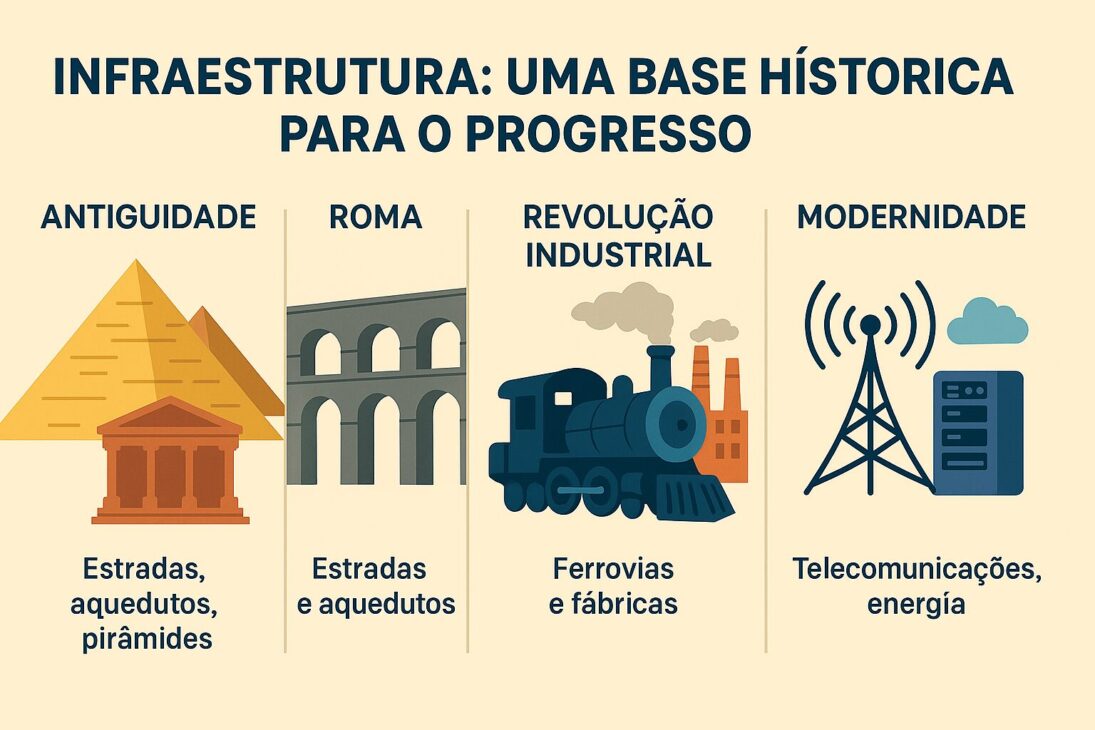
Infrastructure has accompanied humanity since Antiquity.
In Egypt, for example, the great pyramids required not only engineering techniques but also organization of resources and people.
The Romans were known for their roads and aqueducts, which helped expand and maintain the empire.
Thus, each civilizational advancement was connected to a structural innovation that allowed for greater control of territory, improvement in quality of life, or technological advancement.
During the Industrial Revolution in the 18th century, the construction of railways and factories fueled economic growth and modified urban geography.
England, which was a pioneer in this movement, became the center of industrial development, and its infrastructures expanded rapidly.
Cities began to organize around these productive centers, and infrastructure became a central theme in politics and economics.
According to the “Institute of Civil Engineering” (ICE), the Industrial Revolution not only transformed industry but also the very definition of infrastructure, which began to include aspects such as electric power and urban transport.
In modern times, infrastructure has expanded even further, encompassing sectors such as telecommunications, air transport, ports, renewable energy, and now the digital revolution.
The construction of fiber optic networks and data centers, for example, has become essential to support the volume of data flowing through the global internet, connecting people and businesses in an increasingly digital world.
The Current Reality and the Need for Innovation
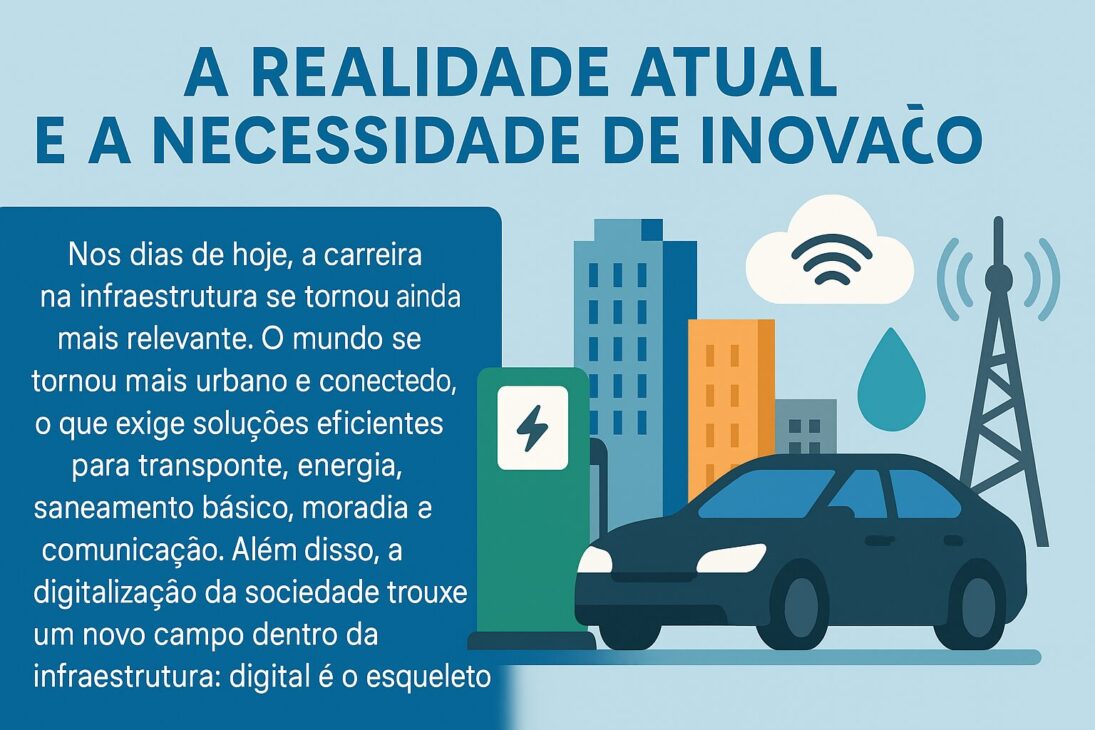
Nowadays, a career in infrastructure has become even more relevant. The world has become more urban and connected.
Cities house millions of people, requiring efficient solutions for transportation, energy, basic sanitation, housing, and communication.
Therefore, a power outage, a flood caused by failures in the drainage system, or lack of internet access in a rural area are clear examples of how the absence of adequate infrastructure can cause serious setbacks.
Moreover, the digitalization of society has introduced a new field within infrastructure: digital infrastructure.
Data centers, fiber optic networks, submarine cables, and cloud systems are invisible to most people but form the backbone of our modern world.
Thus, professionals working in the construction and maintenance of these systems are also part of the vast field of infrastructure.
Indeed, these professionals play a crucial role in ensuring that the flow of data is constant, fast, and secure, something that would not be possible without a well-planned technological infrastructure.
Another important point is the environmental impact. Today, more than ever, the infrastructure sector needs to think sustainably.
Projects that respect the environment, reduce carbon emissions, and utilize renewable resources are gaining prominence, demanding a new generation of professionals prepared for this challenge.
The urban growth indeed cannot occur indiscriminately and without planning. Thus, those who choose this career today need to be aware of the necessity for innovative and responsible solutions, considering not only the immediate benefits of projects but also their impact on the future.
The climate crisis and the search for sustainable solutions have accelerated the need to rethink infrastructure projects, aiming to minimize harm to the environment.
Opportunities, Areas, and Required Skills
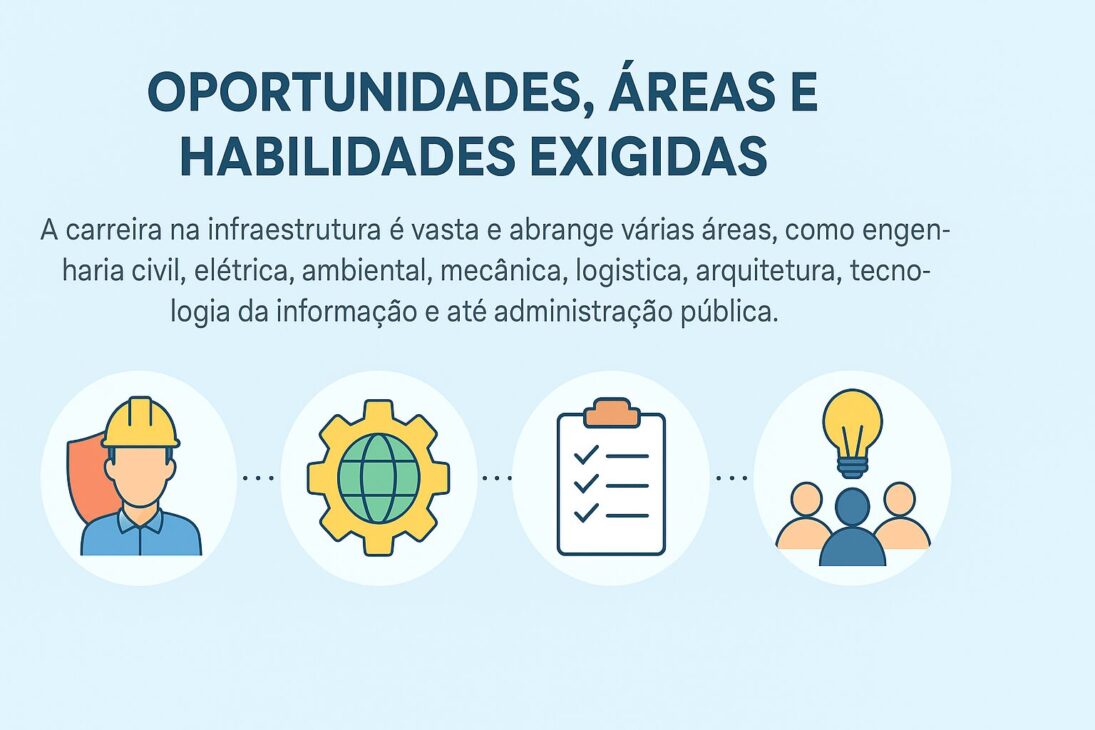
A career in infrastructure is vast and covers several areas, such as civil engineering, electrical, environmental, mechanical, logistics, architecture, information technology, and even public administration.
Additionally, you can work in private companies, government agencies, non-governmental organizations, or even as a freelancer.
Hence, the variety of paths allows the professional to choose a specialization according to their profile and interests.
In recent years, the demand for specialized professionals has grown considerably due to the increase in public works investments and the need to modernize old structures.
According to data from the “World Bank”, in 2021, developing countries need to invest over $1 trillion per year to modernize their infrastructures and meet the needs of their populations.
Furthermore, there is a shortage of skilled labor in certain regions, which broadens the possibilities for those wishing to enter the field.
Consequently, the sector is also recognized for offering competitive salaries and stability in many roles, attracting young talents seeking a solid and long-term career.
Although it offers many opportunities, a career in infrastructure requires constant updating.
Technologies evolve, materials change, regulations are renewed, and the environmental and social challenges are increasingly complex.
Therefore, those who wish to grow in this area need to invest in continuous training and stay attuned to the trends in the sector.
Purpose, Social Impact, and a Promising Future
In addition to technical knowledge, skills such as teamwork, strategic thinking, project management, and communication are increasingly valued.
This is because infrastructure projects usually involve various stages, professionals, and institutions, which requires leadership and cooperation skills.
Thus, knowing how to work with multidisciplinary teams and manage timelines and budgets is essential to ensure that the projects are delivered on time and within expectations.
One of the noblest reasons to choose a career in infrastructure is the positive impact it has on society.
Each bridge built, each hospital erected, each sewage system installed represents a real improvement in people’s lives.
More than just building structures, the professional in the field contributes to building dignity, accessibility, and quality of life.
The future of infrastructure will be marked by innovation, sustainability, and integration.
Smart cities, electric mobility, automated systems, and more efficient buildings are already a reality in many places and are expected to expand.
At the same time, there is the challenge of bringing basic infrastructure to underprivileged regions and adapting old structures to new needs.
As a result, the opportunities in this sector continue to grow, especially as the world turns to more eco-friendly and technologically advanced solutions.
Choosing a career in infrastructure is more than just securing a good professional future. It is about actively participating in building a better, fairer, more accessible, and sustainable world.











Seja o primeiro a reagir!