





 Portuguese
  English
  Spanish
  7 min of reading
  0 comments


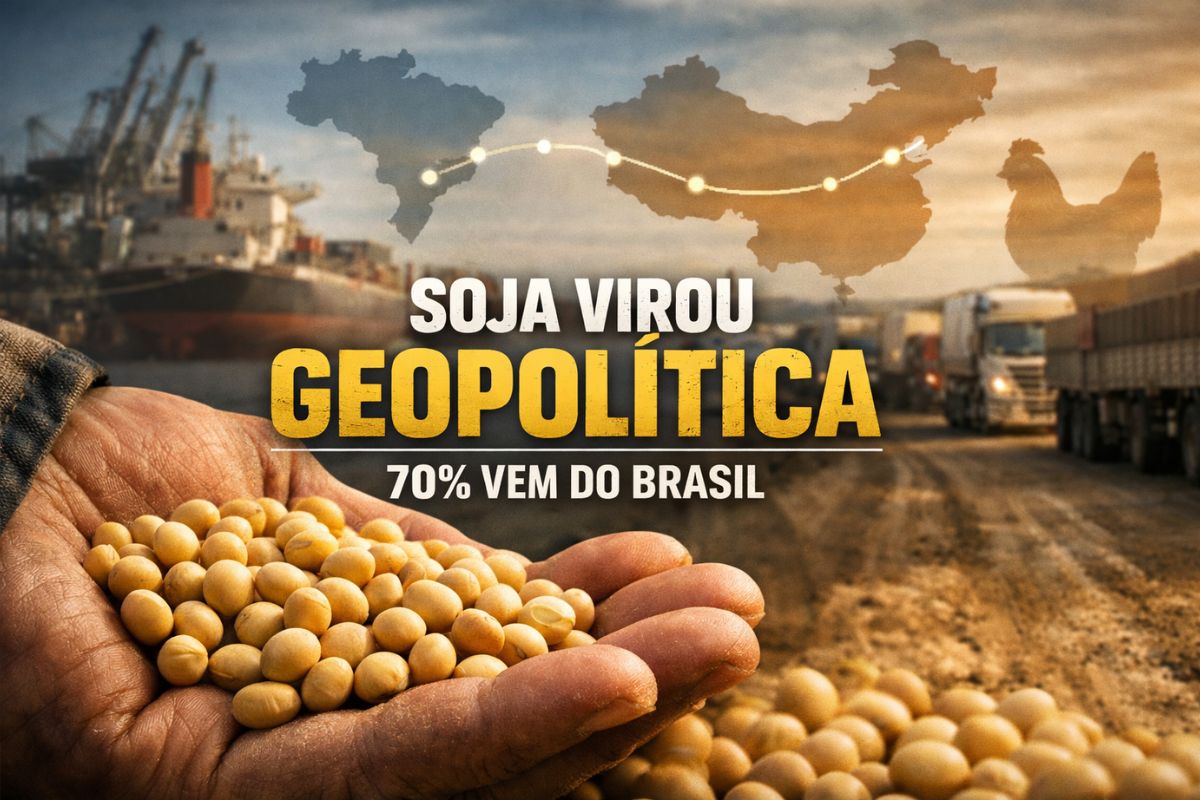
Between 2021 and 2025, More Than 240 Million Tons Explain Why China Buys So Much Soy from Brazil to Turn into Cooking Oil, Pig and Chicken Feed, Meat on the Urban Table, and a Geopolitical Tool That Leaves Agriculture Dependent on a Single Giant Buyer in the World
Between 2021 and 2025, summing only the first seven months of each year, more than 240 million tons of soy left Brazil directly for Chinese ports, a flow that helps understand why China buys so much soy from Brazil and how a single grain came to connect kitchens, farms, and food security decisions in Beijing.
Over the last five decades, China has transformed from a rural and poor country to the second-largest economy on the planet, with more than 300 million people entering the middle class and around 200 million leaving farms to live in cities between 2007 and 2017, trading a simple diet of rice and vegetables for meals with more meat, eggs, milk, soy oil, and processed foods, creating space for the central role of Brazilian soy.
From the Chinese Pan to Brazilian Soy
The trail that explains why China buys so much soy from Brazil starts within the kitchen of a Chinese family.
-
They said no to 26 million dollars and would do it all over again: mother and daughter from Kentucky reject a million-dollar offer from a mysterious company that wants to build the largest data center in the state on more than 2,000 acres of rural land.

-
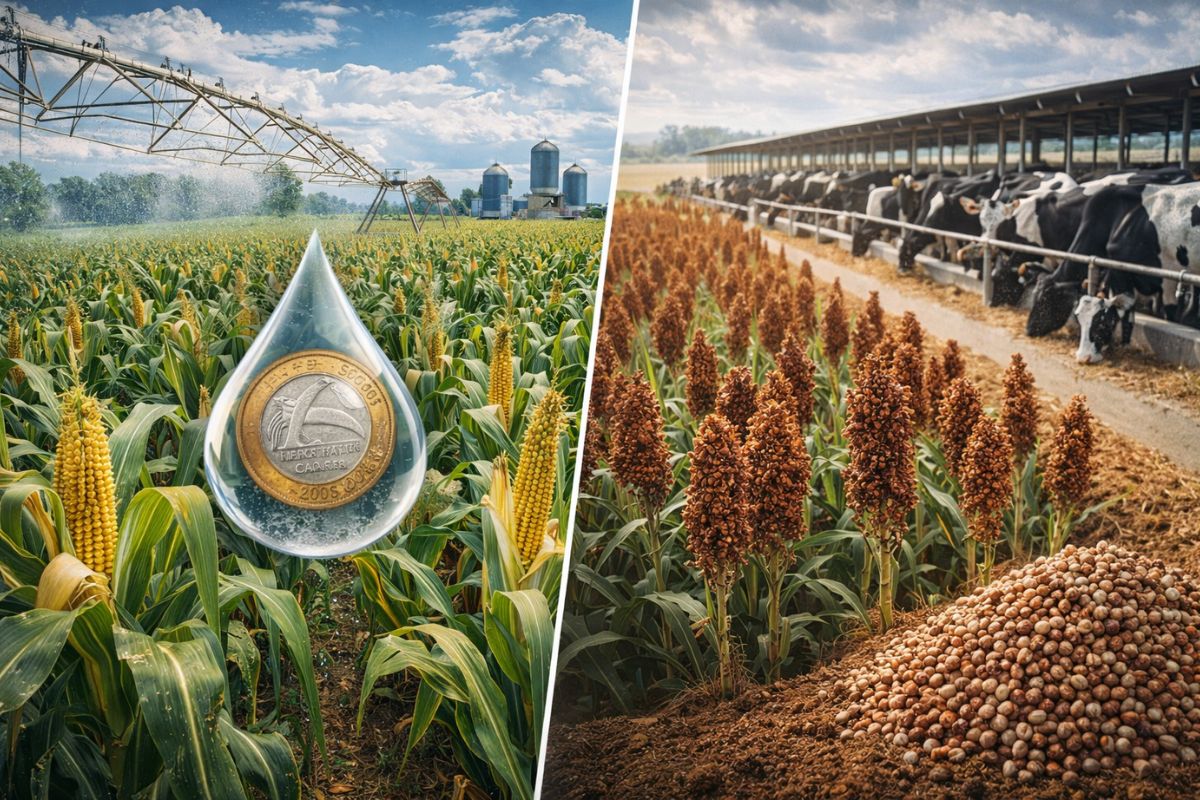
While corn requires rain and is expensive, sorghum produces almost the same volume per hectare at a cost up to 80% lower and uses less water, and it is revolutionizing dairy farming in the Triângulo Mineiro, where producers save hundreds of reais per hectare.
-
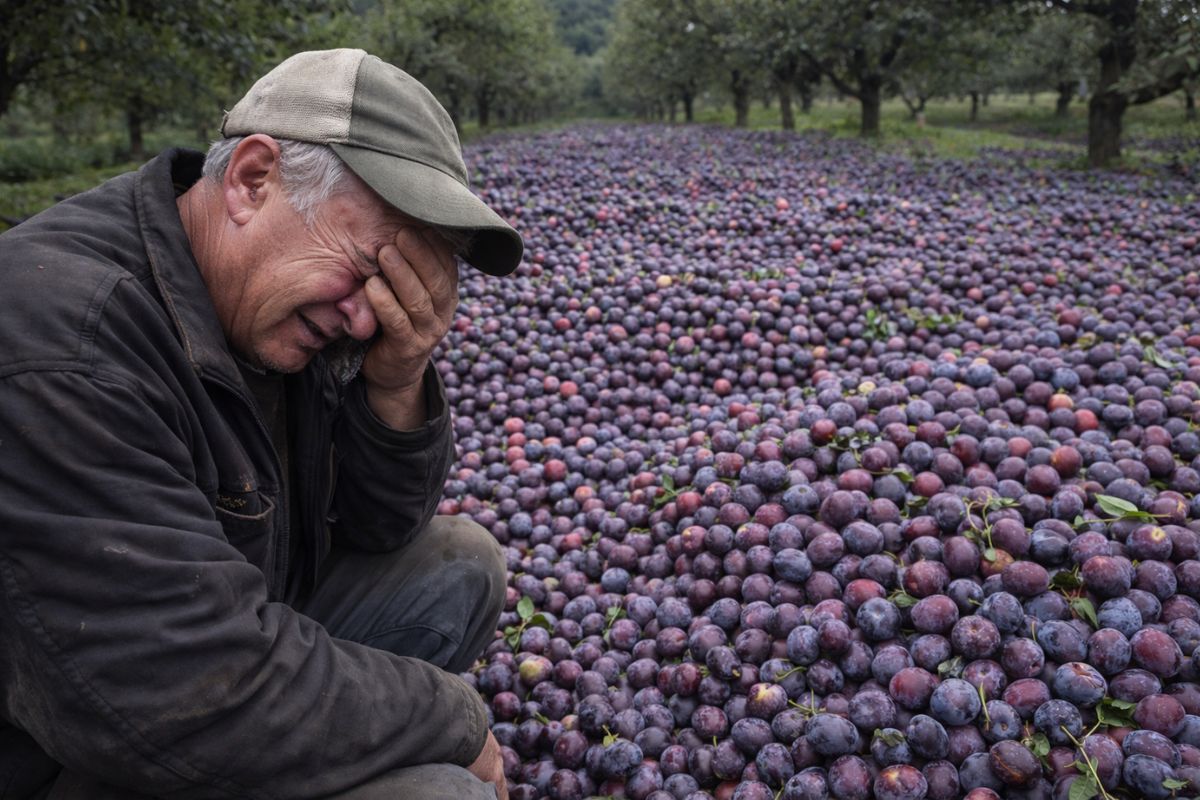
A rural producer from Urubici cries as he shows 50 tons of plums thrown on the ground because no one wanted to buy them, and in desperation, he records a video asking anyone to come to the property to pick the fruits before they rot.
-
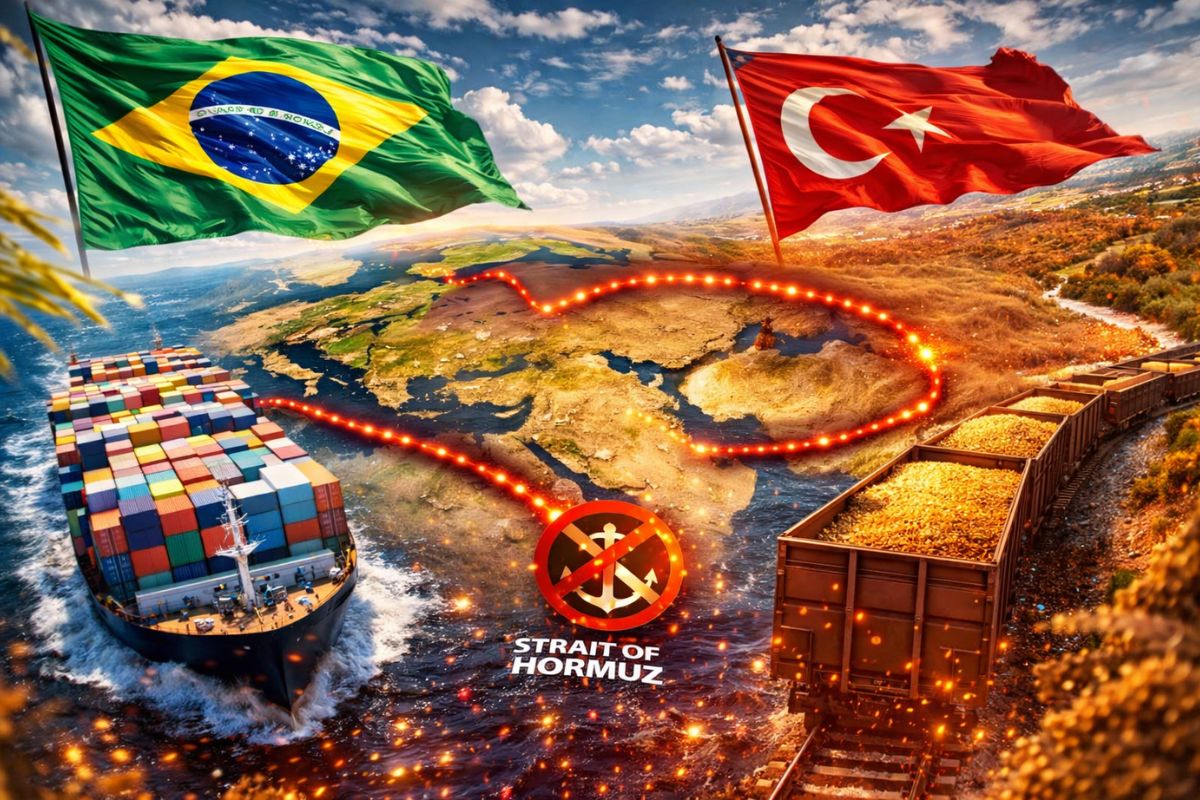
Unable to pass through Hormuz, Brazil activated a plan B that uses Turkey as a gateway to the Middle East: the route through Gibraltar and the Mediterranean is longer and more expensive but ensures that chicken, beef, and corn continue to reach Arab markets.

With more than 1.4 billion inhabitants, every daily stir-fry requires oil in the pan, proteins, and processed ingredients that depend directly or indirectly on soy.
In direct use, soy appears as cooking oil, tofu, dried dumplings, and traditional recipes over two thousand years old.
This human consumption is primarily met by soy produced within China itself, which has grains with higher protein content, more suitable for direct feeding.
On the other hand, the soy that comes from Brazil takes another path. A large portion of Brazilian soy enters crushing industries, which transform the grain into oil and meal, separating two different products. The oil can go to the kitchen or industry, but it’s in the meal that the story gains global scale.
It is this protein-rich meal that feeds the feed chain used to fatten pigs, chickens, and cattle.
In practice, when China buys so much soy from Brazil, it is buying concentrated protein to supply the meat system that now sustains the new Chinese middle class.
From Pigs to Chickens: The Soy Behind 56 Million Tons of Meat
Today, China consumes more than 56 million tons of meat per year, with more than half being pork.
To bring a pig to slaughter, about 300 kilograms of feed are needed.
When this number is multiplied by a population of 1.4 billion people consuming meat throughout the year, the demand for soy skyrockets.
Between 2018 and 2020, African swine fever devastated the Chinese herd and led to the death of approximately 225 million pigs, reducing meat supply and driving prices up on the shelves.
The government’s response was to accelerate a new production model with vertical farms, multi-story buildings fully automated, designed to raise pigs with maximum control and efficiency.
These buildings filled with pigs require feed in even larger volumes and with absolute regularity.
Each productivity gain in Chinese pig farming, poultry farming, and cattle farming means more meal in the production line, hence more demand for Brazilian soy, which enters as concentrated feed in these intensive systems.
At the same time, chicken consumption continues to grow, and beef, once a status symbol rarely accessible, is expanding with market projections exceeding 120 billion dollars by 2030.
In all these segments, the invisible link is the meal that emerges when China buys so much soy from Brazil and transforms the grain into feed.
When Internal Production Does Not Keep Up With The Middle Class Appetite
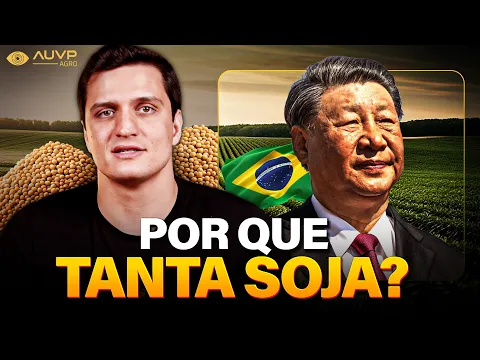

During the 1990s, China came close to self-sufficiency in soy.
The scenario changed starting in the 2000s, when the consumption of meat, oil, and industrialized foods grew faster than the capacity to plant.
Today, the country produces between 20 and 30 million tons of soy per year but consumes about 120 million.
In practice, more than 80 percent of the necessary soy must be imported, making the grain a national food security issue.
For a long time, it was the United States that led the supply.
Brazil grew by clearing areas in the Cerrado, investing in technology, and gaining ground, but the shift came in 2018, with the trade war between China and the United States, marked by tariffs, sanctions, and distrust.
At this moment, China decided to reduce its dependence on a single supplier and accelerated purchases from Brazil.
Today, more than 70 percent of the soy imported by the Chinese comes from Brazilian ports, while China buys so much soy from Brazil but also seeks to diversify with volumes from Argentina, Paraguay, Tanzania, and even a gradual return to purchases in the United States, in an attempt to dilute risks without giving up Brazilian grain.
How Soy Transforms The Interior of Brazil Into A Piece of World Power
The partnership boosted Brazilian agribusiness and reshaped cities in the interior, especially in Mato Grosso. Municipalities like Canarana, Água Boa, and other cities in the Araguaia Valley have strengthened as production, service, and logistics hubs around the soy that is almost entirely aimed at export.
Each harvest moves trucks on congested roads, creates queues in ports, and exposes a storage deficit of over 80 million tons, forcing producers to sell quickly due to lack of space to store.
At the same time, the country faces bottlenecks in railways that should connect Mato Grosso to ports like Paranaguá and Barcarena more efficiently.
While China buys so much soy from Brazil, this still incomplete structure increases internal costs, pressures freight rates, and limits the country’s ability to capture all the value possible from the grain.
Soy has become a pivot of revenue, exchange rate, and employment, but it relies on infrastructure that has yet to keep pace with the size of Chinese demand.
Super Cycle of Commodities and The Risk of An Overly Large Client
The current movement fits what economists call a super cycle of commodities, long periods in which high demand and high prices for raw materials like soy, oil, ore, and copper drive producing countries.
This was the case with the United States in the 19th century, with Europe, and then with Japan in the post-war period, and now with China.
The difference is the scale. Two-thirds of all soy traded in the world is destined for China, which means that for every three grains, two end up in Chinese territory.
If a route is interrupted, if a harvest fails or if a war affects the path between Brazilian and Chinese ports, the impact is global.
This design creates a delicate interdependence relationship. Without China, Brazil would export much less and see its fields, revenue, and GDP shrink.
Without Brazil, China would produce less meat and have trouble maintaining stable protein consumption for its urban population. It is exactly this combination that transforms soy into a geopolitical instrument.
What Brazil Needs To Do Besides Plant More Soy
On the Brazilian side, the challenge is not to become complacent in the position of a raw supplier while China buys so much soy from Brazil.
The recurring recommendation is to invest in logistics, storage, railways, ports, and technology, to reduce internal bottlenecks and increase the margin for producers and agribusiness.
Another front is to add value.
Instead of exporting just the grain, the country can expand the sale of soy oil, meal, and industrial derivatives, in addition to strengthening the production of meat and other products that incorporate soy as an ingredient, capturing a larger share of the income that today remains in the transformation done in other countries.
For China, the strategic goal is to ensure that food never becomes a political weapon against the country, whether due to supplier decisions, climatic shocks, or conflicts.
This explains the search for new partners and strategic stocks, even while keeping Brazil at the center of the soy board.
Soy as Power, Survival, and Balance
The journey of soy cultivation in Mato Grosso to the plate of a Chinese family passes through ports, alters the exchange rate, sustains cities, and feeds billions of animals worldwide.
Brazilian soy shows that food is never just food; it is economy, power, and survival within a geopolitical chessboard where few countries dominate the technology of planting and harvesting on a large scale.
While China buys so much soy from Brazil to ensure feed, oil, and meat, Brazil needs to decide whether it wants to remain just a grain supplier or use this cycle to consolidate a more sophisticated agribusiness, less vulnerable to fluctuations from a single giant buyer.
In light of this interdependence relationship, in your opinion, should Brazil take advantage of the fact that China buys so much soy from Brazil to accelerate a turn towards more added value, or does the risk of relying on this single client still weigh more than the current gains?









-

-

5 pessoas reagiram a isso.