





 English
  Francês
  Alemão
  Italiano
  Japonês
  Norueguês
  Portuguese
  Spanish
  5 min of reading
  1 comment




China, The Global Economic Giant, Seems to Be Changing Direction. After Years of Intense Investments in Africa, Beijing Is Shifting Its Focus to Brazil, Leaving the African Continent in the Background.
But what is driving this strategic shift? The answer may not be as simple as it seems. In recent years, China has established itself as Africa’s largest creditor, offering billion-dollar loans to various countries on the continent.
According to the YouTube channel “Economia das Coisas”, Beijing already holds over 70% of the total bilateral debt of countries like Kenya. What seemed to be a successful strategy for economic and political dominance over Africa now shows signs of exhaustion.
China, once seen as the “savior” of Africa, is now reevaluating its ties to the continent. Why this sudden disinterest?
-
In just three hours, a natural stone floor transforms the entrance of the house with an organic effect, immediate drainage, and a sophisticated non-slip finish that doesn’t puddle water, dries quickly, and impresses with the final result.

-
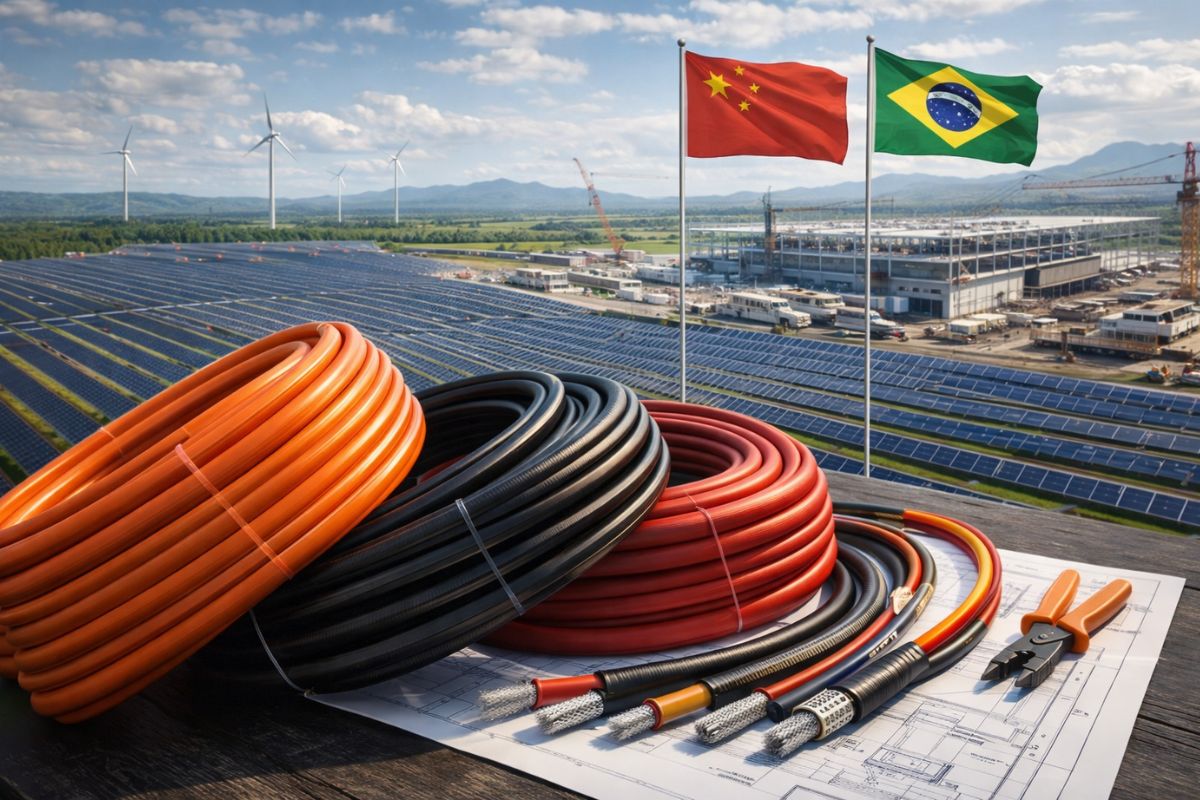
Chinese giant worth nearly R$ 4 billion that manufactures cables for electric cars, solar energy, and robotics wants to open a factory in SC.
-
Many employers do not know, but the law guarantees domestic workers a 25% increase in salary during trips, 50% for overtime, 20% for night shifts, and 17 additional benefits that can lead to labor lawsuits if not paid.

-
Gasoline prices soar and the question arises: is ethanol more advantageous? The 70% rule reveals the limit with gasoline.


The Beginning of Chinese Influence in Africa
The history of Chinese investments in Africa began to gain momentum in the early 21st century. With the Chinese economy booming and abundant financial reserves, the Chinese government began to seek new investment opportunities abroad.
As Chinese economic influence grew, Africa became a strategic target for Beijing, especially due to its wealth of natural resources essential for China’s emerging industries.
According to the channel “Economia das Coisas,” China initiated a massive investment project in Africa, known as the New Silk Road. This multi-billion dollar project aimed to build new infrastructures to expand Chinese commercial influence globally.
In Africa, these investments were crucial for the growth of the Chinese industry, which needed large amounts of natural resources like lithium and silicon for its new technological sectors.
However, this relationship between China and Africa has always been marked by a certain imbalance. According to experts, many African countries have become deeply indebted to China, allowing Beijing to exert significant influence over these governments.
The practice of using natural resources as collateral for loans raised concerns that China was, in fact, engaging in a modern form of colonialism.
The Theory of “Chinese Colonialism”
The theory that China is exploiting African countries through debt has gained traction in recent years.
This strategy, known as the “debt trap,” suggests that China is more interested in gaining political influence than ensuring financial returns.
At international forums, for example, many African governments that rely on Chinese money tend to support Beijing’s positions.
However, as the channel “Economia das Coisas” highlights, this theory is not as straightforward as it seems. In fact, there are indications that China is distancing itself from Africa and reducing its investments in the region in recent years.
A Change of Strategy?
Since 2016, Chinese investments in Africa have been declining significantly. The value of loans offered by China to the continent fell from nearly US$ 30 billion per year to under US$ 2 billion in 2022. This suggests a change in Beijing’s strategy regarding Africa, but what lies behind this decision?
According to recent analysis, China is rethinking its infrastructure projects in Africa due to a number of factors. One major reason is that many of these projects have proven to be economically unviable.
An example is the Hambantota port in Sri Lanka, where China invested over US$ 1 billion, but the project was a flop, leading the country to fail to repay the loan. As a result, China took control of 70% of the port’s revenues for 99 years. This type of situation, where China ends up taking control of unprofitable assets, has repeated itself in several other countries.
Furthermore, studies show that the New Silk Road projects are frequently associated with corruption scandals. Approximately 26% of these projects face corruption issues, compared to less than 10% of other Chinese projects.
This suggests that Chinese companies are experiencing significant difficulties operating in Africa, which may have led Beijing to reconsider its investments in the continent.
The “Lost Decade” of Africa
Another factor influencing China’s decision to reduce its investments in Africa is the poor economic performance of the continent. In recent years, many African countries have faced a “lost decade” in terms of economic growth.
Since 2014, GDP per capita in Sub-Saharan Africa has fallen by more than 10%, mainly due to declining commodity prices. This unfavorable economic scenario has made it even harder for African countries to pay their debts, which in turn makes Chinese investments less attractive.
As the channel “Economia das Coisas” notes, China seems to be shifting its focus to smaller, more profitable projects instead of large infrastructure ventures.
This new approach, known as “xiao er mei,” suggests that Beijing is adopting a more cautious strategy in Africa, focusing on projects that offer quicker and less risky returns.
Brazil as a New Priority
As China reduces its investments in Africa, Brazil has become an increasingly attractive destination for Chinese capital.
According to experts, historical ties and an abundance of natural resources make Brazil a natural choice for China. Additionally, Brazil’s relative political stability, especially compared to many African countries, makes it a more reliable partner for Beijing.
In recent years, China has significantly increased its investments in Brazil, especially in strategic sectors such as energy, infrastructure, and agriculture. These investments not only reinforce China’s economic presence in Brazil but also strengthen the political relations between the two countries.
The shift in China’s focus from Africa to Brazil represents a new phase in Beijing’s global strategy. While Africa remains important to China’s interests, Brazil offers opportunities that China cannot ignore.
A New Chapter in China-Brazil Relations
China is redefining its global priorities, and Brazil is at the center of this new strategy. With reduced investments in Africa, Brazil emerges as the new target of China’s economic expansion. This shift has profound implications not only for the economies of the two countries but also for global geopolitics.
Do you believe that Brazil is prepared to handle this growing Chinese influence? How might this relationship affect the country’s economic future? Share your thoughts in the comments!








O Brasil não deve depender de ninguém a não ser de si mesmo…temos tudo o que precisamos para viver bem…é só distribuir melhor a riqueza..mas se tiver que fazer negócios é melhor com os chineses do que com os americanos que se acham donos da América Latina