





 Portuguese
  English
  Spanish
 5 min of reading
  0 comments


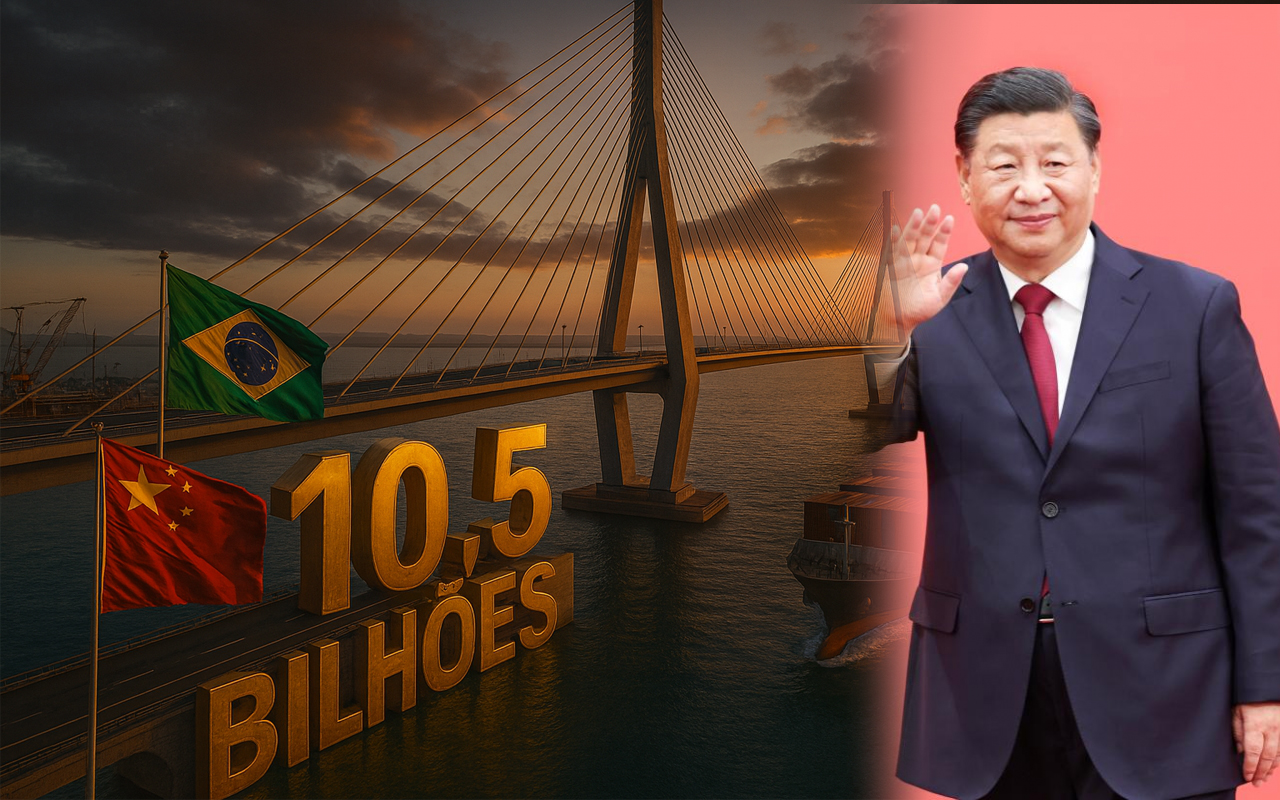
The Salvador–Itaparica Bridge, a PPP project led by Chinese groups, promises 12.4 km over the sea, with estimated tolls close to that of the ferry boat and contractual delivery by 2031
The future Salvador–Itaparica Bridge will be the largest in Latin America built entirely over water, with 12.4 km of maritime extension. The design includes a cablestayed section of 900 m and a design height of 85 m above sea level, allowing for the passage of large ships while maintaining the operation of the port of Salvador. According to the concessionaire, the bridge will have two lanes in each direction and a third lane that will initially serve as a shoulder.
In addition to the deck over the sea, the roadway system provides for approximately 34 km of new access: 4 km of connections and tunnels in the capital, 22 km of expressway in Vera Cruz, and the duplication of 8 km of BA-001 in the southern part of the island. In practice, the direct crossing will reduce the time between Salvador and Itaparica from over an hour by ferry to minutes by road.
For comparison, the Rio–Niterói Bridge has a total length of 13.29 km, of which 8.83 km are over water. In other words, although longer overall, it has a shorter maritime section than that of Salvador–Itaparica, hence the classification of “largest over water” in Bahia.
-
China alone accounts for 70% of trade within the BRICS, while Brazil establishes itself as an essential supplier of food and minerals: understand how the group, which already represents nearly 40% of the world’s GDP, is changing the game.
-
Starting in May, those who do not have registered biometrics will not be able to apply for Bolsa Família, sickness benefits, or unemployment insurance: understand the new rule that changes access to benefits for millions of Brazilians.

-
A new law being voted on in Brazil proposes a minimum fare of R$ 10 per trip and R$ 2.50 per kilometer for Uber and 99 drivers, and promises to ensure they earn as well as taxi drivers did during the golden age of taxis in the country.

-
Bauer Group collapses after failed judicial recovery: 25 years, 800 vehicles, and a network of gas stations leave a debt of R$ 50 million and 100 layoffs, exposing costs, tight margins, and expensive credit in Brazil.

Who Builds and How Much Does the Salvador–Itaparica Bridge Cost, Public-Private Partnership
The work is being carried out in a public-private partnership (PPP) between the Government of Bahia and the Salvador–Itaparica Bridge Concessionaire, controlled by two Chinese conglomerates, China Communications Construction Company (CCCC) and China Civil Engineering Construction Corporation (CCECC). Both are among the largest global infrastructure groups and lead large-scale projects in bridges and highways.
The original contract was signed in November 2020, after the auction won at the end of 2019. In June 2025, a 1st amendment modernized the agreement and adjusted deadlines: six years for the construction phase and 29 years of concession for operation, with refined schedule and responsibilities. The project is budgeted at around R$ 10.4 to R$ 10.6 billion according to official publications and local reports.
The Chinese bring “portfolio” and financing, while the State provides guarantees and complementary interventions in the road system. The model aims to transfer engineering and demand risks to the concessionaire, a common mechanism in logistics PPPs worldwide.
Survey Completed in 2025, Construction Starting in 2026, and Delivery by 2031
The geotechnical survey in the Bay of All Saints was completed in March-April 2025, with an investment of around R$ 200 million and record drilling in the country, reaching 200 m deep to define the foundation. The mobilization of work sites depends on the installation license and related authorizations.
With the amendment of June 2025, the Bahia government and the concessionaire established a window of up to 12 months for the effective start of construction from June 4, 2025. In recent interviews, the concessionaire’s management states that construction will start in 2026 and that contractual delivery is by 2031, with an interest in accelerating.
The executive design phase, logistics of shipyards and supplies, as well as the manufacture of structural elements, occurs in parallel with the terrestrial access fronts and maritime foundations. These steps explain why mega projects of this scale require several “milestones” before the visible start of pillars in the sea.
Estimated Toll and Relationship with the Ferry Boat: How Much Will It Cost to Cross the Salvador–Itaparica Bridge
A sensitive point is the toll. According to an interview with the CEO of the concessionaire to the newspaper A Tarde, the fee for cars is expected to be “around R$ 50” at today’s rates, with all passengers included, following the rationale of equivalence with the ferry boat. The contract provides for two toll plazas on the island, in Mar Grande and near the Ponte do Funil.
The definitive tariff policy will be defined according to contractual rules for inflation adjustment and possible discounts. The ferry’s history indicates an approximate cost for light vehicles that serves as a reference for balance in the concession. It is important to note that travel time will drop significantly, which may alter logistical and tourist flows in the Recôncavo and Baixo Sul.
For frequent trips, it is expected that there will be modicum mechanisms, including effects of round-trips and specific policies to be detailed in the operational manuals of the concession, as occurs on other tolled highways.
Environmental Licensing (Inema) and Consultations
In the environmental field, the Installation License is currently under review at Inema, with additional evaluations and technical meetings. In July 2025, the State signed a TAC with MPF and DPU to guarantee prior, free, and informed consultation with the traditional communities potentially affected. There was also a technical mission from the Bahia government to China to deepen aspects of licensing and engineering.
The concessionaire reports that the alignment was planned to avoid sensitive areas, with no incidence of mangroves in the bridge alignment, and to adopt construction methods without explosions or extensive dredging, in addition to sediment control measures and water quality monitoring.
A topic that generates public debate is the lack of bicycle paths in the project. According to statements from the CEO and local reports, the option is due to technical and operational limitations — strong winds at the deck level and the profile of the crossing. This decision is described as one of technical infeasibility, confirmed in recent interviews.
Why China? Technical Capacity and Strategy in Megaprojects
The Chinese presence is explained by technical capacity, financial scale, and risk appetite in megaprojects. For example, CCCC participated in parts of the Hong Kong–Zhuhai–Macau Bridge, the largest marine complex in the world, a reference in open sea engineering. This history helps justify the interest in challenging ventures like Salvador–Itaparica.
From Brazil’s and Bahia’s perspective, the PPP aims to accelerate investment, generate jobs, and improve regional logistics, shortening the path between Salvador, the southern coast, and axes such as BR-101, BR-116, and BR-242. The government estimates direct and indirect impacts on up to 250 municipalities, with 10 million people benefiting along the economic chain.
If delivered on time, the bridge will reposition metropolitan mobility, relieve the ferry boat system, reduce emissions from trips circumventing the bay, and create a new touristic and logistical corridor. That is why the project, despite its complexity, gathers public interest and international capital — and why the question “why China?” has an objective answer: know-how, scale, and contract.









-

-

-

-

-

-

114 pessoas reagiram a isso.