





 Português
  Inglês
  Espanhol
  3 min de leitura
  0 comentários


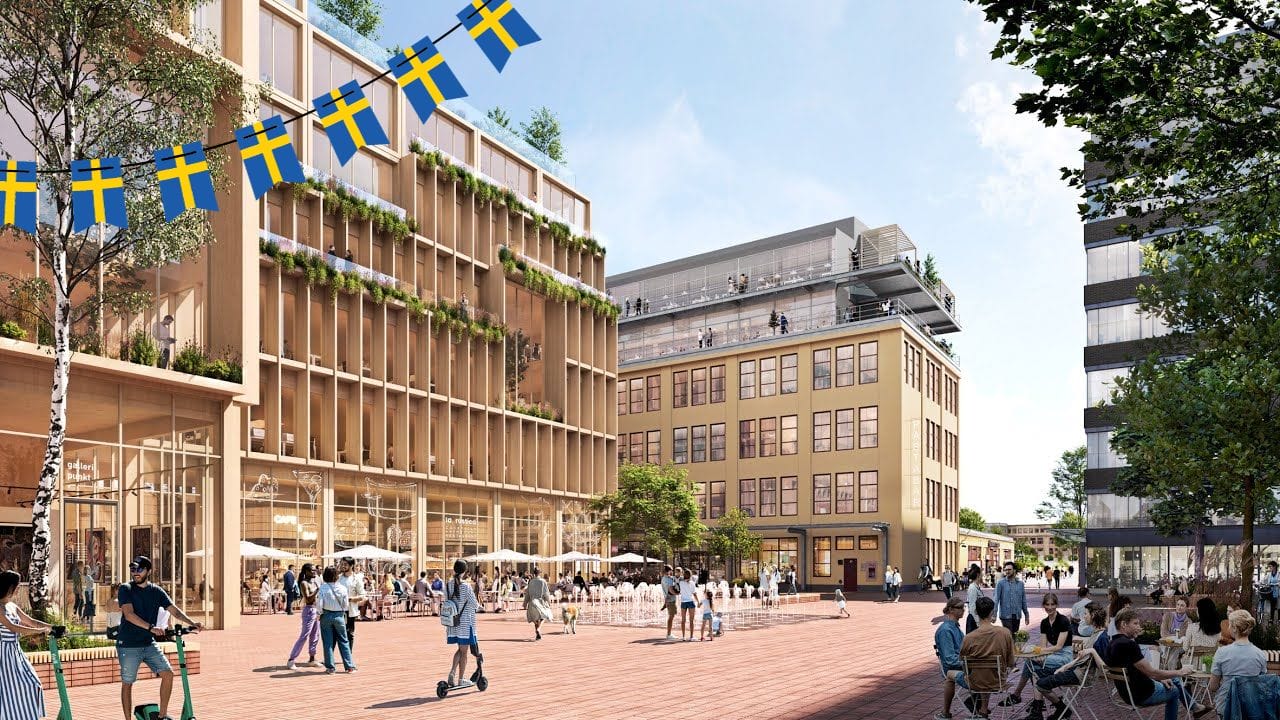
In A Pioneering Initiative, Sweden Is Building An Entire Wooden City, Spotlighting Itself As A Benchmark In Sustainable Construction.
Sweden is raising the standards of sustainable construction by planning an entire city made of wood in Stockholm. This district, covering 25 blocks, is being built primarily with wood, a material that has gained prominence in construction, especially in the Nordic countries. The project, called Stockholms Wood City, spans 250,000 square meters and is considered the largest wooden construction project in the world, according to Atrium Ljungberg, the company responsible for the development.
The choice of wood as the primary material is driven by its significant environmental advantages. Currently, the construction industry and the built environment account for around 40% of global CO2 emissions due to dependence on carbon-intensive materials like concrete and steel. Wood, on the other hand, is a low-carbon alternative and should be sourced from sustainably managed forests. These forests not only replant cut trees but also provide social, economic, and environmental benefits to society and the forest itself. Additionally, wood can sequester carbon and is lighter than concrete or steel.
Stockholms Wood City In Stockholm
The Wood City district in Stockholm will offer 7,000 office spaces, 2,000 residences, restaurants, shops, and more, along with its own energy generation and storage system. Construction is set to begin in 2025, with the first buildings expected to be completed in 2027. Sweden, covered by forests in about 70% of its territory and being the third largest global exporter of wood-based products, has a unique advantage in realizing this project.
-
A megaproject worth R$ 89 billion is advancing in Iraq and promises to change the game in global trade by creating a new corridor between Asia and Europe, reducing traditional routes and repositioning the country as a logistics powerhouse.

-
Goodbye bedside table: floating shelves become a trend in 2026 by freeing up space in the bedroom, improving circulation, bringing visual lightness, and integrating technology without taking up floor space.

-
Israel, Greece, and Cyprus signed an agreement in 2020 to transport gas from the Mediterranean to Europe via a 1,872 km pipeline, but Turkey claimed sovereignty over part of the maritime route, and the project never materialized.

-
Israel, Greece, and Cyprus signed an agreement in 2020 to transport gas from the Mediterranean to Europe via a 1,872 km pipeline, but Turkey claimed sovereignty over part of the maritime route, and the project never materialized.




The constructions will be made of cross-laminated timber (CLT), which is manufactured in factories to be super-resistant, quick to assemble, and well-prepared against fires. Surprisingly, these wooden cities will not be vulnerable to fast-spreading fires, as solid wood panels are designed to slowly char, allowing enough time for the fire to be extinguished and for people to evacuate.
70% Of Swedes Want More Investment In Sustainable Building Materials
This project is not only a response to environmental challenges but also reflects the desire of the Swedish population. A survey conducted in 2023 by Södra revealed that more than 70% of Swedes believe their country should invest more in environmentally friendly building materials, including wood. Nearly half would prefer their next home to be primarily built with wood, despite the recession in Sweden and higher wood costs compared to traditional options.
Stockholms Wood City is an example of how large-scale sustainable projects are becoming more common, which is a good sign for the future of our planet. While it is still early to say whether this initiative will serve as an example for other cities to follow, the benefits of wooden construction are becoming increasingly evident. If successful, this idea will be needed not only in Scandinavia but worldwide as we face the challenges of climate change.









Seja o primeiro a reagir!