





 Portuguese
  English
  Spanish
  5 min of reading
  0 comments


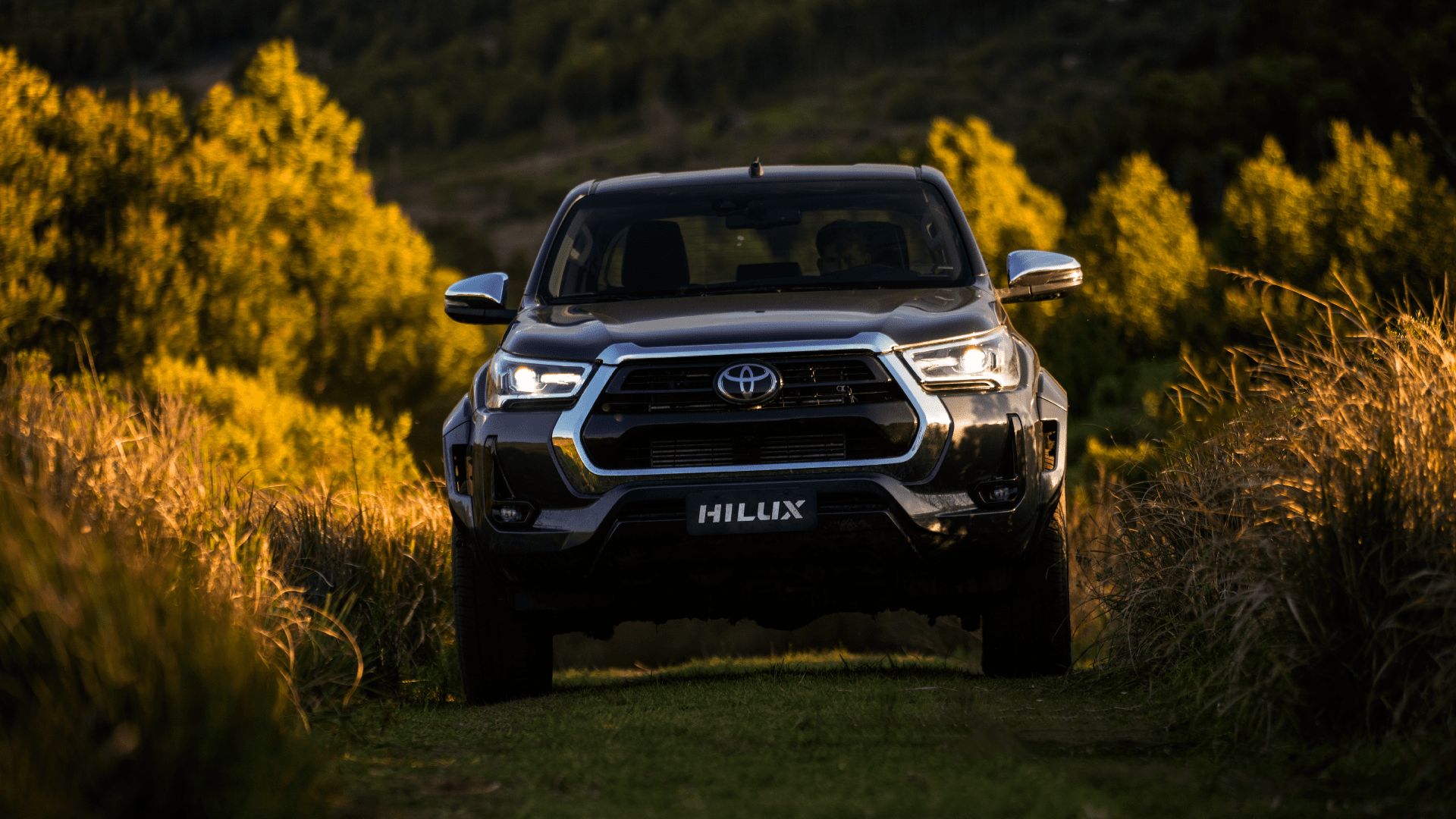
Hilux Gained Worldwide Fame For Extreme Resilience And Lives In An Unusual Situation In The U.S. Market, Where It Does Not Appear In Dealerships Due To Commercial And Regulatory Factors That Have Been Accumulating Since The 1960s.
The Toyota Hilux has established itself as one of the most respected pickups in the world due to its extreme robustness, but it practically does not exist in dealerships in the United States due to an import tariff created decades ago amid a trade dispute involving chickens.
Although it is not formally prohibited for safety reasons or design flaws, the combination of high taxes, strict environmental rules, and market strategies has kept the model away from the largest pickup market on the planet.
Origin And Global Fame Of The Toyota Hilux
Launched in the late 1960s, the Hilux was born with a straightforward proposal: to be a compact, simple, and resilient pickup for intense use in difficult terrains.
-
Is financing a car really worth it? Discover the impact of 25% annual interest and how you could end up paying up to R$ 39,000 more for your vehicle.

-
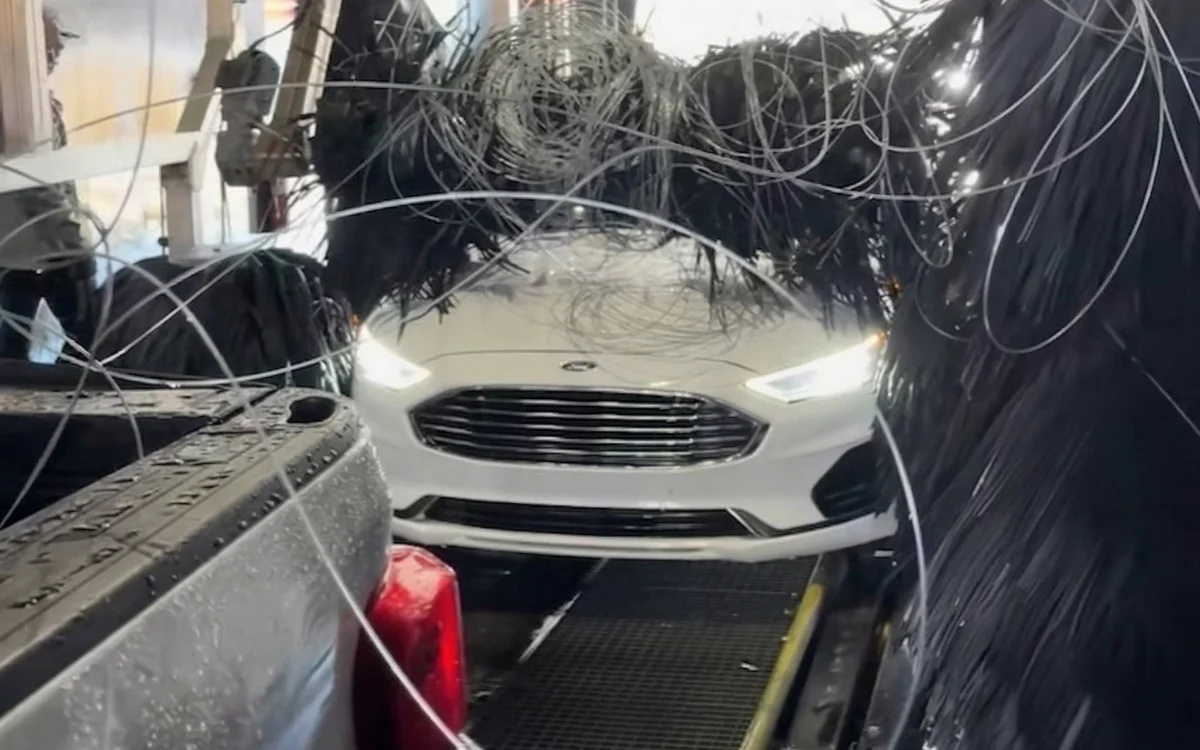
Farmer forgets barbed wire in the pickup truck and destroys Ford Fusion at car wash.
-
While the industry rushes towards automation, Omoda & Jaecoo bets on technology with a human touch and reveals its global mobility plan for 2026.
-
In just 1 year, JAECOO surpasses 7,000 units of the J5 EV delivered in Indonesia and consolidates trust in the Asian market.

The name combined “High” and “Luxury,” but the early versions were far from luxurious.
The focus was to offer a reliable work vehicle, capable of running for many years with basic maintenance.
Over time, the truck gained fame in regions with poor infrastructure, such as rural areas of Asia, Africa, and Latin America.

The reputation came from its ability to withstand bumpy roads, overload, dust, mud, and temperature variations without displaying severe failures.
In many cases, owners report vehicles with hundreds of thousands of kilometers still in daily use.
This image of “indestructible” was reinforced by extreme demonstrations over the years, where units of the Hilux faced flooding, severe impacts, and continuous use in hostile scenarios.
Even after heavy damage, many continued to operate, which solidified the model as a kind of work tool on wheels.
The robustness also led it to more delicate contexts.
Humanitarian organizations, farmers, explorers in remote regions, and even armed groups in conflict zones began to adopt the Hilux.
In some conflicts, the use of heavily modified Toyota pickups was so frequent that the term “Toyota War” began to appear in analyses of these battles, associating the vehicle with operations in war zones.
The Presence And Disappearance Of The Hilux In The U.S.
During part of its history, the Hilux was even sold officially in the United States, in versions adapted to local tastes and, at certain times, with other commercial names.
However, as generations advanced, Toyota’s strategy changed, and the pickup began to give way to a product specifically designed for the North American consumer.

While the Hilux was establishing itself as a work truck in numerous countries, the market in the United States was moving in another direction.
There, the segment became dominated by full-size models, larger and more powerful, such as Ford F-Series, Chevrolet Silverado, and Toyota Tundra itself.
At the same time, the cost of importing pickups produced outside American territory grew significantly.
Today, the Hilux is not available in the brand’s official networks in the United States.
This does not mean that the model is illegal in the country, but that economic, regulatory, and commercial conditions have made it unfeasible to offer it competitively.
Chicken Tax: The Tax That Changed The Market
The central point of this story dates back to the 1960s, when a trade dispute between the United States and European countries focused on chicken.
In response to tariffs imposed on American chicken, the U.S. government created a 25% tariff on the importation of light trucks and pickups.

This measure became known as the “Chicken Tax.”
In practice, any light pickup produced outside American territory became subject to this additional 25% tax.
For entry-level models and work-oriented vehicles, this increase made prices less competitive compared to locally manufactured pickups.
Over the years, the tax ceased to target just a few European brands and began to reach any manufacturer attempting to import light pickups.
For Toyota, this meant that bringing the Hilux would significantly raise the price of the product compared to local rivals.
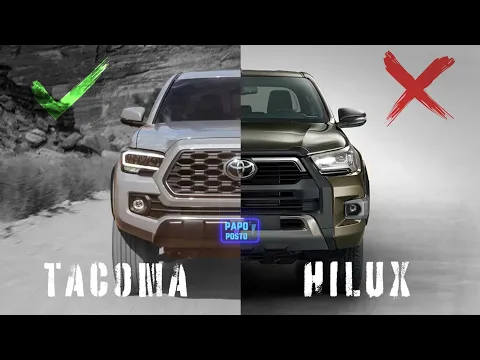
Tacoma: The Alternative Created For The American Market
To circumvent the effect of the Chicken Tax and better align with local consumer preferences, Toyota decided to develop a specific pickup for the United States.
This is how the Toyota Tacoma was born.
The Tacoma shares part of the Hilux’s robustness philosophy but was designed from the ground up with a focus on typical American market use.
The suspension was tuned for greater comfort.
The engines were calibrated to deliver performance and response better suited to local traffic.
The interior received more equipment and refinement.
In this scenario, the medium pickup segment in the U.S. began to be occupied by models like Tacoma, Chevrolet Colorado, Ford Ranger, and Nissan Frontier.
All focusing on comfort, technology, and smoother handling, which distanced the Hilux from this consumer profile.
Diesel Engines And U.S. Environmental Requirements

In addition to the import tariff, changes in U.S. environmental regulations influenced the absence of the Hilux.
Emission standards for light vehicles became stricter starting in the late 1980s, with special attention to diesel engines, widely used in the Hilux around the world.
Adapting global versions of the Hilux to U.S. specific standards would require considerable investments in emissions systems and certifications.
At the same time, Toyota was already directing resources to develop the Tacoma and Tundra within local environmental standards, which reinforced the decision to focus the offer on these lines.
Why Many Believe The Hilux Is “Banned” In The U.S.
Although there is no law that directly cites the Hilux as prohibited, the set of barriers — 25% tariff, strict environmental rules, market preferences, and Toyota’s strategy — creates a scenario in which the pickup becomes practically absent in the country.
In practice, this leads many consumers to associate the model with a “de facto ban”.
While the Tacoma caters to the audience looking for a comfortable mid-size pickup and the Tundra competes within the full-size segment, the Hilux continues its path in remote regions around the world.
And, in light of this contrast, the lingering question remains: if Toyota decided to offer the Hilux adapted to current rules, do you believe it would gain a foothold in the North American pickup market?








Seja o primeiro a reagir!