





 Portuguese
  English
  Spanish
  7 min of reading
  0 comments


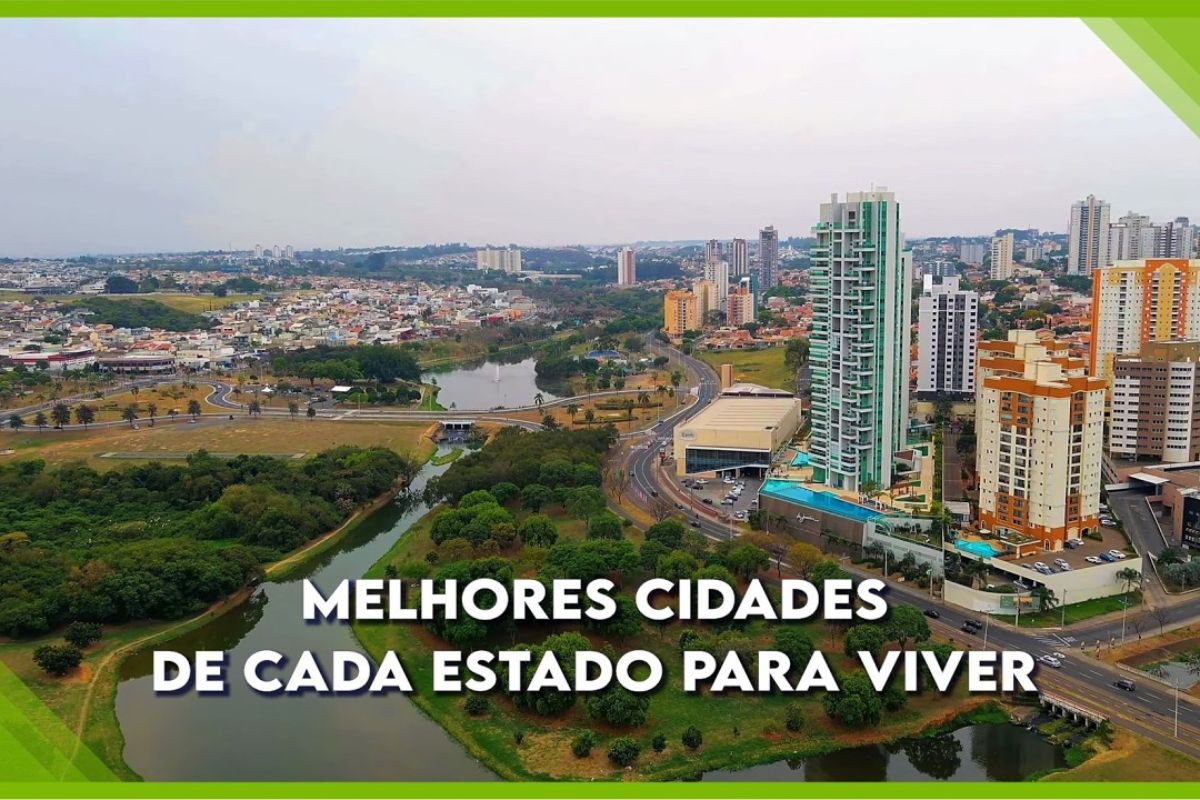
Cities With Less Traffic, More Silence And Milder Climate Are Attracting Retirees Seeking Quality Of Life Without Giving Up Hospitals, Services And Active Social Life
Aging well is no longer just a matter of having a good health plan or a reasonable pension. More and more, the choice of cities to spend old age has become a strategic decision, involving safety, climate, access to doctors, and even the way people greet one another on the street. In the South and Southeast, medium-sized cities are gaining traction as an alternative to the chaos of capitals and the isolation of remote farms and beaches. In these cities, it is possible to have more calm without giving up a nearby hospital, bakery on the corner, and pharmacy just a few minutes from home.
Unlike generic internet lists, those who visit these cities, talk to residents, and observe everyday life notice one simple thing: there is no perfect city, but there are cities that fit better with different life stages. In old age, any fall in the bathroom, strange pain in the chest, or blurred vision can turn into an emergency. From there, living in medium-sized cities with good infrastructure becomes less of a romantic dream and more of a practical decision for survival with comfort.
Capital, Beach Or Farm: Why So Many People Are Reconsidering This Choice
For many years, the idea of an ideal retirement was linked to “escaping the big city”, living at the beach, or in a secluded farm.
-
Italian researchers have detected what appears to be a second Sphinx buried under the sands of Egypt, and satellite scans reveal a gigantic underground megastructure hidden beneath the Giza Plateau for over 3,000 years.

-
There are 4,223 drums and 1,343 metal boxes concreted with 50-centimeter walls that store the radioactive waste from Cesium-137 in the worst radiological accident in Brazil, just 23 kilometers from Goiânia, with environmental monitoring every three months.

-
Giant Roman treasure found at the bottom of Lake Neuchâtel in Switzerland reveals an advanced trade system, circulation of goods, and armed escort in the Roman Empire about two thousand years ago.

-
He buried 1,200 old tires in the walls to build his own self-sufficient house in the mountains with glass bottles, rainwater, and an integrated greenhouse.


However, in practice, the distance between these cities and a good hospital can be costly. A slip in the bathroom, a broken rib, a possible heart attack on a busy summer day, or on a badly paved dirt road completely changes the equation.
Meanwhile, the capitals offer clear advantages: more hospitals, more specialists, more exams, app-based transport, clinics, pharmacies, and support services. Cities like Curitiba, Florianópolis, and Campo Grande showcase this more structured side: good doctors, reference hospitals, parks, senior centers, events, and cultural activities.

However, capitals also carry the problems of large cities: violence, a sense of insecurity while walking the streets, long commutes, high cost of living, and in many cases, the need to live locked in condo for some peace.
In practice, those who want to age well need to balance these factors: it doesn’t help to live in cities with beautiful landscapes if, when times get tough, the hospital is too far away or the ambulance can’t arrive.
Why Medium-Sized Cities Are Winning The Game In Old Age
Medium-sized cities in the South and Southeast offer an interesting middle ground: less stress than capitals, but more structure than isolated rural areas. In general, these cities have:
- A lighter routine, without the rush of heavy traffic
- Less pollution and more contact with nature
- Relatively lower cost of living than large metropolises
- Short distances that allow almost everything to be done in a few minutes
In these cities, it is common to be able to live in central neighborhoods, close to markets, pharmacies, clinics, and parks, which is quite different from living squeezed in peripheral regions of megacities. Instead of losing hours in transport, people gain life time: they walk to the doctor, shop on foot, meet friends in the park, and return home without facing traffic jams.
Another decisive point is the human aspect. Medium-sized cities tend to have more united communities, neighbors who know each other, conversations on the sidewalk, groups of seniors who meet to walk, play cards, participate in classes at community centers.
This sense of belonging is significant for those aging who do not want to spend their days locked inside.
Medium-Sized Cities In Highlight: What They Reveal About The South And The Southeast

When it comes to São Paulo, almost everyone thinks only of the capital. But the interior of São Paulo has cities that constantly appear in quality of life rankings, and Indaiatuba is an example of a medium-sized city that blends infrastructure, tranquility, and good urban appearance.
With about 255,000 inhabitants, it offers that organized countryside vibe but with the influence of Campinas and the capital, enhancing service, hospital, and leisure options.
As more people discover these cities, rental prices rise, but even so, the cost-benefit can be better than living in a large metropolis with much lower quality of life.
In Paraná, Maringá stands out as a symbol of a well-organized medium city, full of trees and with a good sense of safety.
The city has about 410,000 inhabitants, clean streets, many parks, good healthcare infrastructure, and a warmer climate than Curitiba, which appeals to those who easily feel cold.
Residents complain about rental costs in relation to salaries, but compared to the outskirts of big capitals, being middle class in a city like Maringá often means more comfort and well-being in daily life.
In Santa Catarina, it is hard to choose just one medium-sized city because the state has a mosaic of cultural origins: German, Italian, Austrian, and Azorean, each with its customs and architectural styles. Jaraguá do Sul is a good snapshot of this set: neighborhoods with organized houses, aligned rooftops, well-kept gardens, and preserved historic center.
The presence of a large company like WEG helps drive the economy and creates heavy traffic during peak hours, but it also ensures jobs and services. The humid climate, with plenty of rain and overcast weather, is a consideration for those who enjoy intense sun but appeals to those who prefer milder temperatures.
In Rio Grande do Sul, after a certain point, the best quality of life options go through smaller cities, often under 100,000 inhabitants, especially in the Serra Gaúcha.
Canela, Gramado, and Nova Petrópolis are viewed as very safe, clean, and well-maintained locations, featuring impeccable sidewalks, lush nature, and a strong presence of elderly people.
These cities are almost postcard-perfect, enchanting both Brazilians and retired Europeans who chose Brazil to live. The downside is that due to being smaller and touristy, they have high rents and depend on larger cities like Caxias do Sul for more complex healthcare services.
When The City Is Beautiful, But Too Small: The Line Between Dream And Reality
Some small cities in the South, like Treze Tílias and Pomerode, seem straight out of a European scene: immaculate houses, clean streets, a sense of security, and a tranquil life.
For those dreaming of aging in village-like cities, they are highly seductive. However, the lack of well-structured hospitals and specialized services weighs heavily in the balance.
In very small cities, it is common not to have an adequate hospital, forcing residents to travel to another city whenever something more serious arises.
Public transportation is scarce, many services are concentrated among few professionals, and mobility often depends on having a car and the willingness to drive. It is not uncommon to see elderly women walking miles along the roadside or hitchhiking to go to the market or health clinic.
Therefore, even if these small cities are charming, they are better suited for those who still have plenty of energy, good health, and mobility autonomy.
In practice, those who are getting older need to assess if they can maintain this pace for many years or if it makes more sense to invest in more structured medium-sized cities.
Climate, Safety, Mobility: The Checklist For Those Who Want To Age In The Right Cities
When choosing cities to age in the South and Southeast, some points repeatedly arise:
- Climate: those who feel very cold may be bothered by freezing cities and houses without thermal preparation, spending entire months bundled up indoors
- Safety: a city being beautiful is not helpful if the sense of danger prevents walking down the street or wearing loose hair without fear
- Mobility: well-maintained sidewalks, short distances, and minimally functional transportation are essential to avoid falls, trips, and isolation
- Proximity to healthcare facilities: even in beautiful cities, a distance of 30 to 50 km to a larger hospital can complicate an emergency
In the end, medium-sized cities emerge as a possible balance between quality of life and practical safety.
They offer activities to leave the house, opportunities for socialization, contact with nature, and more reasonable access to hospitals and specialists, without requiring the physical resilience that life in isolated farms or very small villages demands.
There Is No Perfect City: There Is The Right City For Your Life Stage
After visiting different cities, talking to residents, and observing how the elderly live in each context, the conclusion is straightforward: different cities fit better in different life stages, income levels, and health. For some, a well-chosen capital may be the best solution.
For others, an organized and safe medium-sized city becomes the ideal setting. In many cases, what makes the most difference is not the name of the city, but the combination of neighborhood, distance to the hospital, sidewalk quality, cost of living, and human warmth.
More than pursuing the “perfect place”, it’s worth creating a personal checklist: how much cold can you tolerate, how willing are you to drive, how important is it to do everything on foot, how much rent can you afford, and how much value do you place on neighbors, parks, markets, conversation queues, and the sense of community.
In old age, making the right city choices can be as important as choosing the right doctor or health plan.
And you, looking at these cities in the South and Southeast, what kind of city do you imagine growing old in, and why?










-

-

-

5 pessoas reagiram a isso.