





 Portuguese
  English
  Spanish
  5 min of reading
  0 comments


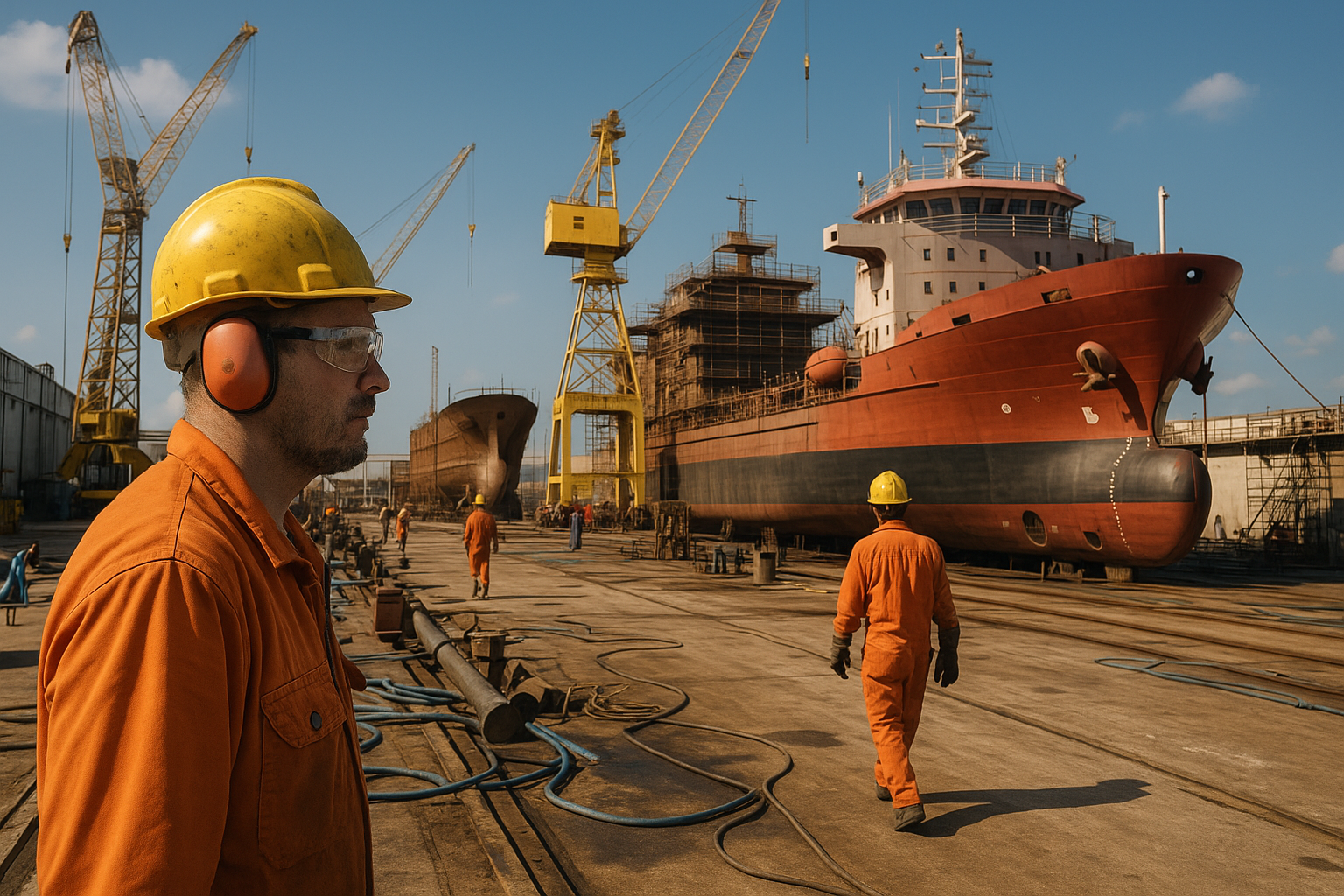
Understand Why Employment in Shipyards Continues to Be One of the Bases of the Economy, Offering Opportunities, Regional Development, and Technological Innovation in Brazil and Around the World.
Shipyards host intense industrial activity; thus, ships of all sizes are born there, from small vessels to giant cargo ships.
Furthermore, in addition to metal structures and molded steel, shipyards represent opportunities, stories of development, and jobs that drive the economy and support thousands of families.
Employment in shipyards is essential because it carries a historical, social, and economic weight that still directly influences the present and the future.
-
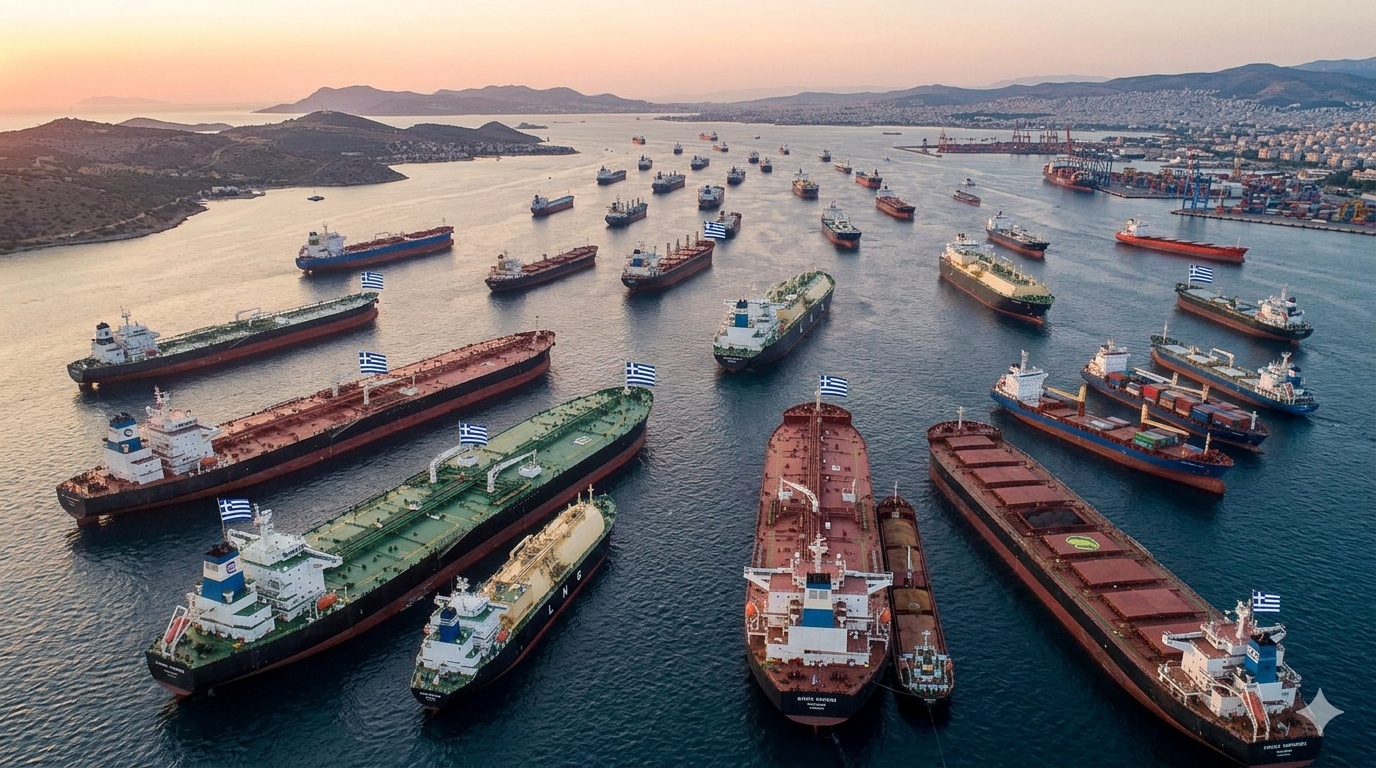
Neither the USA nor China: a small European nation has become one of the largest maritime powers on the planet, controlling one of the largest merchant fleets in the world with thousands of ships and dominating the global transportation of oil and strategic cargo.
-
Scotland and the United Kingdom have created a new anchoring system that floats in the water without touching the seabed, after discovering that the current from a conventional anchor destroys up to 50 m² of seagrass meadow per event and that ship-damaged reefs showed no signs of recovery even ten years later.

-
Weighing 175,500 Tons, Measuring 345 Meters Long, and With Capacity for Over 4,300 Passengers, the Sun Princess Becomes the Largest Ship Ever Built by Princess Cruises and Attracts Global Attention for Its Huge Glass Dome Inspired by Santorini’s Architecture Installed on Top of the Vessel

-
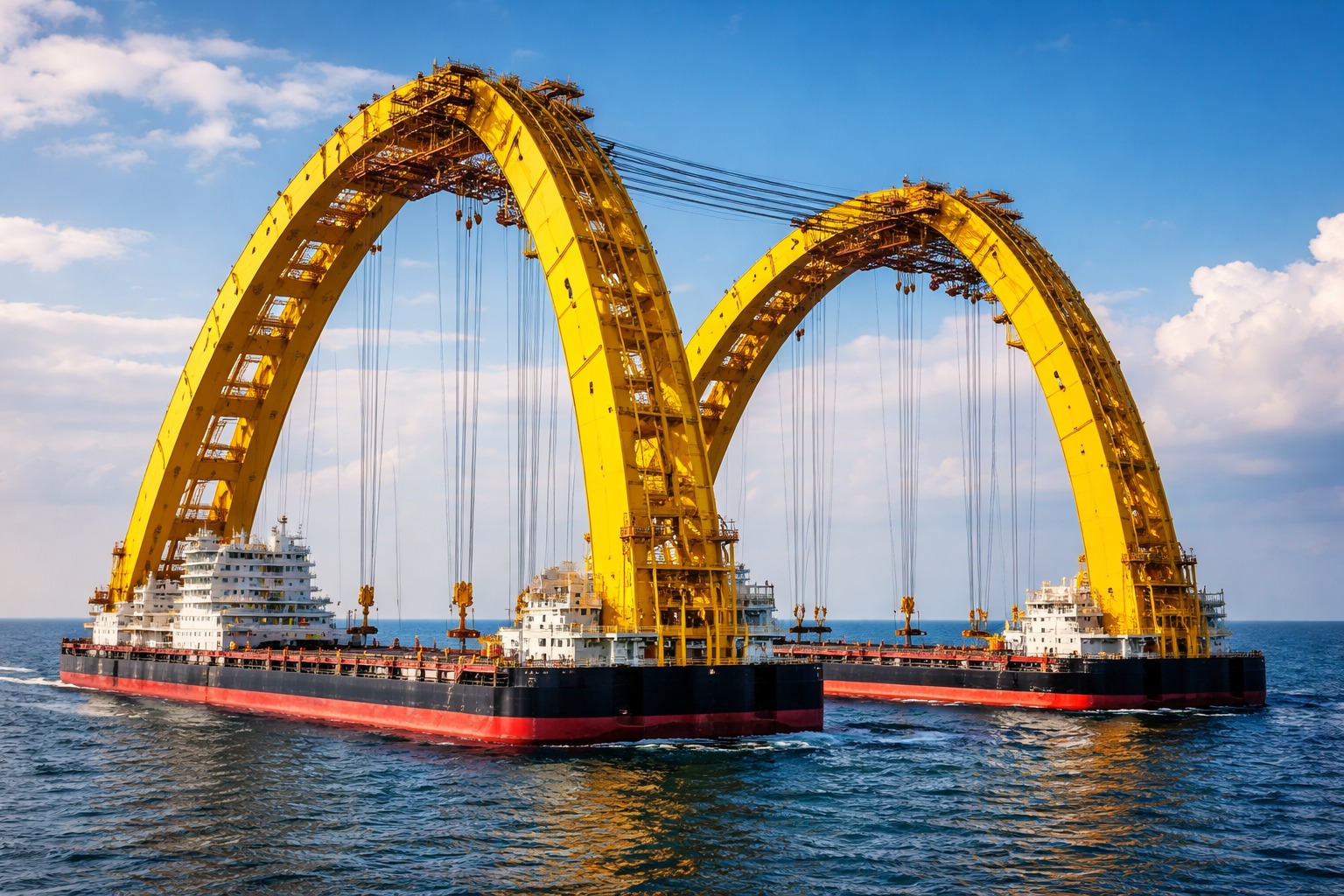
TX-10, The Colossus of The Sea: Largest Lifter Ship in The U.S., With Two Giant Barges, 73-Meter Tall Structure, and Strength to Raise 7,500 Tons of Sunken Oil Rigs

The shipbuilding industry connects with the growth of strategic sectors such as foreign trade, oil and gas production, in addition to tourism with cruises.
This link further reinforces the importance of keeping shipyards active and competitive.
When a shipyard thrives, it strengthens an entire ecosystem around it, from suppliers to small local businesses.
According to data released by the Brazilian Ministry of Economy in its 2023 report, the shipbuilding industry accounts for about 1.5% of Brazil’s Gross Domestic Product (GDP), demonstrating its economic relevance and potential for job creation.
Historical Origins of Shipyards and the Evolution of Naval Professions
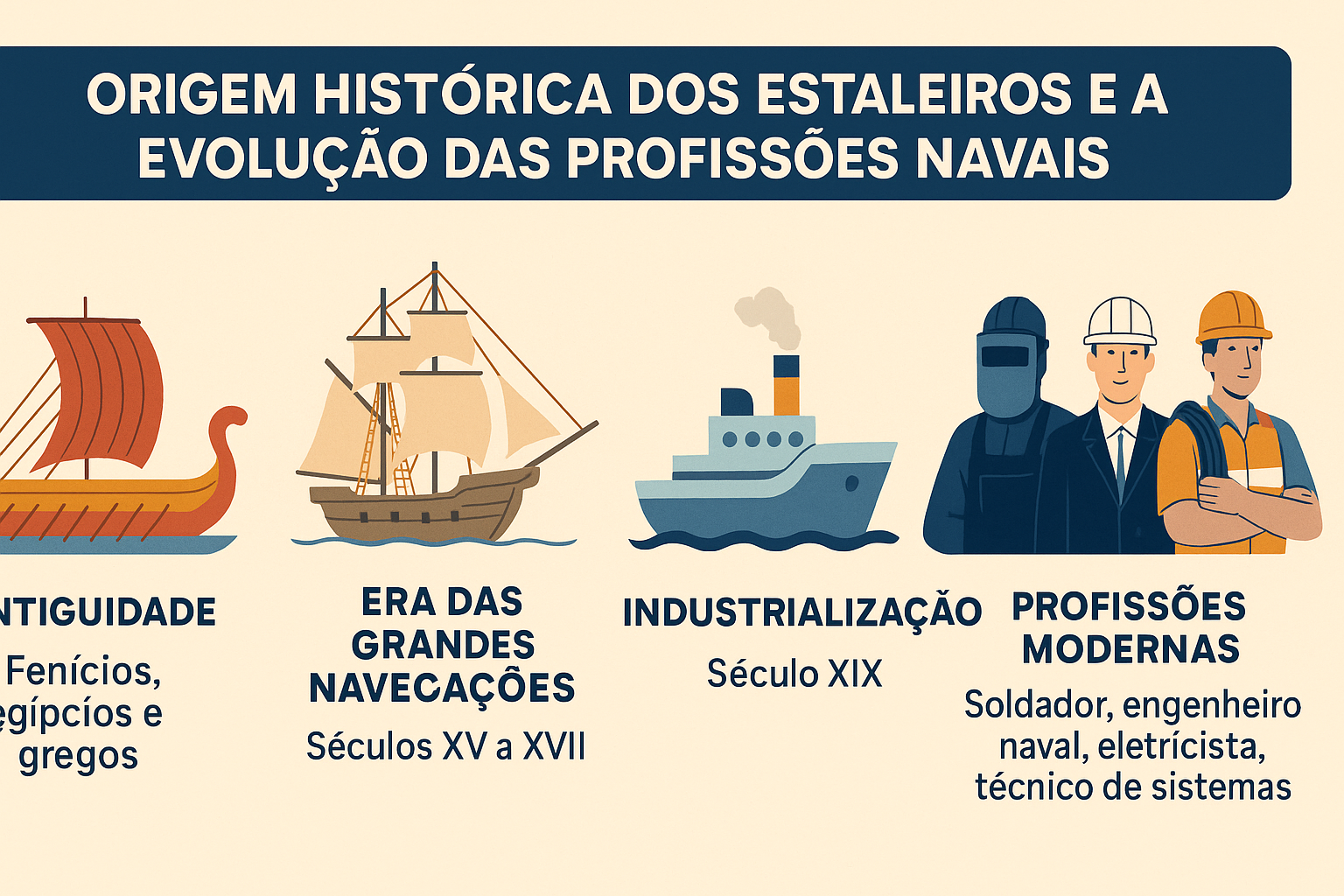
Since Antiquity, peoples such as the Phoenicians, Egyptians, and Greeks have already built vessels.
As noted by naval historian John F. Guilmartin in his book “Naval Warfare: A Global History,” these early techniques were fundamental to maritime expansion.
During the Age of Exploration, between the 15th and 17th centuries, shipyards became strategic centers for European nations.
Portugal and Spain, according to the National Institute of Educational Studies and Research Anísio Teixeira (INEP), expanded their maritime domains thanks to the efficiency of shipyards and the efforts of carpenters, blacksmiths, and sailors.
The industrialization of the 19th century, as highlighted by INEP in its study on the Industrial Revolution and the shipbuilding industry, intensified the construction of steel vessels and the mechanization of processes.
Steel replaced wood, and steam engines were replaced by modern combustion systems, transforming the profile of shipyards and generating new professions.
With modernization, careers such as welder, naval engineer, electrician, and systems technician emerged, according to historical data compiled by the Institute of Technological Research (IPT) in its 2022 report.
Each technological advancement expanded possibilities within shipyards. Currently, they open space for environmental engineers, safety technicians, production analysts, and managers, making the sector plural and promising.
Economic and Social Impact of Shipyards in Port Regions
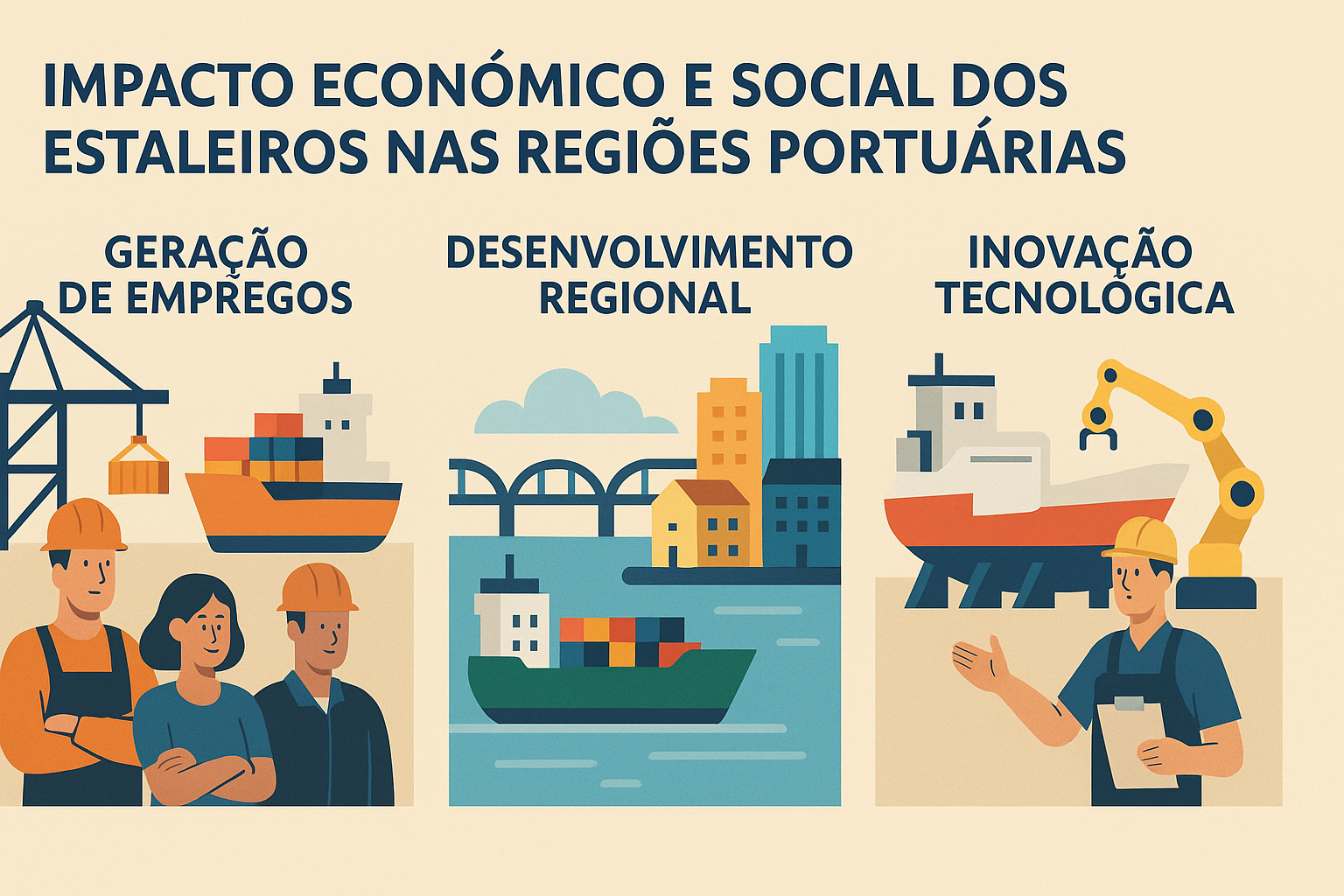
Shipyards not only build ships — they generate direct and indirect jobs, strengthen foreign trade, boost industries such as metallurgy, and promote technological innovation.
Moreover, they favor regional development. Cities like Itajaí (SC), Rio Grande (RS), Niterói (RJ), and Angra dos Reis (RJ) have grown around the shipbuilding industry and depend on it for the local economy.
According to the Ministry of Infrastructure, in a report published in 2024, Brazilian shipyards generate around 50,000 direct jobs and more than 150,000 indirect jobs, counting suppliers and service providers.
The operation of shipyards moves an entire production chain. Therefore, logistics, security, food, and transport companies actively participate in the process.
Thus, employment in shipyards activates a network that supports various sectors of society.
Additionally, shipyards attract investments in infrastructure. The public sector and private sector invest in ports, access roads, technical centers, and professional training.
This cycle strengthens the local economy and offers greater stability to the population.
The Human Value and Diversity of Employment in Shipyards

Working in a shipyard requires preparation, dedication, and collaboration.
The functions range from maintenance and cleaning to the assembly of complex ship systems.
Many professionals start as assistants and grow as they gain experience and technical knowledge. Furthermore, companies often offer internal training, creating real opportunities for advancement.
These jobs represent more than income: they ensure dignity.
The shipbuilding industry welcomes workers who often have not accessed higher education, but find an honest and stable way to live.
In many families, several generations have passed through the shipyards, transmitting practical knowledge from father to son.
This environment teaches discipline, commitment, and respect for the collective. Teams are diverse and share experiences that strengthen the sense of community.
According to the International Labour Organization (ILO), in a 2022 report, sectors such as shipbuilding have great potential to promote social inclusion and the development of technical skills, especially in less advantaged regions.
Shipyards in the Current Global Scenario and Importance to Brazil
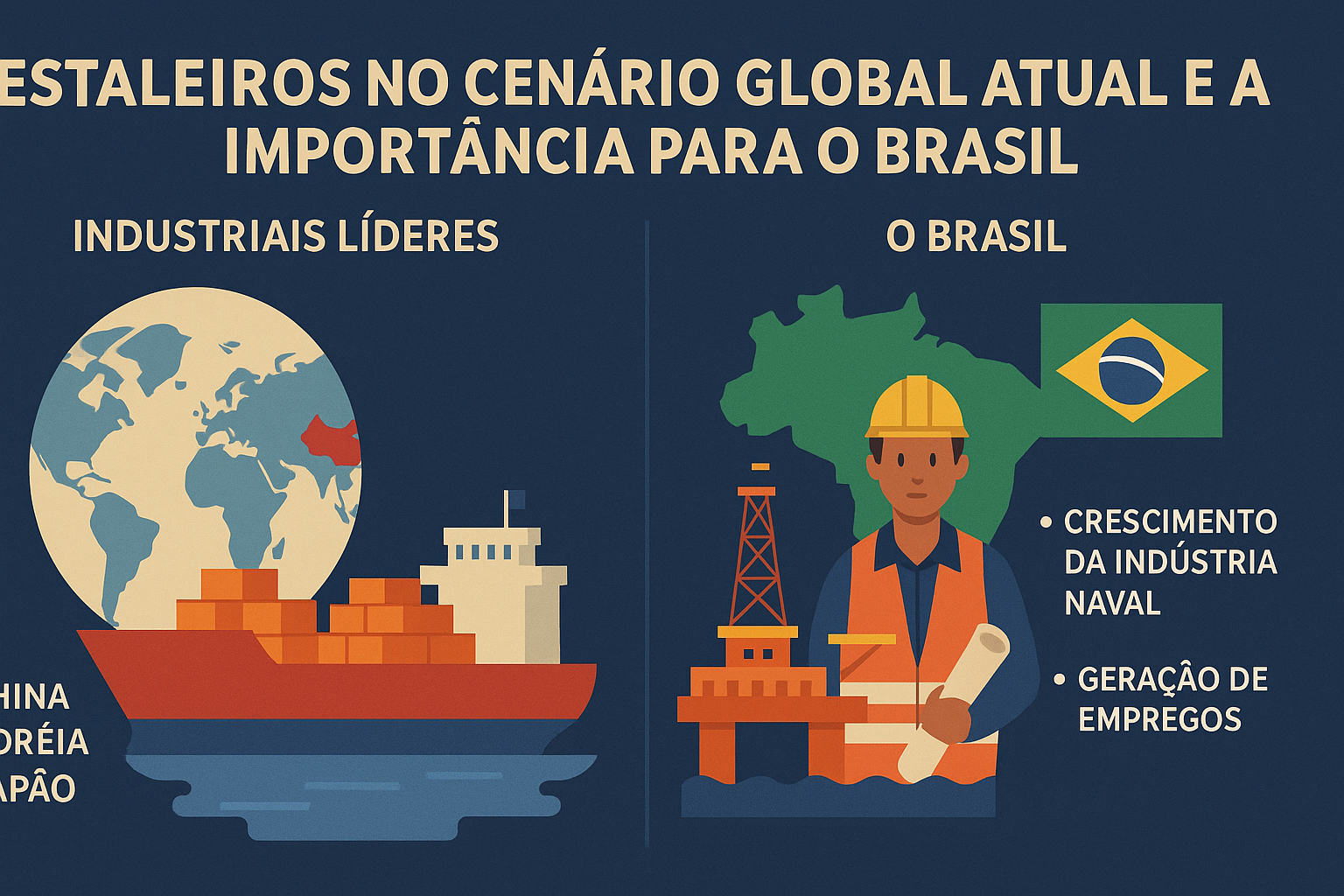
Despite technological advancements, shipbuilding still demands skilled labor.
The expansion of maritime trade, construction of oil platforms, and the demand for more sustainable vessels keep shipyards in constant activity.
Although China, South Korea, and Japan lead the global sector, Brazil shows potential to stand out.
Even with ups and downs, Brazil maintains its technical and geographic capability to grow in the shipbuilding industry.
When the government creates incentives, shipyards reactivate their operations, generating thousands of jobs.
According to the Brazilian Association of Naval Construction and Offshore (ABCON), in its 2023 report, the Brazilian naval sector grew 12% in the number of jobs between 2021 and 2023, driven by offshore energy projects and commercial fleet renewal.
Thus, employment in shipyards proves to be a powerful tool for public policies and economic development.
Lines of credit, tax incentives, and partnerships with technical schools can secure the future of the sector.
In this way, authorities that prioritize this investment promote inclusion, income generation, and long-term industrial strengthening.
Sustainability, Innovation, and Inclusion in the New Demands of the Naval Sector
Shipbuilding faces new challenges, especially environmental ones.
Therefore, shipyards incorporate more sustainable solutions, such as new materials and electric or natural gas propulsion systems.
These transformations generate jobs and require ongoing training.
Moreover, the sector stimulates the presence of women in operations.
More and more women are occupying administrative and operational positions.
Thus, employment in shipyards becomes more accessible and aligned with demands for diversity and equality.
Internship programs and social actions bring shipyards closer to communities, forming young talents and creating opportunities for first-time jobs.
Therefore, shipbuilding transforms lives and communities.
According to the Brazilian Institute of Geography and Statistics (IBGE), in 2024 data, the female participation in the shipbuilding industry increased 18% in the last five years, reflecting a significant change in the labor profile.
The Importance of Employment in Shipyards
The future of employment in shipyards depends on strategic planning, technical education, incentives, and innovation.
In a world facing economic crises, climate change, and new consumer demands, shipyards offer quality jobs, promote technology, and maintain maritime sovereignty.
Therefore, valuing this profession is essential.
Investing in shipyards means investing in people, knowledge, and sustainable development.
It’s not just about manufacturing ships, but about building possible futures.
Employment in shipyards goes beyond a job opportunity.
It carries history, transforms the economy, and inspires hope.
From past to present, shipyards have always shaped not only vessels but the destiny of countless families.
Keeping this sector alive is essential to ensure a strong, innovative, and inclusive future for Brazil.











Seja o primeiro a reagir!