





 Portuguese
  English
  Spanish
  5 min of reading
  0 comments


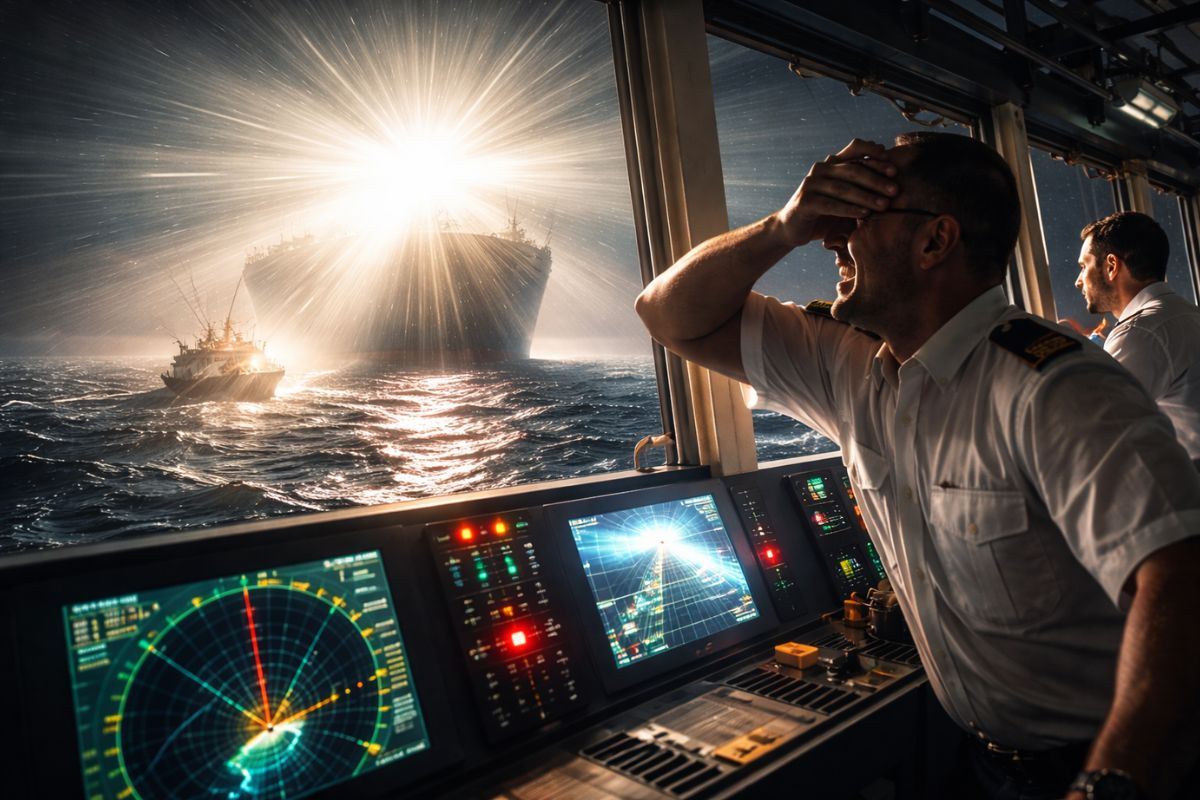
Instead Of Lighting The Horizon, Ships Protect Night Vision, Avoid Glare, And Follow A Language Of Lights And Systems Like Radar And AIS To Reduce Real Risk
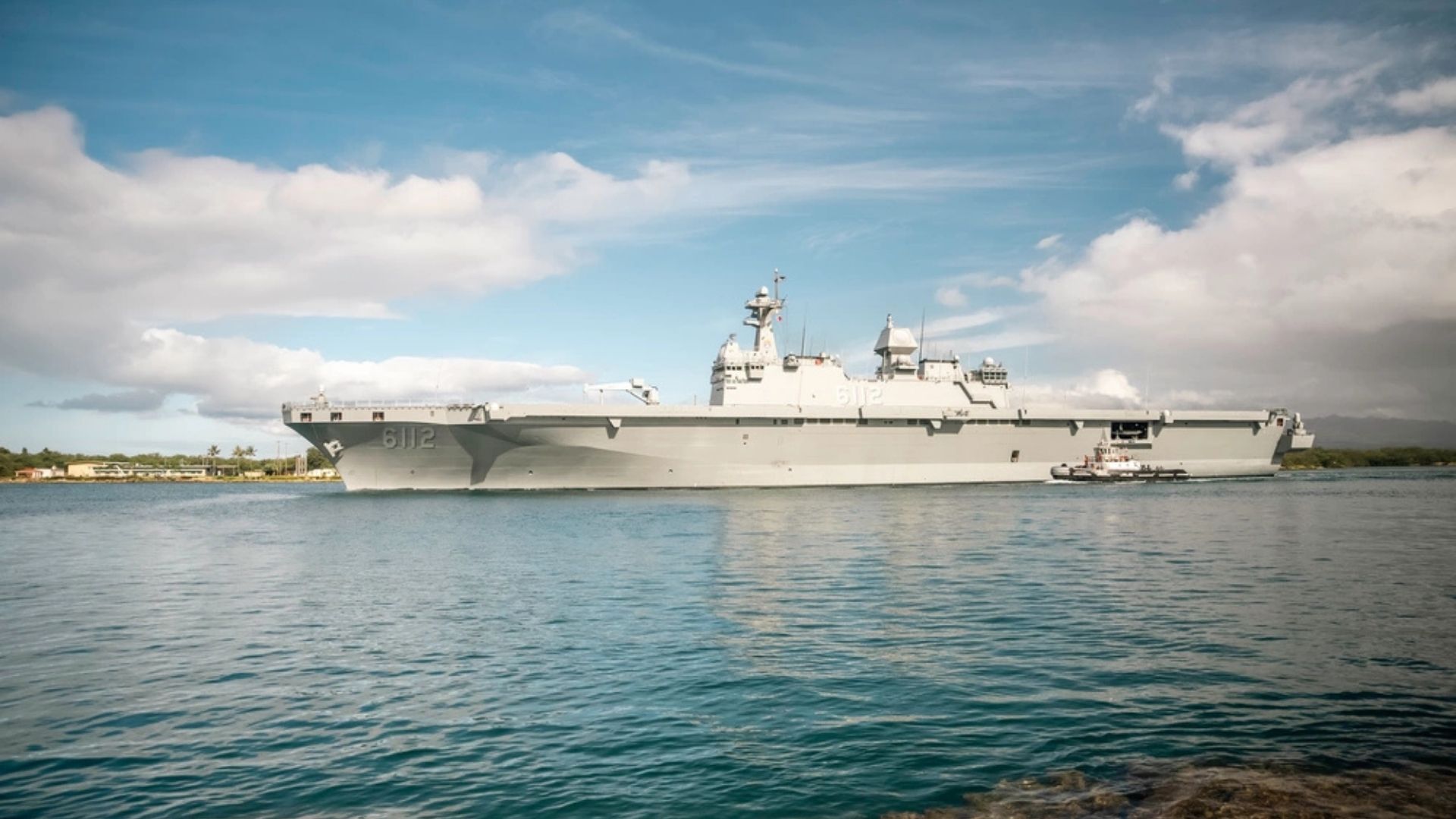
At night, at sea, ships move forward without shining a white beam ahead, and this seems strange to those who think with road logic. However, at sea, this logic fails. A powerful spotlight on ships does not bring clarity: it creates glare, masks information, and can turn a normal situation into operational doubt.
The central point is that ships do not navigate by “lighting the way.” They navigate by interpreting signals, rules, and data. What matters is not seeing the ocean as asphalt, but rather maintaining a clear reading of navigation lights, avoiding the white wall of fog, and using systems that anticipate risks long before any light can help.
The Mistake Of Imagining The Sea As Empty And The Night As Silence
The first misconception is thinking that the night ocean is a space without movement. Major sea routes concentrate thousands of ships every day, even when you can’t see anything from the coast. It’s traffic, not solitude.
-
Spain surprises the world by erecting 62 artificial dunes, mixing sand with natural remains of posidonia, and causing the structure to lose only 1.4% of its volume in 1 year.

-
With 16 Bulava missiles, improvements in acoustic stealth, and a design focused on silent patrols, Russia’s nuclear submarine was born to ensure Moscow’s invisible retaliation and has become one of the pillars of its maritime strength.

-
‘Populous’ city in Rio among the worst in Brazil in national ranking and exposes silent development crisis.

-
Couple buys house in the South Zone of São Paulo, opens a hidden door in the garage, and finds a secret wine cellar with dozens of old wines forgotten since the 1970s.


Now imagine this traffic with powerful headlights. A white beam from one side, another beam crossing from another, reflections in the humid air, and a horizon full of competing light sources. The result would not be “seeing better.” It would be losing the reading of references and creating visual noise where there should be a pattern.
Glare On Ships Is Worse Than On Cars Because Maneuvering Is Not Instantaneous
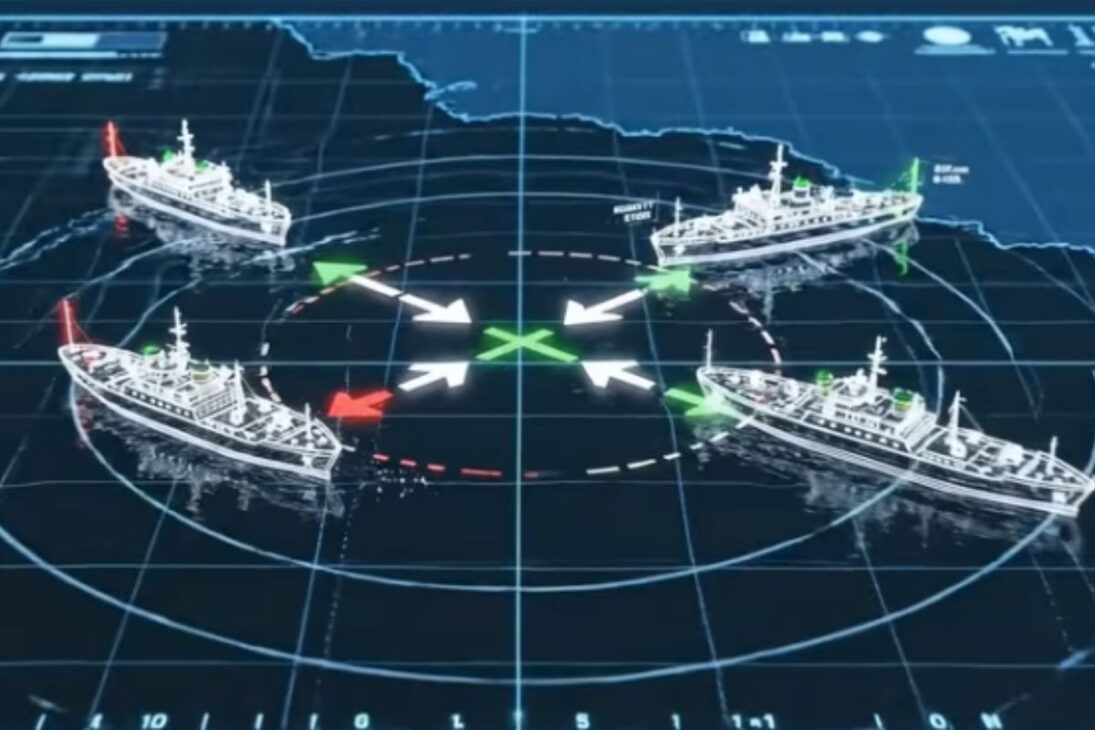
At sea, a turn is anticipated minutes in advance. A ship does not brake like a car and does not swerve sharply. If you lose visual information for seconds, those seconds matter much more because correction is not immediate.
When a strong spotlight enters the scene, it dominates everything. Instead of helping, it causes the officer on the other ship to lose reference of the navigation lights and relative course. And at sea, doubt is the first step toward error. That’s why ships avoid shining forward: it’s not a lack of resources, it’s a safety choice.
Fog, Mist, And The White Wall That Light Creates Over The Ocean
Even in good weather, humidity is constant at sea. Mist appears, and fog can form quickly. When you project a powerful beam, the light reflects off the microdroplets and returns to your eyes. The effect is the same as driving with high beams in fog, only amplified by an open environment.
Light does not “advance cleanly.” It creates a white wall that obscures information. In other words, shining in front of ships does not reveal the way; it hinders vision. That’s why sailors protect their night vision and avoid intense frontal light.
The Language That Really Matters: Navigation Lights On Ships
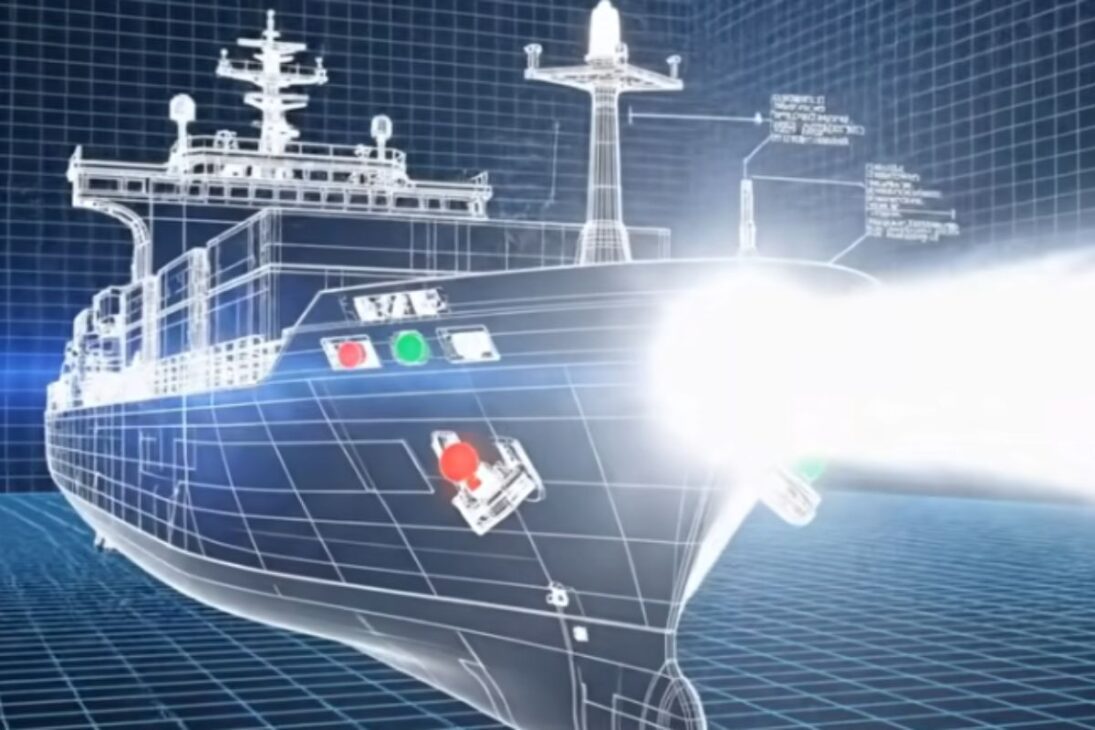
Here’s the point that changes the understanding: navigation lights do not exist to illuminate, but to communicate. Red to port, green to starboard, white on top and at the stern. This combination is an international visual language.
With these lights, an officer interprets direction, relative heading, and type of vessel without radio and without confusion. A powerful front light would break this language, because a white light pointed ahead does not add useful information and can obscure the lights that matter. That’s why international regulations are strict and require ships to prioritize communication, not illumination.
How Ships Really Navigate At Night Without Relying On Direct Vision
At the bridge, vision is just one piece. The first system that changes the game is radar. Radar does not illuminate; it measures energy returns and describes distances, angles, and relative movements. Where the eye sees darkness, radar sees positions and trajectories.
The second layer is AIS, the Automatic Identification System. In it, ships continuously transmit their position, heading, and speed.
On the screen, targets appear with names, types, and predicted trajectories. You know who is who and if there’s dangerous convergence even before seeing the vessel. In this scenario, a spotlight seems irrelevant, because the real risk is anticipated miles away.
GPS, Gyroscope, And Routes: Ships Follow Calculation, Not “Asphalt”

Ships have never depended on “seeing the ground” to follow a path. For centuries, they navigated with stable references like sky, sun, latitude, and longitude. Today, GPS automates this, but the logic remains the same: position comes from calculation, not direct vision.
And when GPS fails, the directional gyroscope takes over. It points to true north using the Earth’s rotation and feeds into the autopilot, electronic charts, and ship control. The ship follows a mathematical line, not an illuminated line.
Buoys And Coastal Lighthouses Do Not Illuminate, They Communicate
When a ship enters port at night, it does not “search for the channel with a lighthouse.” It follows a virtual corridor dredged and marked by aids to navigation. Buoys have color, flashing rhythm, and a unique light signature. The ship does not illuminate them; it identifies them.
The same applies to coastal lighthouses. They are not meant to illuminate the sea but to be recognized as references. Ships do not create light on the horizon; they decode lights that already carry information.
Work Light Exists, But Is Not Navigation Light
There are moments when additional lights appear, but they serve another function. They are work lights, used to illuminate specific areas, such as the deck, quarters, or a specific operation. They do not aim at the horizon and do not try to “clear a path.”
This preserves the visual adaptation of the officers, who use dim lighting on the bridge, often red, so as not to destroy night vision. A strong spotlight would have the opposite effect: pupils constrict, peripheral vision drops, and the brain gets stuck in a tunnel of light.
Why The Absence Of A Headlight On Ships Is A Design Decision
In the end, the absence of a front light on ships is a consequence of one priority: reducing confusion. The maritime system is designed so that any sailor interprets the same image in the same way, anywhere in the world.
A front light would increase visual noise, obscure vital signals, and elevate risk. At sea, safety is not “more light.” It is precise communication, anticipation, and rules that avoid ambiguity.
Had you ever thought that for ships, illuminating more could mean seeing less and increasing risk?






-

2 pessoas reagiram a isso.