





 Portuguese
  English
  Spanish
  3 min of reading
  0 comments


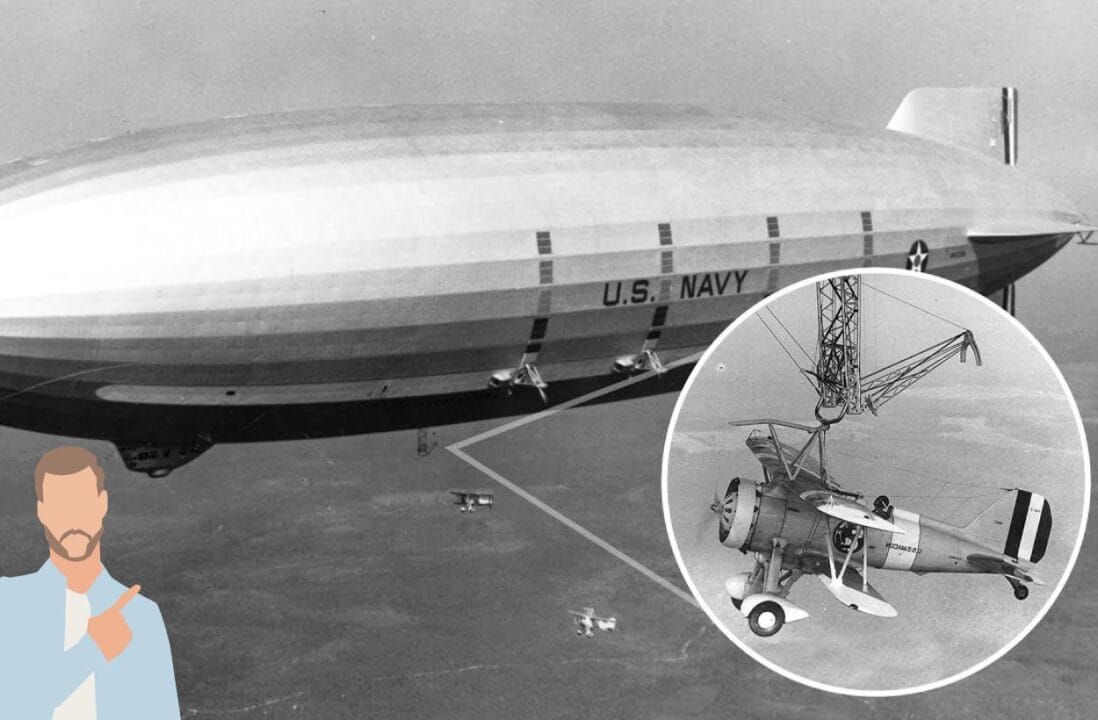
The Visionary Conception of Airships as Flying Aircraft Carriers in the 1920s, Through Ambitious Projects of the Cold War Era, to the Practical Reality of Drone Air Transportation in the 21st Century.
The idea of flying aircraft carriers, although it sounds like fiction, has historical and practical roots. Originally conceived as airships in the 1920s, these “aircraft carriers” transported smaller airplanes. With technological advancements, more ambitious proposals emerged, such as Lockheed’s CL-1201 project, aiming to create a giant airplane capable of transporting fighter jets.
However, the impracticality and high costs of these concepts limited their execution to the project phase. Today, the idea has evolved to drone transportation, as demonstrated by the C-130 Hercules, representing a more viable and contemporary application of the flying aircraft carrier concept.
Technological Evolution and Paradigm Shifts with Flying Aircraft Carriers


From the airships of the 1920s to Cold War projects, such as the modified B-29 bomber for transporting fighter jets, the notion of flying aircraft carriers has been refined. Technological advancements and changes in aerial combat strategies, especially with the development of aerial refueling, made flying aircraft carriers less necessary. Currently, drone technology and the transport capacity of larger aircraft, like the C-130, demonstrate the continuous evolution and adaptation of the concept.
-
Volcanic lava transforms into threads as fine as human hair that travel over 30 kilometers by wind and fall like cutting rain on roofs and backyards in Hawaii and Iceland.

-
NASA issues a warning for the feared Godzilla El Niño that could change the planet’s climate in 2026 with extreme warming of the Pacific capable of causing devastating droughts in some regions and historic floods in others simultaneously.

-
Archaeologists discover a 100-meter ship graveyard in a submerged Greek city, and what has appeared on the seabed of Libya could change what was known about this ancient port.

-
You buy the refrigerator and still have to see ads: Samsung starts displaying advertising on appliances and generates negative reactions among consumers.


Fiction Versus Reality
Although the concept of flying aircraft carriers capable of transporting crewed fighter jets has proven impractical and economically unfeasible, the idea persists in popular culture, through films like the Avengers and comics. The real modern application of this concept manifests in the integration of drones into military operations, indicating a transformation of the old dream into a technology-focused practice centered on efficiency and operational viability.
The Avengers’ Flying Aircraft Carrier
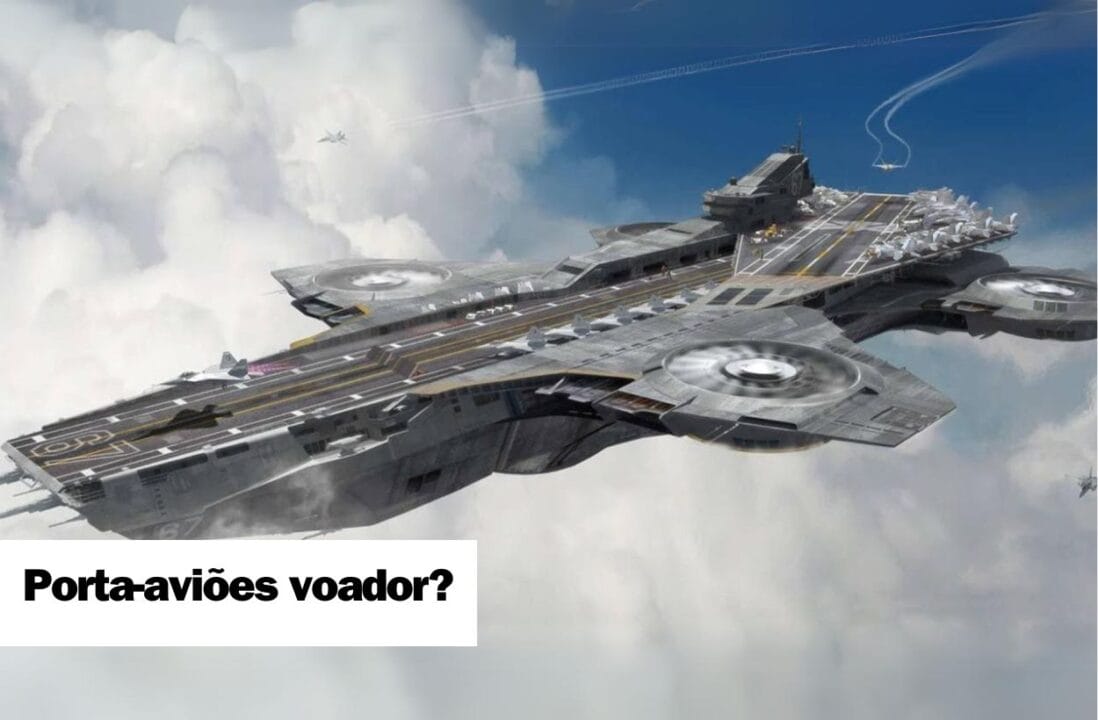
In popular culture, the flying aircraft carrier reaches the pinnacle of its representation with the S.H.I.E.L.D. Helicarrier in the Marvel Universe. This gigantic aircraft, which combines the functionalities of an aircraft carrier and a mobile base, symbolizes the intersection of imagination and technological innovation. Equipped with massive turbines and cloaking technology, the Helicarrier represents a futuristic ideal of integrated aerial and maritime military operations.
The Helicarrier not only serves as a strategic hub for the Avengers but also captures the public’s imagination, reflecting human fascination with revolutionary technologies. Its presence in the media highlights the influence of science fiction on public perception and the conceptual development of advanced vehicles, merging the real with the imaginary to inspire future innovations.
Although the Helicarrier is a product of fiction, its detailed design incites discussions about the future potential of aerospace technology. The idea of a mobile airborne base, invisible and capable of transporting multiple aircraft and equipment, while distant from current reality, stimulates innovative thinking and the development of new technological solutions in aviation and defense. It would be amazing to see one of these flying around, wouldn’t it?









Seja o primeiro a reagir!