





 Portuguese
  English
  Spanish
  4 min of reading
  7 comments


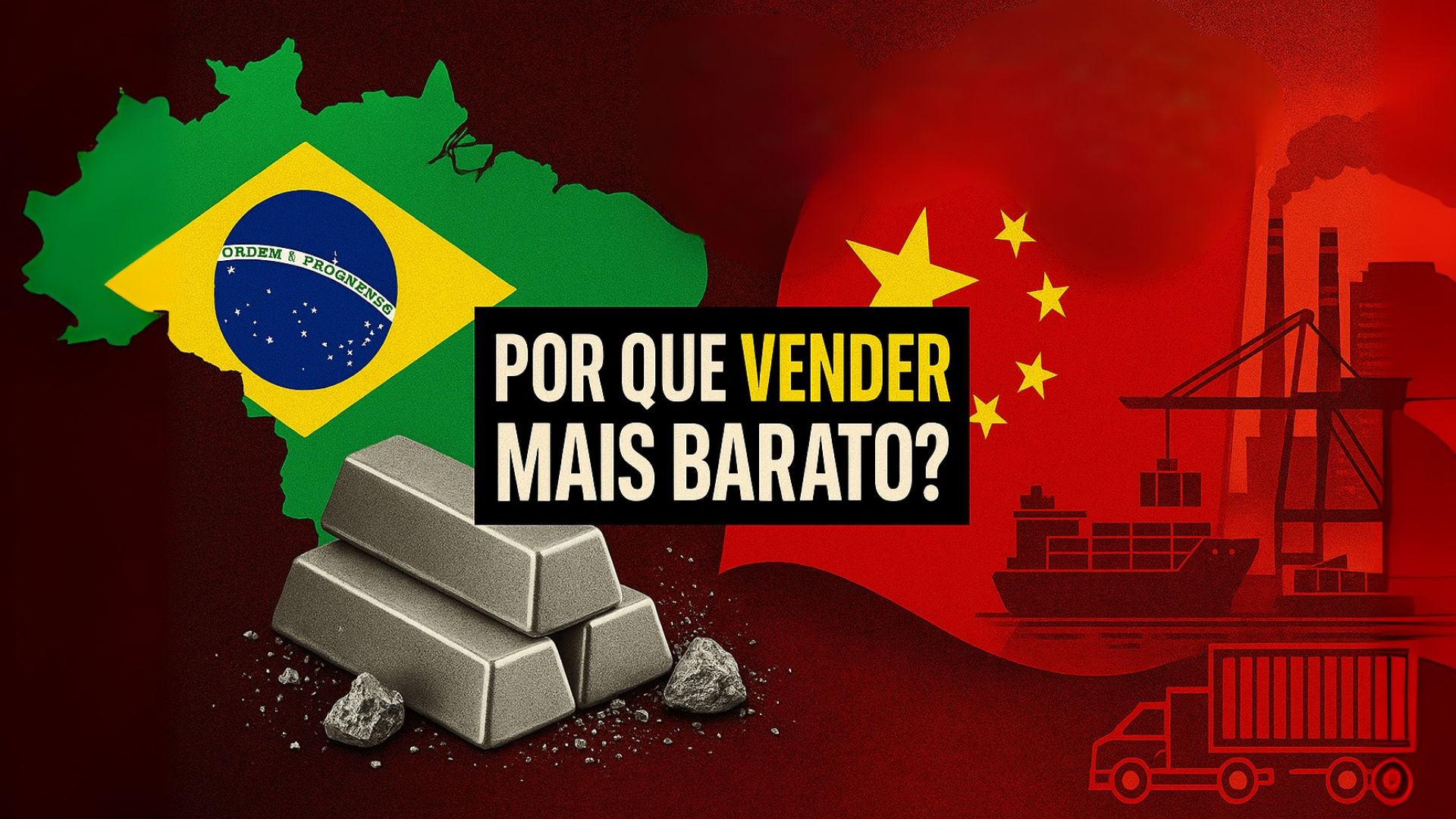


Anglo American Sold Nickel Mines in Brazil to MMG, of China Minmetals, for US$ 500 Million. The Operation Involved Strategic Assets, Raised Sovereignty Questions and International Repercussions, Even in the Face of a Higher Offer Made by Another Company.
The sale of Anglo American’s nickel mines in Brazil to MMG, a subsidiary of the Chinese state-owned China Minmetals, for US$ 500 million, raised questions.
According to the portal Poder360, in a report published this Monday (25), controversy arose because Corex Holding, linked to the Turkish group Yildirim and based in the Netherlands, claims to have made an offer of US$ 900 million.
The deal includes the complexes of Barro Alto and Codemin (Niquelândia), in Goiás, as well as exploration projects in Pará and Mato Grosso.
-
The government requests the Federal Revenue Service for a new system to automate the income tax declaration, reducing errors, time, and bureaucracy for millions of Brazilians.

-
Pix in installments, international Pix, and contactless payment without internet: the Central Bank revealed the new features coming to the tool that is already used by almost every adult in Brazil.

-
Mercado Livre has just started selling medications with delivery in up to three hours to your door, and this move could completely change the way Brazilians buy medicines on a daily basis.

-
In Dubai, rising tensions from the war in the Middle East are causing super-rich individuals to leave the Gulf and direct their fortunes to a new financial refuge in Asia.


With the operation, MMG now controls approximately 60% of national nickel production, further expanding China’s presence in a strategic input for electric vehicle batteries, renewable energy, and stainless steel.
Reasons for Sale at Lower Value
According to specialists consulted by the sector and quoted by Poder360, large transactions of this magnitude are not based solely on the offered value.
Other factors weigh in the decision, such as the probability of regulatory approval, the source of funds, the ability to maintain operations without financial risk, and the speed to complete the deal.
MMG, a subsidiary of a large Chinese state conglomerate, presented greater execution security and a consolidated history of international operations.
On the other hand, Corex, despite the higher proposal, could face regulatory hurdles and difficulties in financial verification, which would reduce its chances of effectively acquiring the purchase.
Moreover, Anglo American has implemented a global restructuring strategy, prioritizing copper, iron ore, and agricultural nutrients.
For the company, quickly selling off non-priority assets may have been more advantageous than waiting for a higher, yet riskier, offer.
Incra Points Out Sovereignty Risk
In Brazil, the National Institute of Colonization and Agrarian Reform (Incra) was called to investigate whether the sale complies with the rules that limit the purchase of rural land by foreigners.
As highlighted by Poder360, the agency warned that the mining areas are in sensitive regions and that the transaction could compromise sovereignty by allowing the exploration of strategic resources without ensuring the complete development of the production chain within the country.
In an official letter, Incra stated that it is contradictory for Brazil to possess an abundance of mineral resources while simultaneously allowing systematic exploitation by foreign companies without fostering the strengthening of the national sector.
Corex Challenge
Corex is questioning the deal at Cade (Administrative Council for Economic Defense) and also at the European Commission, arguing a risk of market concentration.
In its representation, the company stated that the transaction would allow MMG to gain total control over Anglo American’s nickel operations in Brazil, further consolidating China’s position.
Documents presented by the holding estimate that companies linked to the Chinese government could hold up to 60% of global nickel supply after the operation.
For Corex, this brings risks of price increases, instability in delivery times, and loss of predictability for Brazilian buyers.
In Europe, the company emphasized that the sale requires rigorous assessment, as nickel has been classified as a strategic input by the Critical Raw Materials Act of the European Union.
International Reactions
The case also reverberated in the United States.
The American Iron and Steel Institute (AISI) urged the U.S. government to pressure Brazil to reconsider the agreement, arguing that it increases global dependence on China in a sector deemed critical.
The concern is that Chinese dominance in nickel supply could impact essential industrial chains in the West.
What the Companies Say
Anglo American stated that the decision aligns with its strategy to focus on priority sectors and emphasized that the sale was not motivated solely by the value but by its global repositioning.
MMG, in turn, stated that it will comply with all regulatory requirements in Brazil and characterized the transaction as positive for employees, local communities, and shareholders.
This operation demonstrates, according to experts, that in strategic negotiations, factors such as regulatory security, financial reliability, and geopolitical scenario may weigh more than cash offers.
Nevertheless, the transaction reinforces China’s presence in the sector and raises the question: how can Brazil attract investments without relinquishing control over resources deemed essential?








O Brasil colônia nunca deixou de existir, só que agora não é mais apenas dos EUA, é do mundo.
Já fazem mais de 500 anos que sempre foi assim, o Brasil é uma mãe!
Não entendi a chamada da matéria ” por que o Brasil vendeu minas estratégicas para a China ” , pelo que vi na própria matéria, o Brasil não vendeu nada, quem vendeu foi a empresa multinacional Anglo American que não é brasileira, o Brasil já tinha vendido faz tempo.
A manchete tem o claro objetivo de direcionar a atenção para um fictício raciocínio de uma possível dependência econômica da China…, alinhada aos idênticos interesses dos EUA.