





 Portuguese
  English
  Spanish
  3 min of reading
  0 comments



Understand Why Japan Sends Organizational Experts Through JICA, Promoting Development, Human Security and Sharing Its Unique Experience With The World.
See the reasons why Japan sends experts in organization globally. We will analyze JICA’s mission, its methodology, the sectors of activity and the strategic dimensions of this cooperation, all based on detailed information about the agency.
The Japan International Cooperation Agency (JICA) is the main executor of the country’s Official Development Assistance (ODA). One of its central tools is the sending of experts, including those in organization, to support socioeconomic development in developing regions. This practice reflects a deep philosophy of cooperation.
JICA: Japan’s Mission in the International Development Scenario
JICA’s mission is to promote international cooperation. It aims to contribute to the robust development of both the Japanese and global economies by supporting developing regions. Its history of technical cooperation dates back to 1954, with the Colombo Plan, and the agency, in its current form, was established in 1974.
-
In a flooded well, archaeologists found a 1,700-year-old Roman egg that still contains clear and yolk intact inside the very thin shell.

-
Something is happening around the Earth: Inside the huge explosion of fireballs in 2026

-
A hot air bubble coming from Argentina expands over Brazil, causing thermometers to exceed 38 degrees with a thermal sensation of 40 degrees in late March, affecting 6 states at once.

-
The radish leaf that almost everyone throws away has more polyphenols, flavonoids, and fiber than the consumed root, and a 2025 study showed that the leaf contains compounds that protect the intestine, combat inflammation, and may inhibit the growth of cancer cells.


Organizational experts are fundamental to JICA. The agency’s philosophy aims to strengthen problem-solving capacities at the individual, organizational, and social levels. These experts provide policy advice and assist in the formulation and execution of projects in partner countries. The concept of the “Japan Brand,” which includes “unique systems of organization, management, and personnel management” from Japan, is actively promoted, offering a distinct model of organizational effectiveness.
Pillars of Japanese Cooperation: Human Security, Quality Growth, and the “Gemba” Approach
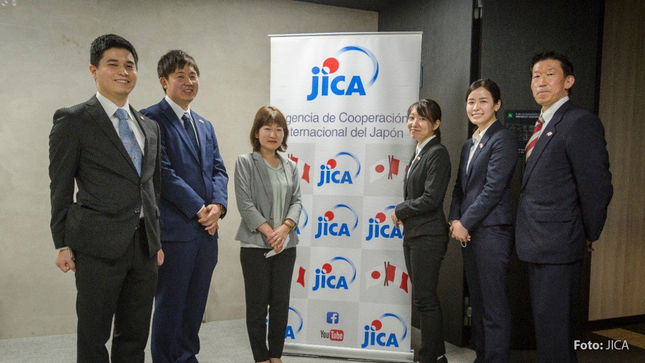
JICA’s actions are guided by two crucial concepts: “human security” and “quality growth.” “Human security” aims for an environment where individuals live with dignity, free from fear and need. “Quality growth” seeks sustainable economic expansion that reduces disparities and protects the environment.
To achieve these goals, strong organizational structures are essential. JICA emphasizes “trust” and “co-creation” with local partners. The “Gemba” approach, a distinctive Japanese concept, emphasizes “going to the field (‘gemba’) and working alongside the people.” This practical and collaborative methodology is vital for sustainable organizational change and local ownership of solutions.
How Japan Sends Experts: Technical Cooperation and Institutional Strengthening
Technical Cooperation is a fundamental modality of JICA. Japan sends experts who can be either Japanese citizens or citizens of third countries. They are assigned for long periods (one year or more) or short periods (less than one year). An explicit requirement is that the receiving agency provides “counterpart personnel” for knowledge transfer.
The main focus is on Capacity Development (CD): the continuous improvement of problem-solving skills in partner countries. JICA nurtures local “change agents,” individuals empowered to lead organizational development within their institutions. The ultimate goal is to enable communities and institutions to solve their own problems, promoting self-sufficiency.
The Strategic and Diplomatic Dimensions When Japan Sends Experts
Japan’s Official Development Assistance (ODA), including when Japan sends experts, functions as a tool of “soft power and global influence.” Historically, ODA enhances global understanding of Japan and promotes the internationalization of its human resources.
Japan uses aid to stimulate economic growth in developing countries, aiming to create stable markets for Japanese exports and investments. JICA supports the expansion of Japanese private companies abroad. ODA is also a pillar of Japan’s “Free and Open Indo-Pacific (FOIP) Strategy,” seeking to preserve regional stability. ODA loans are offered as a transparent alternative for infrastructure financing, aiming to mitigate the risk of “debt traps.” Support is directed towards “like-minded countries,” strengthening strategic alliances.







-

Uma pessoa reagiu a isso.