





 Portuguese
  English
  Spanish
  5 min of reading
  0 comments


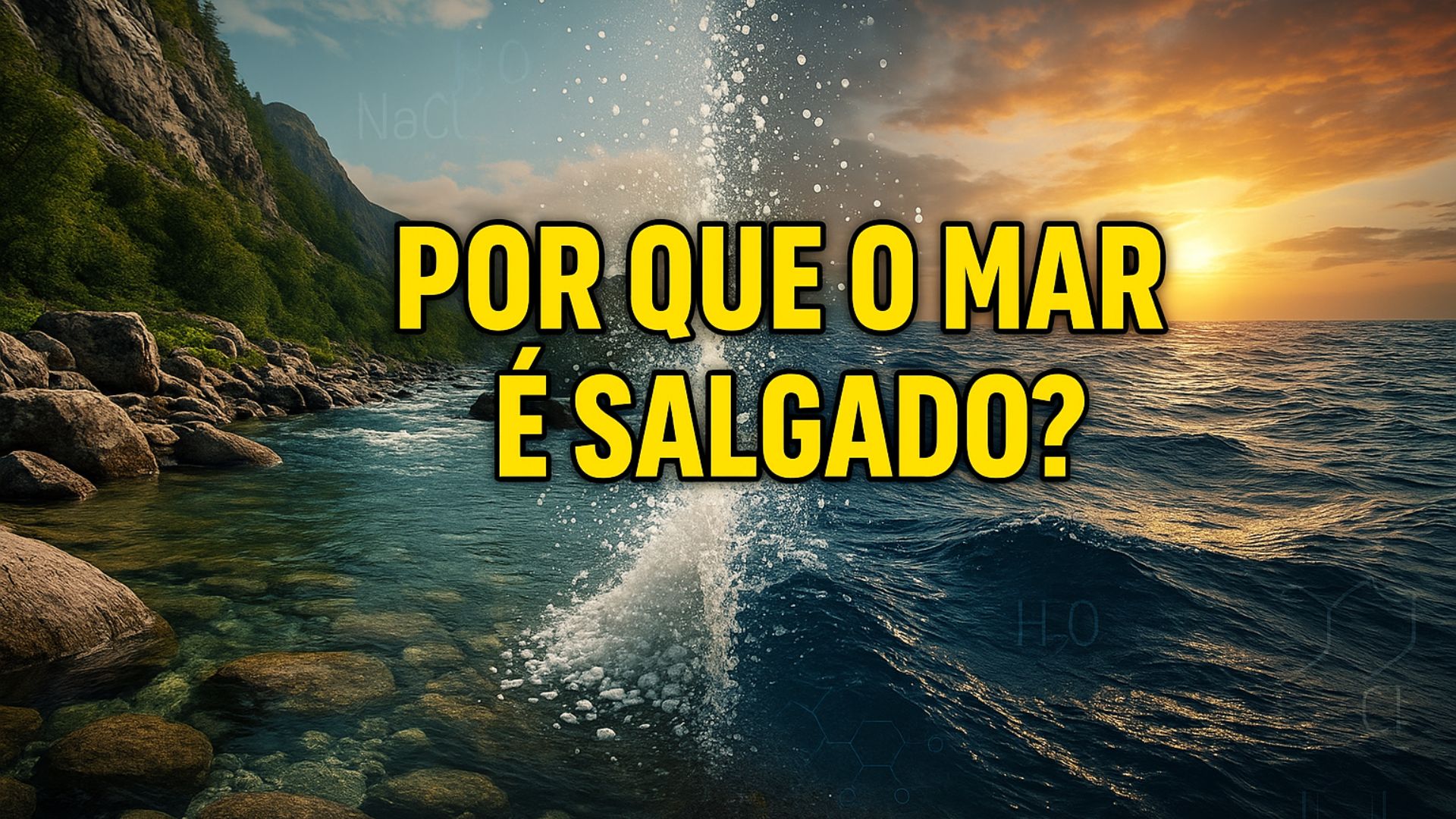
The Transformation of Earth’s Waters into Salty Oceans Is the Result of Billions of Years of Chemical Reactions, Volcanic Activity and Tectonic Movements That Shaped the Current Composition of the Seas and Allowed for the Emergence of Life.
The oceans, which cover about 70% of the planet’s surface, have not always been salty.
Billions of years ago, Earth’s first waters were essentially fresh, formed by heavy rains that accumulated in the depressions of the terrain.
The transformation of this fresh water into mineral seas was slow and constant, driven by the chemistry of the Earth’s crust and the energy from within the planet.
-
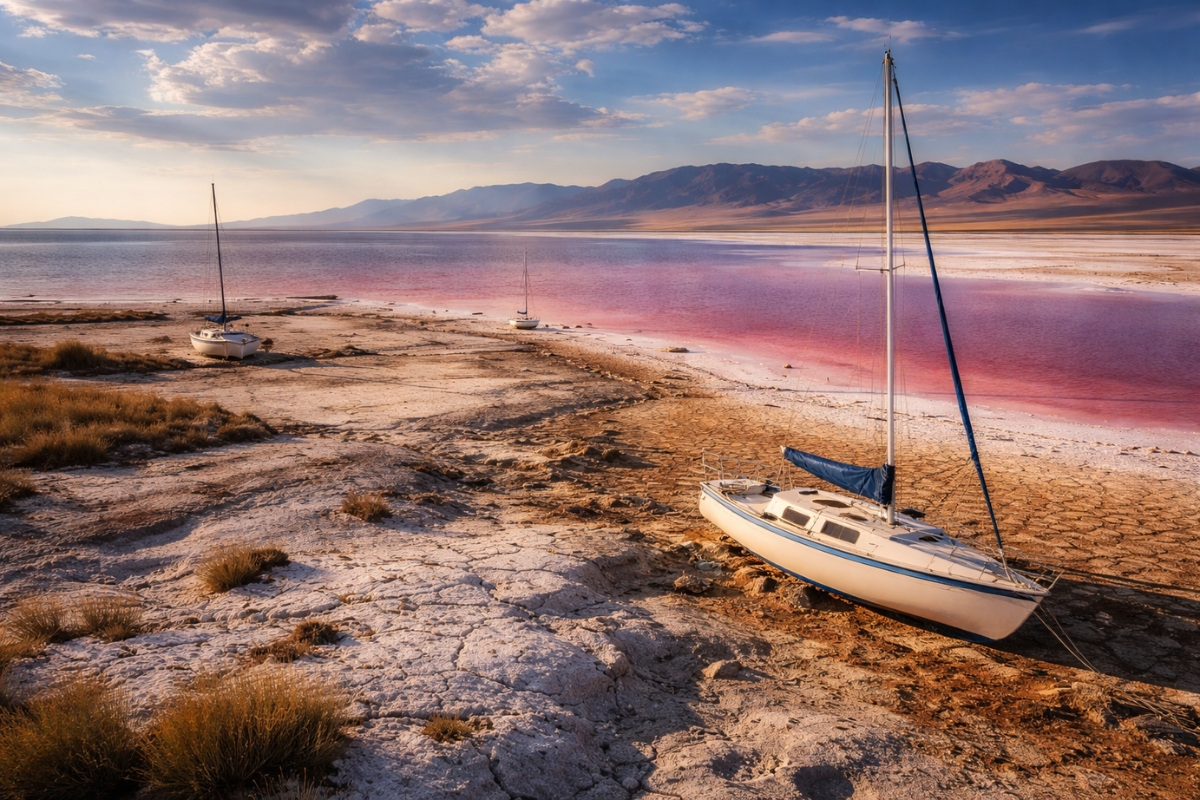
One of the most important lakes in the United States for birds, the balance of nature, and the climate has dried to historic levels, leaving boats stranded, revealing salt flats, and showing how the lack of water can transform an entire landscape.
-
It’s not Cristiano Ronaldo or Messi: the richest football player in the world is only 27 years old, has a fortune of 100 billion reais, and is the nephew of a sultan from an Asian country that few people know about.

-
At 77, the king of one of the most famous and powerful crowns on the planet is said to be under pressure to leave the throne, while behind the scenes there are already talks of a new coronation that could cost R$ 260 million.

-
Chinese researchers have created bamboo drones that fly with the same precision as conventional models and have released the flight control software for free to the entire world in a technology that could revolutionize sustainable aviation.


The Birth of the Oceans
Scientists estimate that the formation of the first oceans occurred more than 4 billion years ago, when Earth’s primitive atmosphere, dense and laden with gases, began to cool.
In this process, water vapor condensed and caused torrential rains that lasted for millions of years, giving rise to the first bodies of water.
These initial seas, however, did not have the salty taste we know today.
Salt appeared gradually.
Acid rain, when falling on rocks, dissolved minerals and chemical elements like sodium and potassium, which were transported by rivers towards the sea.
At the same time, active volcanoes released chloride and other compounds directly into the atmosphere and oceans.
The combination of these two elements — sodium and chloride — resulted in sodium chloride, common salt, which began to accumulate in seawater.
The Chemistry That Shaped the Planet
The salinity of the oceans was built over hundreds of millions of years.
Hydrothermal vents — true underwater geysers — also played an important role, releasing metals and minerals from the depths of the planet into seawater.
This constant exchange between the Earth’s interior and the oceans created a chemical balance that is still maintained.
If all the salt dissolved in the seas were removed and spread over the continents, it would form a layer about 150 meters high, demonstrating the immense quantity of minerals accumulated over the ages.
Salt is not just a detail of the ocean: it is essential for life.
Salinity regulates fundamental biological processes, such as cellular osmoregulation and nerve impulse conduction.
Without it, marine ecosystems would be radically different — perhaps unviable.
The Role of Rocks, Rivers and Volcanoes
The water cycle is the main responsible for maintaining the mineral balance of the oceans.
When rain hits the mountains and soils, it dissolves mineral particles and transports them by rivers to the sea.
These watercourses function as veins of the Earth, carrying salts and nutrients that sustain marine life.
Gigantic rivers, such as the Amazon, dump billions of tons of minerals into the oceans every year.
However, this does not mean that the seas become saltier over time.
There are natural mechanisms that balance this constant input of salts.

The Balance Between Addition and Removal
Part of the dissolved salts is removed from the system when it settles on the ocean floor, forming mineral sediments.
Another portion is absorbed by marine organisms, which use these elements to build shells, skeletons and biological structures.
This dynamics keeps the ocean in balance, preventing its salinity from growing indefinitely.
The ocean, therefore, is a living and constantly transforming system.
Every drop of rain and every river that flows into the sea participates in a continuous cycle, redistributing minerals and regulating the chemical composition of the waters.
Tectonism and the Salt of the Seas
The movement of tectonic plates also directly influences salinity.
When the plates collide, they create mountains and expose new rocks to erosion, increasing the release of minerals.
In subduction zones, part of the oceanic material — including salts — is pushed back into the Earth, where it can be recycled.
This process functions as a planetary recycling system, shaping climate, geology, and even life itself.
The so-called “tectonic dance” is one of the main responsible for maintaining the chemical balance of the oceans.
Life in a Salty Environment
Living in saltwater presents a biological challenge.
Marine fish need to drink seawater and eliminate excess salt through specialized cells and efficient kidneys.
Mangrove plants excrete salt through glands in their leaves or filter the mineral through their roots.
Marine mammals, like whales, obtain water from their food and also have physiological mechanisms adapted to salinity.
Each organism has developed unique solutions to survive in this environment.
The ocean is a natural laboratory of evolutionary adaptations, where life transformed chemical challenges into survival opportunities.
The Depths and Their Extreme Strategies
In the abyssal regions, pressure, cold, and the absence of light have shaped remarkable beings.
Fish like the black devil produce their own light to hunt and communicate.
Others exhibit the so-called abyssal gigantism, which allows them to withstand food scarcity and low temperatures.
Many do not even have a swim bladder; their gelatinous and light bodies naturally float under high pressure.
These extreme adaptations show how life diversified from the salt that dominates the seas.
The Future of Water: Desalinating the Ocean
With 97% of the planet’s water being salty, turning the sea into a drinking source is one of the greatest technological challenges of the century.
Desalination, especially by reverse osmosis, is currently the most used method.
The process presses salty water through a membrane that separates the salt from the H₂O molecules.
Countries like Israel already obtain a good portion of their drinking water from the sea, but the energy cost is still high.
New solutions, such as graphene membranes and solar desalination, seek to reduce costs and environmental impacts.
The goal is to make the process sustainable and accessible, ensuring that the discharge of brine does not harm marine ecosystems.
An Ocean in Change
The study of the chemistry of the seas helps to understand climate change and Earth’s history.
Today, the melting of glaciers and the increase in global temperatures are altering salinity and ocean currents, with effects that are reflected throughout the planet.
Protecting the oceans is essential to ensure environmental balance and the future of drinking water.
After all, the salty taste of the sea is more than a physical characteristic: it is the living record of the planet’s history and of life itself on Earth.
How will humanity balance the use of this vital resource and respect the ocean that sustains it?





-

Uma pessoa reagiu a isso.