





 Portuguese
  English
  Spanish
  4 min of reading
  0 comments


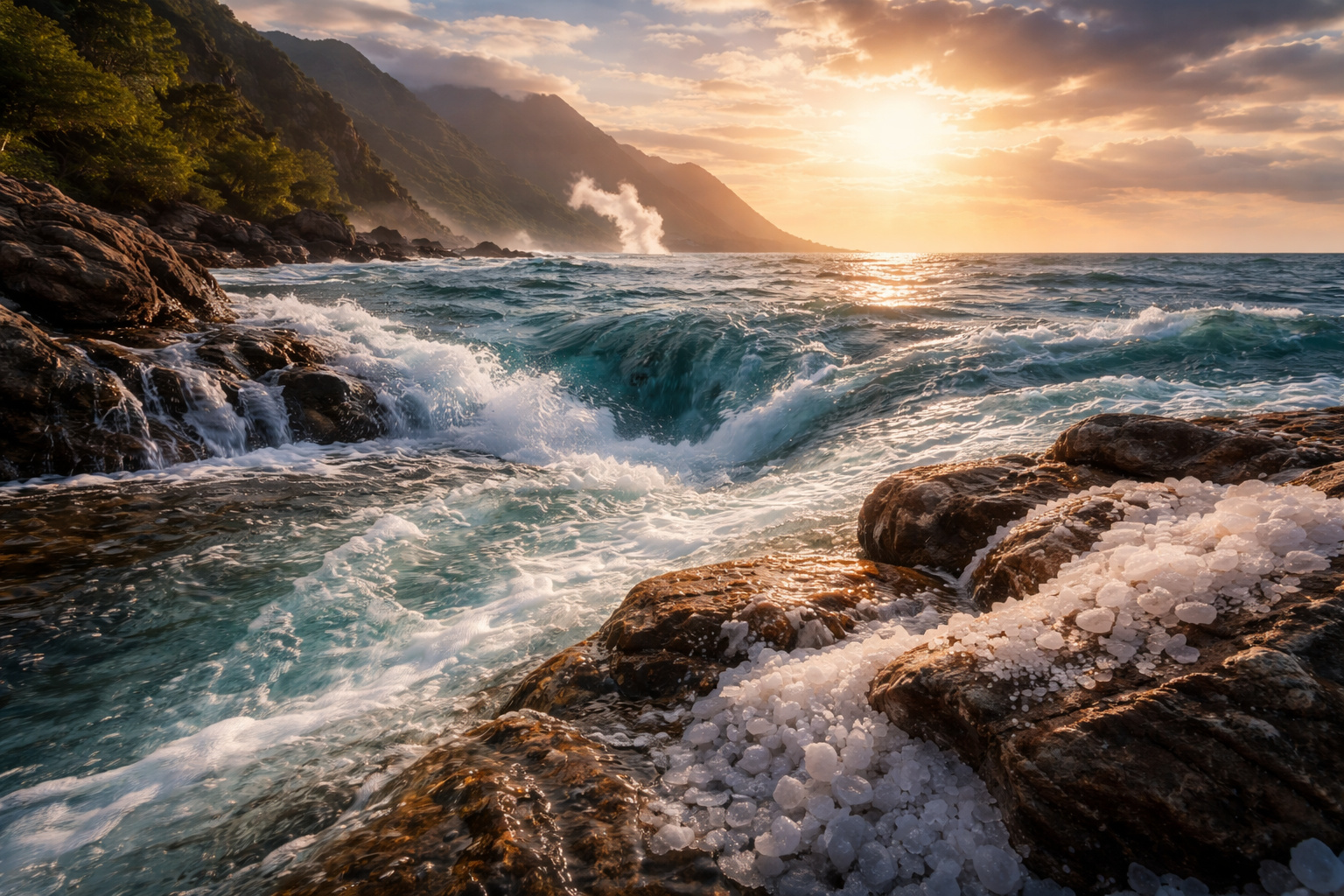
Rivers Transport Minerals to the Sea for Billions of Years, While Geological and Biological Processes Remove Some of These Salts and Preserve the Chemical Balance of the Oceans
A common scientific question has sparked curiosity for decades: if rivers carry dissolved minerals to the oceans for billions of years, why doesn’t the sea become progressively saltier?
Research in oceanography and geology, cited by institutions such as NOAA (National Oceanic and Atmospheric Administration) and NASA, indicates that the answer lies in a natural chemical equilibrium system.
According to studies established since the 20th century, the average salinity of the oceans remains close to 3.5%, even after about 4 billion years of steady flow of minerals from the continents.
-
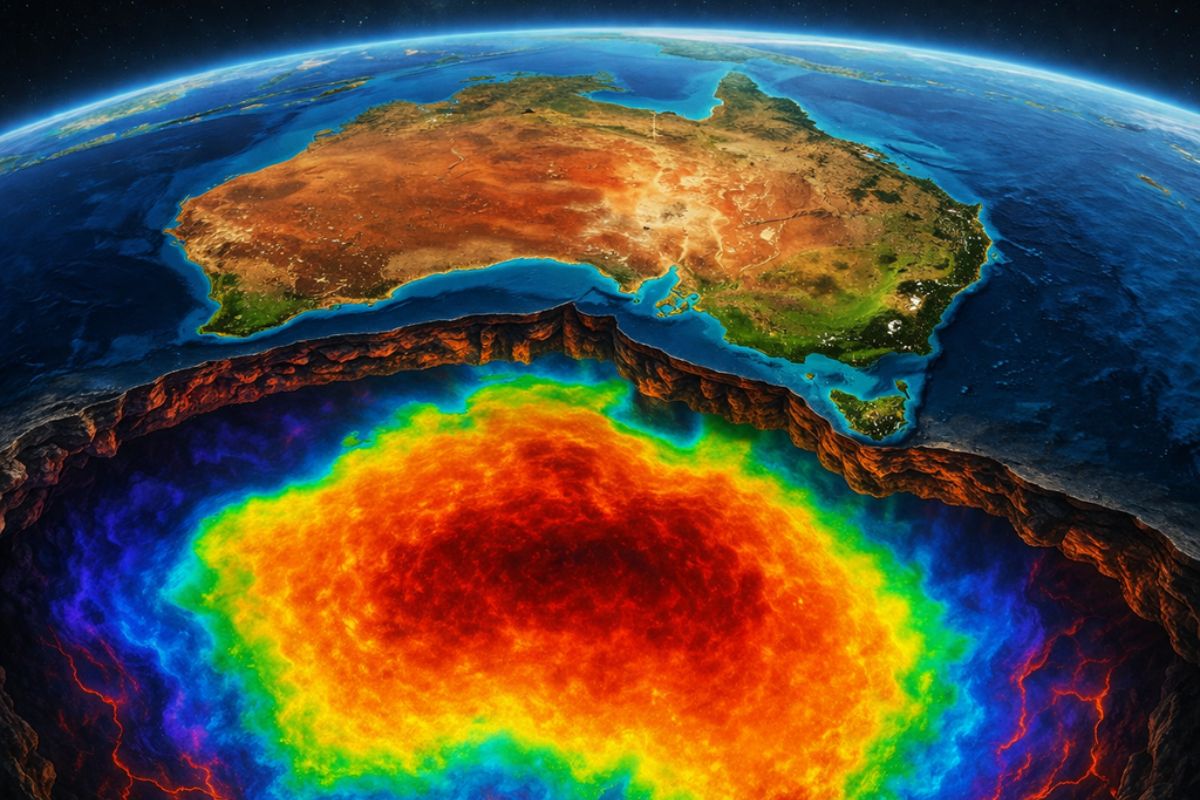
Scientists have discovered a gigantic magnetic anomaly hidden beneath the soil of Australia that mirrors the shape of the entire continent and holds geological records of two and a half billion years that could change what we know about the Earth.
-
The heatwave that has been affecting Brazil in recent weeks is coming to an end: a cyclonic vortex is moving in during Holy Week with heavy rains, and a cold air mass is already threatening to lower temperatures in the South starting in April.

-
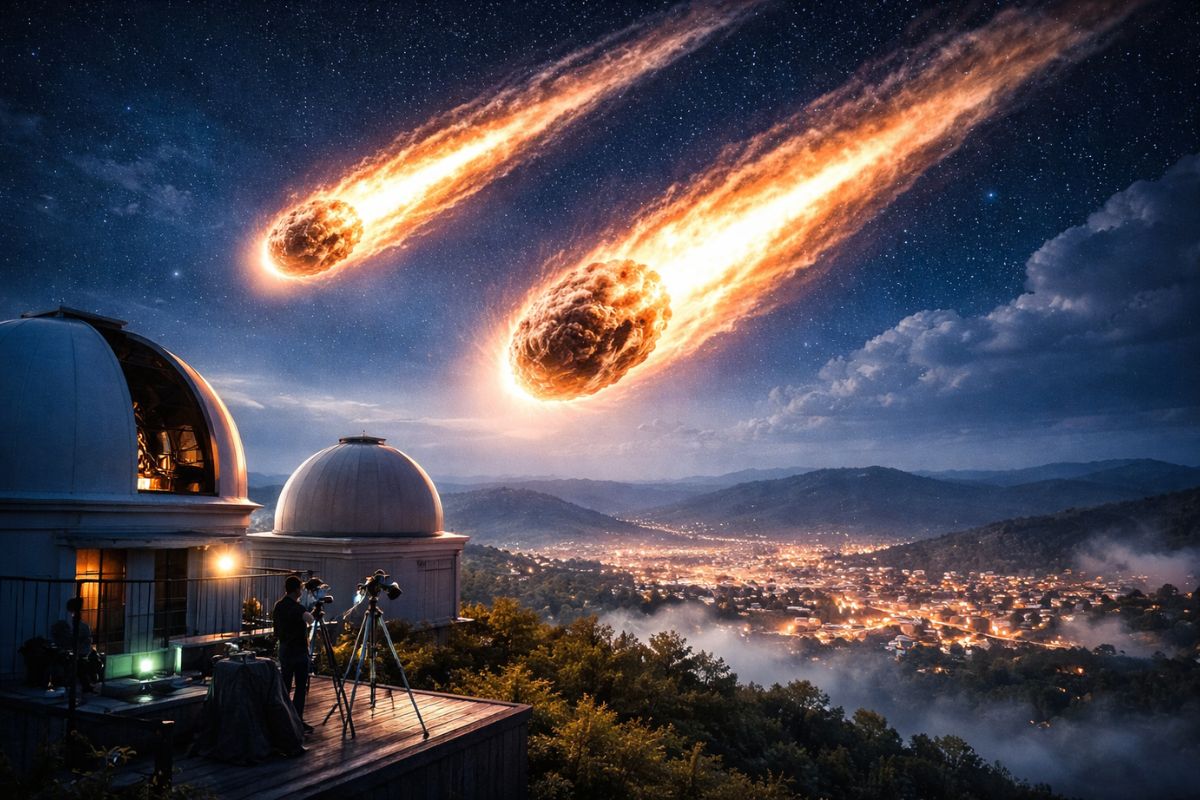
(VIDEO) Cameras from an astronomical observatory captured two meteors falling over Santa Maria in Rio Grande do Sul with only a one-minute difference and such close trajectories that scientists are now investigating whether the two objects have the same origin.
-
Fireballs shoot across the skies of the USA and meteor explosions draw attention: what is causing this mysterious wave of sightings?


This stability occurs because the oceans continuously receive salts; however, at the same time, other natural processes remove some of these minerals from the marine system.
Thus, the planet maintains a dynamic balance between the input and removal of chemical elements.
The Origin of Salt in the Oceans Begins with Rain
The journey of salt to the ocean starts, first and foremost, in the atmosphere.
When rain forms, the water is not completely pure. It mixes with carbon dioxide present in the air, creating a weak solution of carbonic acid.
This compound makes rain slightly acidic and, consequently, allows rocks and soils to undergo chemical weathering over time.
Therefore, when rainwater flows over mountains and rocky surfaces, minerals such as sodium, chlorine, calcium, and magnesium are dissolved.
These elements then exist in the form of ions — electrically charged particles that remain dissolved in water.
As early as the 18th century, around 1715, the English scientist Edmond Halley, also known for astronomical studies, suggested that the erosion of continental rocks was responsible for the salinity of the oceans.
Today, this hypothesis remains one of the foundations of modern oceanography, according to historical records from the Royal Society.
Rivers Act as Natural Routes for Minerals
Once the minerals are dissolved, they continue their journey.
Rivers serve as natural routes that transport dissolved salts from the mountains to the oceans.
However, despite carrying minerals, the water in rivers is not salty.
This occurs because the concentration of salts is extremely low.
In addition, freshwater undergoes constant renewal due to the Earth’s hydrological cycle, which involves evaporation, condensation, and precipitation.
Meanwhile, the oceans represent the final destination of this mineral flow.
When seawater evaporates under the sun, the salts remain dissolved in the ocean, accumulating over billions of years.
Submarine Volcanoes Also Influence the Composition of the Ocean
While continental erosion is an important source of minerals, it is not the only factor contributing to the salinity of the seas.
In the ocean depths, there are fractures in the Earth’s crust where seawater circulates through the rocks.
These structures are part of systems known as hydrothermal vents.
First, the water penetrates these fractures.
Next, it heats up upon contacting magma present within the Earth’s crust.
After that, it returns to the ocean column loaded with dissolved minerals.
According to studies conducted by the Woods Hole Oceanographic Institution, these systems release elements such as magnesium, calcium, and sulfates, contributing to the chemical composition of the ocean.
The Natural Balance Prevents the Sea from Becoming More Salty
Even with the constant influx of minerals, the ocean maintains a system of natural compensation.
Some of the dissolved minerals are absorbed by marine organisms, such as corals, mollusks, and various microorganisms.
These organisms use calcium and carbonates to form shells and skeletal structures.
Additionally, another portion of the minerals precipitates chemically and deposits at the bottom of the ocean, forming sediments.
Over millions of years, these sediments can transform into sedimentary rocks, which eventually return to the surface through tectonic activity.
In this way, a dynamic balance between the input and removal of salts is created.
This mechanism keeps the salinity of the oceans relatively stable throughout Earth’s geological history.
Salinity Varies Between Different Seas of the Planet
Although there is a global average, not all seas have the same amount of salt.
In tropical regions, where evaporation is intense and the influx of freshwater is small, salinity tends to be higher.
An extreme example is the Dead Sea, located between Israel, Jordan, and Palestine.
Despite the name, it is a closed lake, with no outlet to the ocean.
For this reason, its salinity can reach about 35%, nearly ten times the average of the oceans.
At the opposite extreme is the Baltic Sea, in northern Europe.
Due to the large influx of freshwater from rivers and the cold climate, salinity in some areas can drop to about 0.6%.
The Ocean as a Chemical Record of Earth’s History
Every drop of seawater carries part of the geological history of the planet.
The dissolved minerals currently in the ocean may have belonged, millions of years ago, to mountains, volcanoes, or ancient rock formations.
Thus, the oceans function as a gigantic natural chemical recycling system.
They connect the atmosphere, continents, and the Earth’s interior in a continuous cycle of transformation.
Therefore, in addition to storing saltwater, the ocean preserves a chemical record of billions of years of the planet’s evolution.
How many other secrets about Earth’s history remain hidden in the depths of the oceans?








-

-

-

3 pessoas reagiram a isso.