





 Portuguese
  English
  Spanish
  5 min of reading
  0 comments


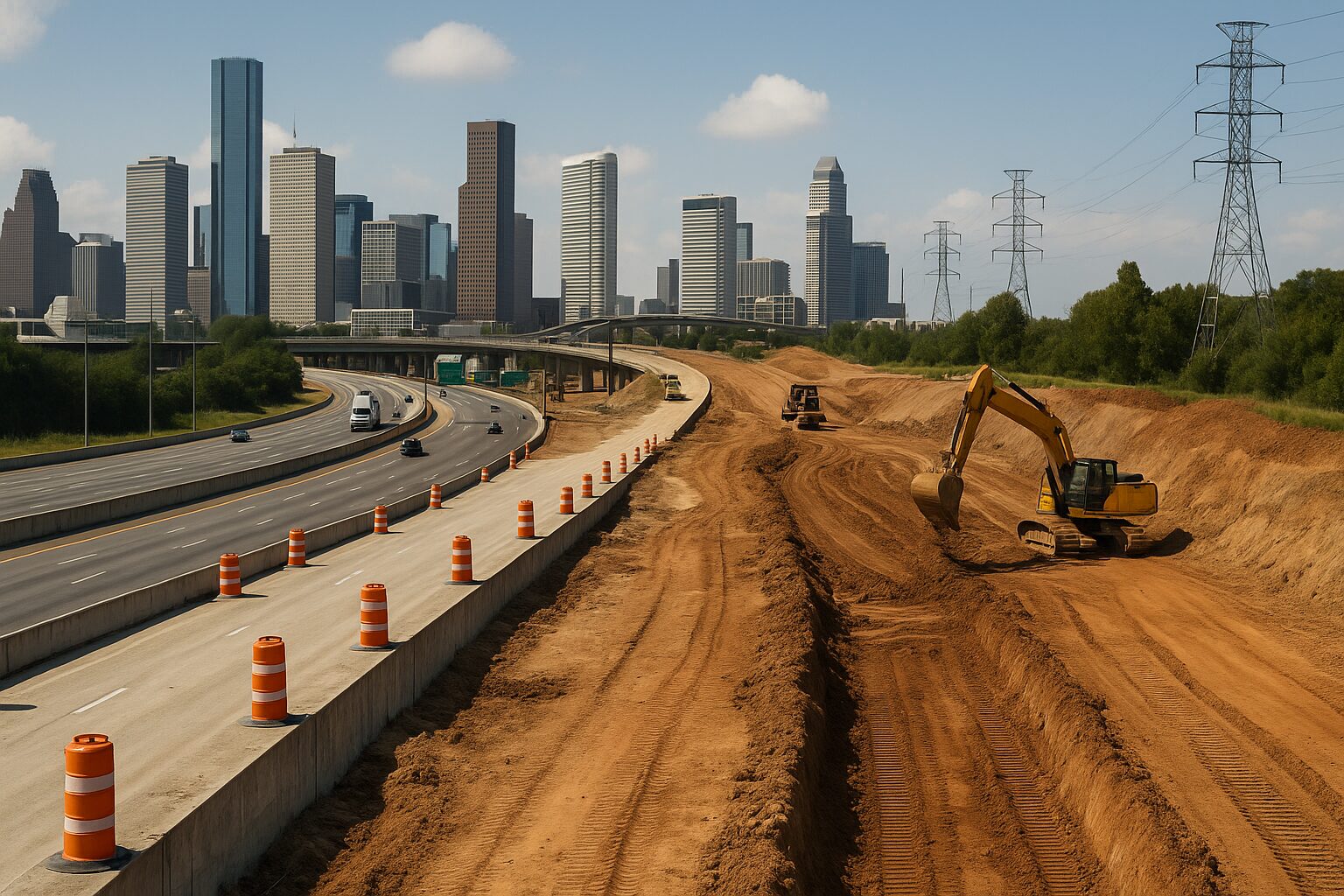
Understand Why Infrastructure Costs Are Fundamental to Economic, Social, and Sustainable Development of Any Country, Now and in the Future.
Infrastructure has always played a crucial role in human development.
Today, it has become even more indispensable.
When we mention infrastructure, we refer to the foundation that supports a society: roads, bridges, electricity, sanitation, telecommunications, public transport, schools, and hospitals.
-
Employee Fired After Accumulating 114 Days of Medical Leave in One Year, Labor Court Upholds Company’s Decision

-
Employee Fired While Treating Depression Wins in Court and Vale Is Required to Rehire Him Following Decision Based on the CLT and INSS Benefits

-
Workers Should Be Aware! March 6 Will Be The Fifth Business Day Of March And The Final Deadline For Companies To Pay Salaries According To The CLT

-
2026 FGTS Anniversary Withdrawal Is Released According to Birth Month, Sets Amounts by Balance Range, Establishes Deadlines for March and April, and Changes Rules in Case of Dismissal


These elements form the backbone that ensures the functioning of everything.
Thus, it is essential to understand why infrastructure costs are so relevant today.
To achieve this, one must consider the historical context, contemporary challenges, and how current decisions shape the future.
Therefore, infrastructure is not just a basic need, but also a key to growth and prosperity for any nation.
The Historical Role of Infrastructure in Development
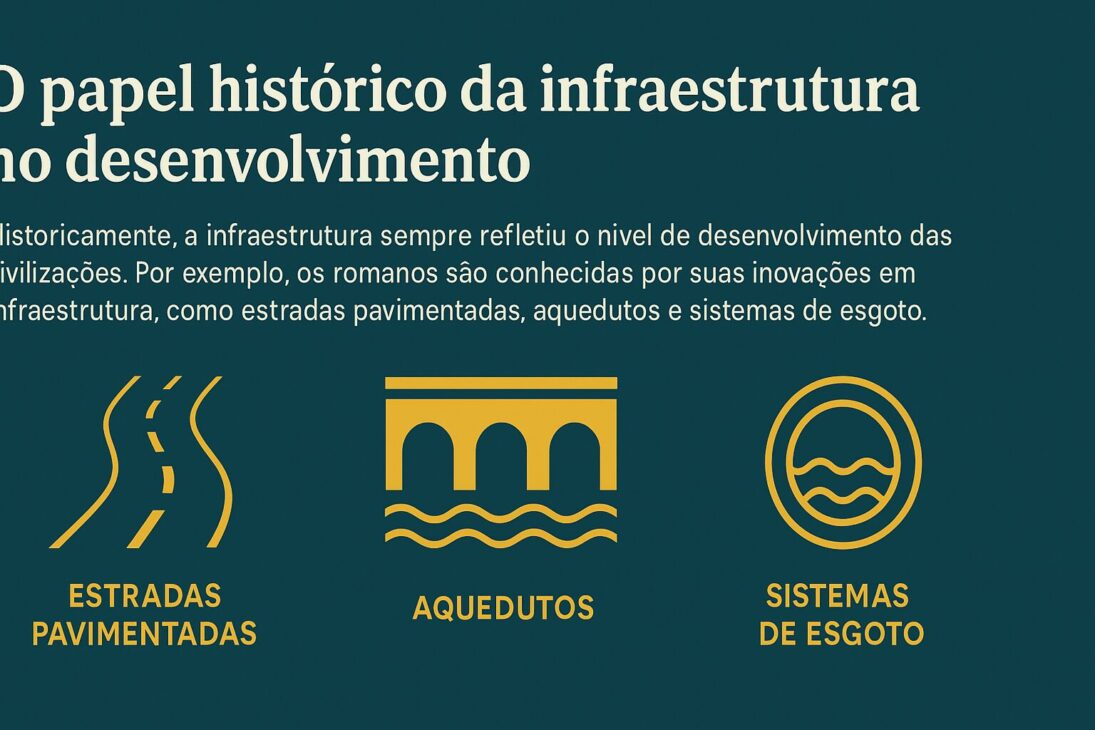
Historically, infrastructure has always reflected the level of development of civilizations.
For example, the Romans are known for their innovations in infrastructure, such as paved roads, aqueducts, and sewage systems.
They understood that connectivity and access to resources were essential for maintaining the empire.
Furthermore, in the 19th century, with the Industrial Revolution, infrastructure investments became even more vital.
Railways, ports, and power networks emerged to sustain mass production and urbanization.
From that moment, it became clear that economic progress directly depends on how a country invests in its infrastructure.
However, what many do not realize is that, over time, infrastructure has become more complex and interconnected.
For example, in the 20th century, as urbanization grew, cities began to require more technological solutions and investments to ensure their functionality.
Therefore, modern infrastructure does not only involve the construction of large works, but also the maintenance and continuous updating of existing ones.
What Lies Behind Infrastructure Costs?
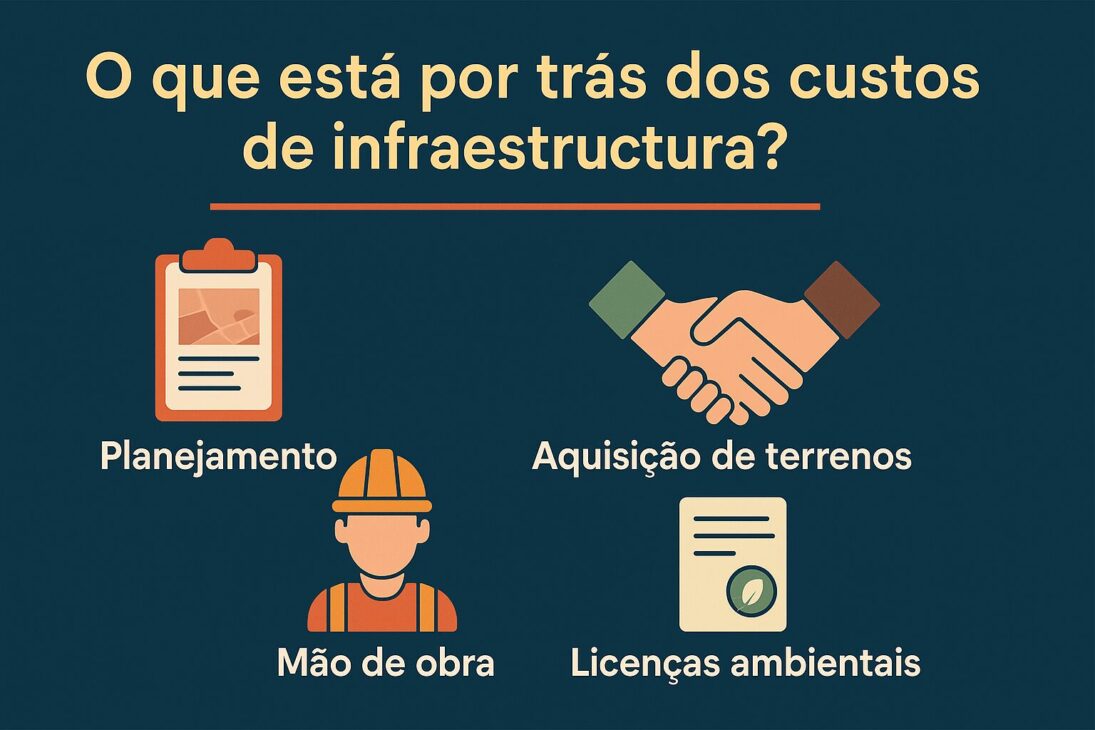
Infrastructure costs do not only involve the cost of constructing new works, but also the financing of a set of complex processes.
For example, planning, land acquisition, labor, materials, and environmental licenses are just some of the variables that make these costs high.
Therefore, it is not just about erecting a building or paving a road, but about ensuring that everything functions correctly over time.
Moreover, it is important to observe indirect costs. When a new work begins, the economic impacts can be felt throughout the region.
For instance, the construction of a subway can affect traffic, local businesses, and even the real estate market. These variables further complicate the precise calculation of the costs involved.
In this context, it is also necessary to consider the ongoing maintenance of infrastructure. It is not enough to build; it is essential that the works remain safe and functional.
According to the United Nations (UN), sustainable infrastructure must take into account factors such as energy efficiency and environmental impact, thus reducing future costs.
Indeed, a bridge built 30 years ago can become dangerous if not periodically restored.
Thus, the cost of infrastructure becomes a continuous commitment, requiring resources for conservation and adaptation.
Costs That Reflect Urgent Needs
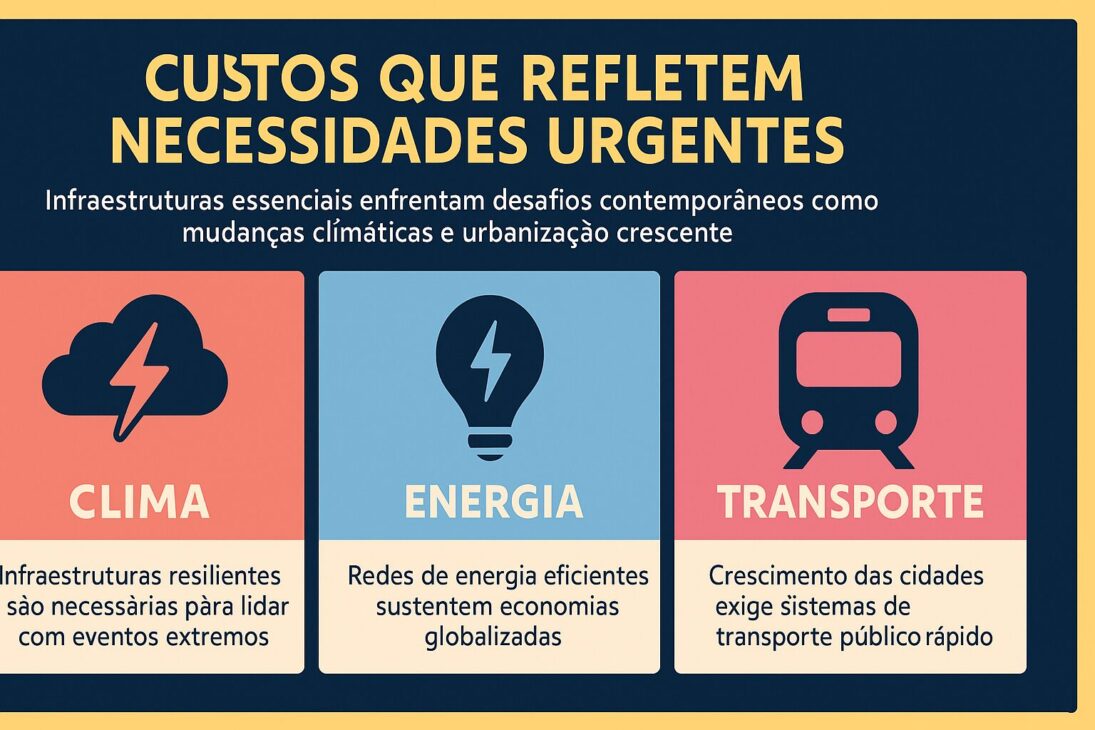
In an increasingly interconnected world, efficient infrastructures are essential for a country’s growth.
With globalization, economies depend on fast and efficient systems to transport resources and products.
This means that any failure in infrastructure can result in significant delays, which raises production costs and harms the country’s competitiveness.
Moreover, global warming and climate change have brought additional challenges to infrastructure.
For instance, extreme weather events, such as heavy rains or prolonged droughts, directly affect the functionality of roads, bridges, and energy networks.
In response, it becomes necessary to strengthen existing infrastructure and invest in new, more resilient solutions.
This, of course, implies higher costs, but these are necessary for the preservation of society and the economy.
Additionally, the growing urbanization demands continuous investments in infrastructure more than ever.
Cities, which now house more than half of the world’s population, need efficient public transport, basic sanitation, and electricity for everyone.
Without these investments, the risk of a crisis in public services becomes imminent.
Economic Growth Depends on Infrastructure
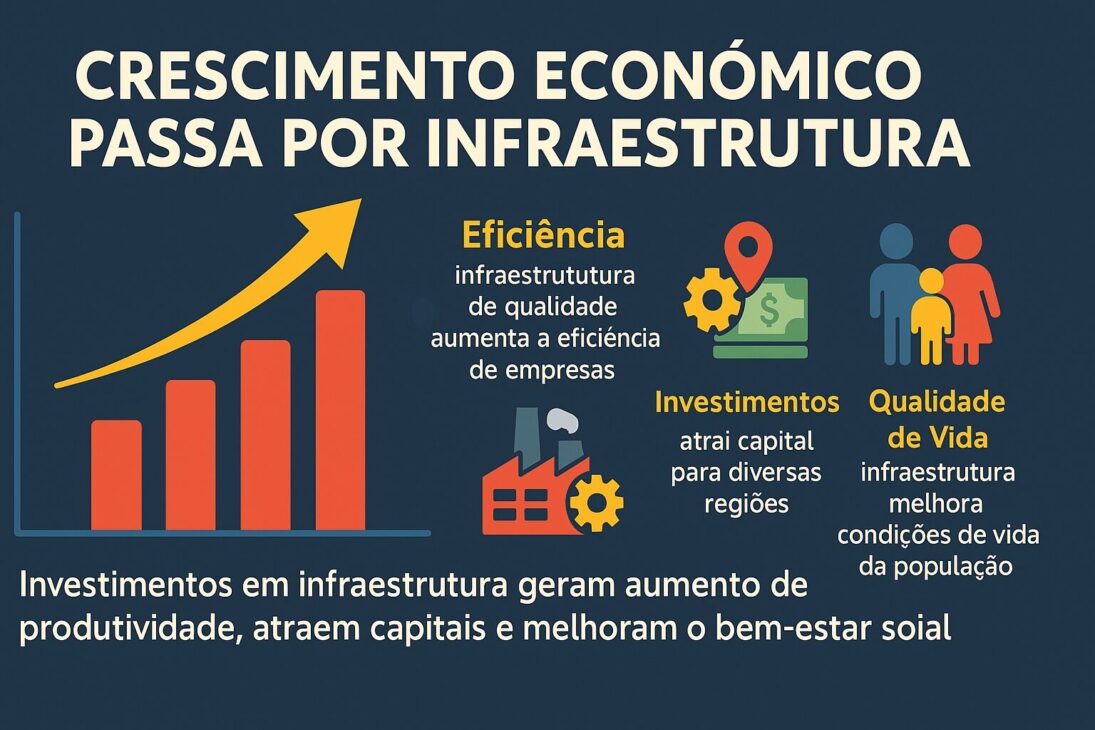
Investing in infrastructure is not just a matter of basic necessity, but also a strategy for economic growth.
Indeed, studies show that every real invested in infrastructure generates a significant return in terms of productivity and competitiveness.
This happens because quality infrastructure increases the efficiency of companies, attracts investments, and improves the quality of life for the population.
Furthermore, infrastructure allows more isolated regions to connect with the rest of the country, promoting inclusion.
For instance, bringing electricity to rural areas or building highways to link small towns stimulates local development, creates jobs, and reduces regional inequalities.
On the other hand, a lack of infrastructure investment can lead to a series of social and economic problems.
Power outages, bumpy highways, lack of water, and poor services are just some of the negative effects that neglecting infrastructure can generate.
These problems affect health, education, security, and ultimately the quality of life for all citizens.
Innovation and Sustainability Also Have Costs
In today’s times, constructing infrastructure is no longer just about simply executing works. Now, sustainability and innovation play a central role in planning.
Today, infrastructure projects need to integrate practices that minimize environmental damage and promote the conscious use of resources.
Thus, infrastructure costs also include investments in cleaner technologies and eco-friendly materials.
In many cities, we can already see the emergence of solutions like smart cities, where intelligent monitoring systems help optimize the use of energy, water, and public transport.
These advances are crucial for ensuring that development is sustainable, but they undoubtedly generate additional costs.
Therefore, building sustainably is not cheap, but it is necessary.
This will ensure that future generations do not face the same problems of scarcity and environmental degradation as previous ones.
Ultimately, the cost of a sustainable infrastructure project reflects the commitment to a more balanced future.
Invest Now to Reap Later
The infrastructure costs are, in fact, an investment in a more prosperous and sustainable future.
Although high, these costs are essential to ensure that society’s needs are met, both now and in the future.
Without quality infrastructure, economic growth is compromised, and the living conditions of the population can deteriorate.
Therefore, investing in infrastructure is not just a matter of immediate need, but of planning for the coming decades.
Only through these investments can we ensure a functional, safe, and efficient environment for all.
Thus, the development of a nation directly depends on the commitment to infrastructure, reflecting directly on the quality of life and the country’s growth potential.









-

Uma pessoa reagiu a isso.