





 Portuguese
  English
  Spanish
  5 min of reading
  0 comments


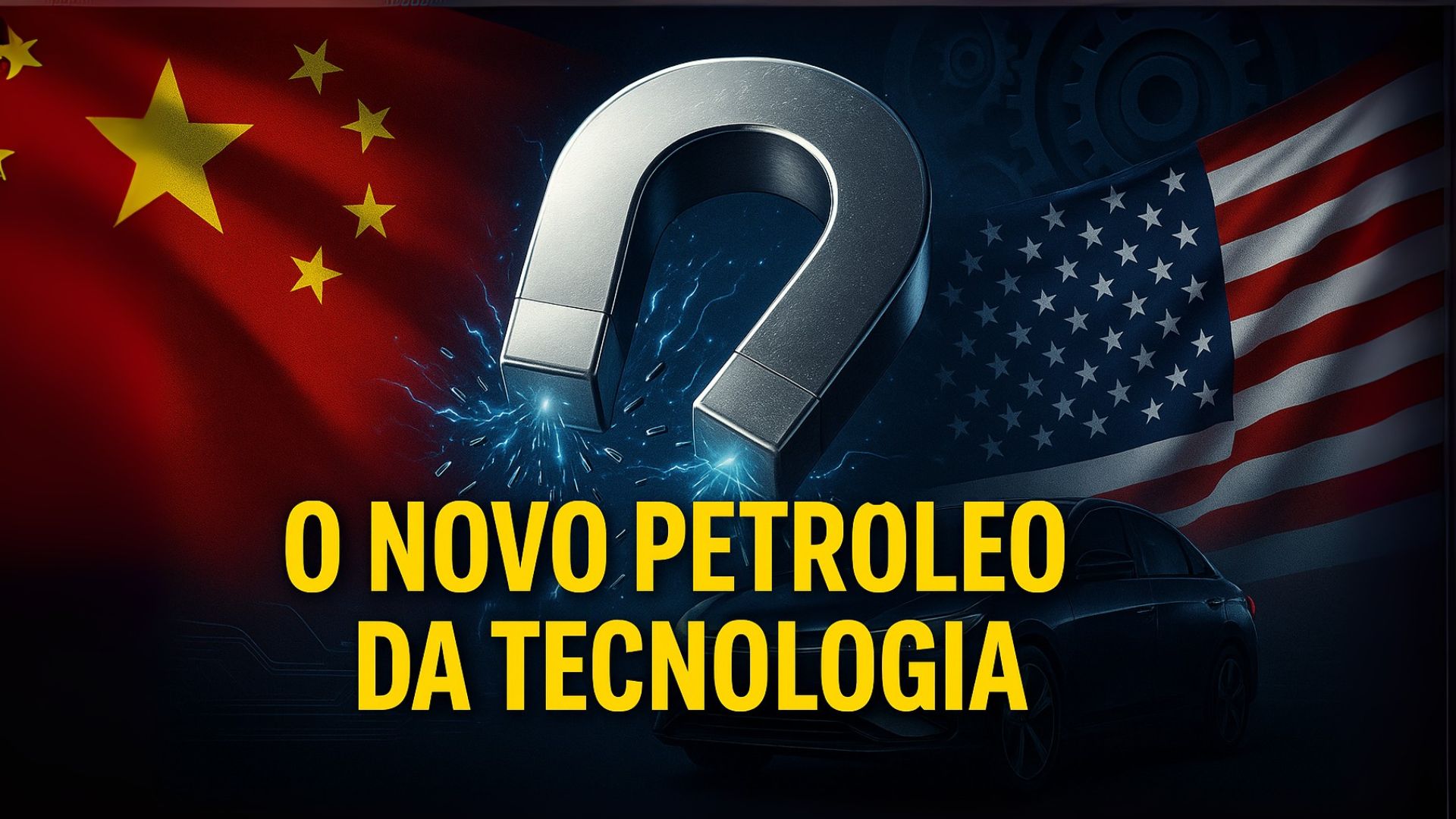
Rare Earth Magnets Are At The Center Of A Geopolitical Dispute Involving China, United States, Trump, BYD, And Even Brazil. Essential For Electric Cars And Advanced Technology, They Have Become A Key Piece Of The Global Economy.
Rare earth magnets have moved from technical jargon to strategic assets. On August 25, U.S. President Donald Trump threatened to impose a 200% tariff on Chinese products if Beijing does not ensure the supply of magnets for the American industry, escalating the dispute over a critical input for electric motors, turbines, and high-tech equipment.
“I will impose a 200% tariff or something similar,” he said. The statement came in the context of ongoing negotiations between Washington and Beijing.
According to Fantástico, from TV Globo, in a report published this Sunday (24), the dispute over these materials has taken on new dimensions, highlighting China’s leadership position in the sector.
-
The government requests the Federal Revenue Service for a new system to automate the income tax declaration, reducing errors, time, and bureaucracy for millions of Brazilians.

-
Pix in installments, international Pix, and contactless payment without internet: the Central Bank revealed the new features coming to the tool that is already used by almost every adult in Brazil.

-
Mercado Livre has just started selling medications with delivery in up to three hours to your door, and this move could completely change the way Brazilians buy medicines on a daily basis.

-
In Dubai, rising tensions from the war in the Middle East are causing super-rich individuals to leave the Gulf and direct their fortunes to a new financial refuge in Asia.



What Is At Stake With Rare Earth Magnets
Called “rare” more for the challenge of concentration and processing than for absolute scarcity, these elements sustain high-performance magnets, such as those made of neodymium-iron-boron.
In applications requiring thermal stability, elements like dysprosium and terbium are often added.
The result is compact and powerful components that are now fundamental in electromobility, electronics, and defense sectors.
According to Fantástico, from TV Globo, these elements are already considered strategic not only for the industry but also for global geopolitics.
China dominates the supply chain from ore to final magnet, holding a large share of global extraction and about 90% of processing capacity.
Chinese Control And New Restrictions
In addition to its historical weight in mining and refining, Beijing tightened its grip even further this year.
On April 4, 2025, the Chinese government imposed export controls on magnets and some critical elements, requiring specific licenses.
The measure affected, among others, dysprosium and terbium, key inputs for magnets operating at high temperatures — which raised uncertainties and delivery timelines for Western manufacturers.
As highlighted by Fantástico, from TV Globo, China’s dominance over the entire production chain — from mining to final product — makes the country practically irreplaceable in the short term.
Tariff Truce Between US And China
In parallel, the two countries have forged a pause in the tariff escalation.
On August 11 and 12, the White House extended for 90 days a suspension that freezes US tariffs at 30% on Chinese products and keeps China at 10% on American goods.
The extension, valid until November 10, 2025, prevented rates from skyrocketing to 145% (US) and 125% (China), as predicted by the escalation trigger. The relief is temporary and may be reviewed as technical discussions progress.

Tariffs And Impact On Public Accounts
The impact of tariffs on federal revenue also entered the debate.
According to the Congressional Budget Office (CBO), tariff changes since January should reduce total deficits by US$ 4 trillion by 2035 — a combination of increased revenue and decreased interest payments due to a lower need for borrowing.
However, the same report warns that higher tariffs tend to slow investment and productivity, driving up the cost of consumer and capital goods.
Advantage Of Integrated Production In China
While American and European automakers purchase a large part of their components from third parties, major Chinese manufacturers have invested in integrated production.
Batteries, power electronics, and even motors often go through the same plant, shortening timelines and reducing costs.
At BYD, for example, Vice President Stella Li often emphasizes the pace of development: the company records an average of about 45 patents per day, supported by a large R&D team.
“We produce many components in our own factory. This helps us to constantly innovate,” says the executive.
Price Differences Between China, Brazil, And USA
In the domestic Chinese market, the price war has reached a level difficult to replicate in the West.
In April, BYD announced the Seagull starting at 56,800 yuan — less than US$ 8,000 on promotion — intensifying local competition among entry-level electric vehicles.
In Brazil, the cheapest electric vehicle currently is the Renault Kwid E-Tech, priced at R$ 99,990.
Models like the BYD Dolphin Mini appear just above, reflecting the greater supply of compact vehicles since 2024.
In the United States, entry-level prices remain higher.
The Nissan Leaf 2025 starts at around US$ 29,000 suggested retail price, varying by model and incentives. The difference highlights China’s scale and the distinct tax structure between markets.
Brazil And Its Rare Earth Reserves
Although China concentrates most of the global refining, Brazil stands out for its reserves and ongoing projects.
According to USGS, the country ranks among the holders of the largest rare earth reserves in the world, at a level close to that of Vietnam.
In Goiás, the Serra Verde began commercial production in 2024, aiming to reach 5,000 tons/year of rare earth oxides by 2026.
Among the extracted elements are neodymium, praseodymium, dysprosium, and terbium, all critical for high-performance magnets.
This initiative places Brazil in supply chains seeking to reduce dependency on Chinese processing.
Flying Cars: China’s New Bet
While consolidating its leadership in batteries and magnets, China is accelerating in advanced air mobility.
Industry studies project up to 100,000 eVTOLs in operation in the country by 2030, including air taxi services and logistics.
The expansion has regulatory support and government financing but still depends on adequate infrastructure.
The Geopolitical Board Of Magnets
Control over mining, refining, and magnet manufacturing becomes a geopolitical lever.
With exports conditioned on licenses and a tariff truce set to expire in November, Beijing can calibrate supply.
On the other hand, Washington is trying to buy time, encourages domestic production, and hints at punitive tariffs if supply fails.
The dispute is not limited to prices: it involves national security, energy transition, and industrial competitiveness.
Brazil, with relevant reserves and emerging projects, enters this game as a potential supplier of raw materials and partner in new processing routes.
If rare earth magnets are the new “oil” of technology, who will manage to secure contracts, diversify the supply chain, and guarantee stable volumes before the next supply shock?








-

-

2 pessoas reagiram a isso.