





 Portuguese
  English
  Spanish
  4 min of reading
  1 comment


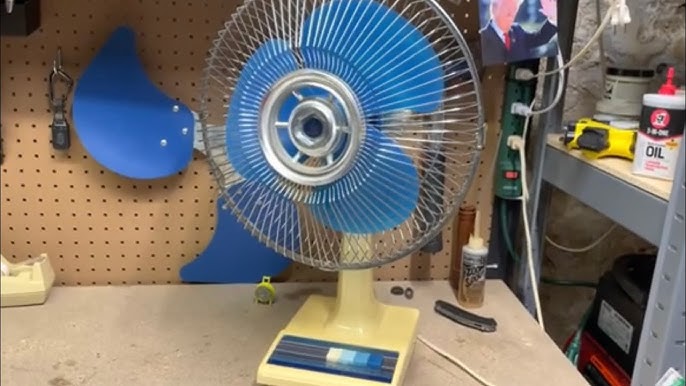

Have You Noticed That Fans Keep Spinning Even After Being Turned Off? There Is a Physical Explanation for This — And It Is Fascinating!
Fans are among the most common devices in daily life, providing comfort by manipulating air circulation.
Often, we associate their speed with cooling the environment, although they do not actually lower the temperature, they merely move the air.
However, one peculiar feature catches our attention: when we turn them off, their blades keep spinning for a few seconds before eventually stopping. But why does this happen?
-
Artemis 2 launches at 7:35 PM with four astronauts and ends a 50-year fast in lunar orbit: the SLS rocket departs from Florida, the mission lasts 10 days, circles the far side, and tests Orion in a free-return trajectory.

-
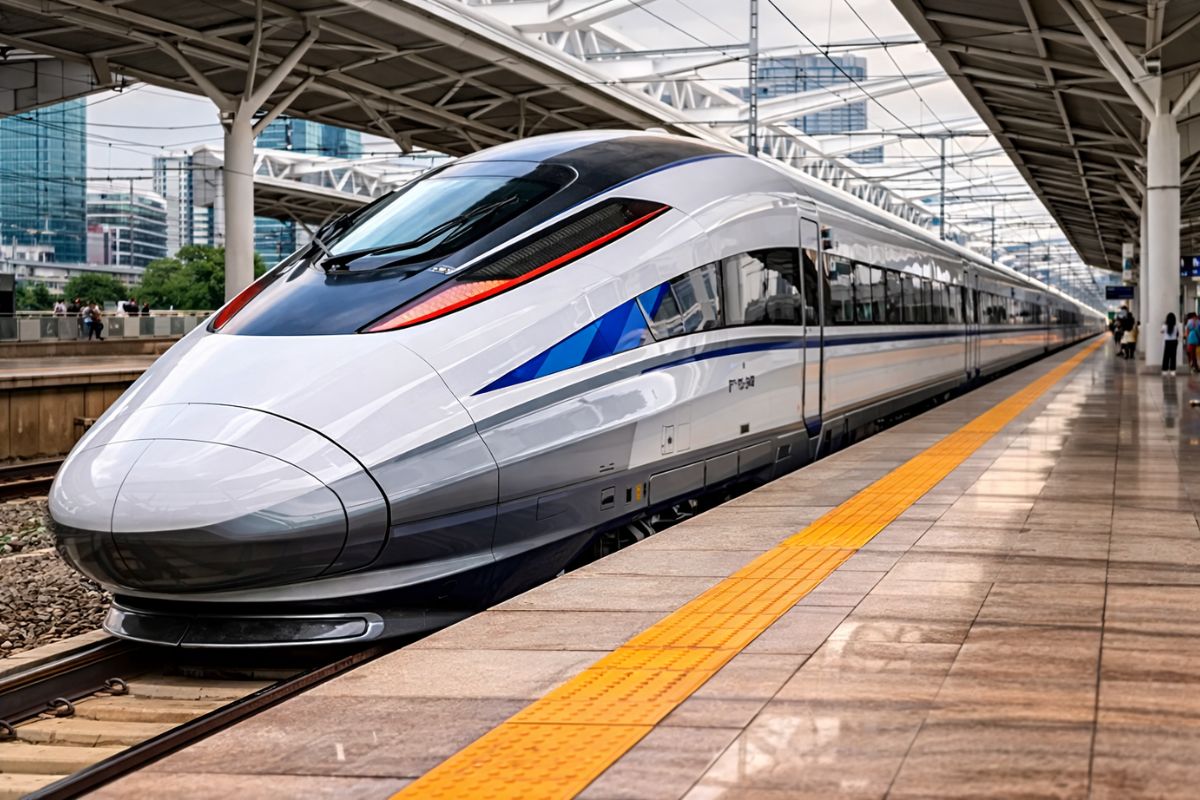
China is testing a train that will operate at 400 km/h in daily service, which is 80 km/h faster than the French TGV, and uses carbon fiber, magnesium alloys, and more than 4,000 sensors to become the fastest commercial train on the planet.
-
Forget about having an air fryer, electric oven, and steam pot taking up space in your kitchen because a 30-liter smart oven combines all these functions, automatically selects the ideal temperature, and even turns off by itself when cooking is done.

-
Engineers rewrote all the apps from scratch and bet everything on a buttonless screen: now the creator of the iPhone says that Apple needs to make the same revolution again because of AI.


The Basic Operation of the Fan
To understand this dynamic, it is essential to know the structure and basic operation of a fan. The main components include:
- Motor: The mechanical energy source of the fan, which converts electricity into rotational motion.
- Blades: Attached to the rotor, they are responsible for pushing air and creating the sensation of ventilation.
- Support Structure: Keeps the fan stable and properly directed.
The fundamental principle of a fan’s operation lies in the interaction between the blades and the air. As they spin, the blades, which have a slightly curved shape, create a pressure difference, forcing the air to move.
Newton’s First Law
The main reason a fan continues to spin after being turned off is related to inertia. According to Newton’s First Law, an object in motion tends to stay in motion unless acted upon by an external force. This means that when the fan is turned off, its blades continue to spin because the stored kinetic energy does not disappear instantly.
The force that eventually makes the fan stop is air resistance and friction in the motor bearings. These factors drain energy from the system until it stabilizes and comes to a complete stop.
“An object at rest tends to stay at rest, and an object in motion tends to stay in motion with a constant velocity in a straight line unless acted upon by an external force.”
Energy Conservation and Natural Dissipators
Energy cannot be destroyed, only transformed. Thus, when the electrical energy powering the motor is cut off, the remaining kinetic energy needs to be dissipated. This occurs in several ways:
- Mechanical Friction: Within the motor, internal components generate friction, gradually reducing the rotor’s speed.
- Air Resistance: As the fan pushes air while spinning, that same air exerts an opposing force on the blades, reducing speed.
- Conversion to Heat: Friction generates heat in the internal components of the fan, converting part of the kinetic energy into thermal energy.
These factors cause the fan to decelerate gradually until it comes to a complete stop.
What Would Happen If the Fan Stopped Instantaneously?
If it were possible to stop the fan’s motion instantaneously, the remaining kinetic energy would need to be absorbed somehow. This could lead to mechanical damage, such as twisting and breaking the shaft or other structural components.
Rotating machines, like drills and blenders, exhibit the same phenomenon. Some of them include mechanical brakes to stop the motion quickly, but this requires a system that efficiently converts the remaining energy.
Could We Apply a Braking System to Fans?
A theoretical alternative would be to employ a mechanism similar to regenerative braking, used in electric vehicles.
This system converts kinetic energy into electrical energy, storing it for reuse. However, applying this concept to fans would bring challenges, such as increased weight, cost, and complexity of the device.
Currently, the simplicity and efficiency of conventional fans outweigh the need for an advanced braking system. After all, the extra spinning time does not impact their operation or pose a problem for the user.
Fans continue to spin after being turned off due to inertia and the need to dissipate the remaining kinetic energy.
Mechanical friction and air resistance are the main factors responsible for reducing this energy until the device stops completely. Although it is possible to create braking systems, the simplicity and cost-effectiveness of conventional fans make this addition unnecessary.
With this, the next time you turn off a fan and notice its blades spinning for a few seconds, you will know that this is just physics in action.







É para pessoas inteligentes assim, que o xampu vem com instruções de uso.