





 Portuguese
  English
  Spanish
  6 min of reading
  0 comments


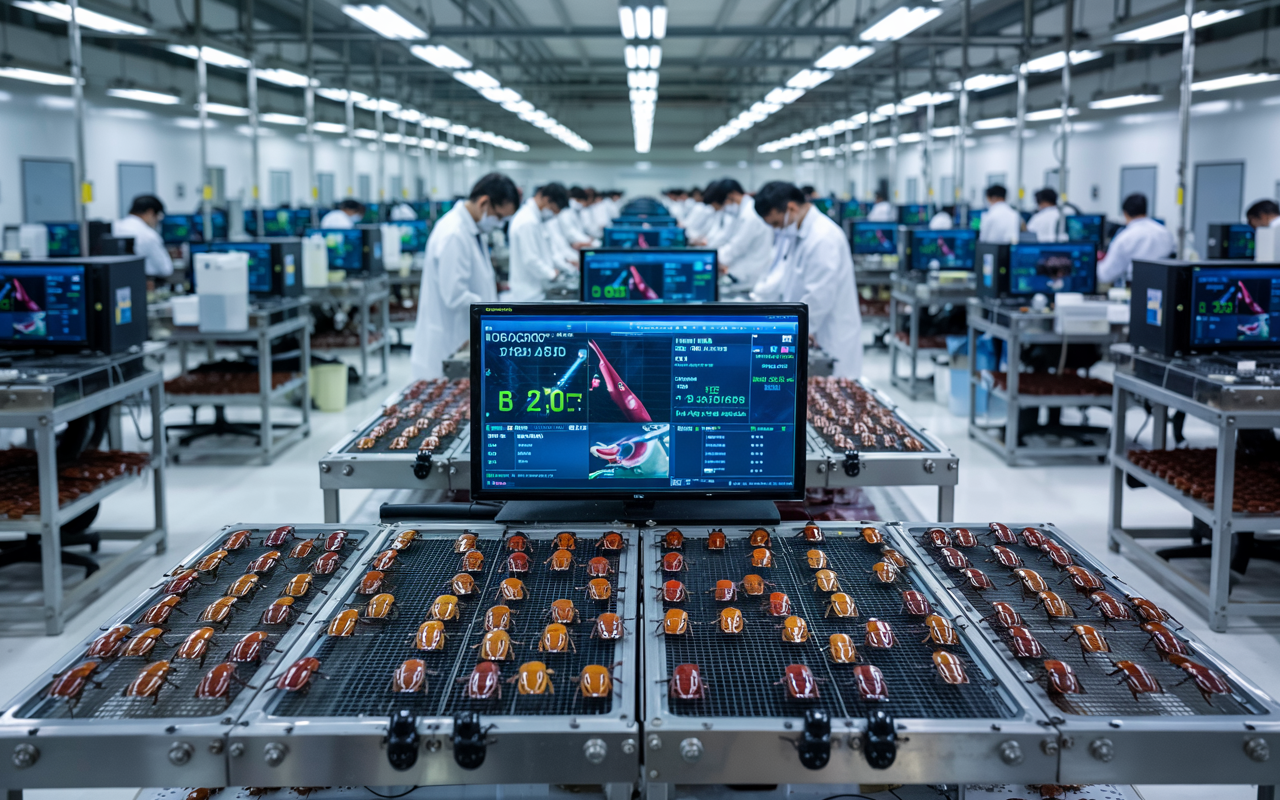
A Laboratory in China Is Creating 6 Billion Cockroaches Per Year. Discover How These Insects Are Revolutionizing Traditional Chinese Medicine, Waste Recycling, and Sustainable Production of Biological Energy.
While the world associates cockroaches with dirt, urban pests, and repulsion, laboratories in China see these insects as a valuable and multifunctional resource. In the largest cockroach breeding center on the planet, located in Sichuan province, more than 16,438 thousand cockroaches are bred daily in controlled environments, fed with food scraps and subjected to medical and environmental research. According to reports from the South China Morning Post and investigations by the BBC, these insects are being used in applications ranging from traditional Chinese medicine to sustainable solutions for combating food waste and the mass production of insects as biological input.
In Xichang, in the Chinese province of Sichuan, the world’s largest cockroach farm operates, according to the South China Morning Post. The facility, managed by the pharmaceutical company Gooddoctor Pharmaceutical Group, produces more than 6 billion cockroaches annually in the lab, utilizing artificial intelligence to maintain ideal growth conditions. These cockroaches are produced on a large scale to supply the medicine industry of traditional Chinese medicine, and the impressive volume is equivalent to almost 16,000 new insects per day — a number that reveals the advancement of the mass production of insects as a biotechnological and sustainable alternative in China.
How Does Cockroach Breeding in the Laboratory Work?
The best-known structure for this type of production is in Chengdu, the capital of Sichuan province, where a facility of over 6,000 square meters operates 24 hours a day. The automated environmental control system maintains the ideal temperature and humidity for the accelerated reproduction of American cockroaches (Periplaneta americana), a resilient and fast-growing species.
-
Global warming will expose a treasure hidden under the ice of Antarctica and may spark an international dispute over gold and valuable minerals.

-
The Argentine government celebrates the lowest poverty rate in 7 years, but experts warn that the methodology has changed, real wages have fallen, unemployment has risen, and the number of people on the streets of Buenos Aires has increased by 57% since Milei took office.

-
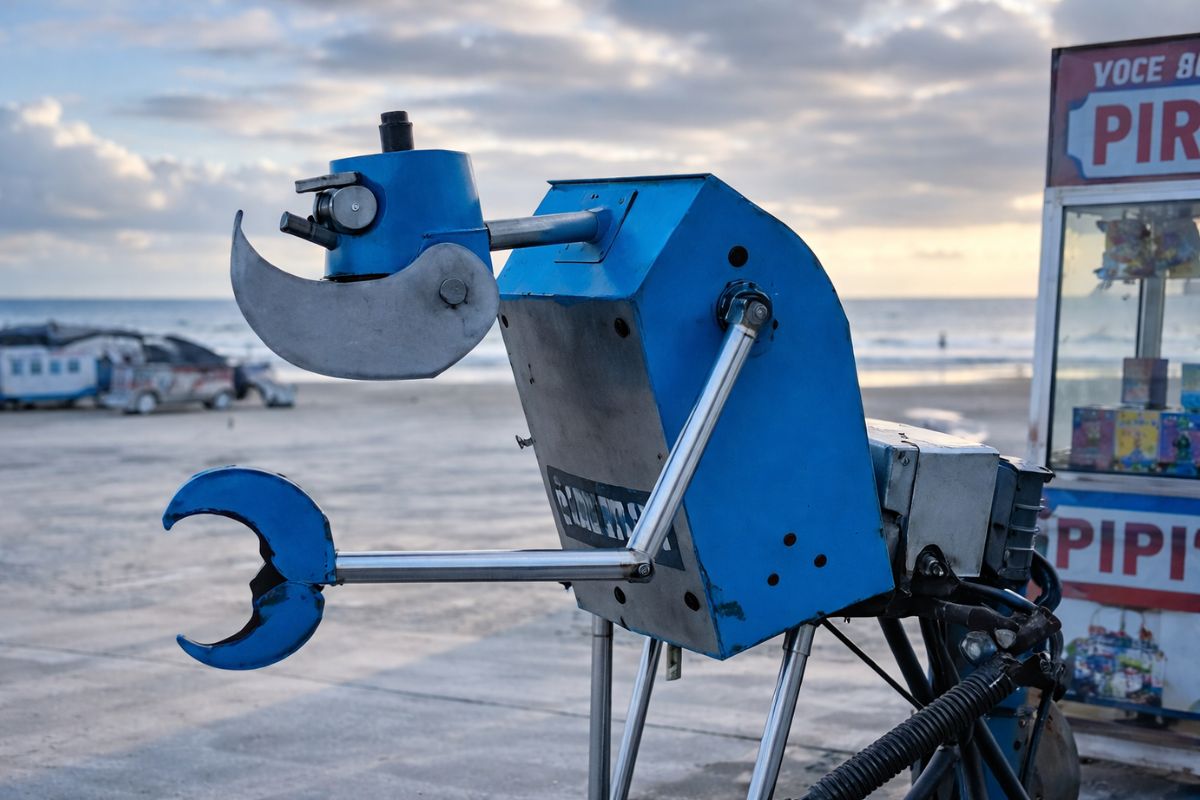
A street vendor from Praia Grande built a robot made of scrap from scooters and washing machines that pulls his popcorn cart on the beach, emits sounds, and interacts with customers, becoming an attraction on the coast of São Paulo.
-
The specifications of the Xiaomi 18 Pro Max have been leaked, and the highlight is a dual 200 MP camera with a new 22-nanometer technology that promises to consume less energy and capture details in shadows and bright areas using LOFIC HDR.

According to the South China Morning Post, the system uses artificial intelligence to monitor the insect lifecycle, analyze growth patterns, and predict the ideal time for harvesting. The animals are fed organic food waste from restaurants, supermarkets, and canteens, which helps to reduce urban waste volume.
The estimate is that more than six billion cockroaches live simultaneously in these facilities, being harvested in batches for various scientific and commercial purposes.
Traditional Chinese Medicine: An Ancient Use with New Vigor
Traditional Chinese Medicine (TCM) is one of the areas that most consumes lab-bred cockroaches. According to National Geographic, cockroach extracts are used to formulate medications that treat issues such as gastric ulcers, burns, pulmonary inflammations, and hard-to-heal wounds.


One of the most prominent companies in this sector is the Gooddoctor Pharmaceutical Group, which developed a cockroach-based tonic called “Kangfuxin Liquid.” The medication has been approved by the Chinese government and is distributed in public hospitals, with over 40 million patients treated so far, according to local government data.
Recent research indicates that proteins and peptides present in cockroach tissues have antibacterial and regenerative properties, attracting the interest of pharmaceutical companies and international research institutes.
Cockroaches as an Environmental Solution: Recycling and Combating Organic Waste
Another notable application in the mass production of insects involves the use of cockroaches as a biological tool for food waste recycling. Cockroaches can consume large quantities of organic matter in a short time, turning urban waste into biomass at low cost and high efficiency.
The municipality of Jinan in Shandong province already uses cockroaches on a large scale to process up to 50 tons of organic waste per day. After consuming the waste, the bodies of the cockroaches themselves are reused as protein-rich animal feed, especially in aquaculture and pig farming.
According to the BBC, this integrated chain — waste, insects, and animal feed — reduces greenhouse gas emissions, decreases dependence on artificial feed, and saves natural resources, representing a model of sustainable energy and food infrastructure.
Global Interest in Insect Farming
Although the practice is still heavily associated with China, other countries are showing interest in the model. Universities in the United States, France, the Netherlands, and South Korea are testing controlled insect farming systems, including cockroaches, as an alternative source of protein and pharmaceutical inputs.
The Max Planck Institute in Germany recently published a study showing that extracts from American cockroaches have potential applications in cancer treatments, due to the presence of antioxidant and regenerative compounds that act against cellular degradation.
Private companies are also investing: biotechnology startups, such as the French Ynsect and the Dutch Protix, are already testing similar technologies to replace animal meat in feed and nutritional supplements.
The Controversies and Risks of Mass Cockroach Production
Despite advances, industrial cockroach farming also raises concerns. The main worry is the risk of accidental escape and the possible uncontrolled urban proliferation. In 2013, a facility in Jiangsu province experienced a leak, and over 1 million cockroaches escaped into nearby urban areas, causing local panic.
Chinese authorities have reinforced regulations, requiring strict standards for sanitary safety, physical containment, and proper disposal of insects after use. Nevertheless, critics warn of potential ecological implications, especially if the practice is adopted on a large scale outside laboratory environments.
Another point of controversy is animal welfare. Although there is no scientific consensus on the ability of insects to feel pain like vertebrates, international organizations are calling for minimum ethical standards to be applied, even in automated slaughter systems.
Cultural Perception and Challenges of International Acceptance
The idea of using cockroaches as medicinal, food, or industrial input still encounters resistance in much of the West. There is a significant cultural barrier, especially in countries with a strong aversion to insects. However, perceptions are beginning to change, driven by factors such as food crisis, sustainability, and the search for new sources of biological energy.
According to a report from the FAO (Food and Agriculture Organization of the United Nations), the world will need to increase protein production by 70% by 2050. In this scenario, insects such as cockroaches — highly reproductive, efficient, and versatile — gain prominence.
In Asia, where traditional Chinese medicine is widely respected and there is greater familiarity with the consumption of insects, acceptance is much broader. Chinese laboratories argue that the controlled expansion of the practice can yield medical, environmental, and economic benefits, in addition to representing a living energy infrastructure, functioning as a self-sustaining biological system.
The Future of Cockroaches in the Laboratory: From Disgusting to Necessary?
If a few years ago the idea of breeding cockroaches in a laboratory sounded absurd, today it is viewed as a viable alternative in multiple sectors. Advances in biotechnology, the challenges of climate change, and the demand for renewable energy and biodegradable materials are transforming the way we see insects.
Scientists point out that cockroaches are resistant to radiation, adaptable to hostile environments, and equipped with efficient immune systems, characteristics that make them excellent candidates for genetic, pharmacological, and industrial studies. Moreover, their breeding consumes little water, does not require large areas of land, and generates minimal waste — everything expected from a sustainable production model for the 21st century.
China, once again, leads this silent vanguard. The challenge now is to transform the stigma into opportunity — and show the world that even the most feared insect can be the key to a more balanced planet.





Seja o primeiro a reagir!