





 Portuguese
  English
  Spanish
  5 min of reading
  19 comments


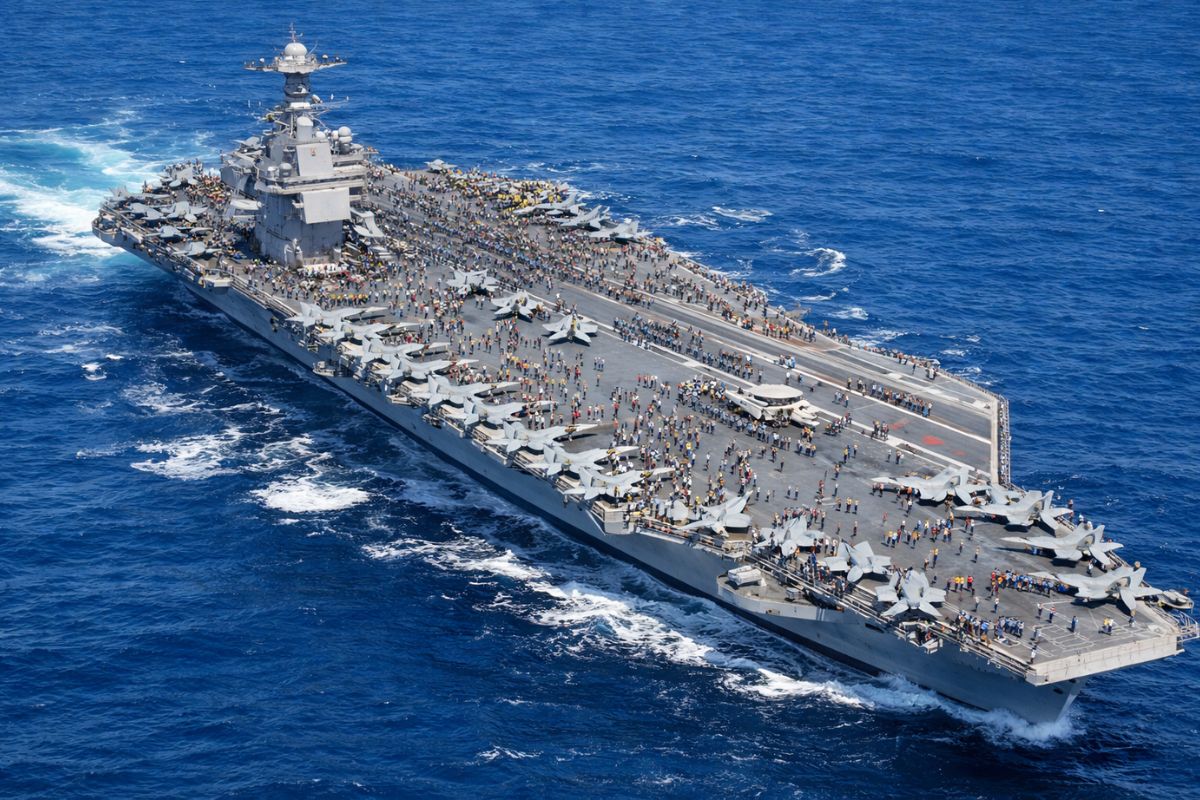


Aircraft Carrier Operates As A True Floating City With Nuclear Reactors, Full Hospital, Self-Produced Water, And Up To 18 Thousand Meals Served Daily While Sailing Isolated In The Ocean.
A nuclear aircraft carrier measuring 333 meters long moves through the ocean like an entire city that never stops. Inside this gigantic vessel, more than 4,500 people live and work to maintain a highly organized routine in an isolated environment, where there are no streets, neighborhoods, or any quick access to the outside world.
In this aircraft carrier, everything needs to be planned in advance. There is no going out to buy something forgotten or asking for external help. Food, water, energy, health, and maintenance must be available within the ship itself. Therefore, this structure is designed to remain months at sea without touching land, functioning as a totally self-sufficient city.
Aircraft Carrier Is One Of The Largest Structures Mobile On The Planet
The aircraft carrier is about 333 meters long, a dimension greater than three football fields placed end to end. When fully loaded, its weight exceeds 100 thousand tons.
-
The Argentine government celebrates the lowest poverty rate in 7 years, but experts warn that the methodology has changed, real wages have fallen, unemployment has risen, and the number of people on the streets of Buenos Aires has increased by 57% since Milei took office.

-
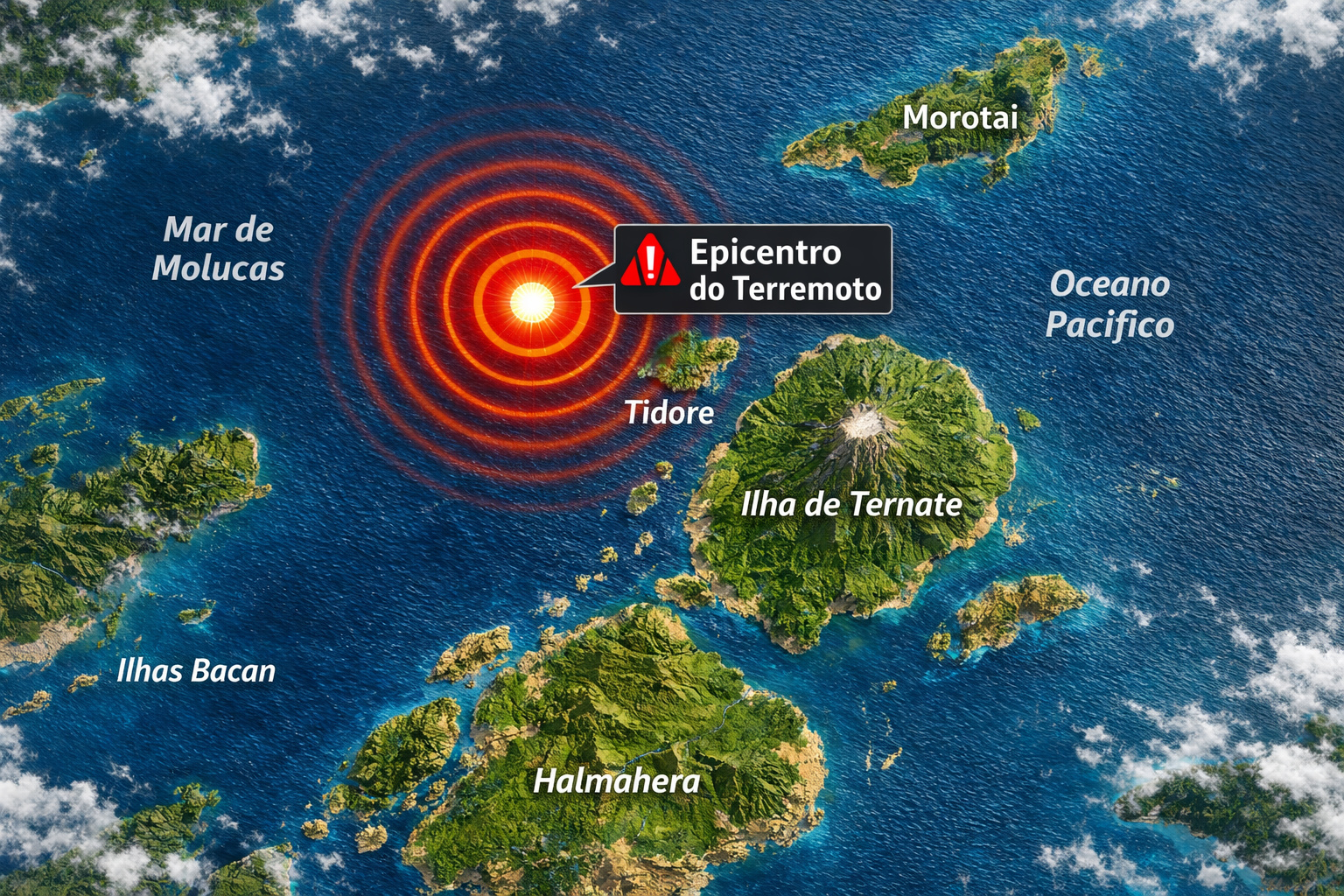
7.8 magnitude earthquake in Indonesia frightens the population, triggers tsunami alert, and hits an island with over 200,000 inhabitants this Thursday.
-
Google will finally let you change that embarrassing Gmail address you created in your teenage years without losing any accounts, logins, or old emails: the feature is already available in the United States.

-
Heading to Brazil in a Bonanza F33 single-engine aircraft: a couple departs from Florida on a visual flight, makes technical stops in the Caribbean to refuel and organize paperwork, and begins the staged crossing until they reach the country.

Even with this impressive size, the aircraft carrier can navigate for long periods without the need for immediate return to port. In many missions, the vessel remains up to 90 consecutive days operating in the ocean.
More than just a large military ship, the aircraft carrier represents strategic presence. The mere presence of this structure in certain regions can influence political decisions, diplomatic negotiations, and military balance between countries.
The power of an aircraft carrier often lies precisely in its constant and visible presence at sea.
Feeding Thousands Of People Requires Continuous Operation
Keeping thousands of people working inside an aircraft carrier starts with one of the most basic needs: food.
Every day, approximately 18 thousand meals are prepared for the crew. Breakfast, lunch, dinner, and additional meals are distributed to accommodate teams that work in continuous shifts around the clock.
The kitchens operate almost without interruption. Large preparation areas function as true industrial lines for food production.
In just a few minutes, hundreds of people need to be served at the same time. Therefore, the menus are planned in advance to ensure hot, balanced meals that are sufficient to maintain the performance of the crew.
In an aircraft carrier, adequate nutrition is not just comfort, but an essential part of operational safety.
Water Production Happens Within The Aircraft Carrier Itself

Another fundamental challenge within an aircraft carrier is the water supply.
All the water used on board is produced directly on the ship by desalination systems. These systems take water from the ocean and turn it into potable water.
Hundreds of thousands of liters are produced daily to meet basic needs such as consumption, hygiene, food preparation, and operation of various equipment.
This ability to produce water ensures autonomy for the aircraft carrier to remain at sea for long periods without relying on external supply.
Daily Life Inside The Aircraft Carrier Requires Constant Adaptation
The routine inside an aircraft carrier is different from life on solid ground.
Most sailors sleep in compact bunk beds organized in shared dormitories. Space is limited and often shared with several people.
Younger sailors usually share large communal areas, while non-commissioned officers and officers have smaller cabins with a bit more privacy.
Even during rest, the ship continues to move. Vibrations, equipment noise, and continuous activities are part of the environment.
Over time, the body adapts to the work shifts and the constant rhythm of the aircraft carrier.
Leisure Areas Help Maintain Psychological Balance
Spending months inside an aircraft carrier can be mentally challenging.
To help reduce the stress of routine, the ship has gyms, lounges, chapels, and small leisure spaces.
These areas allow the crew to have moments of rest and socialization between shifts.
The intense interaction makes the same people meet daily in the same corridors, work sectors, and rest areas.
In this enclosed environment, discipline and respect are essential to maintain the harmony of the crew.
The Flight Deck Is One Of The Most Dangerous Areas Of The Ship

Among all sectors of the aircraft carrier, the flight deck is considered one of the most dangerous places.
In this space, fighter planes accelerate from zero to almost 250 kilometers per hour in just a few seconds, being launched by electromagnetic catapults.
Upon returning, these aircraft are braked by extremely strong steel cables capable of stopping dozens of tons in just a few seconds.
All of this happens while the aircraft carrier continues to move in the ocean, facing wind and changes in the sea.
Jet engines produce extreme heat and loud noises. Any loose object can turn into a hazard.
Therefore, each person on the deck has a specific function and is identified by different colored uniforms that indicate responsibilities such as moving aircraft, maintenance, fueling, or security.
On the flight deck of the aircraft carrier, constant attention is not just a quality; it’s a condition to avoid accidents.
Nuclear Reactors Provide Energy For The Entire Floating City
Below the deck of the aircraft carrier lies the infrastructure that keeps the entire ship operational.
Two nuclear reactors generate enormous amounts of energy capable of powering all the ship’s systems.
This energy supplies radars, aircraft elevators, kitchens, defense systems, medical equipment, and various electronic systems.
The reactors can operate for many years without the need for refueling, ensuring great autonomy for the aircraft carrier to undertake prolonged missions anywhere in the ocean.
Additionally, this energy also allows for the production of enormous volumes of potable water drawn directly from the sea.
Onboard Hospital Provides Comprehensive Medical Care
Inside the aircraft carrier, there is also a complete hospital structure.
The hospital has operating rooms, intensive care units, diagnostic equipment, and a medical team prepared to handle emergencies.
At sea, there is no possibility of quickly transporting a patient to a land hospital.
Therefore, the hospital on the aircraft carrier needs to be prepared to perform everything from basic care to complex surgeries.
The medical structure is essential to ensure safety for the crew during long missions.
Coordination Of Thousands Of People Keeps The Aircraft Carrier Operational
In the end, the operation of an aircraft carrier primarily depends on the coordination among thousands of people.
Each sector of the vessel has specific functions that need to operate in perfect synchronization for everything to work properly.
Kitchens, maintenance, engineering, air operations, health, and logistics work together to sustain life within this floating city.
The aircraft carrier is much more than a gigantic military ship. It is a city built to function in an organized manner in an extreme environment where there is no room for improvisation.
And you, could you live for months inside an aircraft carrier, surrounded only by the ocean and following a routine completely different from life on solid ground?








Tudo explicado mas nao vi o que fazem com o Lixo???jogam nos oceanos???
Muito interessante. Obrigado
Sim; Ja passei 180 dias dentro de navios de pesca longínqua bem mais pequenos e nem morri nem ninguém lá morreu.
Qual o problema por passar 90 dias a bordo de um porta aviões?