





 Portuguese
  English
  Spanish
  4 min of reading
  1 comment


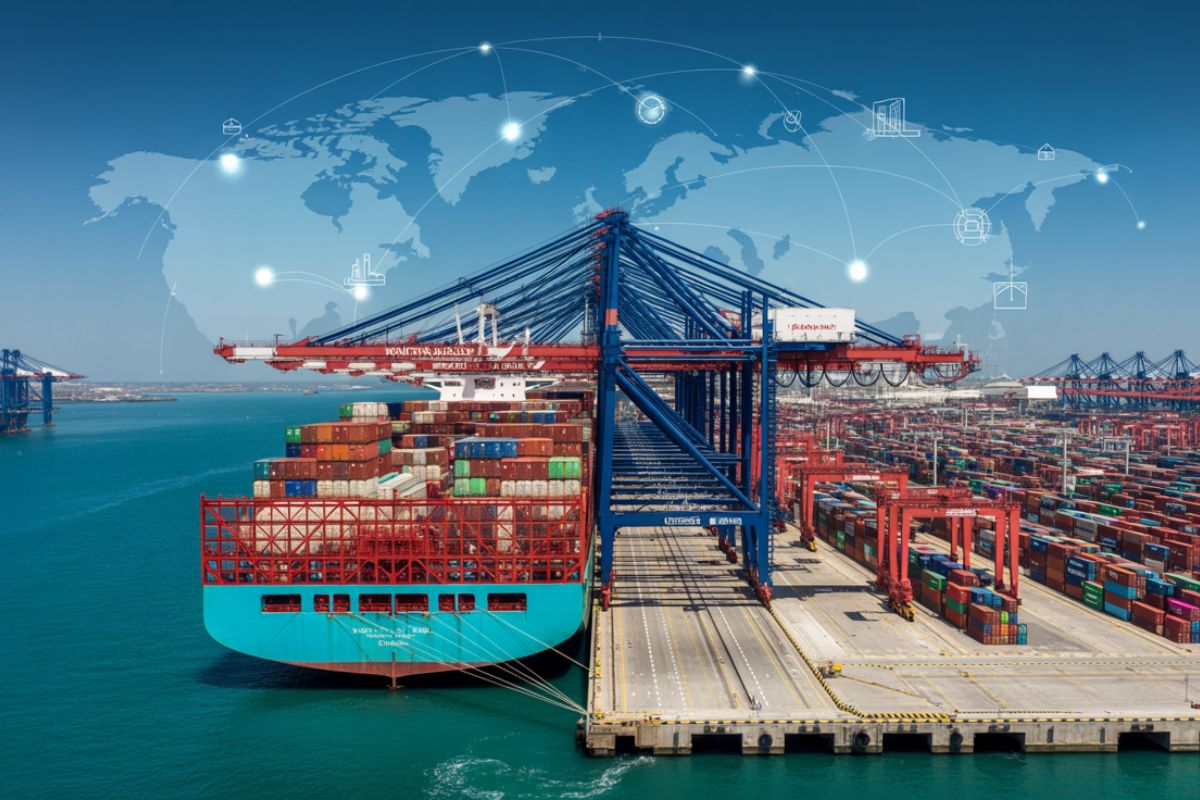


Get To Know Porto Central, The R$ 16 Billion Private Megaproject In Espírito Santo That Promises To Revolutionize National Logistics And Put The Country On The Route Of The World’s Largest Ships.
In a strategic move that may redefine Brazilian foreign trade, a new deep-water superport is being built along the coast of Espírito Santo. With the capacity to accommodate the largest ships on the planet, the project directly answers the question: Why Is This Port Keeping The World’s Eye On Brazil? This is Porto Central, an industrial port complex that promises to resolve historical bottlenecks and firmly insert the country into the main global maritime routes.
With a private investment that may reach R$ 16 billion, the project is not just an infrastructure work, but an audacious bet on Brazil’s logistic future. By allowing the docking of ships that currently cannot operate along the Brazilian coast, Porto Central has the potential to reduce costs, increase the competitiveness of national products, and attract a new wave of investments to the country.
A Giant Under Construction
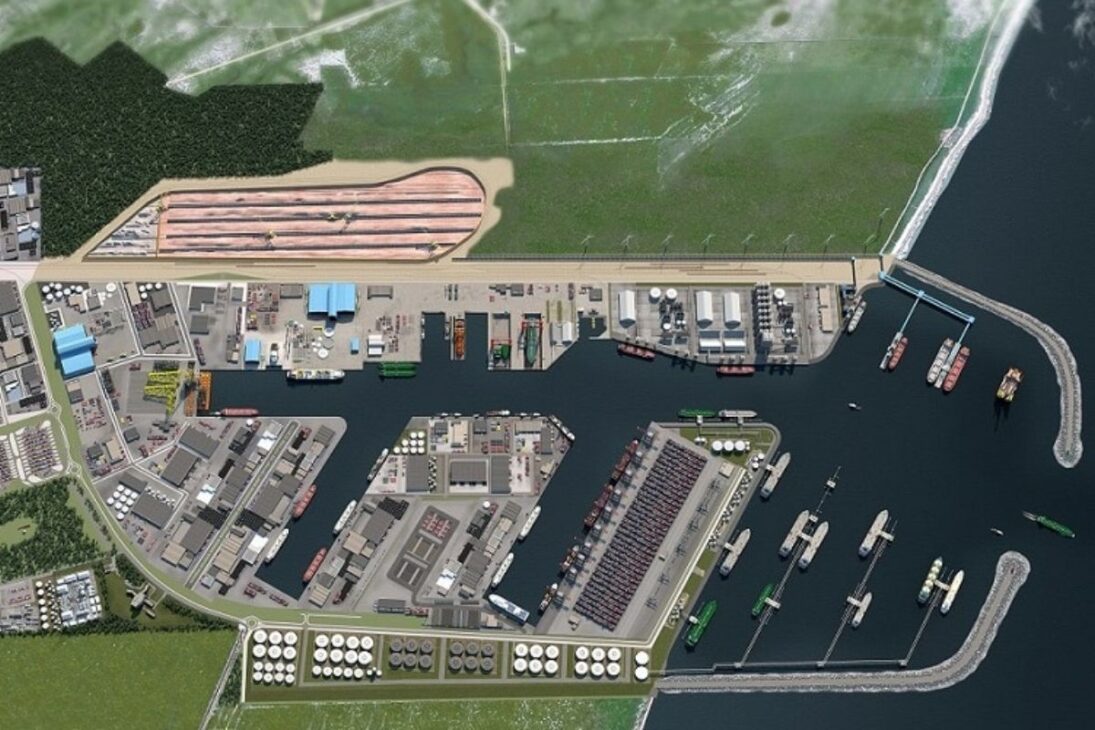
Located in the municipality of Presidente Kennedy, in the far south of Espírito Santo, Porto Central occupies a strategic geographical position. It is close to the main pre-salt oil basins and connected to an area that accounts for over 63% of Brazil’s GDP, encompassing the largest industrial and agribusiness hubs from states like Minas Gerais, São Paulo, Rio de Janeiro, and Goiás.
-
The government opens the vault and deposits R$ 2.6 billion for the construction of Brazil’s first underwater tunnel, with a length of 1.5 km, 870 m under the sea, a total project cost of R$ 6.8 billion, and a 30-year concession.
-
Only 46 meters remain for Brazil and Paraguay to connect via the Bioceanic Route bridge, the project that will link the Atlantic to the Pacific by land and change the logistical map of four countries in South America.
-
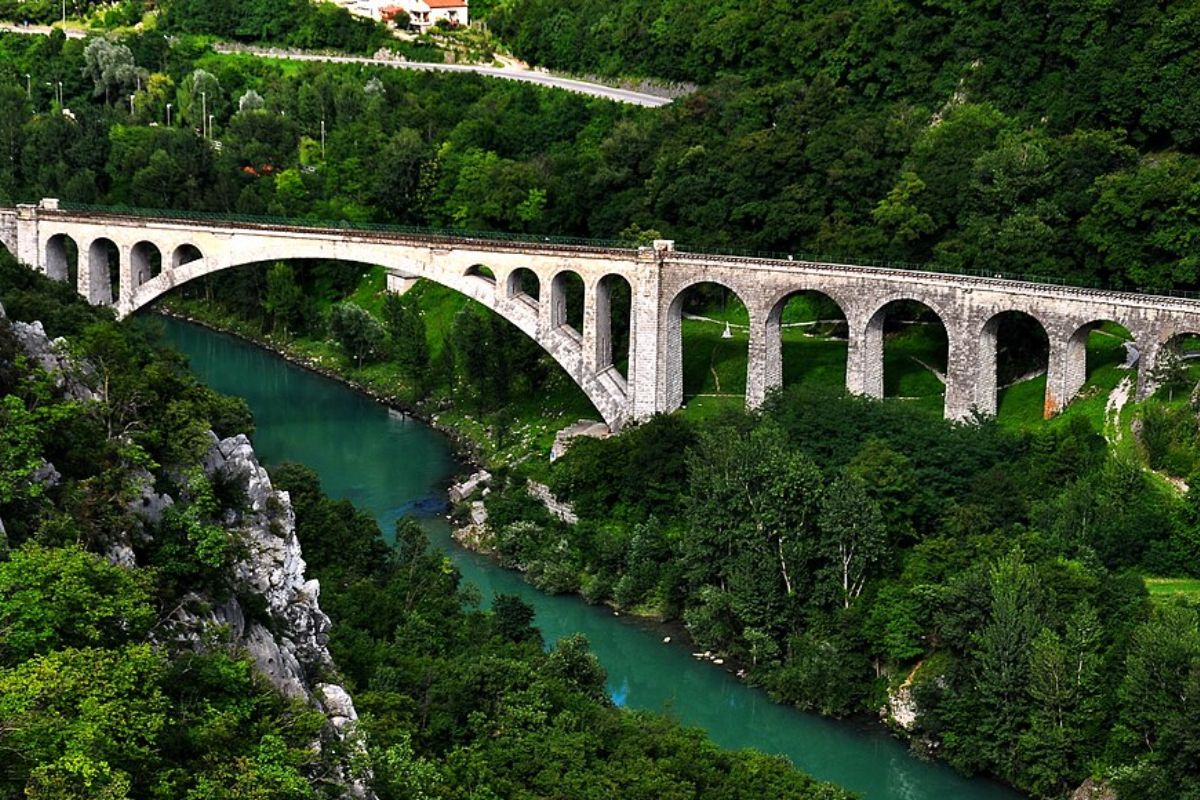
The bridge that holds the largest stone railway arch in the world: built over 100 years ago, destroyed in the war, and rebuilt to continue operating to this day, it still carries trains over the Soča River in Slovenia.
-
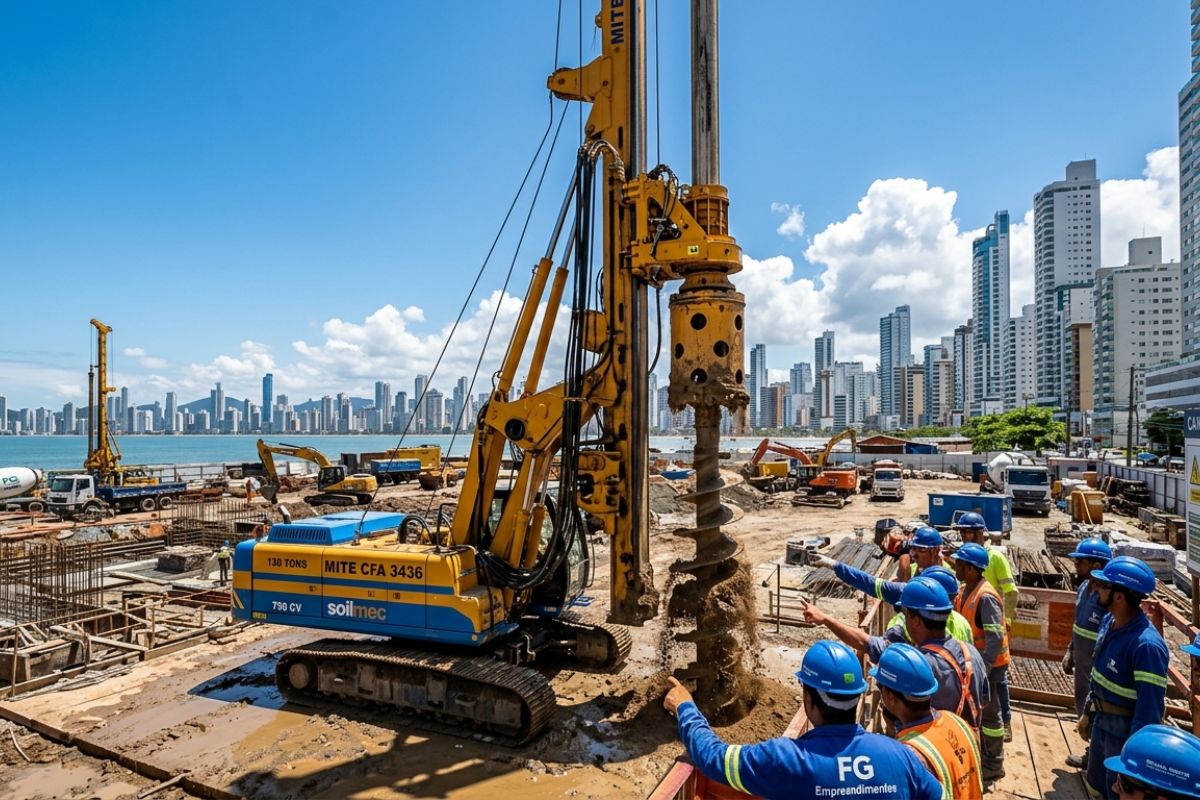
Italian giant of 130 tons arrives at the Senna Tower construction site and accelerates foundations: Mite CFA 3436 drills up to 50 m, 750 hp engine, investment of R$ 20 million, unique in Latin America.

What is truly impressive, however, is its scale. The project is designed to have an access channel with up to 25 meters in depth, a significant difference compared to the average depth of 13 meters at Brazil’s major ports.
Capacity: it will be able to accommodate large vessels such as Valemax (the world’s largest bulk carriers) and VLCC supertankers, with a capacity of up to 400,000 tons.
Total Area: the complex will occupy an area of approximately 2,000 hectares, which is more than twice the size of the Copacabana neighborhood.
Billion-Dollar Investment: the first phase of the project is estimated at R$ 2.6 billion, with a total investment forecast of R$ 16 billion over its five phases, with an estimated completion in 2040.
Solving A Historical Bottleneck In Brazilian Logistics
The main reason Why This Port Is Keeping The World’s Eye On Brazil is that it tackles the root of one of the country’s biggest competitiveness issues: the limitations of its port infrastructure. Currently, the shallow depth of national ports forces exporters to use smaller ships, carry out costly transshipment operations at sea, or make stops at ports in other countries.
This deficiency generates a cascading effect:
Increases Costs: freight becomes more expensive, reducing the profit margin for grain, mineral, and oil producers.
Reduces Efficiency: the time to move production is longer, generating truck queues and congestion in port areas.
Decreases Competitiveness: Brazilian products reach the international market at a higher final price, losing ground to competitors with more modern logistics.
Porto Central was designed to be the direct solution to this scenario, offering a modern platform capable of operating with the same efficiency as global giants like Rotterdam, in the Netherlands, and the ports of Singapore and Shanghai.
Connecting Brazil To The World
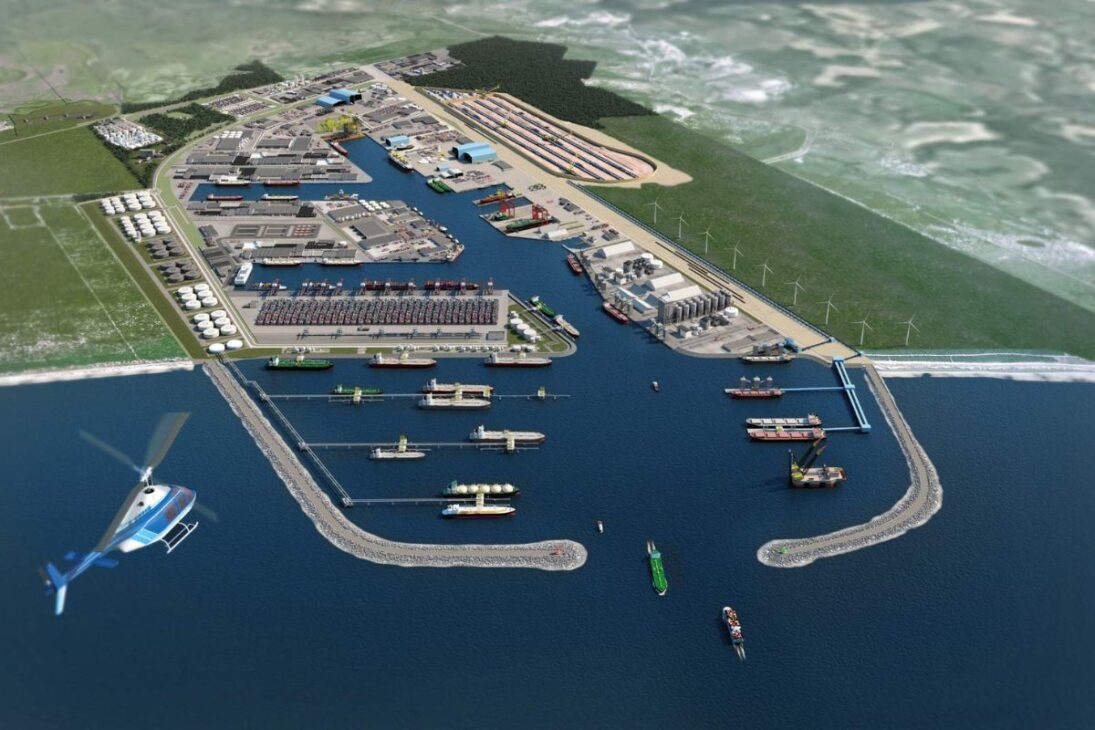
The great trump card of Porto Central is its design as a fully integrated logistics complex. It will not merely be a docking point, but a hub connected to the productive heart of the country through different modalities.
Road Access: the port will be connected to the federal highways BR-101 and BR-262 through state roads that are already undergoing modernization by the government of Espírito Santo.
Rail Access: two strategic railway connections are planned. The EF-118 will link the port to Rio de Janeiro and Vitória, while the future EF-354 will connect it directly to the agribusiness and mining center in Minas Gerais and Goiás.
Pipelines Access: the complex is only 10 km away from the national gas pipeline network and is already positioning itself as a strategic point for future transportation routes of natural gas and other liquid bulk.
In addition, the project foresees the establishment of a Export Processing Zone (ZPE), an area with tax incentives for companies that set up there to produce and export, adding value to national production.
The Future From Presidente Kennedy
The advancement of a project of this magnitude brings enormous impacts and responsibilities. Economically, it represents a leap in competitiveness for Brazil. Socially, it promises to generate thousands of direct and indirect jobs, transforming the reality of the southern region of Espírito Santo.
In environmental terms, the challenges are equally large. To mitigate the construction impacts, the project includes over 40 control and monitoring programs, in addition to a robust compensation plan that foresees the planting of over 100,000 seedlings of native species.
In the end, what will define the success of Porto Central will not just be concrete and steel, but the ability to execute such a complex project responsibly and integratively. What is already clear is that in a small city on the Brazilian coast, a giant step is being taken to change the country’s logistic future.
What do you think about this gigantic project? Do you believe that Porto Central can really transform Brazil’s logistics? Leave your opinion in the comments!








Será uma tragédia socioambiental para Presidente Kennedy, para a região (como já evidenciado por outros Portos à exemplo do Açu) e para o planeta, já que precisamos emergencialmente mudar a rota do sistema petroleiro capitalista que está colocando em risco a vida. Fora Porto Central!