





 Português
  Inglês
  Espanhol
  3 min de leitura


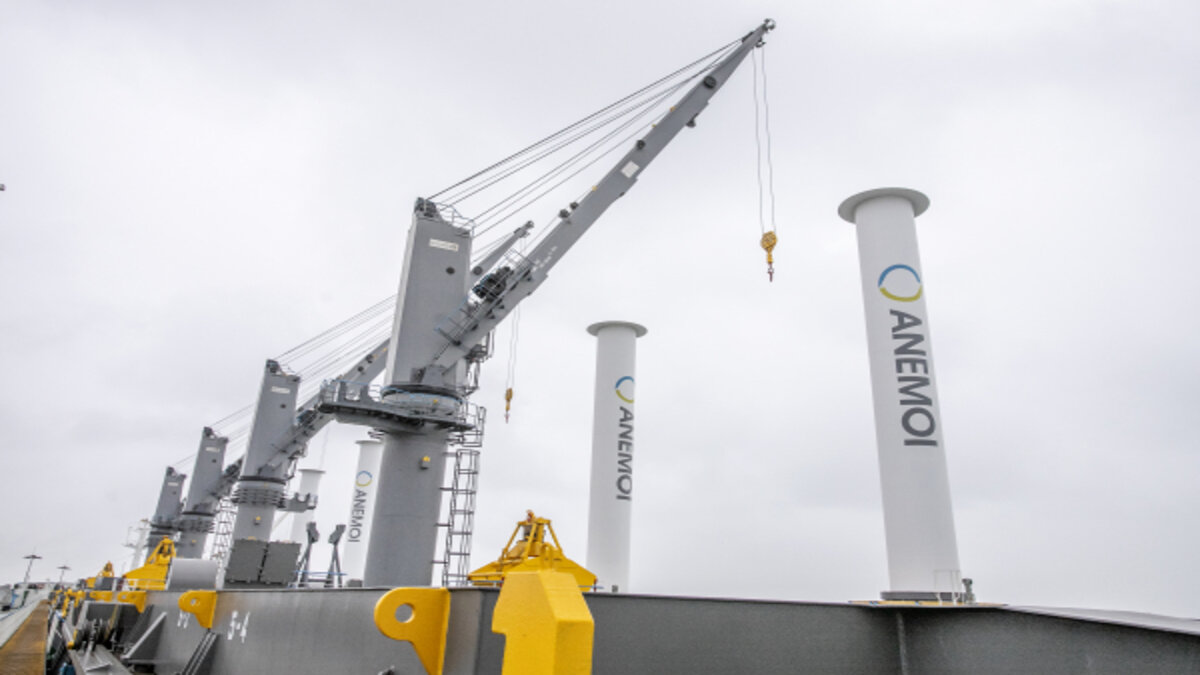
This Is The First Ship To Use The Wind For An Innovative Technology That Guarantees A High Reduction In Fuel Consumption And Should Continue With The Loading Operations Focused On Fertilizers At The Port Of Paranaguá
After arriving for the unloading of fertilizer cargo, the MV Afros ship departed on Tuesday, (05/03), for Argentina and is expected to return to the Port of Paranaguá, in Paraná, later this month. The vessel is a pioneer in using rotary sails to create a technology that reduces fuel consumption. With this, the ship ensures much more sustainability within its cargo handling operations at the complex.
MV Afros Ship Stands Out In Sustainability At The Port Of Paranaguá By Using Rotary Sail Technology To Reduce Fuel Consumption
With the arrival of a large number of vessels for the unloading of tons of fertilizer at the Port of Paranaguá, the MV Afros ship has achieved significant prominence at the location. This is due to the innovative and pioneering technology of using rotary sails to harness the wind in the vessel’s movement, thus guaranteeing a high reduction in fuel consumption and, consequently, more sustainability in operations.
The ship docked last Thursday (26) at the Port of Paranaguá, coming from the port of Klaipeda, Lithuania, with 48,000 tons of potassium chloride. And, although it left this past Tuesday for Argentina, the vessel is expected to return to Paraná later this month for the unloading of new tons of fertilizer. This is the first ship to use the help of the wind through rotary sails in these operations, aiming for a reduction in fuel consumption in all its unloading activities.
-
Historic bankruptcy of Centauro shocks the market, and the century-old company puts more than 500,000 products, machines, and complete infrastructure up for online auction.

-
New shoe factory in Ceará is expected to create 400 jobs and strengthen the local economy.
-
No one imagined it, but a mixture of sawdust with a mineral that fights fires surprises scientists with a result that changes the course of fire-resistant construction.
-
From empty land to a high-end house, wooden construction uses a lightweight system, metal structure for the foundation, ventilated ceramic cladding, and special windows to create an efficient and comfortable living space throughout the year.


Additionally, the MV Afros also features innovative systems that prevent bulk spillage, oil spills, and workplace accidents, which further ensures efficiency in cargo handling. Finally, another technology that guarantees more safety in operations is the frequent testing of the winch brakes that pull the mooring cables and a walkway so that workers do not run risks while monitoring the final loading of the hold. Thus, the ship achieves not only greater productivity and efficiency in fertilizer unloading but also safe operations for all.
Teams From Portos do Paraná Visited The MV Afros Ship To Learn About Innovative Rotary Sail Technology In Cargo Unloading
Following the arrival of the ship at the Port of Paranaguá and the great prominence it achieved, some teams from the Portos do Paraná company visited the vessel. Thus, João Paulo Ribeiro Santana, Environment Director of the public company, commented on the innovative technology and stated that “The Port of Paranaguá is a signatory of the UN Global Compact and is studying strategies to attract vessels that are aligned with these intentions, including helping to reduce greenhouse gas emissions.”
With initial tests conducted in 2018 for the reduction of fuel consumption, the MV Afros achieved a fuel savings of up to 12.5% in the first month. Furthermore, in the early operations, using 73 tons less fuel, the vessel reduced the emission of 235 tons of carbon dioxide. This technology was developed in the United Kingdom and is now being introduced worldwide to reduce fuel consumption.
Finally, the company emphasized that this is the type of ship that should be prioritized in cargo handling operations at the Port of Paranaguá, as the environmental commitment and sustainability are essential points for the current international market.










Seja o primeiro a reagir!