





 Portuguese
  English
  Spanish
  4 min of reading
  0 comments


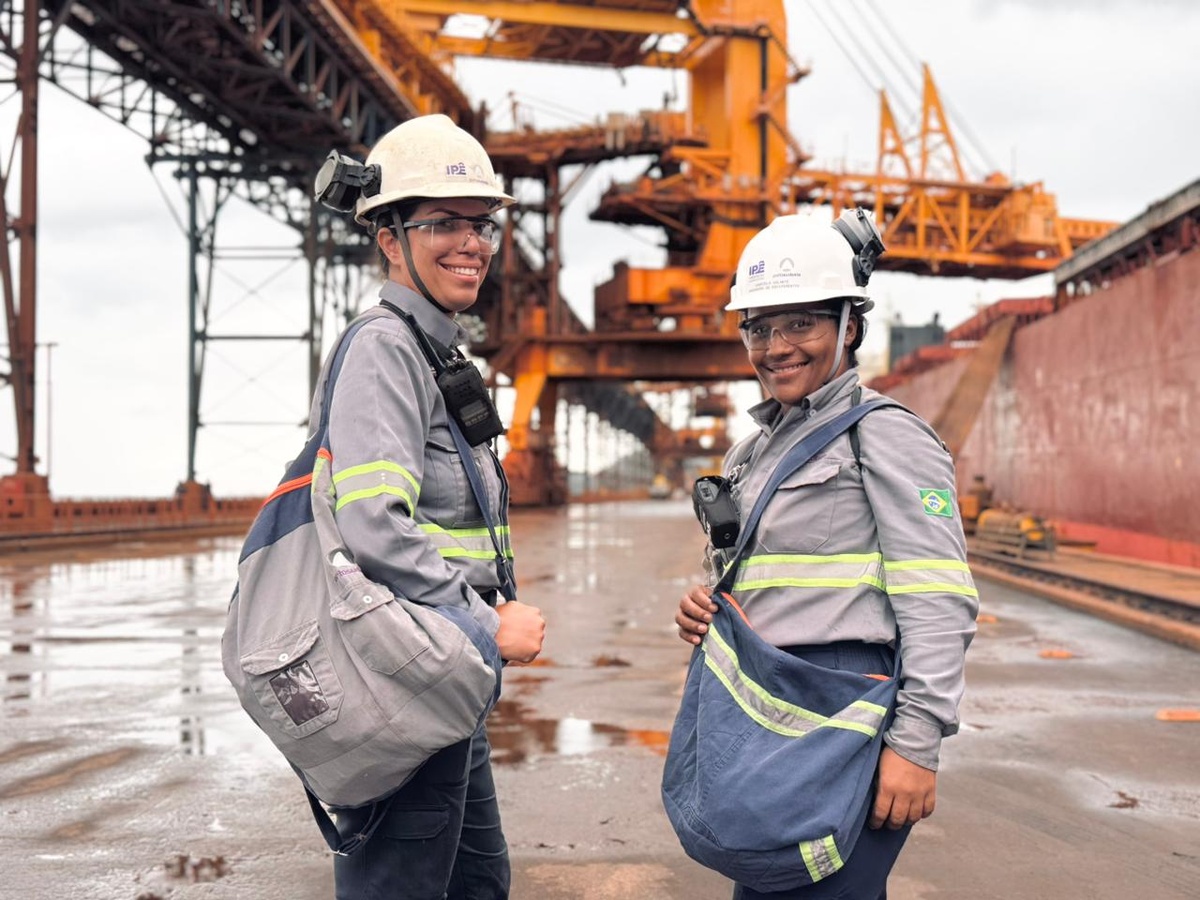
Project Carried Out in Itaguaí Transforms Unused Uniforms into New Products, Reduces Emissions, and Strengthens Circular Economy in the Port Sector.
Initially, Porto Sudeste completed a Proof of Concept (PoC) in 2026 focused on the reverse logistics of corporate uniforms.
Additionally, the initiative was carried out in partnership with the startup Minha Coleta and received support from the BlueRio open innovation program, from the Government of the State of Rio de Janeiro.
Thus, the project structured an operational model that ensures complete traceability of textile disposal.
-
While the world looks at oil, the war with Iran is already disrupting helium supply from Qatar, affecting car and iPhone chips, threatening AI expansion, and putting pressure on aluminum packaging at the highest value in four years.

-
Global warming will expose a treasure hidden under the ice of Antarctica and may spark an international dispute over gold and valuable minerals.

-
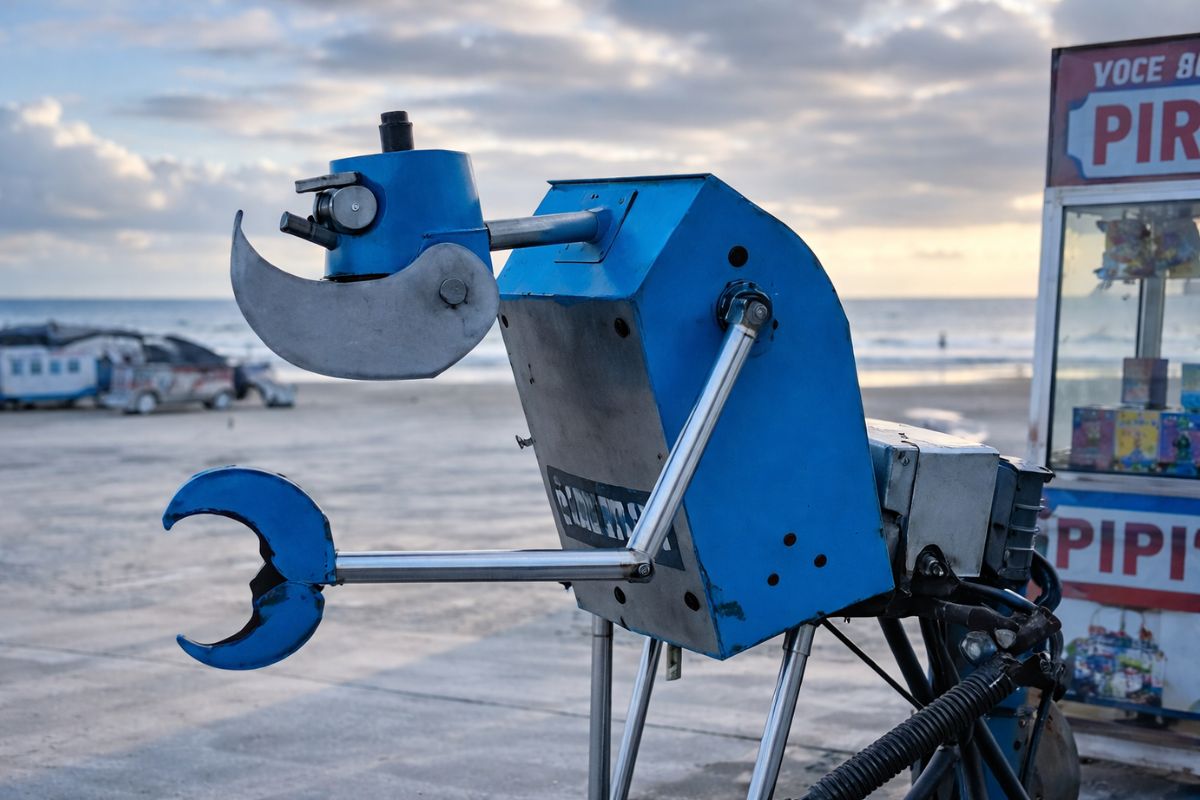
A street vendor from Praia Grande built a robot made of scrap from scooters and washing machines that pulls his popcorn cart on the beach, emits sounds, and interacts with customers, becoming an attraction on the coast of São Paulo.
-
The specifications of the Xiaomi 18 Pro Max have been leaked, and the highlight is a dual 200 MP camera with a new 22-nanometer technology that promises to consume less energy and capture details in shadows and bright areas using LOFIC HDR.

Consequently, the initiative also strengthens the terminal’s environmental strategy, aimed at the Zero Landfill goal by 2030.
Furthermore, the solution was created to overcome technological and operational challenges that hindered the reuse of textile waste in the port sector.
Circular Economy Gains Scale at Porto Sudeste
Initially, the partnership between Porto Sudeste and the startup Minha Coleta was structured to solve scalability and technology bottlenecks in textile waste treatment.
Previously, recycling actions had already been taken.
However, there were still limitations to expand the process.
Now, during this stage of the Proof of Concept, approximately 420 kilograms of unused corporate uniforms were reused.
Thus, the material was transformed into new products and corporate gifts, expanding the value chain associated with textile disposal.
According to Bernardo Castello, Environmental Manager at Porto Sudeste, the challenge has always been linked to scale and the lack of adequate technological solutions.
“Providing a proper destination for retired uniforms has always been a challenge for us,” Castello stated.
Additionally, he explained that previous actions were isolated and limited.
Now, however, a traceable and replicable model has been structured.
As a result, uniforms that previously would have ended up in a landfill are now being transformed into new products.
Therefore, the project has ceased to be merely an environmental initiative.
In practice, it has come to represent a case of operational innovation in the port sector, according to the manager.
Environmental Indicators Show Measurable Gains
In addition to the reuse of materials, the environmental indicators of the project also show relevant results.
Initially, about 95% of the collected material was recovered during the process.
Thus, approximately 2.5 tons of greenhouse gases were avoided considering transport and textile production.
Moreover, the initiative also generated energy savings.
According to project data, about 13,000 kWh of energy were not consumed.
This volume is equivalent, for instance, to the average monthly consumption of about 85 Brazilian households.
At the same time, there was a significant reduction in the use of natural resources.
In total, 2.5 thousand cubic meters of water were preserved, avoiding additional consumption in the textile production chain.
Thus, the project began to demonstrate measurable environmental benefits within port operations.
Social Impact Also Integrates the Project Strategy
In addition to environmental gains, the program also generates direct social impacts in the local production chain.
This occurs because the production of the gifts involves women participating in the sewing stage.
Thus, the initiative expands income generation and strengthens regional economic development.
Therefore, the project connects three important pillars.
Among them:
- Environmental Sustainability
- Productive Inclusion
- Local Development
Porto Sudeste’s Strategy Aims to Expand Reuse Solutions
Currently, the project integrates the environmental strategy of Porto Sudeste to achieve the Zero Landfill goal by 2030.
However, the initiative should not be limited to uniforms.
According to the terminal’s strategy, new stages should consider other operational waste, including personal protective equipment.
Among them:
- helmets
- gloves
- safety glasses
- noise suppressors
Furthermore, the program also seeks to identify professionals working with upcycling in the Itaguaí region.
Thus, new local solutions can be incorporated into the reuse chain.
According to representatives of the initiative, the Minha Coleta platform also connects large companies to small local service providers.
Moreover, the company facilitates verification processes and documentation regularization.
In this way, providers can operate in compliance with operational and environmental requirements.
Consequently, the initiative expands the network of partners and strengthens the circular economy within the territory where the terminal is located.
Given this operational and environmental advancement, the initiative raises an important question: how can new circular economy solutions transform the future of waste management in the Brazilian port sector?








-

Uma pessoa reagiu a isso.