





 Português
  Inglês
  Espanhol
  7 min de leitura
  3 comentários


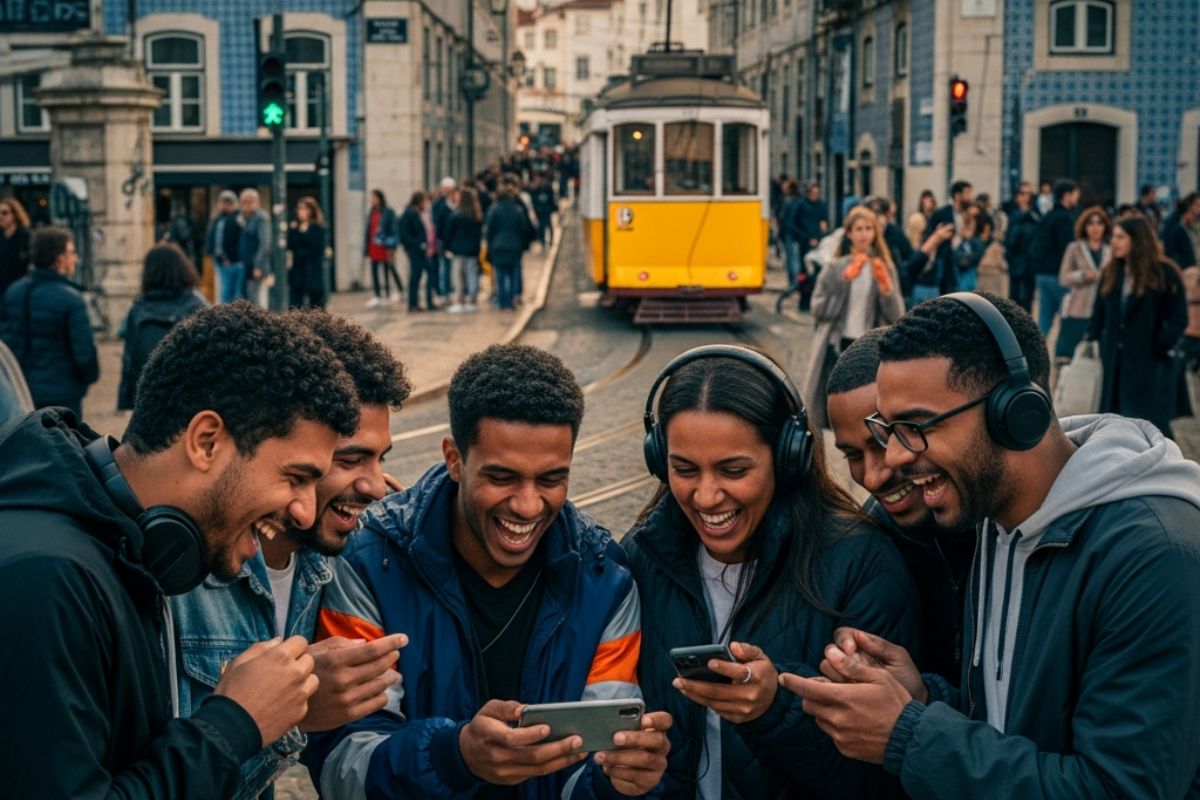


Between The History Of Portuguese Since The 13th Century, Soap Operas And Streaming, The Diaspora Of 400 Thousand Brazilians In Portugal And Political Decisions In Lisbon And Brasília Rekindle The Question: Do Brazilians Already Demand The Status Of A Standalone Language In Education, Grammar, Diplomacy, And Cultural Identity?
The Portuguese spoken in Brazil today was born from a long process, starting from the Latin of the Roman Empire, passing through a decree in the 13th century in Portugal, crossing the Atlantic during the great navigations, and landing in a territory with hundreds of indigenous languages between the 16th and 18th centuries. At the same time, the European Portuguese continued to evolve in a different social, political, and demographic context, accumulating differences that are now felt in vocabulary, syntax, pronunciation, and even in the way it is taught.
In the 19th century, Brazilian intellectuals were already considering linguistic independence. In the 21st century, with the impact of soap operas, pop music, influencers, streaming platforms, and a community of around 400 thousand Brazilians legally living in Portugal, the question returns with renewed force: does it still make sense to treat everything simply as Portuguese, or are we facing a candidate for a language called “Brazilian”?
From Rome To Lusitania: When Did Portuguese Become A Language?

The history of Portuguese begins long before Brazil existed.
-
Drought may be creating stronger superbugs in the soil and helping antibiotic resistance reach hospitals, warns a study highlighting a problem that could grow alongside extreme weather.

-
The biggest scam in history: Napoleon’s France deceived the United States by selling them a territory that was Spanish.
-
Why is the Danakil Desert so dangerous? It has unstable terrain and how extreme temperatures and toxic gases turn the region into one of the most hostile environments on Earth.
-
With a height of 221 meters and a capacity for trillions of liters, Hoover Dam still holds a trick that makes water defy logic.
For more than 500 years, the Roman Empire occupied parts of Europe, North Africa, and Western Asia and imposed Latin as the language of administration, religion, and power.
In the region that would later become Portugal, the popular Latin was assimilated by the population and mixed with local usages until it formed its own Romance variety.
Centuries later, with the end of Roman rule and after an Arab occupation in the Iberian Peninsula, Portuguese was recognized as the official language in Portugal by a 13th-century decree, when the kingdom was already established.
In other words, first the people were already speaking Portuguese in practice, then the state recognized the language by political decision. The language is born, therefore, as a social phenomenon, but gains official status in a gesture of power.
How Portuguese Arrived In Brazil And Changed Forever

In Brazil, Portuguese arrived during the great navigations, starting in the 16th century, as part of a colonial project.
However, this did not initially mean that the entire population began to speak the same language.
There were between 800 and 1,500 indigenous languages in use when Cabral arrived, in addition to the languages of African peoples brought forcibly. This set named plants, animals, and realities that the European vocabulary did not know.
For much of the 16th to 18th centuries, Portuguese was not even the majority language in Brazilian territory.
The language gradually imposed itself through religious schools, colonial administration, and decrees such as that of the Marquês de Pombal in the 18th century, which expelled Jesuits and prohibited teaching in indigenous languages.
In this process, Brazilian Portuguese mixed with indigenous and African references and incorporated structures that European Portuguese would leave behind.
Brazilian Portuguese Preserves Ancient Traits That Portugal Lost


Linguists point out that the Portuguese transplanted to Brazil had traits from the classical period, including usages that are no longer dominant in Portugal today.
The most illustrative example is the gerund.
In Brazil, people say “we are doing,” “we are watching TV.” In Portugal, the common form is “we are a doing,” “we are a watching TV.”
Another case is the use of possessives. In Portugal, it is mandatory to say “my house,” “my school.” In Brazil, the standard is simply “house,” “school.”
Historically, many of these Brazilian structures are closer to ancient phases of Portuguese itself, while the European standard has moved away from them over the centuries.
This challenges the simplistic idea that Brazilian Portuguese “ruined the language” and that Brazilian is merely a deformation of the European model.
At the same time, vocabulary diverged in various fields. “Refrigerator” in Brazil, “frigorífico” in Portugal. “Cell phone” here, “mobile phone” there. “Bathroom” for “washing house.” “Train” for “combination.” “Girl” with an offensive meaning in Brazil, a neutral word in Portuguese lands.
These are differences that, in isolation, do not create a new language, but reveal systems of use that have followed different paths.
Variation, Dialect Or New Language? Where Is The Line Of Disruption?
The central doubt of experts is: at what point does the Portuguese spoken in Brazil cease to be a variation and become recognized as an autonomous language?
The answer, linguists interviewed in the report say, is not merely grammatical.
Differences in pronunciation, vocabulary, and syntax exist, but the definition of language is much more social, historical, and political than purely linguistic.
Within Brazil itself, there are deep variations between regions.
Yuca, macaxeira and aipim refer to the same food, just like dozens of regional terms for “French bread,” “cookie,” or “biscuit.”
However, no one seriously argues that each state should have an official language.
In this context, the differences between Brazilian Portuguese and European Portuguese are currently classified as variations of the same system, not as separate languages.
The Precedent Of Galician And The Hypothesis Of An Autonomous Brazilian
The case of Galician helps to understand the potential unfolding of Portuguese.
Initially, it was said to be the same linguistic unit in the northwest of the Iberian Peninsula, which later split into Galician and Portuguese.
Galician, spoken in Galicia, consolidated its status as a standalone language due to specific political and social circumstances, even being closely related to European Portuguese.
Some experts argue that something similar could theoretically happen with Portuguese in Brazil.
There are those who have argued for years that “Brazilian” could become a language, claiming that it no longer makes sense to teach the peculiarities of vocabulary and grammar as mere footnotes of a European standard.
There have even been predictions that, in two generations, Brazilian would be so far removed from the Portuguese norm that separation would be inevitable.
The majority of linguists, however, emphasize that the rupture depends less on grammar and more on a political decision.
Just as Portuguese was formalized by decree in Portugal and consolidated as the state language in Brazil in the 18th century, an eventual “Brazilian language” would require institutional will, economic impact, and diplomatic alignment to sustain itself.
Streaming, Slang, And 400 Thousand Brazilians In Portugal Change The Game
If, on the one hand, Brazilian Portuguese was historically viewed as a peripheral variation, today, the cultural landscape has inverted.
In recent decades, telenovelas, popular music, series, and reality shows have brought the Brazilian way of speaking into Portuguese homes.
With streaming, this presence has become daily and global, reaching adolescents and young adults in Portugal early on.
Additionally, there is the migratory dimension.
It is estimated that around 400 thousand Brazilians live legally in Portugal, creating a network of bars, restaurants, gyms, salons, and small businesses that operate mainly in Brazilian Portuguese.
On many streets, one can hear funk, pagode, sertanejo, expressions like “how’s it going” or “it’s all good” and grammatical structures that are clearly Brazilian.
There are Portuguese people who say, half-seriously, half-ironically, that “Brazilian” is spoken everywhere.
This circulation of slang and expressions generates distinct reactions.
Some interviewees in Lisbon see “Brazilian” as a funny way of speaking, full of different expressions, but still within the same language.
Others explicitly refer to it as “language,” in an informal acknowledgment that Brazilian Portuguese has already gained its own life in the social imagination.
Who Colonizes Whom? The Cultural Flow Inverts In The 21st Century
During the colonial era, the flow was clear: culture, books, norms, and decisions about Portuguese came from Europe to America.
Today, the circuit of cultural products indicates the opposite movement. According to experts, much more Brazilian music, television, and audiovisual production is heard in Portugal than vice versa in Brazil.
What reaches Brazilian screens produced in Portugal is still proportionally small.
This inversion feeds discomfort among some speakers of European Portuguese.
Some criticize the use of Brazilian expressions in Portugal as a kind of “reverse colonization,” accusing colleagues and youths of “speaking Brazilian.”
The tension reveals that the debate is no longer just about grammar, but about symbolic power and cultural influence within the very universe of Portuguese.
Linguists emphasize that the result of this clash can only be clearly assessed in one or two decades.
The open question is whether European Portuguese will absorb part of Brazilian vocabulary, whether the norms will converge, or whether the friction will generate a clearer claim for autonomy from Brazil.
The Future Of Portuguese Depends More On Brasília Than On Grammar
Whether the Portuguese spoken in Brazil will officially transform into “Brazilian language” remains an unknown.
What is already known is that the decision, if it comes, is likely to arise less from a sudden change in the way of speaking and more from a political, economic, and diplomatic choice.
A state can choose to rename its language, reinforce the idea of unity, or maintain, for international convenience, the same label as before.
For now, all indications are that Portuguese will continue to be the official name of the language used in documents, schools, and treaties, both in Lisbon and Brasília.
But, in the realm of imagination and daily practice, “Brazilian” is already operating as an informal label for a way of speaking associated with slang, rhythms, accents, and constructions that are increasingly distancing from the European norm.
The boundary between variation and new language remains blurred, awaiting decisions that extend beyond the classroom and enter the realm of state policy.
In your opinion, should the Portuguese spoken in Brazil officially remain the same language as the other Lusophone countries, or should Brazil eventually recognize Brazilian as a language separate from European Portuguese?








Roberto – GEOLÍNGUA – um nome para a língua brasileira.
Pois, na realidade o Brasil fala e escreve o Galego-brasileiro, desde o ano de 1500
O Testamento de vida de D. Afonso II, terceiro rei de Portugal, foi assinado em 27 de Junho de 1214 e, é considerado, simbolicamente, por alguns historiadores, como sendo o primeiro documento escrito em “português”. Entretanto, e na realidade documental, a língua do rei era o Galego, tal qual a língua de seu neto, D. Dinis, e que – por decreto real, lá por volta de 1297 oficializa o nome português à sua língua que – entretanto, era o galego. Esta ação de D. Dinis deu-se por fatores geopolíticos, na sequência de seu avô, D. Afonso X, rei de Leão, Castela e Galiza ter oficializado o castelhano como a língua de seu reino. É de salientar que, avô e neto, ambos poetas, se expressavam em Galego, a língua de suas poesias.
“A Galiza deu-nos população e língua e, o português não é senão o dialeto galego” – Alexandre Herculano … em carta datada em 1874 enviada ao seu amigo.
27 de Junho de 1931 é a data da Primeira República Galega. – Juntando, todas as evidencias ao redor do dia 27 de Junho a partir de 1214, justifica-se ser esta a data da Língua Galega, de direito e de facto via documentação histórica, visto que a língua “portuguesa” ser um dialeto do galego e criada artificialmente por decreto real de D. Dinis.
Sugiro que se leia o livro: “Assim nasceu uma língua” escrita pelo Prof. Fernando Venâncio.
GEOLÍNGUA – um nome para o Galego-brasileiro.
Para tal, basta se promover, democraticamente – o bilinguismo entre os povos.!
Sendo assim, concluímos que, a partir da sua língua materna, escolha uma língua que não promova o diálogo bilingue, como é o caso do inglês, por exemplo. Pois, ao apreender o inglês estará a contribuir para se promover o monoglotismo no mundo.
No futuro todo o diálogo será na sua língua materna ou em Geolíngua (galego-brasileiro) pois esta já é bilingue à nascença – pelo facto de entendermos o espanhol e o contrário isso não acontece, devido aos doze símbolos fonéticos do galego-brasileiro (7 orais e 5 nasais) contra apenas os 5 símbolos unicamente orais do espanhol. Em linguagem publicitaria poderíamos afirmar o seguinte: Aprenda o galego-brasileiro e ganhe de graça o espanhol, pague 1 leva 2.
Muito provavelmente, a profissão de tradutor será extinta.
A seguir explico como surgiu o projeto Geolíngua no hotel Sheraton de Lisboa em 1996, e lá permaneceu até 2004. Entretanto, e visto que o seu mentor, eu Roberto Moreno, fui expulso do hotel, por defender o português e o bilinguismo, mas, a diretora geral, que assumiu o seu cargo em 1998 e, até 2004, nunca aceitou que eu falasse em português no hotel, “dela”, segundo afirmou, pois o inglês era obrigatório e oficial no Sheraton, como única língua. Mas, esta é uma outra história, e que já virou livro e, no futuro também em suporte teatro e cinema.
O Projeto Geolíngua, a partir do GALEGO
O GALEGO, a língua que deu origem ao dialeto português e, que, por sua vez virou língua por decreto, é falada por 100 vezes mais pessoas, do que o país que a criou – a Galiza!
Até o final do século XXI haverá 500 milhões de falantes de galego no seu dialeto e, que, virou língua brasileira, diz Roberto Moreno presidente da Fundação Geolíngua, com muito mais propriedade científica e mais credibilidade documental do que o Governo português.
Porque é que o Galego é tão idêntico ao Português?
– A resposta é muito simples: é idêntico porque é a mesma língua.
O Português é igual ao Galego porque foi criado por decreto Real em 1296, por D. Dinis, rei de Portugal. – E, neste âmbito a Fundação Geolíngua passou a existir desde 11 de Setembro 2001.
Entre os objetivos da Fundação Geolíngua está a criação, na Galiza, do: MUSEU DA LÍNGUA GALEGA Luso-afro-brasileira.
No texto abaixo descrevo um pouco sobre a verdadeira história da autoproclamada língua portuguesa e uma proposta, neutra, para a língua do futuro.
Geolingua: novo nome para o Galego-brasileiro.
Cá está a sinopse de uma Obra a ser publicada em suporte Livro, Teatro e Cinema.
Como nasceu a língua “portuguesa”.
Segundo relatos históricos de: D. Afonso X, Rei de Castela e Leão, e D. Dinis, Rei de Portugal; Alexandre Herculano, historiador português e, Humberto Eco, filósofo … e, tudo narrado por Roberto Moreno, professor e historiador desde 1974, e fundador da Fundação Geolíngua, cujo objetivo principal é transcender a língua Galega para língua universal, via o seu dialeto brasileiro, mais conhecido como língua portuguesa do Brasil ou língua brasileira.
Cá estão alguns fatos históricos.
1 – D. Dinis (sexto rei de Portugal) em 1296, por decreto, cria a língua portuguesa e obriga-a a ser adotada na Chancelaria Real, na redação das leis, nos notários e na poesia, eliminando a língua Galega por razões socioculturais e geopolíticas. – D. Dinis adotou uma língua própria para o reino de Portugal tal como o seu avô espanhol, D. Afonso X, fizera com o castelhano a partir de 1252, quando assumiu o trono de Leão e Castela, por razões geopolíticas (embora, ambos continuassem a utilizar o Galego em suas poesias). – Portanto, como reza a história e, diante dos fatos (factos em Portugal) – A dita língua “portuguesa” foi criada por Decreto e, o Galego foi sumariamente banido, ocultado e torturado durante 8 séculos, para já não falar há mais de 2 mil anos, quando a sua língua, conhecida como “linguagem” se mesclou com o Latim, dando origem ao Galego-latinizado (conhecido como latim vulgar) e que se fala hoje, principalmente em Portugal e no Brasil, nos seus dois dialetos, o português e o brasileiro, respectivamente.
2 – «O certo é que as línguas não podem ter nascido por convenção já que, para se porem de acordo sobre as suas regras os homens necessitariam de uma língua anterior; mas se esta última existisse, por que razão se dariam os homens ao trabalho de construir outras, empreendimento esforçado e sem justificação? » – (Umberto Eco)
3 – O português standard é um superdialeto. – Uma língua é um dialeto equipado com um exército, tem poder político e, pode invadir a área de outros dialetos. Historicamente, foi sempre assim. – Modernamente, diria que uma língua é um dialeto que tem uma televisão. A televisão é mais eficaz do que um exército. – Ivo Castro, Professor catedrático, licenciado em Filologia Românica e doutorado em Linguística Portuguesa
4 – O português vem do Galego – Não é correto, do ponto de vista histórico-geográfico, afirmar, como fazem todas as gramáticas históricas, que “o português vem do latim”. O português vem do galego – o galego, sim, é que representa a variedade de latim vulgar que se constituiu na Gallaecia romana e na Galiza medieval. – Marcos Bagno, Professor, doutor em filologia, linguista e escritor brasileiro.
5 – “O Congresso reafirma a tese de que o galego e o português são normas cientificamente reconhecidas de um mesmo sistema, que engloba as comunidades linguísticas luso-galego-brasileiro-africanas”. – Mª Helena Mira Mateus, … no CONGRESSO SOBRE A SITUAÇÃO ACTUAL DA LÍNGUA PORTUGUESA NO MUNDO (1985)
6 – “O nosso idioma é muito mais antigo que a nação. Isto significa que, se nunca Portugal tivesse surgido, esta mesma língua (hoje chamada portuguesa) teria existido sem ele”. – “Se a língua de D. Afonso Henriques algum nome pudesse ter tido, era só este: Galego”
É preciso que os galegos o entendem… Porque os portugueses, eles, acham, no fundo, no fundo, que Portugal esteve sempre prometido, desde toda a eternidade.
OLHA, O GALEGO-PORTUGUÊS!
Uma língua chamada Galego-Português jamais existiu. – Inventou-a, ali por 1900, a grande linguista alemã Carolina Michaëlis de Vasconcelos, quando percebeu que os portugueses jamais conceberiam que o simples Galego tivesse sido, durante séculos, a língua daquele nosso lindo Reino novinho em folha. – Fernando Venâncio, Professor, filólogo e escritor português, critico literário e académico.
7 – “O Brasil fala galego no dialeto brasileiro” – O ato de pensar, duvidar e investigar é a base da reflexão científica e, neste âmbito conclui-se que, à semelhança da afirmação de Alexandre Herculano quanto ao português ser um dialeto do galego e, da invenção do galego-português, ali por volta de 1900, poderá se afirmar que a língua do Brasil é o Galego-brasileiro, quiçá, futura GEOlíngua. – Roberto Moreno, investigador, historiador e professor de Filosofia do Direito e do Jornalismo, fundador e presidente da Fundação Geolíngua.
Proposta de Roberto Moreno:
À luz dos fatos e da história e diante das declarações das autoridades citadas, a Fundação Geolíngua propõe-se a seguir os mesmos passos do Rei D. Dinis no âmbito deste ter criado a primeira “marca branca” do mundo, ao nomear de “português”, o Galego.
O objetivo é designar o Galego, no seu dialeto brasileiro (em sintonia com Alexandre Herculano) – por GEOLÍNGUA (língua da terra). – É uma espécie de “Esperanto II” – uma “nova marca branca” – 8 Séculos após à marca “português”, ter sido criada por decreto.
Esta proposta resulta de uma minuciosa e fundamentada investigação científica, ao consultar varias fontes, além das “oficiais”, desde 1992, onde se vislumbra que, a percentagem necessária para que uma língua tenha um nome diferente da sua anterior, terá de ter aproximadamente 20% de diferença. Hoje, pode-se afirmar que, entre o galego e o português de Portugal é de 7% e, entre o português e o “brasileiro” é de 3%. – Portanto, histórica e cientificamente analisada, o português simplesmente não existe como língua, mas sim como – dialeto evoluído e aperfeiçoado – como afirmou Alexandre Herculano.
Nesta perspectiva, a futura Geolíngua (Galego-brasileiro) passa a ser a primeira língua do mundo, pelo fato desta, entender 90% do “espanhol”, 50% do italiano e 30% do francês, sem qualquer dificuldade (pelo menos, na linguagem escrita) e une, para já, e a partir do Galego-castelhano (espanhol) 800 milhões de pessoas em 30 países nos 5 continentes e, se se acrescentar o italiano ultrapassa os 900 milhões, superando o inglês e o mandarim, com a vantagem de a Geolíngua possuir, além do aspecto quantitativo, também o qualitativo, geopolítico e geoeconômico, em simultâneo, o que não é encontrado em nenhuma outra língua do planeta.
Algumas fontes consultadas:
– Assim nasceu uma língua – Fernando Venâncio
https://observador.pt/2020/02/08/e-promiscua-e-e-liberal-afinal-de-onde-vem-a-lingua-portuguesa/
“Entre Latim e Português: o Galego”
https://www.facebook.com/notes/fernando-venâncio/entre-latim-e-português-o-galego/872947272754366/
– A LÍNGUA BRASILEIRA – Eni P. Orlandi
http://cienciaecultura.bvs.br/scielo.php?pid=S0009-67252005000200016&script=sci_arttext
– O Brasil fala a Língua Galega – artigo do Prof. Catedrático Júlio César Barreto Rocha, da Universidade de Santiago de Compostela – http://www.udc.gal/dep/lx/cac/sopirrait/sr044.htm
– Vídeo ilustrativo sobre o projeto Geolíngua:
Quanto ao Acordo Ortográfico, sugiro ver a posição de Roberto Moreno, aqui
– http://www.parlamento.pt/ActividadeParlamentar/Paginas/DetalheAudicao.aspx?BID=94935
Português, lengua de la globalización! – É assim, com este título, que começa uma crónica escrita por Roberto Moreno em 2005, a pedido da jornalista Oriana Alves, na época, a serviço do Instituto Camões, em Lisboa, para uma matéria no Jornal de Letras, de Portugal. – Entretanto, por ORDEM do referido Instituto, esta crónica nunca chegou a ser publicada e foi arquivada sumariamente! – Cá está a Crónica que foi censurada:
http://www.recantodasletras.com.br/artigos/3814553
Geolingua no wordpress – https://geolingua.wordpress.com/
Algumas entrevistas com Roberto Moreno, presidente da Fundação Geolíngua:
• Rádio Antena 3, em 5-11-12 – https://www.rtp.pt/play/p260/e98295/prova-oral
• Palestra na Academia das Ciências de Lisboa – https://www.academia.edu/4163297/A_Lingua_Portuguesa_no_Mundo_por_Roberto_Moreno
• Televisão SIC, em 1997 –
• Televisão RTP, em 2004 –
• Rádio RDP, em 20-4-2010 –
• Rádio RDP, em 19-5-2011 –
• Rádio RDP, em 27-7-2012 – https://www.youtube.com/watch?v=YnsTq2M08xo
Deve permanecer como está. A questão de vocabulário não deve ser motivo de alteração, mesmo porque ,no próprio Brasil temos várias diferenças. Porém, há uma unidade, na diversidade.