





 Portuguese
  English
  Spanish
  4 min of reading
  18 comments


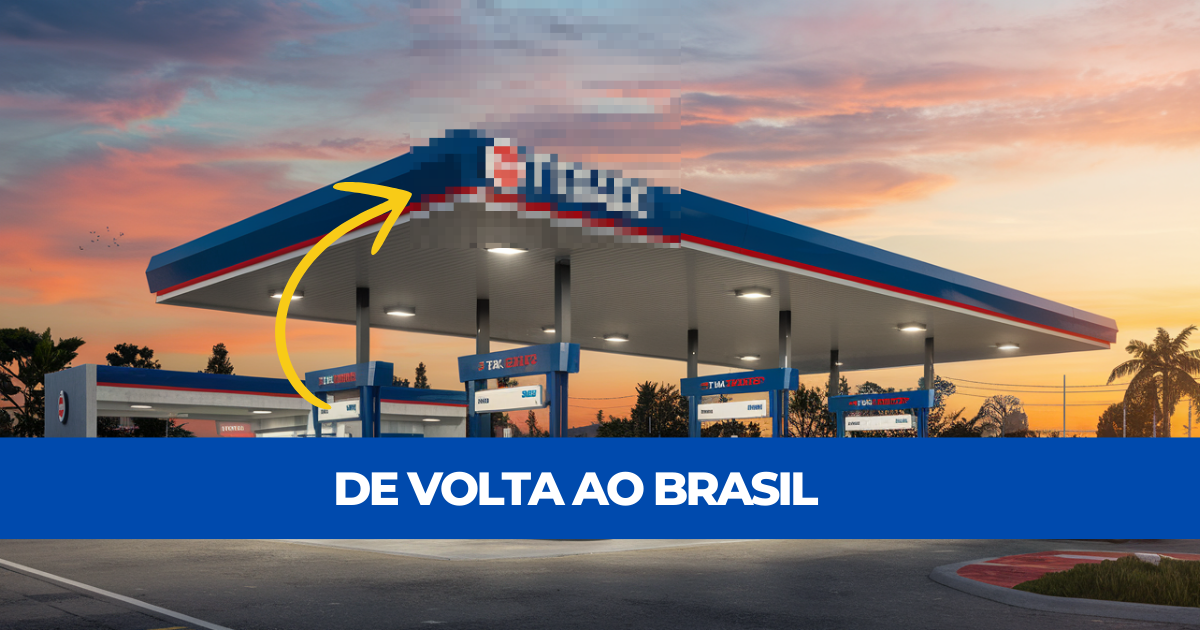

The Legendary Texaco Returns to Brazil After More Than a Decade with a New Business Model. The First Station Has Opened, and the Brand Promises to Challenge Major Market Players Like Petrobras and Shell. Will Brazilians Embrace the Return?
An iconic brand is back on Brazilian roads, promising to transform the fuel market and challenge giants like Shell and Petrobras.
After 19 years away from Brazil, Texaco resurfaces with an ambitious proposal that combines innovation, nostalgia, and a new business approach that could revolutionize the sector.
The first step of this return took place in Palhoça, Santa Catarina, in early November 2024, with the opening of the first Texaco station in Brazil in more than a decade.
-
Brazilian city bets on the business environment to generate jobs and attract investments in the energy sector — secretary reveals strategy at Macaé Energy 2026.

-
50 viaducts, 4 tunnels, 28 bridges, and 40 kilometers of bike paths: BR-262 in Espírito Santo will receive 8.6 billion reais for the largest engineering project in the state’s history, inspired by the Immigrant Highway in São Paulo.

-
Brazil produces too much clean energy and doesn’t know what to do with it: over 20% of solar and wind capacity was wasted in 2025 while investors flee and 509 renewable generation projects were abandoned in the last year.

-
Piauí will produce a new fuel that replaces diesel without needing to change anything in the truck’s engine and reduces pollutant gas emissions by half: truck drivers from all over the Northeast are already celebrating the news that will arrive later this decade.

According to Ipiranga, the partnering company responsible for operations in the country, this is just the beginning of a planned expansion to various states, including São Paulo and Rio de Janeiro, in the coming months.
A Story of Tradition and Return
Founded in 1901 in Texas, Texaco arrived in Brazil in 1915, gaining space and popularity over the decades.
At the height of its presence in the country, the brand had about 2,000 fuel stations, offering products and services that earned consumers’ trust.
However, in 2008, the Ultra Group, which controls Ipiranga, acquired Texaco’s operations in Brazil and converted the stations to its own brand, ending the presence of the American brand in the country.
Now, thanks to a licensing agreement made in May 2024 between Chevron Brands International LLC, owner of Texaco, and Ipiranga, the brand returns to the market with a modern strategy focused on premium fuels.
Innovation in the Business Model
Unlike the traditional format, where distributors invest in the infrastructure of the stations, Texaco’s return to Brazil introduces the concept of the “dealer-investor.”
In this model, the station owners assume the structural costs, while Ipiranga is responsible for fuel supply and marketing campaigns.
According to Bárbara Miranda, vice president of marketing and business development at Ipiranga, this model offers greater freedom and autonomy to dealers, allowing regional exclusivity and eliminating the long mandatory purchase contracts that prevailed in the market.
“This new paradigm makes the operation lighter for Ipiranga and gives more freedom to the dealer, who isn’t tied down for long periods by a contract,” explains Bárbara.
The executive emphasizes that, although large networks are the main candidates to operate Texaco stations, smaller dealers with suitable profiles will also benefit from the brand.
Technology and Strategic Expansion
Texaco is returning to Brazil with its line of additive fuels, known for its Techron technology, which promises greater efficiency and care for vehicle engines.
Additionally, Texaco stations will also feature Star Mart convenience stores and Star Lube oil change services, enhancing the experience offered to consumers.
The first unit in Palhoça is already operating and serves as a starting point for this new phase.
According to Ipiranga, the next steps include expansion into strategic states like São Paulo and Rio de Janeiro still in 2024.
Chevron, the owner of Texaco, sees Brazil as a market with enormous potential, especially in the premium fuel segment, which is growing as consumers seek higher quality and efficiency.
The Impact on the Brazilian Market
The return of Texaco promises to intensify competition in a market dominated by brands like Shell, BR Distribuidora (Petrobras), and Ipiranga.
The brand bets on its tradition and on the nostalgia of consumers who lived through the golden age of Texaco in Brazil.
For Ipiranga, relaunching Texaco is an opportunity to strengthen its presence in the additive fuels segment, a niche that has shown consistent growth in recent years.
The expectation is that the innovative business model and the strength of the Texaco brand will boost sales and attract new consumers.
What to Expect from the Future?
With Texaco already operating in Palhoça and concrete plans for expansion, the coming months will be crucial to assess the impact of this strategy on the market.
The “dealer-investor” model could be a game changer, opening up more flexibility in the fuel sector.
Meanwhile, consumers have another option for fueling their vehicles with quality and efficiency.
Will Texaco’s return be able to win back the hearts of Brazilians and displace giants like Shell and Petrobras?







Por mim, sim! Adorava a gasolina com techron.
Não vai adiantar nada, o preço do combustível no Brasil é tabelado.
Muitas das vezes o mesmo dono tem várias marca de postos.
Será uma ótima opção pro mercado brasileiro.
Pra mim será a minha segunda escolha ou a primeira, vai saber.! kkk
Gosto muito dos combustíveis da Ipiranga, como é da mesma rede… já me sinto em casa .
Que venha com preços Justo ao mercado e que siga os padrões da Ipiranga .