





 Portuguese
  English
  Spanish
  9 min of reading
  0 comments


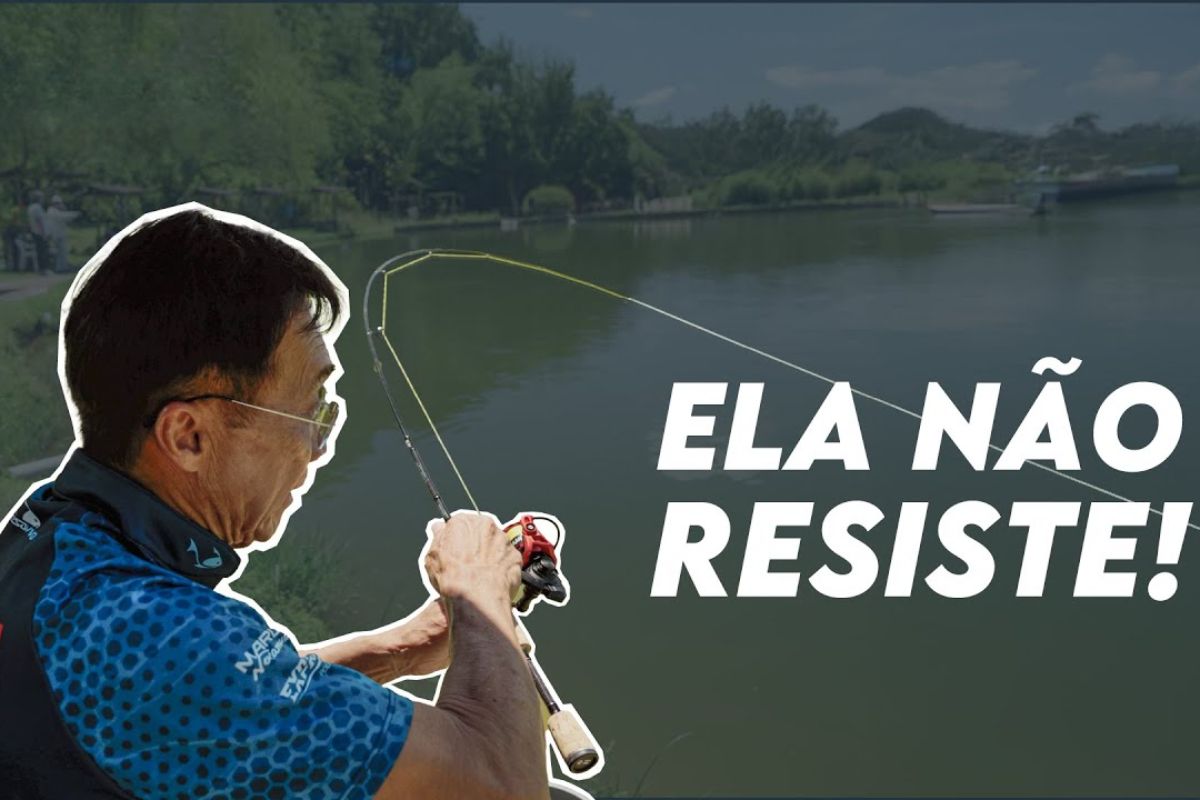
When Fishing Tilapia with a Spinning Rod, You Discover That Small Adjustments to the Loose Line, the Fully Free Weight, and the Low Cast Make a Huge Difference: They Reduce the Pressure Felt by the Suspicious Fish, Increase the Naturalness of the Sinkbait, and Convert Almost Invisible Tugs into Really Effective Strikes Throughout the Fishing Trip
The scene is well-known: full lake, perfect weather, tilapia rising to the surface, but the tip of the rod barely moves. The angler feels only timid tugs, the line “breathes” and returns, the bait disappears from the hook, and there are no fish in the photo. For those who insist on fishing tilapia with a spinning rod as if it were any other river fish, the result is usually frustration.
When someone decides to calmly observe the behavior of tilapia, the picture changes. This fish usually bites the bait, retreats, and tests the weight before swallowing it. If it feels the resistance of the weight, the taut line, or the rigid rod, it simply lets go and swims away. That’s when the combination of the correct whip, free weight, controlled slack line and low cast transforms the fishing experience. The secret lies not in force, but in removing everything from the system that reveals the presence of the angler.
Why Tilapia Requires a Different Way to Fish with a Spinning Rod

To understand why fishing tilapia with a spinning rod using slack line and free weight makes such a difference, one must start from the fish’s behavior.
-
Spain surprises the world by erecting 62 artificial dunes, mixing sand with natural remains of posidonia, and causing the structure to lose only 1.4% of its volume in 1 year.

-
With 16 Bulava missiles, improvements in acoustic stealth, and a design focused on silent patrols, Russia’s nuclear submarine was born to ensure Moscow’s invisible retaliation and has become one of the pillars of its maritime strength.

-
‘Populous’ city in Rio among the worst in Brazil in national ranking and exposes silent development crisis.

-
Couple buys house in the South Zone of São Paulo, opens a hidden door in the garage, and finds a secret wine cellar with dozens of old wines forgotten since the 1970s.

Unlike species that bite and run forward or sideways, tilapia often bites the bait, holds it, and retreats. This retreat is a test: it checks for any strange weight before confidently swallowing it.
If, during this retreat, the tilapia encounters immediate resistance from the taut line, the trapped weight, or the very rigid rod, the tendency is to release the bait immediately.
It feels any abnormal pressure in its mouth. Therefore, setups where the weight is attached directly to the hook or swivel end up revealing the system even before the strike. The fish only “nibbles” and disappears.
The logic behind fishing tilapia with a spinning rod with slack line is to give the fish a few free centimeters to work with the bait without realizing that there’s a complete system in front of it.
While it tests the bait, the weight remains stationary, the line runs freely through the hole of the weight, and the bead protects the knot of the swivel. When the line finally tightens, it’s not the fish that feels the angler; it’s the angler who feels the fish.
Whip, Weight, and Bead: The Invisible Mechanics of the Setup

In practice, the system used to fish tilapia with a spinning rod is not complex, but it is extremely well thought out.
The setup starts with the hook, a small, discreet Tinu model, suitable for compacted bait and the relatively delicate mouth of the tilapia.
The hook is tied to a short piece of multifilament, connected to a small swivel, around size 0, depending on the manufacturer.
Right above the swivel, a bead is added. This seemingly simple detail serves an essential role: it prevents the weight, while moving, from directly hitting the knot and weakening the line. The bead absorbs the impact and acts as a soft stop.
The weight, in turn, is not fixed. It remains completely free, sliding on the main line above the bead, without loops, stop knots, or locks that keep it fixed.
When the tilapia pulls the bait, the first thing that moves is the whip, not the weight. The hook and the multifilament slip smoothly, the line slides through the hole of the weight, and the fish doesn’t feel immediate weight.
Only after the line runs and the movement reaches the reel does this traction appear to the angler at the tip of the rod.
At that moment, with the line tightening, it’s time to strike decisively, seizing the moment when the fish still has the bait in its mouth.
Bait, Hook, and Presentation: How the Bait Behaves in the Water


The bait used in this type of fishing is usually a relatively soft mixture, shaped into a moderately sized ball.
It doesn’t need to be large: enough to cover the hook, completely envelop the shank, and form a compact volume.
An exaggerated ball, besides being heavy, tends to come off more easily upon impact with the water, especially if the cast is too high.
When fishing for tilapia with a spinning rod, it’s crucial that the bait arrives at the fishing spot still intact.
The angler fits the hook inside the ball, seals it well, and only smoothes the surface with their fingers, being careful not to compress it so hard that it becomes rigid.
In the water, this bait will gradually soften, releasing scent and forming a discreet “cloud” that attracts the tilapia to investigate.
If the cast is poorly executed, all this effort is lost before touching the bottom.
This is why the combination of bait at the correct hardness and low cast makes such a difference.
Instead of casting “over the head,” with a high trajectory and violent fall, the angler uses a lower and more controlled movement, reducing the impact on the water.
The less impact, the lower the chance of the bait coming off the hook on the first contact with the surface.
Low Cast: The Pitting That Protects the Bait and Disguises the Bait
In the routine of fishing for tilapia with a spinning rod, the cast known as “pitting” becomes almost mandatory.
The technique starts with the angler holding the line with their middle finger, controlling the opening of the reel, and keeping the bait in the other hand, with the rod slightly lowered.
At the moment of casting, the rod describes a short and low movement, projecting the bait in a low trajectory.
This type of cast simultaneously serves two important purposes. First, it reduces the impact of the bait hitting the water, protecting the integrity of the bait around the hook.
Second, it makes the sound of the splash on the surface much more discreet, which is significant in pressured fish farms, where tilapia have become accustomed to associating loud casting noises with danger.
When the low cast is combined with a light whip, free weight, and well-shaped bait, the bait usually sinks gently, as if it were a common food item disengaging from any structure in the lake.
In this scenario, the fish sees fewer signs of artificiality and feels more confident to test the bait, which increases the frequency of tugs and, mainly, the quality of the strikes.
Loose Line, But Not Released: How to Manage Slack Without Losing Sensitivity
After the bait touches the water and sinks, the stage begins that separates those who are just “throwing line” from those who truly know how to fish for tilapia with a spinning rod: managing the slack.
If the line remains fully taut, any nibble from the tilapia will return to the fish the immediate pressure of the system, causing the fish to let go of the bait almost instantly.
On the other hand, it’s not about abandoning the rod and leaving a huge belly of line on the water.
The angler adjusts a minimal, controlled slack by letting out a few centimeters by rotating the reel of the spinning rod.
When needing to correct a large slack, they use the handle; when the adjustment is fine, they make the correction directly on the reel, without reeling it all in. Thus, the line stays relaxed but still under observation.
The rod support enters as an important ally. With the rod static and well-supported, the angler can observe both the movement caused by the wind and that caused by the tilapia.
The wind tends to oscillate the line continuously, more slowly, pushing it sideways. Meanwhile, the fish pulls forward or backward in small jerks, often almost imperceptibly. Knowing how to differentiate between these two readings is part of the game.
Reading the Tugs: When the Tilapia is Just Testing and When It’s Time to Strike
In busy fish farms, tilapia tend to become even more suspicious. They nudge the bait, retreat, return, poke again.
With the line minimally loose, these tugs appear as small advances toward the lake, followed by a retreat.
If the rod were engaged with the line taut, this cycle would barely be noticed, as the fish would release the bait at the first sign of pressure.
The correct reading works like this: the line shifts slightly, the tip of the rod shows a short movement, and the slack decreases.
It’s the moment when the tilapia has the bait in its mouth, testing. When the slack almost disappears and the line starts to “pull for real,” it’s time to strike.
The angler raises the rod firmly but gently, seizing the instant when the hook is still well positioned.
This way of fishing for tilapia with a spinning rod transforms timid tugs into frequent strikes.
The difference is not in luck, but in the sum of details: the free weight that doesn’t signal weight, the bead protecting the knot, the intact bait thanks to the low cast, the line with just the right slack, and the trained eye to separate wind from fish.
Fish Farms, Surprise Pacu, and the Environment Where the Technique Appears
A large part of this refinement in the way of fishing tilapia with a spinning rod arises in fish farms, where beginners and veterans share the same body of water.
These places offer structured lakes, safety, and, in many cases, surrounding restaurants, creating a family routine. At the same time, the fishing pressure is high, and the fish become more educated.
It’s not uncommon during a fishing trip aimed at tilapia for a pacu to hit the same setup, cut the line, bend the hook, and remind that any carelessness costs equipment.
This shows that even in controlled environments, the lake is a living and unpredictable system.
The same sensitive setup created for tilapia can be tested by stronger fish, and the angler needs to be prepared to deal with these surprises without losing the delicacy necessary for the main target.
In this context, the fish farm ends up functioning as a laboratory.
The angler observes, adjusts the whip, tests bait sizes, calibrates the slack of the line, and feels in practice how the tilapia reacts to each detail.
Those who insist on fighting with the equipment, locking everything up, usually return home with stories of “too finicky fish.”
Those who accept to fine-tune the system reap different results, even while fishing side by side with other attendees.
What Detail Are You Still Ignoring When Fishing for Tilapia with a Spinning Rod?
When observing the entire process, it becomes clear that fishing tilapia with a spinning rod is less about force and more about hiding one’s own system.
Free weight, bead protecting the knot, well-sized whip, compacted bait, low cast, and just the right slack line form a set designed so that the fish doesn’t feel weight, only easy food.
From there, the timid tugs cease to be a mystery and become a clear reading of the opportunity to strike.
After learning this logic of slack line, free weight, and low cast, what detail of your setup do you think is most revealing the angler’s presence to the tilapia: the casting technique, the line slack adjustment, or the way you decide when to strike?








-

-

-

-

-

-

19 pessoas reagiram a isso.