





 English
  Francês
  Alemão
  Italiano
  Japonês
  Norueguês
  Portuguese
  Spanish
  5 min of reading
  0 comments


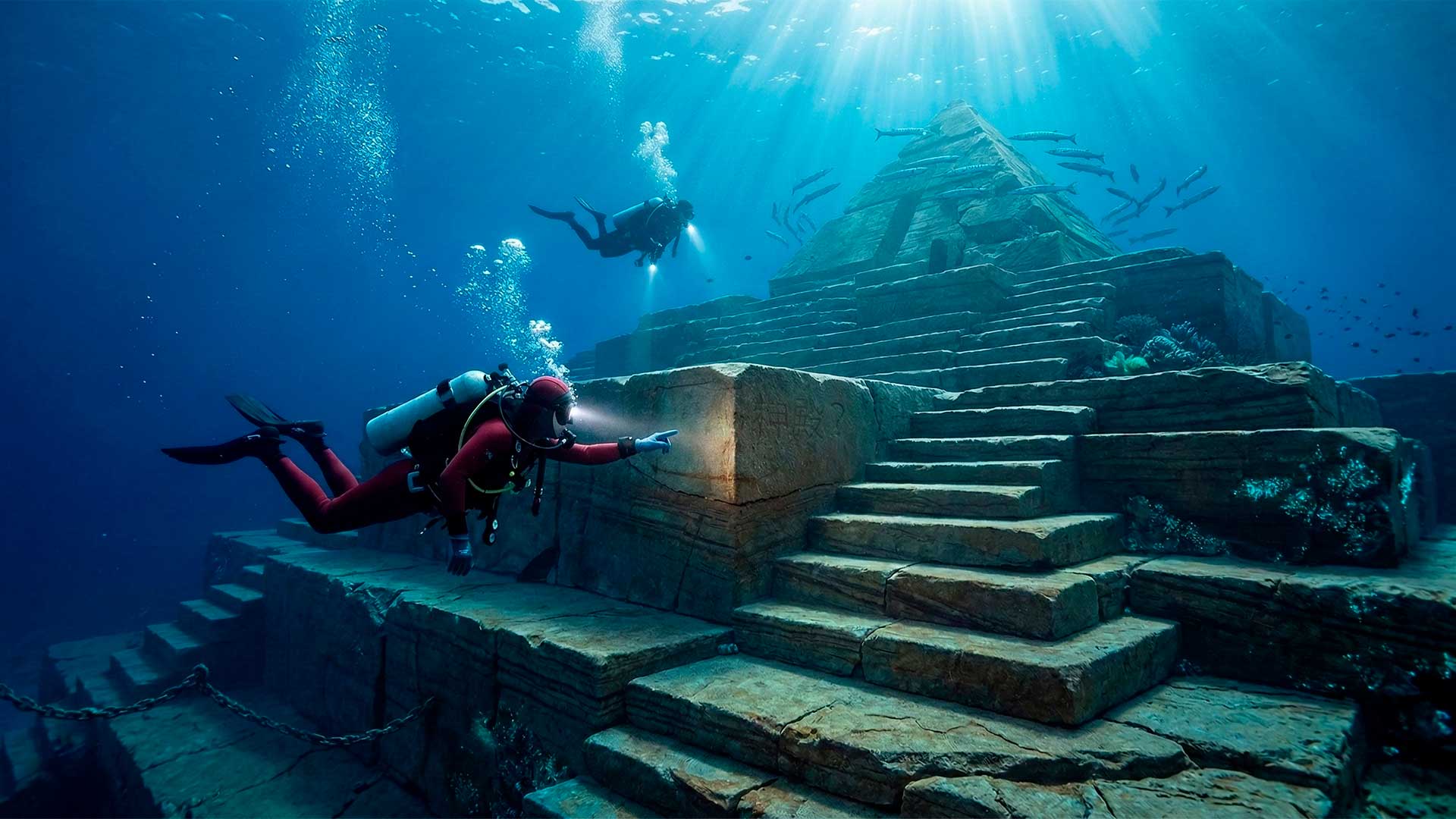
Submerged Formations in Yonaguni, in the Ryukyu Archipelago, Reignite the Scientific Debate About Natural or Human Origin. New Analyses Indicate That There Are No Clear Signs of Construction by People, Although the Monumental Appearance Continues to Impress. Still, the Hypothesis of Extraterrestrial Intervention Finds No Support in Evidence.
The enigmatic structures known as Yonaguni Monument have once again come to the forefront. Located near the island of Yonaguni, in the Ryukyu Archipelago in Japan, they display steps and platforms reminiscent of pyramids and temples, which have fueled theories and curiosity for decades.
The site was discovered in 1986 by Kihachiro Aratake, a diver and then director of the Yonaguni-Cho Tourism Association, while searching for new diving spots.
The formation rises about 25 meters deep and exhibits right angles and surprisingly flat surfaces.
-
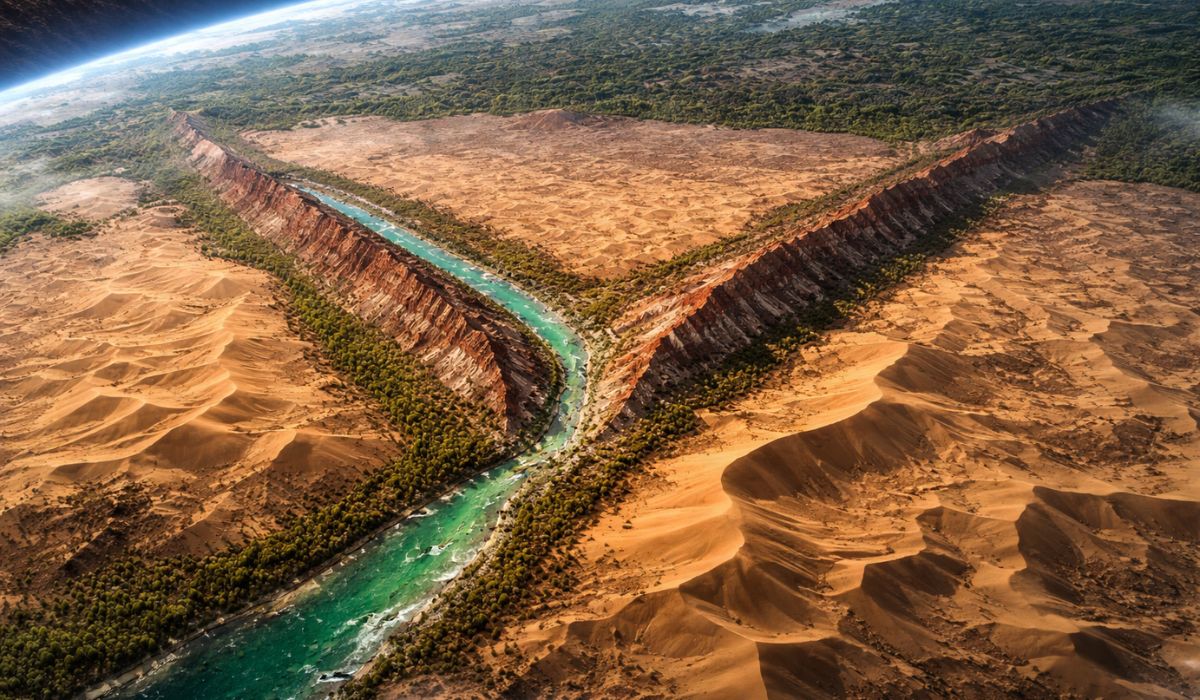
Seen from space, a colossal ‘Y’ cuts through the largest desert in China, blending a jade-filled river, red and white mountains, and revealing the absurd scale of the transformation of the Taklamakan surrounded by a green wall with billions of trees.
-
The Pacific Ocean reveals what the cliffs of Big Sur have hidden for millennia: Pfeiffer Beach, in California, features swirling purple sand formed by garnet crystals and displays a stone arch that is illuminated by the sun in winter for just a few days each year.

-
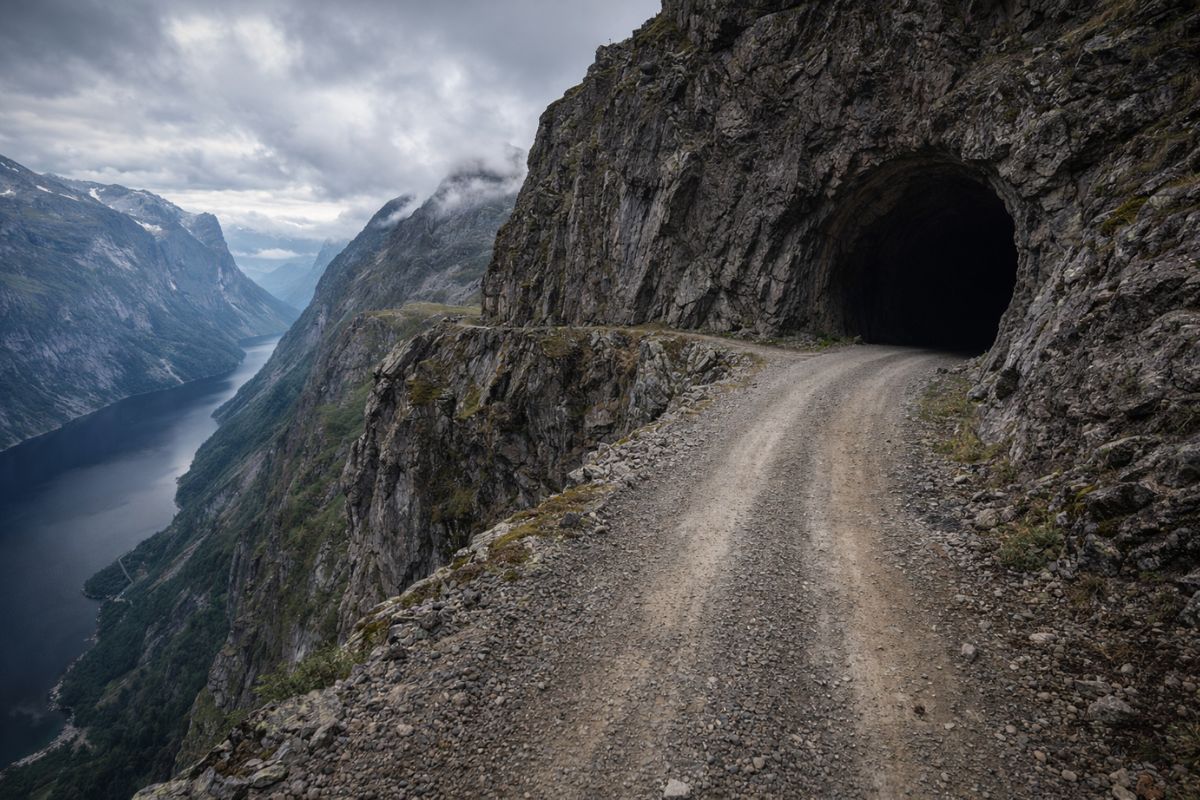
Aursjøvegen in Norway is a 100-kilometer gravel road that crosses chasms and dark tunnels carved into the rock at an altitude of 947 meters in the fjords and is only open for four months a year.
-
With about 4,000 m², the building constructed in a traditional neighborhood in France looks like a rainbow, has a colorful facade, mixes vibrant glass, and creates one of the most unusual visuals in Bordeaux.


Since then, the site has been nicknamed the “Japanese Atlantis,” referencing the mythical island described by Plato. The aura of mystery has grown with visual reports of large terraces and stairways, leading some of the public to assume it was an ancient sunken city, a hypothesis that science has been re-evaluating rigorously.
New Analyses Reinforce Natural Origin, Geology Explains the Right Angles
Among specialists, the main line of current interpretation points to a natural formation. According to IFL Science, if the monument had been erected, it would have occurred between 10,000 and 14,000 years ago, a period prior to the known capabilities of civilizations to produce such complex structures, which weakens the thesis of human construction.
For Robert Schoch, a geologist and professor at Boston University, the features result from fracturing and erosion processes.
He explained to National Geographic that this is “basic geology” of sandstones that break along planes, creating straight edges, especially in areas with faults and intense tectonic activity — precisely the scenario at Yonaguni.
The Hypothesis of Human Construction Persists, Led by Masaaki Kimura
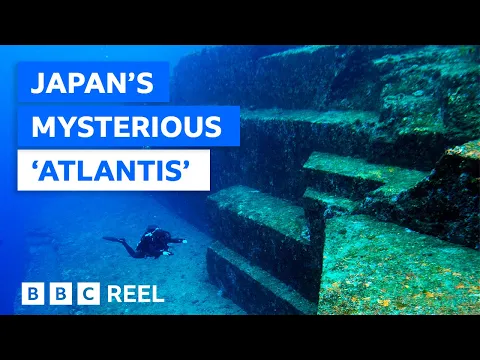

Even with the weight of geological evidence, there are proponents of the anthropogenic origin. The most well-known is Masaaki Kimura, a marine geologist and emeritus professor at Ryukyu University, who proposed that the region might harbor remnants of an ancient civilization, with structures resembling pyramids, castles, and even a stadium.
Kimura estimated that the complex could be about 10,000 years old, but later revised the age to something between 2,000 and 3,000 years. In his book The Continent of Mu Was in Ryukyu, he links the site to the legendary lost continent of Mu, part of an imagination that gained traction in the 19th century.
According to the hypothesis, Mu would be an alternative name for the supposed Lemuria, proposed in 1864 by zoologist Philip Sclater to explain lemur fossils between Madagascar and India. The idea, however, became obsolete with the advancement of the plate tectonics theory, which explains the drifting and joining of continents over millions of years.
Critics point out that, without associated artifacts, settlement patterns, or inscriptions, the thesis of a sunken city remains speculative. For these researchers, the “architectural” forms can emerge naturally when rock layers are fractured and eroded under specific conditions.
How the Geodynamics of Ryukyu Can Carve Steps and Platforms on the Ocean Floor
Yonaguni is located in a subduction zone in the southwestern tip of Japan, subject to frequent earthquakes and crust fractures. In rocks like sandstone, stratification planes and structural joints favor breakup into blocks with straight edges, creating the illusion of carved stairways.
Ocean currents, waves, and abrasion from sediments act over centuries, polishing surfaces and accentuating edges. The combination of tectonic faults and underwater erosion can sculpt terraces and levels that resemble human intentionality, even without any intervention.
The depth of about 25 meters also helps to preserve angles and surfaces, as wave energy is filtered and erosion occurs more selectively. Thus, flat platforms and wide steps emerge, as observed in the Yonaguni Monument.
Tourism and Myth, the Japanese Atlantis Keeps Yonaguni on the Map
The popular fascination has not diminished over time. The discovery has made Yonaguni a coveted destination for divers and the curious, attracted by the large platforms and the story of the “Japanese Atlantis,” a phrase that encapsulates the aesthetic appeal and the aura of mystery of the place.
“I was very excited when I found it. Upon discovering it, I realized that it would become a treasure of Yonaguni Island,” said Kihachiro Aratake to the BBC in 2022. The account helps to understand why the site, presented to the world four decades ago, continues to fuel both tourism and academic debate.
What Science Still Needs to Map to Resolve the Impasse
To consolidate the consensus, experts advocate for more high-resolution mapping and systematic analyses of samples, as well as searches for possible associated artifacts. Without these elements, the robust geological explanation prevails, supported by known and observable processes.
Detailed studies of stratigraphy, joints, and faults, combined with bathymetric surveys and underwater photogrammetry, can refine the understanding of the shapes.
With more data, any anomalies would move from the realm of seems to be to the field of we can prove it is.
In the meantime, the prevailing reading in the scientific literature indicates that the Yonaguni Monument is most likely a natural formation. There is no solid evidence of human work — nor any extraterrestrial action.
What do you think, natural formation or human work? Does the geological interpretation convince you, or do the “architectural” forms call for another explanation? Leave your comment and state which evidence would be decisive for you — age, artifacts, inscriptions, or a new mapping of the site. The debate is welcome and helps shed light on this submerged enigma in southwestern Japan.







Seja o primeiro a reagir!