





 Portuguese
  English
  Spanish
  5 min of reading
  0 comments


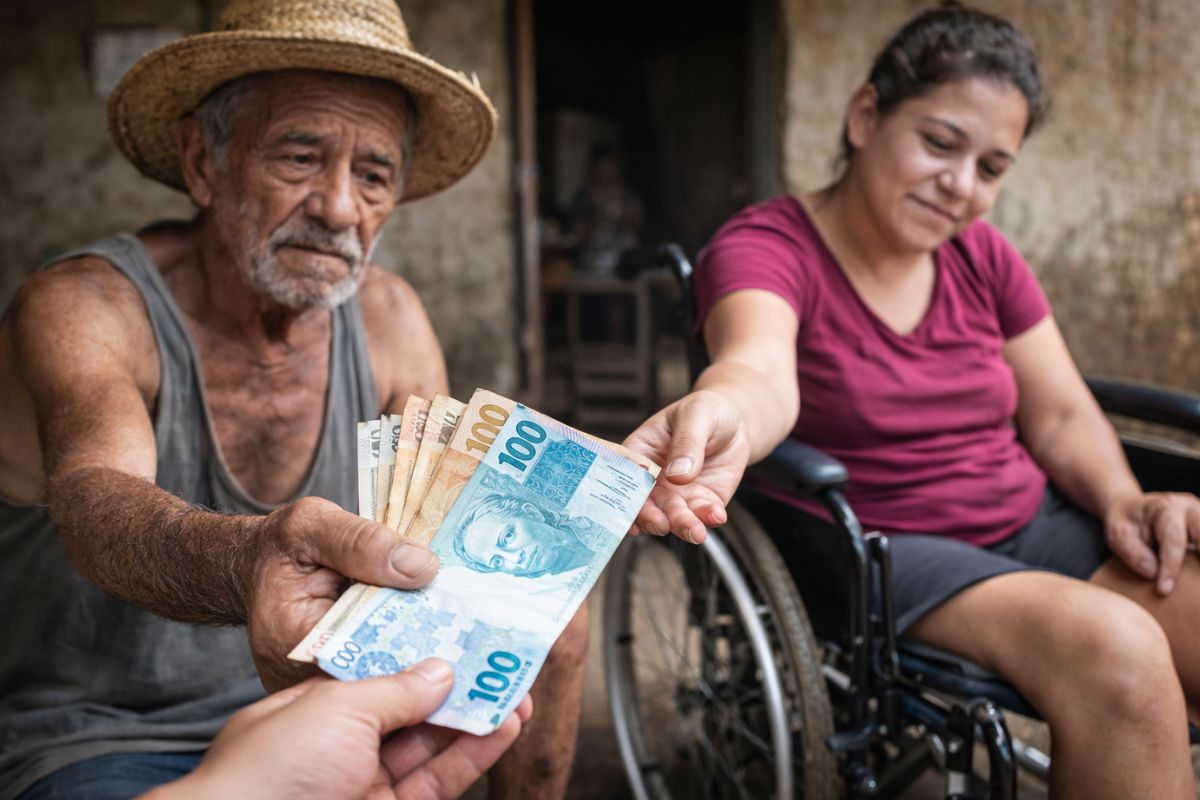
The Government Benefit Known as BPC/LOAS Guarantees a Minimum Wage to Elderly and Disabled People in Extreme Poverty, but Requires an Updated Unified Register, Complete Reports, INSS Assessment, Rigorously Analyzed Income, and Stamina to Face Lines, Denials, Reassessments, and Visits to CRAS Nationwide
The government benefit BPC/LOAS remains one of the main social assistance policies in effect in Brazil, guaranteeing a monthly minimum wage to elderly and disabled individuals in situations of extreme vulnerability, even without a contribution history to INSS, and serving as a safety net for families with limited resources.
In practice, until December 2025, this assistance arrangement has become the only regular income for many households, helping to cover food, medication, and basic bills in areas marked by extreme poverty, while exposing registration flaws, the requirement for detailed medical reports, and delays in INSS assessments.
What is BPC/LOAS, the Government Benefit that Pays a Minimum Wage
Outlined in the Organic Law on Social Assistance, the Continued Benefit (BPC/LOAS) is a government benefit of an assistance nature, aimed at those who cannot provide for their own maintenance or do not receive sufficient family support.
-
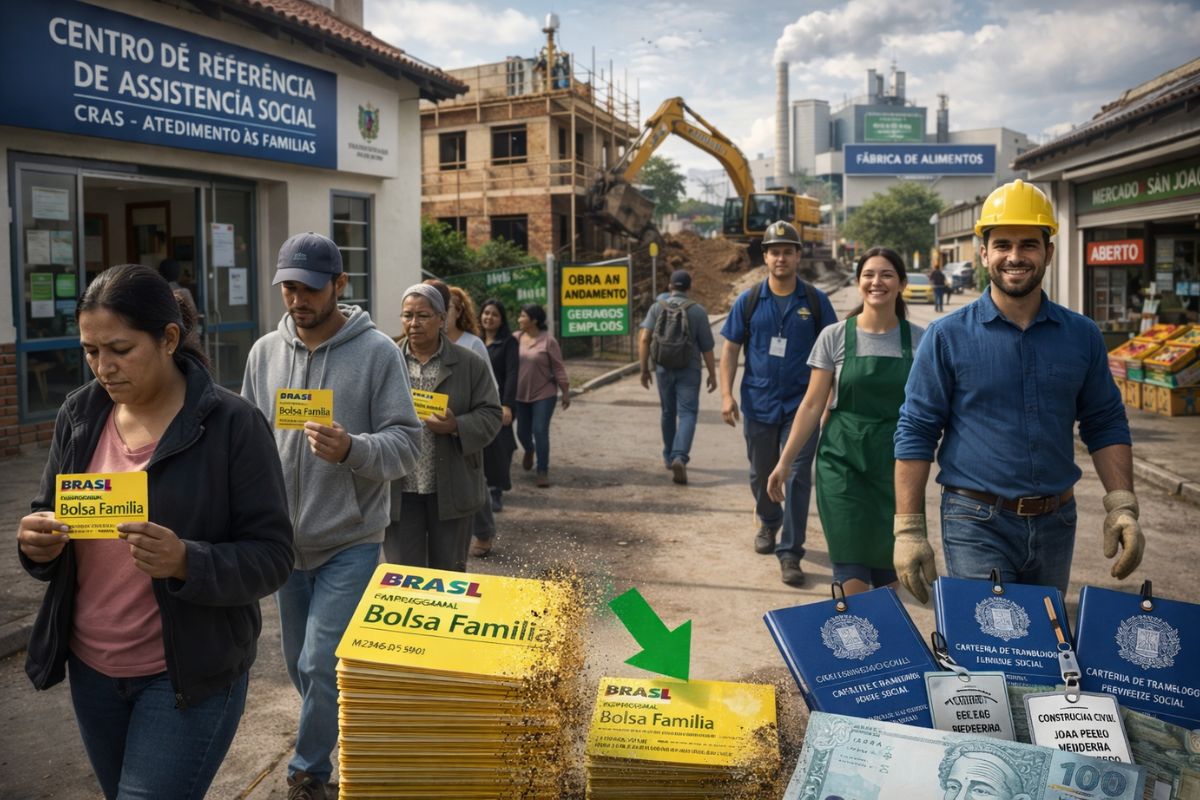
The gaucho city reduced the number of Bolsa Família beneficiaries by almost 40% in just a year and a half with active outreach that connects each registered person directly to job vacancies in Bento Gonçalves in Rio Grande do Sul.
-
The bluest city in Brazil has just gained a new floating bridge for the free crossing between the island and the mainland, connecting residents and visitors to the historic center of São Francisco do Sul every day of the week.

-
In a silent race, Shopee signs a mega contract in Guarulhos and accelerates the e-commerce war with faster deliveries, pressured shipping, and a new threat to rivals in Brazil.

-
Oil surged to $115 a barrel due to the war in the Middle East, and diesel in Brazil has already risen to R$ 7.45 per liter, while the United States…


The policy design primarily targets people who have spent their lives informally or have never achieved stable insertion in the job market.
The BPC guarantees a monthly minimum wage, but does not generate a 13th salary or survivor’s pension.
Nevertheless, in a large number of the households served, it represents the only stable income, making the value decisive for purchasing food, medicine, and paying basic expenses, with a direct impact on reducing extreme poverty in vulnerable areas.
Who is Entitled to This Government Benefit in 2025
The BPC/LOAS serves two distinct groups: individuals aged 65 and older and people with disabilities with long-term impairments that hinder full and effective participation in society, on equal terms with others.
In both cases, it is necessary to demonstrate that there are no personal or familial means to ensure sustenance.
The family income per capita criterion must generally be less than a quarter of the minimum wage, which means that small variations in the budget can exclude poor families that barely exceed the threshold.
Moreover, it is mandatory for the family to be registered and updated in the Unified Register, the official base used by the government to identify low-income individuals.
The benefit can be granted to native Brazilians, naturalized citizens, and some resident Portuguese individuals, within the existing reciprocity rules.
Step by Step to Request the Government Benefit
Access to BPC/LOAS depends on a formal procedure that combines correct Unified Register, personal documents, well-filled medical reports, and INSS analysis.
The request can be initiated through digital channels, by phone 135, or in person, requiring detailed proof of the family’s socioeconomic situation.
In simplified terms, the step-by-step process to request the government benefit follows this sequence, according to the normative and operational framework in 2025:
Registration or update in the Unified Register at the CRAS of the municipality, providing income information, family composition, and address, paying attention to possible discrepancies that may lead to future issues.
Gathering personal documents of all family members and, in the case of people with disabilities, complete medical reports describing long-term impairments and their functional repercussions.
Submission of the request via the Meu INSS application or website, by phone 135, or directly at an INSS agency, linking the request to the CPF of the applicant.
Social evaluation and possible medical examination conducted by INSS, a stage where health conditions, family income, and Unified Register information are checked.
Monitoring the progress and receiving the decision, with the possibility of appeal in case of denial, which often prolongs the waiting time for families.
Each of these phases demands organizational documentation and patience with bureaucracy, especially in cities where access to the internet, transportation to the CRAS, or to the INSS agency is limited.
Bureaucracy, Medical Reports, and Income: The Main Obstacles
The main barriers to accessing BPC/LOAS continue to be bureaucracy, ignorance of the rules, and difficulty in gathering the required documents.
Families in greater vulnerability, lacking regular internet access or living far from CRAS units and INSS agencies, often delay or give up on the request due to a lack of technical support to fill out forms and registrations correctly.
The rigid income criterion, tethered to a quarter of the minimum wage per person, means that sporadic increases, temporary jobs, or benefits from other family members can push the calculation upwards and ultimately exclude still poor households.
At the same time, the need to keep the Unified Register always updated creates the risk of benefit suspension in case of inconsistencies, income omissions, or unregistered address changes.
The medical report, when it concerns people with disabilities, is also a sensitive point.
Generic descriptions, lack of information on the duration of the impairment, and its impact on daily life can lead the INSS to deny the request or ask for additional documentation, prolonging the assessment time.
In many cases, delays in the examination and social evaluation result in families waiting months for a response, even when facing dire poverty.
Impact of BPC/LOAS on the Income of Brazilian Families
In households without formal employment, BPC/LOAS is often the only predictable source of income throughout the month, allowing for some minimal planning for fixed expenses.
The amount of the government benefit is frequently allocated to purchasing food, acquiring ongoing medications, and paying essential bills, such as electricity and water.
As a public policy, BPC contributes to reducing extreme poverty and regional inequalities, especially in municipalities with little job availability and high informality.
At the same time, the program’s design requires the state to continuously improve the processes of medical examination, social analysis, and monitoring of the Unified Register, in addition to clearly communicating the rights and duties of beneficiaries to avoid unexpected cuts and suspensions.
What the Beneficiary Needs to Do Now
In light of this scenario, social assistance experts recommend that those who meet the criteria carefully review the status of their Unified Register, organize to gather detailed documents and medical reports, and use, whenever possible, the digital channels of Meu INSS and the support of CRAS to avoid formal errors in the benefit request.
To keep the government benefit active, it is essential to monitor notifications, meet registration update deadlines, and keep copies of reports, declarations, and income proofs.
In a context of structural poverty, correct information and organized documentation can make the difference between having or not having the guaranteed minimum wage every month.
Have you tried requesting this government benefit or do you know someone who had their BPC/LOAS request denied due to issues with the Unified Register or the medical report?









Seja o primeiro a reagir!