





 Portuguese
  English
  Spanish
 4 min of reading
  11 comments


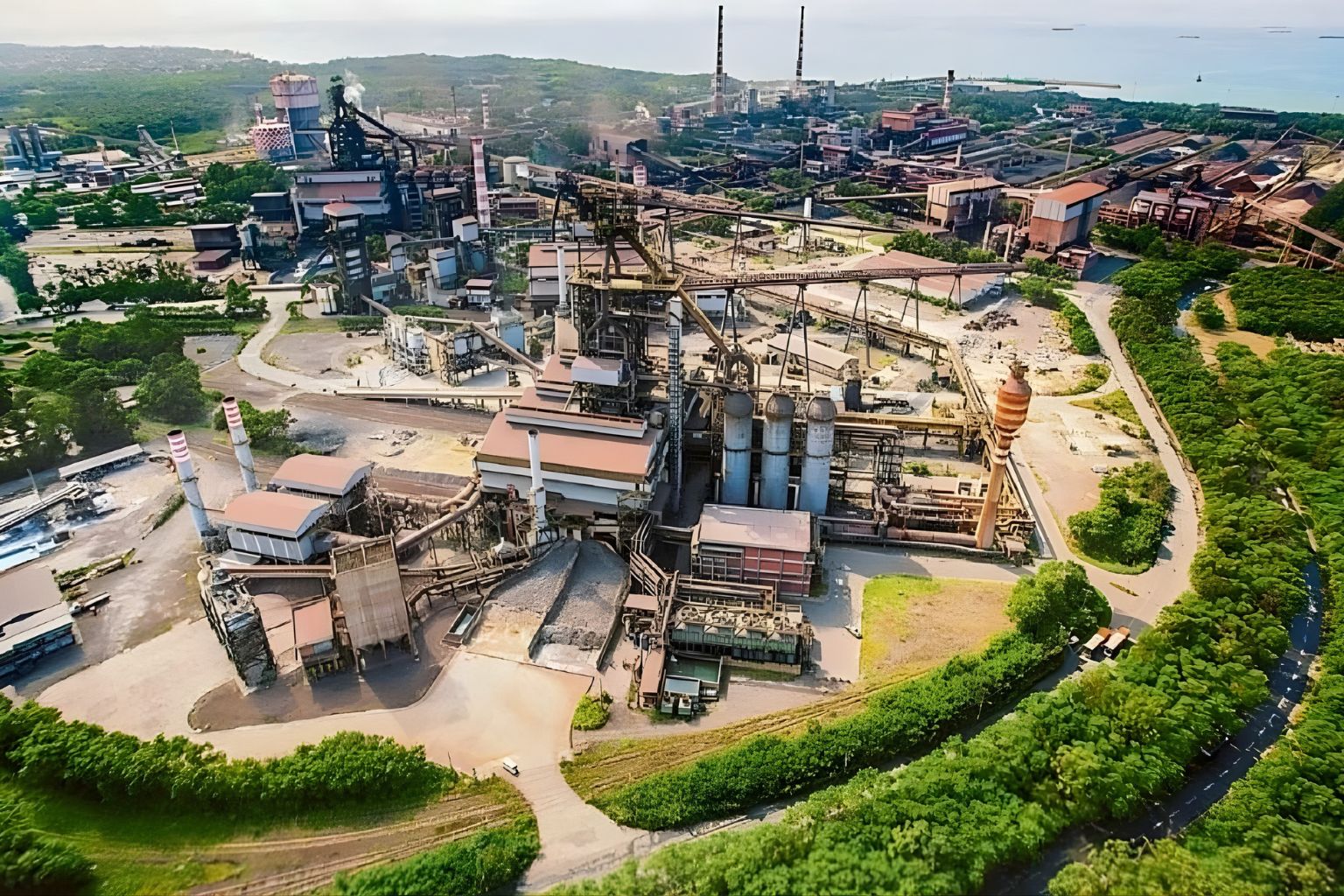


ArcelorMittal Inaugurated in ES in 2021, the Largest Industrial Desalination Plant in Brazil, with a Capacity of 500 m³/hour, Reducing the Intake from the Santa Maria da Vitória River.
In September 2021, during one of the most severe water crises in recent Brazilian history, ArcelorMittal Tubarão inaugurated in Espírito Santo the largest and most modern seawater desalination plant in Brazil aimed at industrial purposes. The R$ 50 million project represents not only a technological milestone for the country but also a strategic solution that alleviates pressure on water resources shared with the local population.
Located in the port complex of the municipality of Serra, the plant has the capacity to desalinate 500 cubic meters of water per hour — enough volume to supply around 80 thousand people daily. However, the goal is not to compete with public supply: the treated water will be exclusively allocated for the steelmaking processes, replacing part of the volume previously taken from the Santa Maria da Vitória River and allowing greater availability of this resource for society.
ArcelorMittal Tubarão Becomes a National Reference in Lower Freshwater Consumption in the Industry
Before desalination, ArcelorMittal Tubarão already operated as a national reference in efficient water management in steelmaking. Taking advantage of its strategic coastal location, the company structured operations where 96% of all water used comes directly from the sea, mainly used for cooling steel production equipment. Only 4% of the consumption comes from freshwater supplied by Cesan, taken from the Santa Maria da Vitória River.
-
Motorola launched the Signature with a gold seal from DxOMark, tying with the iPhone 17 Pro in camera performance, Snapdragon 8 Gen 5 that surpassed 3 million in benchmarks, and a zoom that impresses even at night.

-
Satellites reveal beneath the Sahara a giant river buried for thousands of kilometers: study shows that the largest hot desert on the planet was once traversed by a river system comparable to the largest on Earth.

-
Scientists have captured something never seen in space: newly born stars are creating gigantic rings of light a thousand times larger than the distance between the Earth and the Sun, and this changes everything we knew about stellar birth.

-
Geologists find traces of a continent that disappeared 155 million years ago after separating from Australia and reveal that it did not sink, but broke into fragments scattered across Southeast Asia.


The differentiator lies in the recirculation rate: currently, 98% of the freshwater captured is recirculated and reused internally in multiple cycles before any disposal. This percentage puts ArcelorMittal Tubarão as having the lowest industrial freshwater consumption rate in Brazil — a strategic metric in light of water scarcity scenarios.
The desalination project was designed to further reduce this dependence on the 4% of freshwater, freeing up public system resources for the population’s consumption. Benjamin Baptista Filho recalls that the decision was made after rationing between 2015 and 2016: “The priority of supply is for human and animal use.”
Modular Desalination Plant Allows Future Expansion up to 1,500 m³ per Hour
Built on an area of approximately 6,000 square meters within the industrial complex, the plant adopts a modular configuration. The first module has a capacity of 500 m³/hour (12 thousand m³/day), with the possibility of expansion to 1,500 m³/hour with the installation of two additional modules.
The employed technology is reverse osmosis, widely used in countries such as Israel, Spain, and the United Arab Emirates.
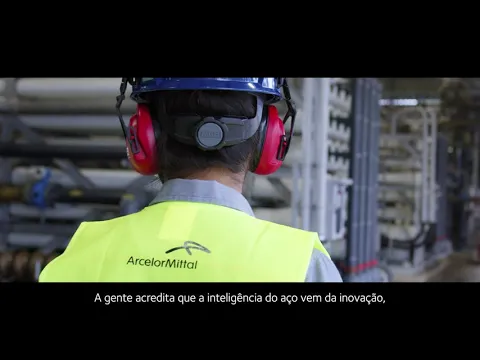

The system operates in sequential stages that include reinforced intake, pre-treatment, high-pressure pumping, and passage through semipermeable membranes less than 1 micron thick, responsible for separating the salt and producing water with a high degree of purity for industrial use.
Energy Self-Sufficiency Guarantees the Viability of Industrial Desalination
One of the main challenges of desalination is energy consumption. The plant consumes about 3 megawatts when operating at maximum capacity.

This consumption represents less than 1% of the total energy generated by ArcelorMittal Tubarão itself, which is self-sufficient thanks to thermal power plants that utilize residual gases from steelmaking processes, such as blast furnace gas and coke oven gas.
This energy integration has been decisive for the project’s economic viability.
Environmental Management of Brine and Impact Control in the Ocean
The main byproduct of desalination is superconcentrated brine. For every liter of freshwater produced, the system generates approximately 1.5 liters of brine.
ArcelorMittal returns this solution to the sea through an existing channel, claiming that the system promotes gradual dilution before final disposal and that all environmental studies have been approved by the state licensing agency.

Experts warn that brine can raise local salinity and affect marine ecosystems if there is no adequate dilution. The company emphasizes continuous monitoring and rigorous environmental compliance.
International Recognition by the IDA and Global Desalination Awards
In 2019, at the International Desalination Association (IDA) Congress in Dubai, the plant won the “Innovative Project” award.
In 2022, at the IDA Congress in Sydney, it was elected “Best Corporate Social Responsibility Project”, recognizing not only the technical aspects but also the social impact of freeing up water resources for the population.
Construction during the Pandemic Generated 220 Jobs in Espírito Santo
The work was carried out between 2019 and 2021, including the critical period of the pandemic. At the peak of construction, 220 jobs were created, with priority given to local labor.
The desalination project integrates a broader strategy that includes:
- Expansion of the Water Treatment Station for Reuse (R$ 23 million)
- Agreement to purchase 540 m³/hour of reused water from Cesan
- Construction of the future Water Production Station for Reuse (EPAR)
- Investments in the recovery of springs in the Santa Maria da Vitória River Basin

The EPAR will have a capacity of 300 liters per second, of which 200 l/s is contracted by ArcelorMittal.
First Desalination Plant of the ArcelorMittal Group in the World
The Tubarão unit is the first desalination plant integrated into a steel mill in the entire ArcelorMittal global group.
The Capixaba project becomes a global reference for future implementations in regions affected by water scarcity.
The model demonstrates that it is possible to reconcile intensive steel production with water responsibility, as long as there is investment in technology, efficient management, and environmental commitment.








Interessante, porém é necessário dizer que a empresa só fez esse investimento pensando em si, para ter a matéria prima de qualidade aos seu interesses. Se o rio Santa Maria secar, a indústria não para e a população morre de sede.
E por acaso a empresa teria que produzir água potável para a população? Deixe de extremismos. Espero que ela se torne totalmente operante e não consuma água doce do rio.
A obrigação de abastecer a populaçãi é do governo e não de empresa privada…
Excelente iniciativa da ArcelorMittal. Mais uma prova incontestável de que o setor privado é muitas vezes melhor e eficiente do que empresas públicas, sejam elas Federais, Estaduais ou Municipais. Empresas estatais só servem para abrigar, “cabides de emprego”, e para onerar os gastos governamentais, sem retorno para a população. Até porque o Governo seja ele Federal, Estadual ou Municipal, não tem que ter empresa, mas simplesmente administrar o dinheiro dos impostos e taxas, de forma honesta e transparente.
Essa questão é uma via de duas mãos, exemplo são as empresas estatais brasileiras que passam para o controle das estatais chinesas.
Exemplo de empresa privada é a ENEL. E os carteis de combustíveis.
Privatiza que é bom
Parabéns para Ancelor, bom saber notícias como essa.