





 Português
  Inglês
  Espanhol
  4 min de leitura
  0 comentários



Inside the Maritime Giants, the Engine Room Hides the Engine of a Ship Capable of Moving 20 Million Pounds, Revealing the Complexity and Power Behind Modern Naval Engineering.
In a world where innovation and engineering meet at the frontiers of human knowledge, ship engines emerge as true colossi of modern technology. Imagine, for a moment, the magnitude of an engine capable of propelling a ship weighing 20 million pounds. This feat not only challenges our perception of power and scale but also highlights the complexity and precision required in the construction and maintenance of these maritime engineering marvels.
In the belly of every ship, hidden from the eyes of passengers and observers, lies the engine room, a space dedicated to housing not only the main engine but also a myriad of critical systems that ensure the operation and safety of the vessel. It is in this chamber, filled with heavy machinery and complex systems, that the ship’s engine – a masterpiece of engineering – operates incessantly to keep the ship moving.
How Does an Engine of a Ship Weighing 20 Million Pounds Work?


The ship engine operates based on internal combustion, similar to automobile engines, but on an infinitely larger scale. Components such as pistons, cylinders, and valves, although sharing names with their automotive counterparts, are monumental in size and power. The explosion of fuel inside the combustion chamber generates immense force, capable of moving the piston and, consequently, generating the rotational motion that propels the ship through the seas.
-
Historic bankruptcy of Centauro shocks the market, and the century-old company puts more than 500,000 products, machines, and complete infrastructure up for online auction.

-
New shoe factory in Ceará is expected to create 400 jobs and strengthen the local economy.

-
No one imagined it, but a mixture of sawdust with a mineral that fights fires surprises scientists with a result that changes the course of fire-resistant construction.

-
From empty land to a high-end house, wooden construction uses a lightweight system, metal structure for the foundation, ventilated ceramic cladding, and special windows to create an efficient and comfortable living space throughout the year.


The process begins with the introduction of a mixture of air and marine fuel into the combustion chamber. The pressure generated by the compression of this mixture leads to its combustion, whose force is directed to move the piston. This motion is then converted into rotational energy, transmitted to the ship’s shaft and, eventually, to the propellers that cut through the waves.
Maintenance and Operation: A Rigid Routine
The maintenance of the ship engine is a meticulous and continuous routine, essential for ensuring optimal engine performance and navigation safety. The engine room, with its multiple levels and complexity of equipment, requires a specialized team that is constantly attentive to any signs of wear or system failure.
In addition to propulsion, ships need to generate their own electric power to supply navigation systems, lighting, air conditioning, and more. To achieve this, they rely on generators that operate similarly to thermal power plants, using marine fuel to generate electric power on board.
By exploring the workings of the ship engine and the complexity of the engine room, we unveil a bit of the veil covering the engineering and operation of these sea giants. It is a testament to human ingenuity and the constant pursuit of pushing the limits of what is possible, navigating not only the planet’s oceans but also the frontiers of innovation and technology.
What Are the Types of Ship Engines?
Different types of engines, from traditional oar and sail to modern diesel and steam turbine engines, equip vessels, each with unique characteristics adapted to their specific purpose. Among them, notable are the diesel/diesel-electric engines and nuclear propulsion, employed in a wide range of ships, including submarines, aircraft carriers, and nuclear icebreakers, vital for producing the mechanical energy necessary for the movement of vessels.
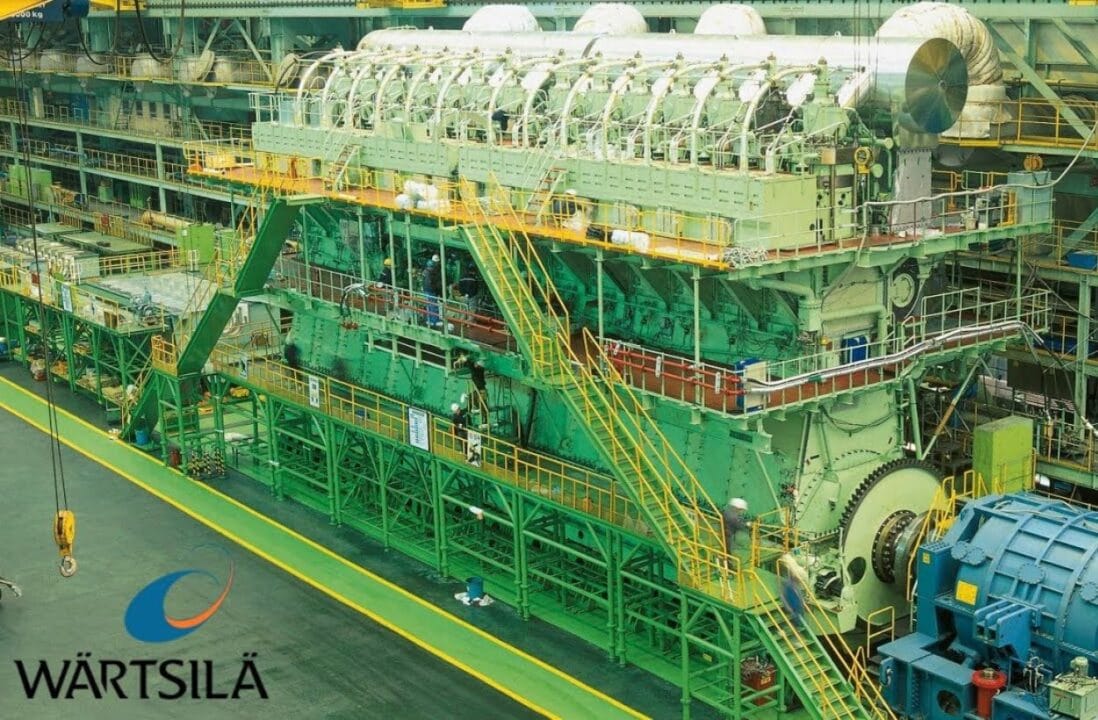
In the pantheon of maritime engines, the Wärtsilä RT-flex96C reigns as one of the most powerful and efficient in the world. This two-stroke diesel engine, adorned with 14 cylinders, not only impresses with its monumental dimensions – 26.5 meters long and 13.5 meters high, weighing around 2,300 tons – but also with its capability to consume about 1,660 gallons of fuel oil per hour. Its efficiency and power are unmatched, marking a benchmark in the global shipbuilding industry.
And What Is the Fuel Consumption of a Ship Engine?
Energy efficiency is a constant challenge in the shipbuilding industry, with fuel consumption being one of the main focuses. The range of DEUTZ engines, for example, showcases the versatility of options available on the market, from the SDZ-280, a 6-cylinder turbocharged engine with intercooler offering 271.7 horsepower, to the ME-C series engines, which provide power ranging from 4,350 kW to 82,440 kW. These engines are designed to optimize performance, offering compact solutions with fully integrated electronic control, adapting to the specific needs of each vessel and contributing to reduced fuel consumption and emissions.
The complexity and diversity of ship engines reflect the continuous evolution of maritime engineering, seeking solutions that combine power, efficiency, and sustainability. The development of engines like the Wärtsilä RT-flex96C and the DEUTZ line highlights the shipbuilding industry’s commitment to innovation, meeting the demands of a constantly moving world while navigating the challenging waters of energy efficiency and environmental protection. Taking the Wärtsilä RT-flex96C engine as an example, one of the most powerful in the world, it consumes approximately 1,660 gallons of fuel oil per hour. This consumption rate reflects the energy demand to move large ships through the oceans efficiently and powerfully.










-

-

2 pessoas reagiram a isso.