





 Portuguese
  English
  Spanish
  3 min of reading
  1 comment




Government Justifies Increase With Standardization and Efficiency, But Unions Warn of Distortions and Increased Costs to Citizens
The price of vehicle storage for seized vehicles in São Paulo may see an adjustment of up to 320% with the granting of collection, custody, and auction services for automobiles. The change, outlined in a public announcement issued by Governor Tarcísio de Freitas, is currently in public consultation and is expected to be formalized at the beginning of 2026.
According to the government, the current fees are inconsistent among traffic agencies, generating uncertainty about the final cost. The proposal sets unique and differentiated rates based on vehicle type, but industry entities warn that the distances traveled to the lots may double, which means more time and money for the citizens.
How the New Vehicle Storage Price Model Will Work
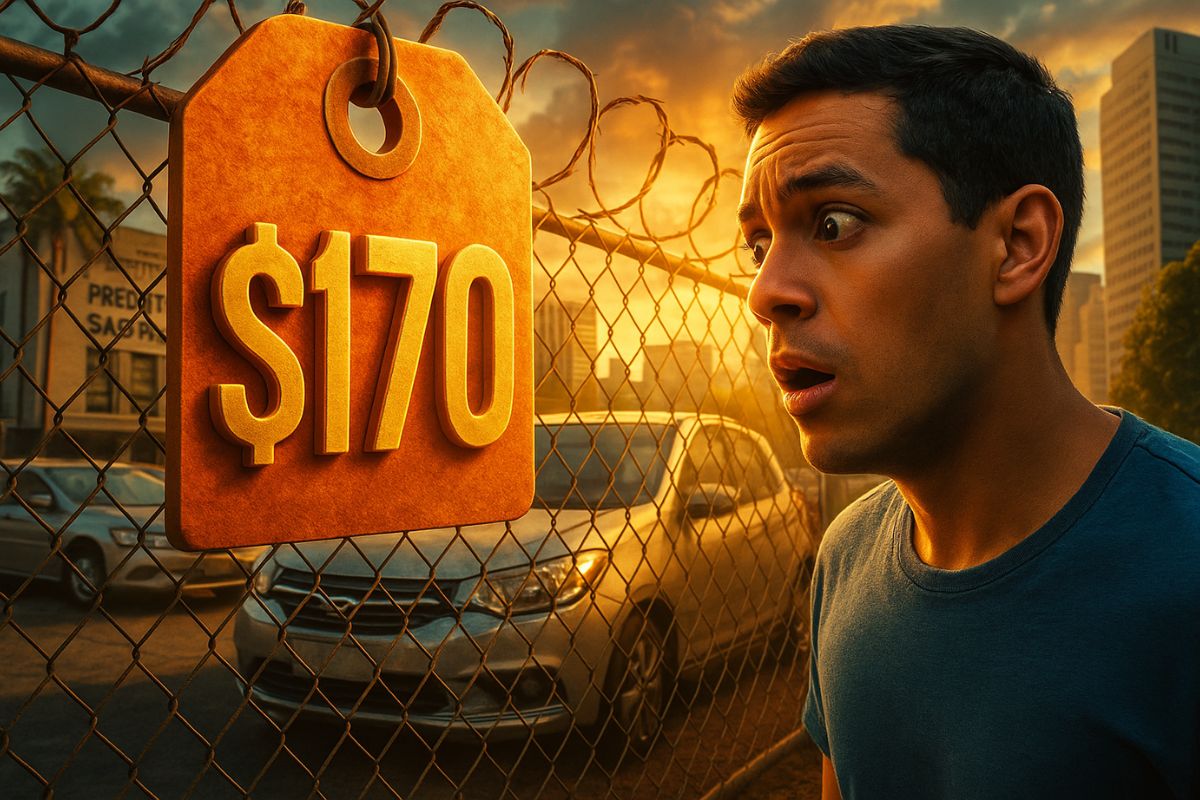
The public announcement proposes a complete restructuring of how the vehicle storage price is calculated in accredited lots. Currently, a daily fee costs R$ 40.72 regardless of the vehicle type. With the new concession, this amount will increase to R$ 70 for passenger cars, R$ 60 for motorcycles, and R$ 170 for heavy vehicles — variations that reach up to 317%.
-
Brazilian city bets on the business environment to generate jobs and attract investments in the energy sector — secretary reveals strategy at Macaé Energy 2026.

-
50 viaducts, 4 tunnels, 28 bridges, and 40 kilometers of bike paths: BR-262 in Espírito Santo will receive 8.6 billion reais for the largest engineering project in the state’s history, inspired by the Immigrant Highway in São Paulo.

-
Brazil produces too much clean energy and doesn’t know what to do with it: over 20% of solar and wind capacity was wasted in 2025 while investors flee and 509 renewable generation projects were abandoned in the last year.

-
Piauí will produce a new fuel that replaces diesel without needing to change anything in the truck’s engine and reduces pollutant gas emissions by half: truck drivers from all over the Northeast are already celebrating the news that will arrive later this decade.


The removal fee, which is currently fixed at R$ 407.22, will become dynamic. For distances of up to 30 km, the fee drops to R$ 400. Beyond this range, the cost increases to R$ 460, representing a 13% increase. The model also limits the charging of daily fees to the first seven days to encourage the quick retrieval of vehicles and reduce congestion in the lots.
Official Justification Highlights Efficiency and Predictability in Vehicle Storage Prices
According to the Secretary of Partnerships in Investments, the new model aims to standardize procedures, expand regional coverage, and ensure greater predictability for citizens. The government argues that the reformulation reduces distortions and improves overall system management, in addition to establishing operational targets such as 90% of seizures occurring within 30 km from the point of origin.
In a statement, the government asserts that there will be incentives for the quick retrieval of vehicles, and that the vehicle storage price could even decrease in some scenarios. A motorcycle removed and retrieved within seven days, for instance, would incur an estimated cost of R$ 620, compared to the current R$ 692.26. Meanwhile, a truck, under the same conditions, would go for R$ 1,450 — less than half of the current value of R$ 2,705.05.
Unions Criticize Distances to Lots and Impact on Consumers
Despite the government’s technical arguments, representatives from unions of tow truck drivers and lot owners warn of practical consequences that could burden motorists. They argue that with the redistribution of lots, citizens may be required to retrieve seized vehicles from another municipality, leading to additional transportation costs.
The announcement also plans to reduce the number of lots: there will be seven lots with 125 units, down from 264 currently. For the unions, this could hinder access and increase waiting times for vehicle releases. The entities have already announced that they intend to seek a court order to block the auction and argue that management should remain under the responsibility of municipalities.
Auctions, Investments, and Participation of Small Businesses
The concession process will last for 26 years and is expected to total an investment of R$ 555 million. The largest of the seven lots, number 6, is estimated to be worth R$ 90.5 million. Since the resumption of vehicle auctions in 2024, there have been 35 events with over 19,000 vehicles sold, and another 23 auctions are ongoing.
Despite the large size of the contracts, the government states that micro and small businesses will be able to participate in the bids, as long as they meet the technical criteria. They will also be able to be subcontracted by the winning concessionaires. Nevertheless, industry entrepreneurs argue that the entry fees are too high for the current financial reality, exacerbated by the suspension of auctions in 2023.
Do you think this adjustment in the price of seized vehicle storage is fair? How does this impact those who are already facing financial difficulties? Comment and share your thoughts on the topic.








Mas não se preocupem, pois essa arrecadação milionária vai retornar em investimentos.
Mas, o investimento será na próxima campanha política do Tarcínico e seus comparsas ideológicos.