





 Portuguese
  English
  Spanish
  3 min of reading
  0 comments



Wheat Price Drop Reduces Stimulus to Crop in Agriculture; Conab and Cepea Point to Strong Imports and Continuous Pressure in the Market.
The drop in the price of wheat in Brazil is reducing the stimulus for planting, keeping the crop less attractive for agriculture and increasing dependence on imports.
The scenario was pointed out by the Center for Advanced Studies in Applied Economics (Cepea) and the National Supply Company (Conab), with data regarding market behavior in 2025 and projections for 2026.
The combination of falling internal prices, greater external supply, and high stocks explains why a consistent recovery is not expected in the short term.
-
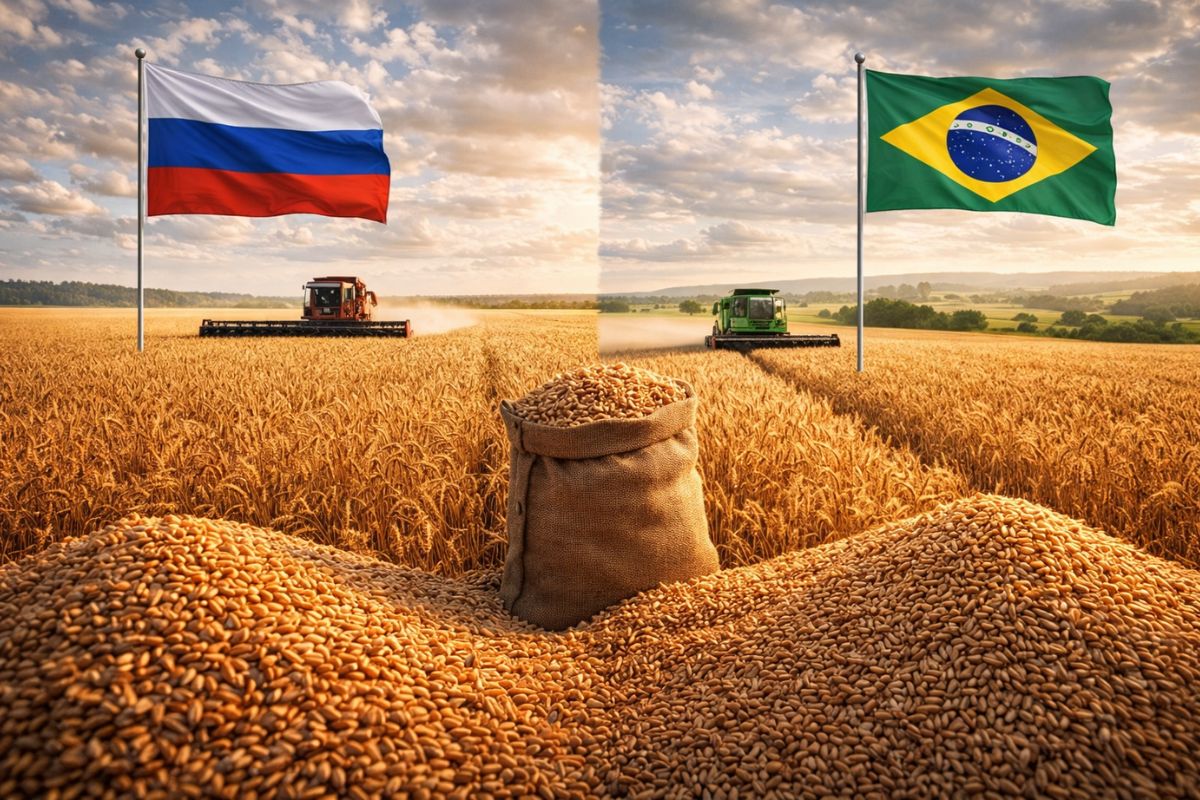
While Russia dominates the global wheat market, Brazil emerges as an unexpected competitor in the Cerrado, offering grain available in July and August when stocks in the Northern Hemisphere are at their lowest point of the year.
-
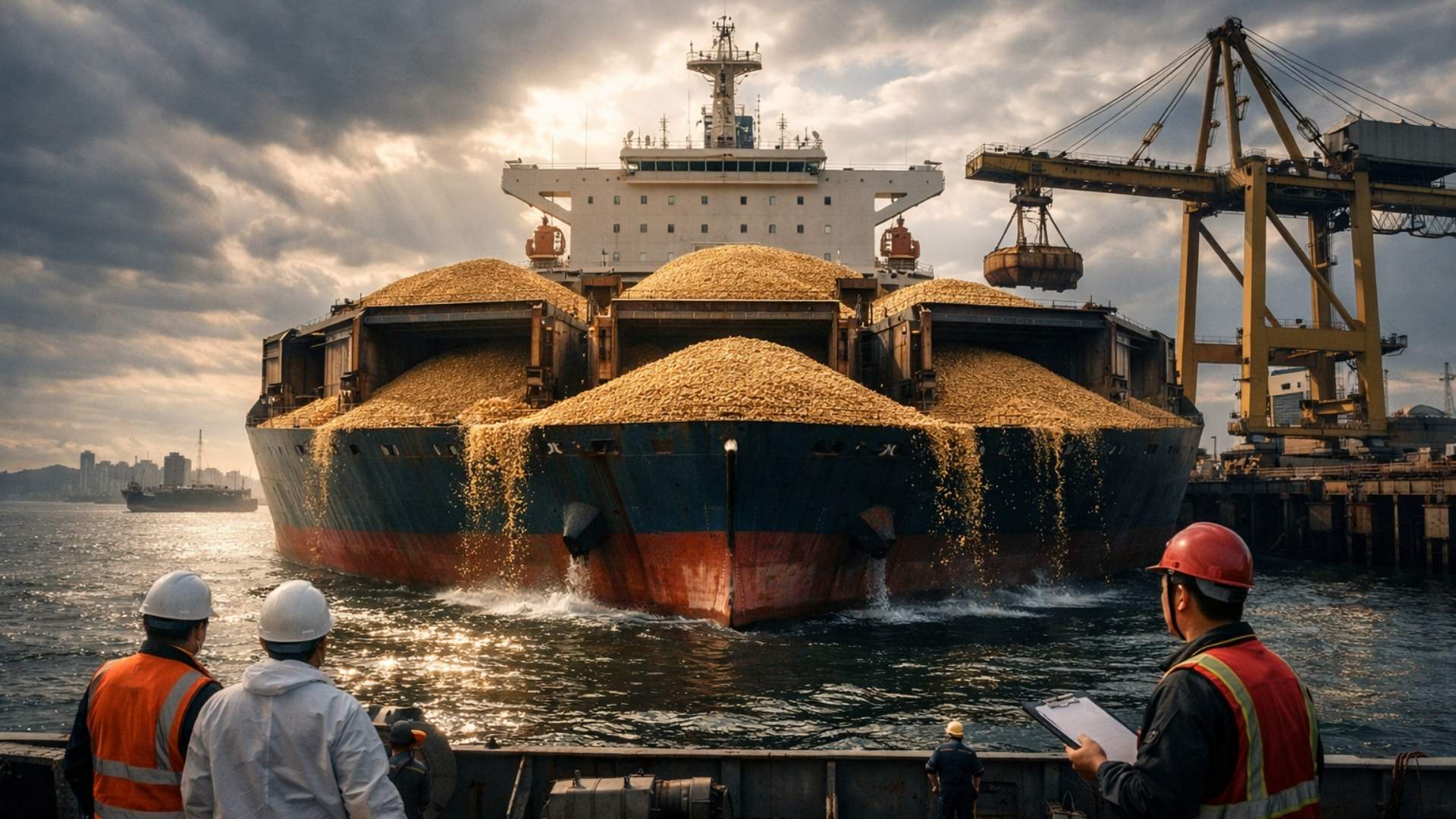
China returned almost 20 Brazilian ships with soybeans, but now everything could change: the country that buys 80% of the grain is considering relaxing regulations after impurities held up shipments of thousands of tons and caused million-dollar losses.
-
The drought of the cerrado was considered an enemy of wheat, but Brazilian scientists turned the lack of rain into a competitive advantage by creating a grain with quality that is already attracting the attention of international mills around the world.

-
THE OWNER of Brazil: a farmer who came from laundries, created an ’empire’ and today runs a company valued at R$ 42 billion after tripling its value in less than a year and receiving a billion-dollar investment from the USA.


According to Cepea, wheat prices decreased significantly throughout 2025, directly affecting the profitability of producers.
In Paraná, the national reference for the cereal, bread or improving wheat accumulated a drop of 16%, with an average price of R$ 1,183.75 per ton in December.
In Rio Grande do Sul, soft wheat saw an even greater decline of 18%, ending the year at R$ 1,036.09 per ton.
Wheat Price Pressures Planting Decisions in Agriculture
In light of this movement, the wheat price weighs on rural producers’ decisions. Researchers from Cepea indicate that, with compressed margins, there is no expectation of significant progress in the cultivated area in the first half of 2026.
Thus, the crop tends to remain stable or even shrink in some regions, keeping Brazil dependent on imported wheat to supply the domestic market.
Moreover, even with the possibility of occasional exports, the volume shipped is not expected to be sufficient to sustain a price recovery.
Still, external sales help reduce some of the downward pressure in the domestic market, acting as a mechanism for disposing of the surplus.
Imports Remain High, Says Conab
Data from Conab reinforces this scenario. According to the state-owned company, Brazilian wheat imports between August 2025 and July 2026 are expected to reach 6.7 million tons.
The number indicates that, between December 2025 and July 2026, the pace of external purchases will be more intense than what was observed in the early months of the harvest year.
As a result, total domestic wheat availability during this period is expected to exceed 16 million tons, a volume 5.3% higher than that recorded in the previous season.
This increase reflects not only the imports but also the maintenance of high stocks, a factor that limits stronger reactions of the wheat price in the domestic market.
Consumption, Exports, and Stocks at High Levels
Of the total projected by Conab, about 11.8 million tons are expected to be directed to domestic consumption.
Exports are estimated to be 2.24 million tons between August 2025 and July 2026, maintaining a relevant role in the market dynamics.
Even so, final stocks at the end of July 2026 should reach approximately 2 million tons. This volume corresponds to 8.7 weeks of consumption, the highest ratio since 2020.
In practice, this means a comfortable supply cushion, which reduces the urgency for new purchases and keeps the wheat price under pressure.
Argentinian Crop Increases Competition in the Market
Another decisive factor is the international scenario. Imports remain competitive because foreign wheat, especially from Argentina, continues to arrive in Brazil at attractive prices.
According to data from the Bolsas de Cereales de Buenos Aires, Argentina’s wheat production for the 2025/26 crop is estimated at 27.8 million tons, a new historical record.
This abundant supply reinforces competition with domestic products and increases pressure on Brazilian agriculture, especially in the producing regions of the South.
Meanwhile, imported wheat continues to occupy space in the milling industry, limiting the capacity of domestic prices to react.
Outlook for 2026 Remains Cautious
In this context, researchers from Cepea assess that there are no clear signs of a consistent recovery in the wheat price at the beginning of 2026.
Imports are expected to continue exerting a direct influence on the market throughout the year, keeping domestic cereal at a competitive disadvantage compared to external products.
Therefore, as long as the high supply scenario persists, Brazilian agriculture tends to adopt caution in expanding the crop, waiting for clearer signs of profitability improvement.
Until then, the wheat market is expected to remain marked by pressured prices, a strong presence of imports, and comfortable stocks in the country.










Seja o primeiro a reagir!