





 Portuguese
  English
  Spanish
  2 min of reading


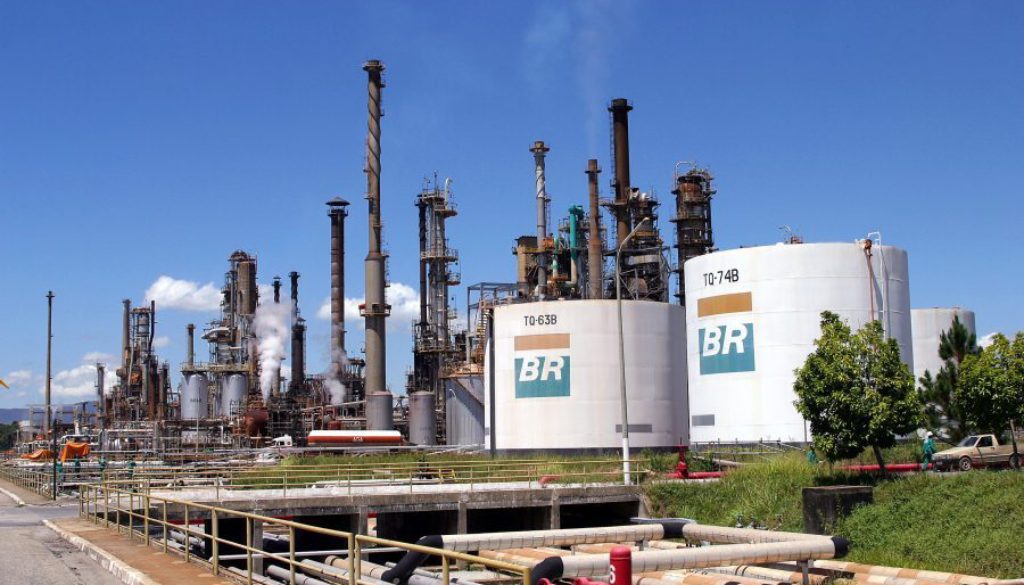
Fuel Prices Depend on Market Fluctuations, Says Petrobras. Increased Use of Refineries Caused Decline in Oil Exports.
The state-owned Petrobras reaffirms that it is not responsible for setting the fuel prices. These prices fluctuate according to market conditions and their variations. By utilizing its refineries, Petrobras has caused a significant drop in the country’s oil exports. This scenario is reflected in its return to the domestic market for fuel supply.
[adrotate banner=”10″]
-
Haiti’s capital is experiencing an energy and construction crisis, facing blackouts, a blocked port, and buildings at risk after years of instability and a significant earthquake.

-
Government unlocks R$ 554 million for a highway that has been requested for decades and accelerates the duplication of BR.

-
Without bricks, without cement, and without endless construction: the cardboard house that is assembled in modules and can be moved.

-
Billions of barrels on the equatorial margin could lead Amapá to double its oil production in Brazil — the state aims to enter the route of companies in the Campos Basin, attract investments, and boost jobs and businesses in the oil and gas sector.

Competitors of the state company are discouraged from continuing with imports due to Petrobras implementing prices below the import level, confirm importers and various market analysis professionals.
2.176 Million Per Day
With the ability to process 2.176 million barrels per day (bpd), Petrobras did not provide details on the utilization factor of its refineries. Diesel sales at distributors experienced a decline of 0.6%, accompanying an 11.1% drop in gasoline sales, according to ANP. The total decline across all fuels accounted for 1.1%.
The worst recession scenario in history has had a major impact on fuel demand, according to Alexandre Szklo, a professor of Energy Planning at Coppe/UFRJ.
We cannot overlook the much-discussed truck drivers’ strike, which contributed to the decline in sales.
In the sixth month of the year, it was necessary to increase national oil refining compared to May of this year, which was caused by the increased demand for this type of product. The export of oil was reduced as a result of this demand, according to information from Petrobras.
[adrotate banner=”11″]
Imports Declining
By practicing prices below import parity, independent international companies face difficulties in continuing their operations in Brazil. This practice undermines these companies, which have invested heavily in infrastructure, as they are unable to achieve profitability due to the prices. This statement was made by the president of the Brazilian Association of Fuel Importers (Abicom).
As a result of the truck drivers’ strike and an agreement reached by the government in June 2018, it also contributes to the difficulties in importing fuels, states the Abicom – Brazilian Association of Fuel Importers.
The reduction in fuel prices, according to government program, reimburses importers and refineries by up to R$ 0.30 (thirty cents)/liter.
[adrotate banner=”12″]
Import Activities Halted
The inability to operate, due to the drop in import prices set by Petrobras, led independent importers to halt their activities.
Other important news:
- Opportunity for Bilingual Engineer in Macaé-RJ.
- Great Opportunity for Sales Manager (Fuel and Lubricant Solutions)
- DREAM – Is It Worth Insisting on a Unlikely Dream?
[adrotate banner=”14″]








Seja o primeiro a reagir!