





 Portuguese
  English
  Spanish
 4 min of reading
  0 comments


Approved Project by the Chamber Transforms Parking in Rio with Technology, Safety, and End to Abusive Charges
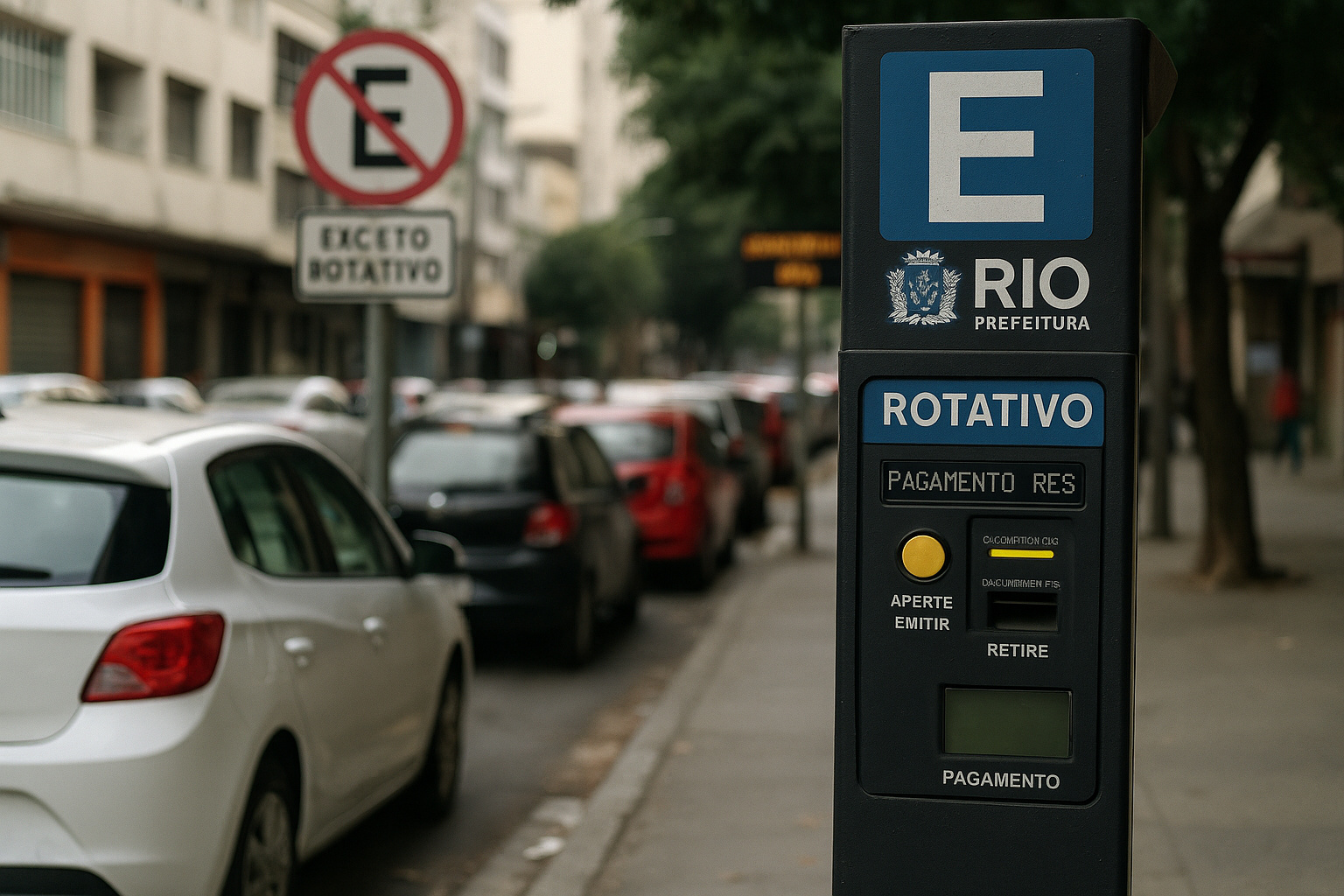
A historic change is about to transform the daily lives of drivers in Rio de Janeiro. On October 9, 2025, the City Council approved, in its first vote, the Bill No. 156/2025, which ends the activities of parking attendants and creates a digital parking system managed by the city government.
The proposal will still undergo a second vote. If confirmed, it will proceed to approval or veto by Mayor Eduardo Paes. According to the text, the objective is to replace informal charges with an electronic and automated model, using apps, GPS, and license plate recognition. This way, the city government aims to ensure safety, transparency, and standardization in the use of public parking spaces.
Urban mobility experts consider this initiative a decisive step towards the modernization of road management, bringing Rio closer to the practices of major global capitals.
-
One of the most important lakes in the United States for birds, the balance of nature, and the climate has dried to historic levels, leaving boats stranded, revealing salt flats, and showing how the lack of water can transform an entire landscape.

-
It’s not Cristiano Ronaldo or Messi: the richest football player in the world is only 27 years old, has a fortune of 100 billion reais, and is the nephew of a sultan from an Asian country that few people know about.

-
At 77, the king of one of the most famous and powerful crowns on the planet is said to be under pressure to leave the throne, while behind the scenes there are already talks of a new coronation that could cost R$ 260 million.

-
Chinese researchers have created bamboo drones that fly with the same precision as conventional models and have released the flight control software for free to the entire world in a technology that could revolutionize sustainable aviation.


Digital System Will Bring More Control and Efficiency
According to the proposal, the new format will eliminate the presence of intermediaries. Additionally, it will allow payment for parking spaces through electronic means, with charges proportional to the time of use. The system promises to simplify the process, reduce conflicts, and ensure direct control by the city government.
Currently, the rotating parking charges R$ 2 for up to four hours. However, drivers report that they rarely manage to pay this amount, as many parking attendants demand higher sums, especially in highly trafficked areas, such as beaches, stadiums, and event venues.
With the new digital system, the city government hopes to increase safety and curb improper charges. Furthermore, the measure is expected to improve public revenue, ensure transparency, and reduce operational costs. Thus, the control of parking spaces will be handled with greater efficiency and constant supervision.
Second Vote and Approval by Mayor Eduardo Paes
The president of the City Council, Carlos Caiado (PSD), confirmed that the second vote will take place in the week of October 14, 2025. If the project is approved again, it will go to the office of Mayor Eduardo Paes, who may approve or veto the proposal.
If approved, the law will come into effect after a transition period of up to one year. During this time, the city government will implement the electronic payment systems and organize the supervision of the streets. Furthermore, the Municipal Transport Secretary will be responsible for coordinating the process, ensuring a safe, gradual, and efficient transition.
Positive Reactions and Implementation Challenges
The news was received with enthusiasm by a large part of the population. Drivers emphasize that the measure could eliminate embarrassment and common threats in areas dominated by parking attendants. “We pay out of fear of retaliation, not for service,” stated a driver interviewed by O Dia.
Still, experts warn that the success of the new model will depend on rigorous enforcement and the digital education of users. For this reason, the city government plans to conduct informative campaigns to teach the use of payment apps. In this way, it is hoped to avoid confusion, increase public adherence, and ensure that the system functions in an accessible manner for all.
Urban Transformation and Social Impact
The project is part of a broader strategy for reorganizing urban space. With the end of informal charges, it will be possible to reduce conflicts on the roads, improve vehicle flow, and increase the sense of safety in public places.
Moreover, the digi<alization of parking will allow the city government to monitor in real-time the occupancy of parking spaces, optimizing traffic and encouraging rational use of public space. As a consequence, the city could improve urban mobility and reduce the environmental impacts of disordered traffic.
The expectation is that the model will serve as a benchmark for other Brazilian capitals, consolidating Rio de Janeiro as a reference in innovation and modern public management.
What Does the Future Hold for Carioca Drivers?
If well implemented, the new law could put an end to an old and controversial practice and usher in a new era of efficiency and technology in Rio’s traffic. Additionally, the project symbolizes a progress in combating informality, strengthening the authority of the public power and restoring to citizens their right to park with peace of mind.
The challenge, therefore, will be to ensure that the electronic system functions with stability and that the supervision process is fair and transparent.
After all, what do you think: Will the end of parking attendants and digital advancement really transform traffic in Rio de Janeiro?






Seja o primeiro a reagir!