





 Portuguese
  English
  Spanish
  4 min of reading
  10 comments


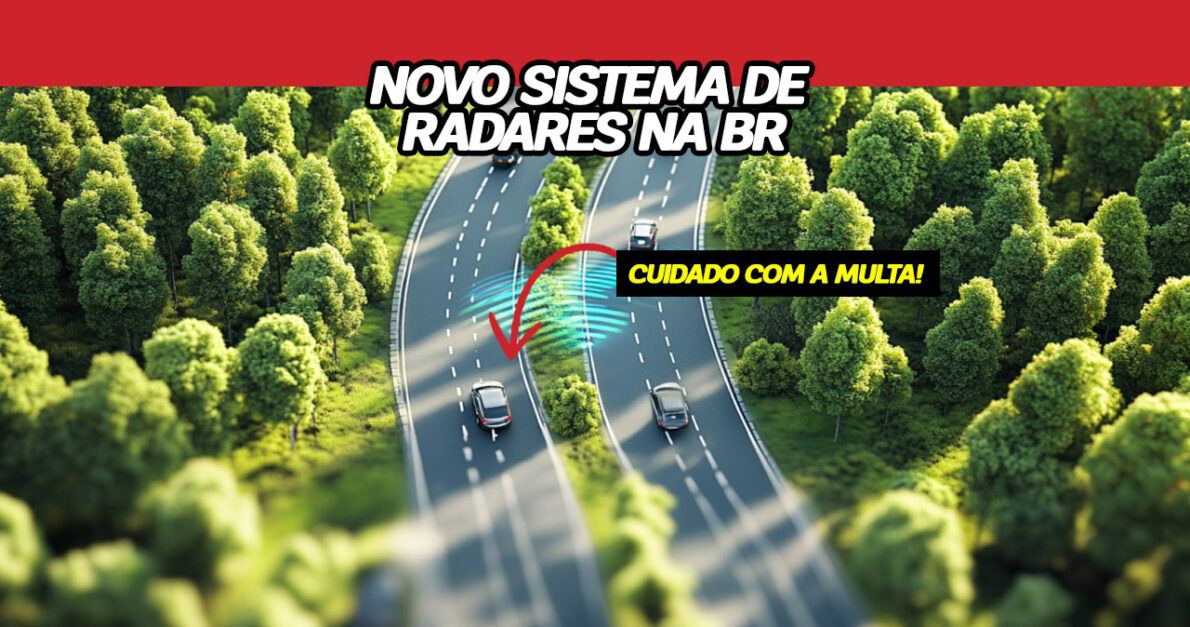

From This Monday (14), the BR-050 Introduces the Use of Radars That Monitor the Average Speed of Vehicles. The New Model Is Already Successfully Used in Countries Like Italy.
Have you ever imagined driving peacefully on a highway and suddenly finding out that you exceeded the speed limit without even noticing?
Now, this may become a reality for many Brazilian drivers.
The BR-050, one of the most important highways in the country, is implementing a new radar system that promises to directly impact safety and speed control on the roads.
-
The government requests the Federal Revenue Service for a new system to automate the income tax declaration, reducing errors, time, and bureaucracy for millions of Brazilians.

-
Pix in installments, international Pix, and contactless payment without internet: the Central Bank revealed the new features coming to the tool that is already used by almost every adult in Brazil.

-
Mercado Livre has just started selling medications with delivery in up to three hours to your door, and this move could completely change the way Brazilians buy medicines on a daily basis.

-
In Dubai, rising tensions from the war in the Middle East are causing super-rich individuals to leave the Gulf and direct their fortunes to a new financial refuge in Asia.


And the changes begin very soon, putting drivers on alert.
Starting this Monday (14), the concessionaire Eco050 will begin, on an experimental basis, the use of a new radar system that measures the average speed of vehicles.
This system will be operational on an 11-kilometer stretch of the BR-050 highway, in the municipality of Uberaba, Minas Gerais, and will automatically monitor driver behavior.
This is the first system of its kind on a federal granted highway, and it may mark the beginning of a new era of more efficient monitoring in the country.
How the New System Will Work
The radars will be positioned at two specific points on the highway, at km 171 and km 182, in the direction from Uberaba to Delta.
These devices will be interconnected, recording the times at which vehicles pass each point.
The calculation is simple: by monitoring the time a driver takes between one point and another, the system will be able to determine the vehicle’s average speed.
If the speed exceeds the allowed limit, an infraction will be automatically recorded.
According to information from the concessionaire, the speed limit for this stretch is 80 km/h, and the minimum time to cover the 11 kilometers is eight minutes.
If the journey is completed in less time, it means the driver has exceeded the speed limit at some point.
What Makes This System So Special?
According to the Operations Manager of Eco050, Bruno Araújo Silva, the main difference between the new system and the traditional fixed radar method is that monitoring now occurs throughout the entire route, and not just at the moment a driver passes the radar.
“With traditional radars, drivers can slow down only as they approach the radar, even if they’ve been driving at high speeds for the rest of the route.
With average speed monitoring, this is no longer possible. The driver will be monitored throughout the entire stretch, increasing respect for speed limits,” Silva highlighted.
Impact on Road Safety
This technology is not new in the world.
Countries like Italy already use this system and have seen impressive results in terms of road safety.
In just 12 months after implementation, the number of deaths in traffic accidents dropped by as much as 50%.
In Brazil, it is hoped that the new system will also contribute to dramatically reducing the number of accidents and improving the safety of everyone traveling on federal highways.
Additionally, Eco050 and the Federal Highway Police (PRF) will carry out educational actions at the site, starting on Monday morning, at km 193 of the BR-050.
These actions aim to educate drivers about the new system and the importance of respecting speed limits.
The Importance of Average Speed Enforcement Radar
The average speed enforcement model brings a series of benefits compared to traditional methods.
The system helps eliminate loopholes that allowed drivers to bypass radars by only reducing speed when approaching equipment.
Now, control will be stricter and more constant, increasing the monitored area and making driving behavior safer across the entire stretch of the highway.
According to Bruno Araújo Silva, this technology significantly increases respect for traffic laws and improves overall safety on the roads.
Drivers will need to adopt more cautious behavior and respect the established limits throughout the entire journey, avoiding fines and, more importantly, severe accidents.
What’s Next?
The BR-050 will be a pioneer in Brazil with this type of enforcement, and this may just be the beginning.
If the experimental operation is successful, other federal highways may also adopt the technology, which could transform the way traffic is monitored in the country.
Drivers traveling on the highway should prepare for the changes.
The new enforcement technology is here to stay and may soon spread to other Brazilian highways, impacting the behavior of millions on the roads.
Do you think this new system will really help reduce the number of accidents? Or will drivers find ways to bypass enforcement? Leave your opinion in the comments!








Sem dúvida alguma os acidentes diminuirão…e com certeza não haverá mais arrecadação com notificações…será do interesse da administração..federal..estadual..ou municipal…abrir mão dessa fonte de recursos? Sei não…
Como já num bastasse todas as maneiras de arrecadar mais dinheiro, agora mais essa vigarice de “fiscalização de velocidade média”. Coitado do cidadão brasileiro, tá mais falido do que nunca.
Uma dúvida!!! A velocidade da rodovia por ex é de 110k/h
Ok
Em muitos trechos a reduções brusca p 60, 50 até 40km/h !!!
Qual velocidade será a infração ?
Velocidade da rodovia ou em um trecho específico ???