





 Portuguese
  English
  Spanish
 5 min of reading
  0 comments



The President of Petrobras, Magda Chambriard, Emphasized the Relevance of Energy Security and Cooperation with Firjan During the Meeting of the Oil and Gas Council, Highlighting Challenges and Opportunities in the Sector
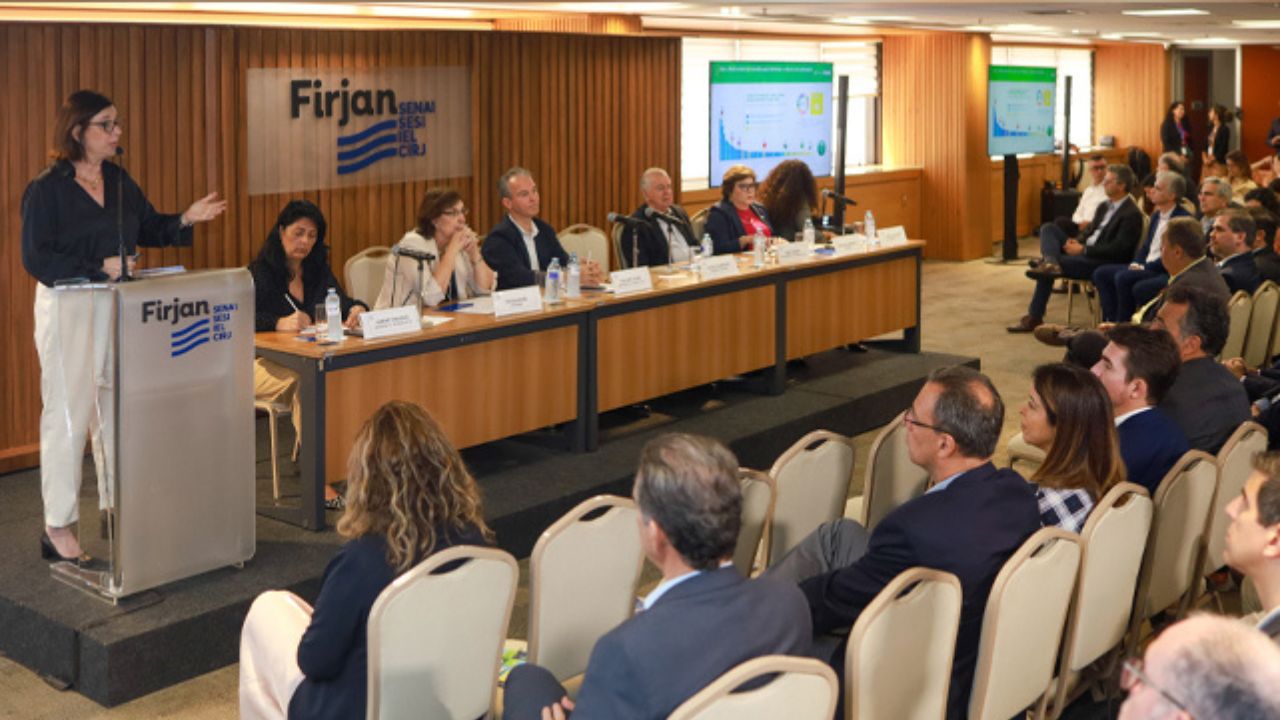
On this Tuesday (14), the meeting of the Firjan Oil and Gas Council brought together industry leaders to discuss development and sustainability strategies. The president of Petrobras, Magda Chambriard, presented the Energy Planning and Climate Plan of the state-owned company, emphasizing the importance of energy security as a pillar for Brazil’s economic and social growth.
Energy Security as a National Priority for Petrobras
During the meeting held at Firjan’s headquarters, Magda Chambriard stated that Brazil must increase its energy production and consumption capacity, in addition to investing in the expansion of transmission lines. The statement reinforces Petrobras’ role in promoting energy security, essential for ensuring the country’s continuous and sustainable supply.
Moreover, the president highlighted that the countries with the highest energy consumption are also those that demonstrate the best human development indices. Therefore, the goal is to improve the country’s human development index, she stated, connecting the goals of COP and ESG practices to the company’s objectives.
-
Offshore industrial demand in Macaé surges with the recovery of oil and gas and could grow by up to 396% by 2026 in the Campos Basin.
-
Brazilian giant expands borders in the Southeast: Petrobras confirms new oil discovery in ultra-deep waters in the pre-salt of the Campos Basin.

-
Alert in the global energy market: Severe tropical cyclone hits the coast and disrupts gas production at major plants in Australia, threatening global supply.

-
Petrobras finds high-quality oil in the pre-salt at 113 km from RJ and reignites expectations about strategic reserves in the Campos Basin.


According to Chambriard, energy security is a vector for social inclusion and economic development. Stability in energy supply directly impacts industry competitiveness, investment attraction, and the quality of life of the population.
Energy Planning and Climate Plan of Petrobras
Magda Chambriard’s presentation addressed two strategic documents from Petrobras: the Energy Planning and the Climate Plan. Both are aligned with the commitments of the Paris Agreement and emissions reduction targets.
- Emissions Reduction: In the last ten years, Petrobras has reduced methane emissions by 60% and CO₂ emissions by 40%. The actions encompass scopes 1 and 2, with clear and measurable targets.
- Renewable Fuels: The state-owned company already produces diesel with 5% renewable content and is testing versions with up to 10%. The naval bunker with 24% renewable biodiesel has been tested with promising results.
- Integration with Agriculture: Products such as carbon-neutral gasoline and green coke are being developed in partnership with the agribusiness sector.
The Climate Plan is only viable when aligned with the national Energy Planning, Magda Chambriard emphasized, highlighting the interdependence between sustainability and energy security.
North Fluminense and Regulatory Challenges
Another central point of the meeting was the situation in North Fluminense, a strategic region for oil production in Brazil. Magda Chambriard warned about the lack of assistance in defining the reference price of oil, especially in the post-salt era.
The region must receive the necessary support and cannot be neglected, she stated, advocating for the continuity of investments and the viability of new projects. The president of Petrobras also highlighted the importance of clearer and more efficient regulation to ensure the attractiveness of investments in the region.
Emiliano Gomes, president of the Oil and Gas Council, also reinforced the region’s relevance: It is essential that local leaders discuss the appropriate incentives to ensure the continuity of production and its economic effects.
Firjan and the Energy Transition in the Industry
Firjan presented the initiative “Firjan Journey for Energy Transition in Industry,” which will be launched on October 23 at the Dialogues on Transition event. The project aims to promote:
- Diversification of Sources and Technologies
- Operational Efficiency
- Improvement of Quality of Life without Compromising Socio-Environmental Demands
Karine Fragoso, technical advisor of the Oil and Gas Council, and Tatiana Lauria, from the Electric Energy Council, explained that the energy transition will be driven by three pillars: regulation, consumer empowerment, and energy security.
Firjan advocates for an integrated approach that considers regional and sectoral specificities, promoting a just and equitable transition. The entity also acts as a bridge between the productive sector and the government, contributing with data, studies, and technical proposals.
ESG, Public Policies and the Role of Petrobras
The president of Petrobras also addressed the convergence between the National Climate Change Policy and Energy Policy. Although they have distinct visions, both share objectives such as:
- Eradication of Poverty
- Reduction of Social Inequalities
- Rational Use of Energy
- Reduction of Emissions in Transport and Production Sector
This integrated approach reinforces Petrobras’ role as a social and environmental transformation agent, aligned with the best global practices. The company has invested in innovation, research, and development to create cleaner and more efficient energy solutions.
Additionally, the state-owned company has expanded its involvement in carbon capture and storage projects, renewable energy, and energy efficiency, contributing to the decarbonization of the Brazilian matrix.
Institutional Participation and Technical Support in the Oil and Gas Council
The event was attended by representatives from Firjan’s ESG and Electric Energy Councils, as well as executives from Petrobras, such as:
- Angélica Laureano, Director of Energy Transition and Sustainability
- Sylvia Anjos, Director of Exploration and Production
- Raul Sanson, Vice President of the Oil and Gas Council
- Claudia Guimarães, Vice President of the ESG Council
The diversity of voices and perspectives strengthened the debate and broadened the understanding of the challenges and opportunities of energy security in Brazil. The exchange of experiences between the public and private sectors was essential to align strategies and identify synergies.
The meeting also included the participation of regulation specialists, academic representatives, and business leaders, contributing to a technical and in-depth discussion.


Paths to a Sustainable Energy Future
The meeting of the Firjan Oil and Gas Council, held on October 14, 2025, highlighted that energy security is more than a technical issue — it is a strategic vector for human and economic development.
With leadership from Magda Chambriard at the helm of Petrobras, the country is moving towards a cleaner, more efficient, and inclusive energy matrix. The integration of planning, innovation, and socio-environmental responsibility is the way to ensure a sustainable future.
The coordination among companies, government, and civil society will be essential to consolidate this process. Petrobras, with its technical capacity and commitment to sustainability, plays a central role in this scenario.
Firjan, for its part, reaffirms its commitment to strengthening the Fluminense industry and building a modern, competitive energy agenda aligned with global challenges.





Seja o primeiro a reagir!