





 Portuguese
  English
  Spanish
  4 min of reading
  0 comments


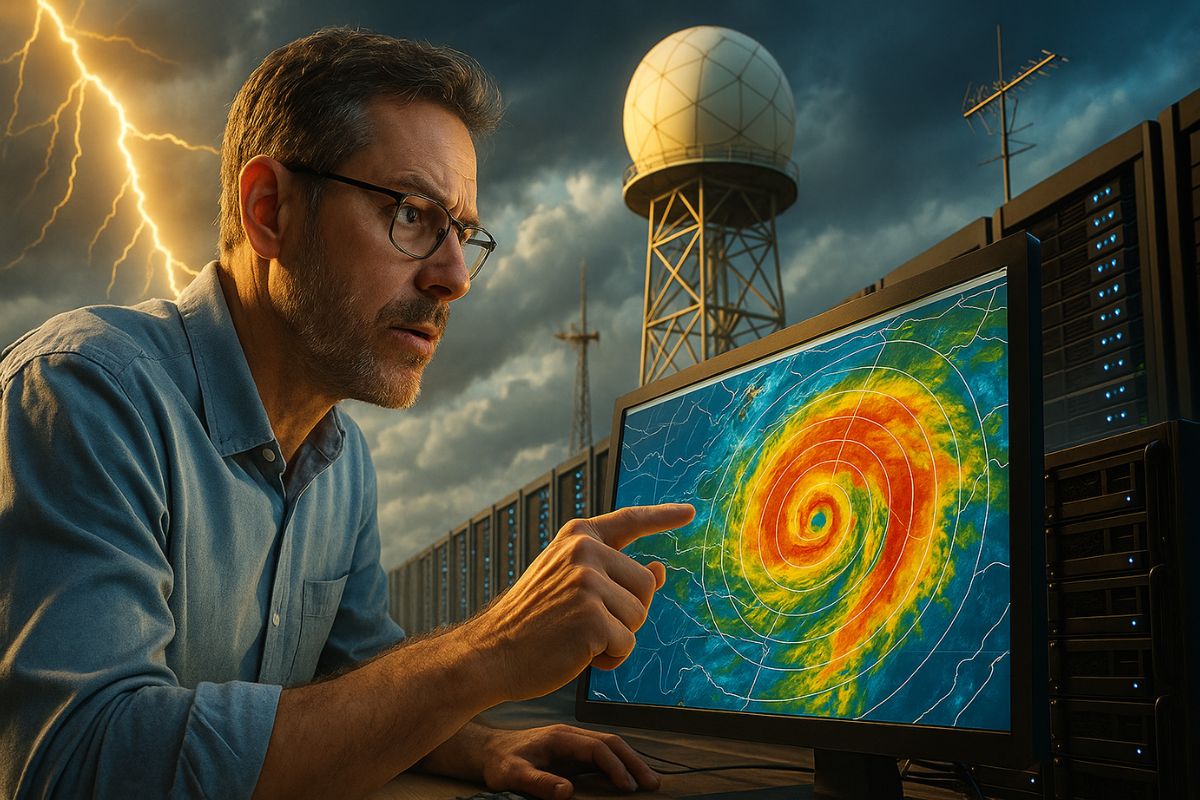
Understand How Meteorologists Use Data and Supercomputers to Attempt to Predict the Unpredictable and Why Accuracy Depends on Timeframe and the Chaotic Nature of the Atmosphere
Weather forecasting is one of the most consulted scientific tools in the world. It influences everything from the ideal day for harvesting to the right moment to take off in an airplane. Even so, many people still wonder if it really gets it right. The answer involves science, technology, and a good dose of uncertainty.
Today, predicting the weather is the result of a collective and continuous effort. Data collected from all continents is processed by supercomputers and analyzed by specialized meteorologists. Despite all the advancements, the atmosphere remains an extremely dynamic system full of difficult-to-control variables.
How Weather Forecasting Works
It all starts with the collection of atmospheric data.
-
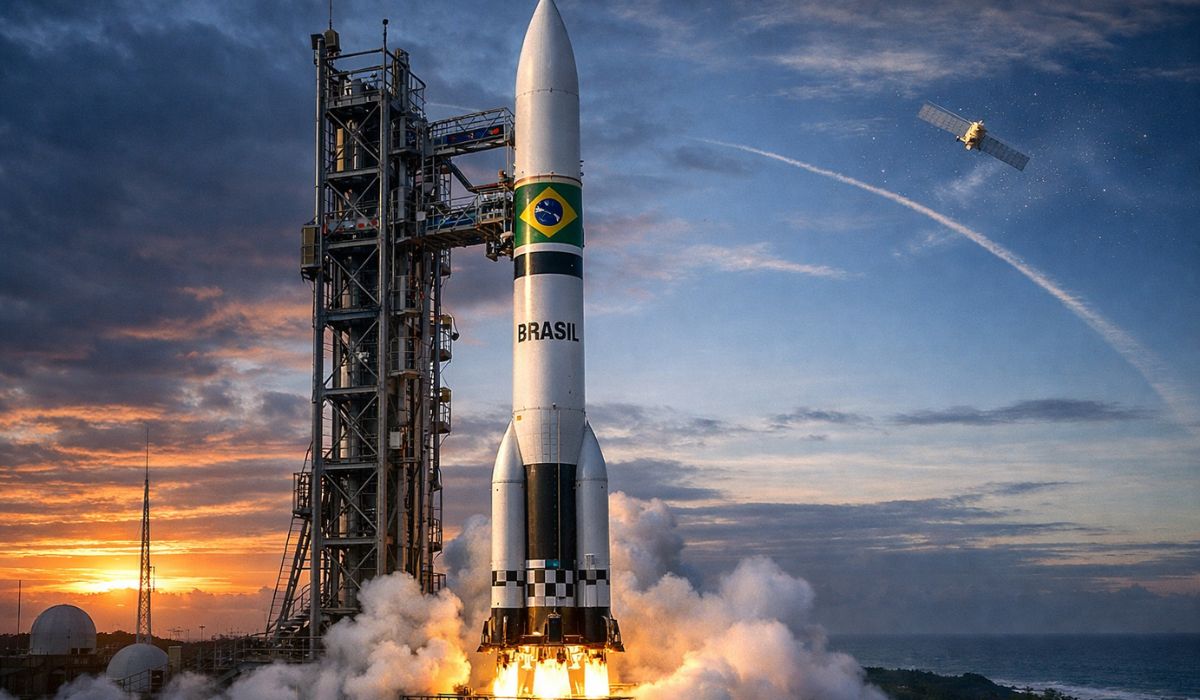
After decades of failed attempts, Brazil is once again looking to space with an orbital rocket measuring 12 meters, weighing 12 tons, costing R$ 189 million, and scheduled for launch in 2026, in a new race to finally achieve autonomous access to orbit.
-
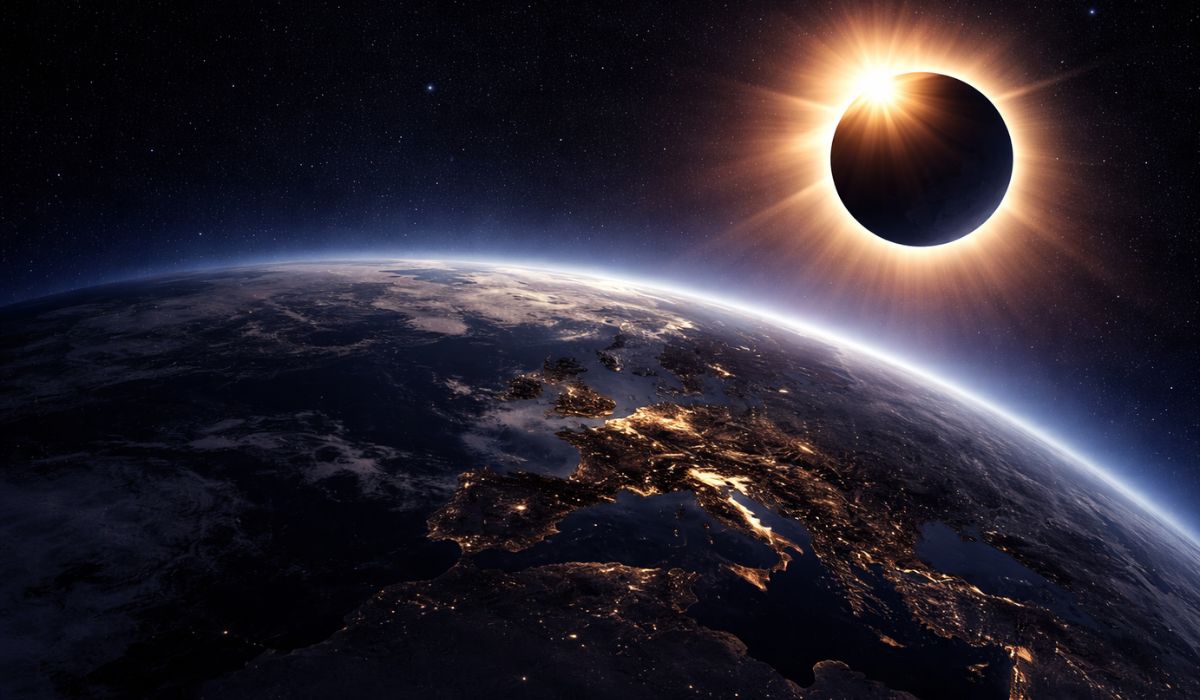
The Earth will plunge into a few minutes of darkness in broad daylight in August 2026, when a total solar eclipse transforms the sky into one of the most impressive astronomical phenomena in recent years.
-
How the terraforming of Mars can transform the planet: artificial aerosols can increase the temperature by up to 35°C in 15 years, creating conditions for liquid water.

-
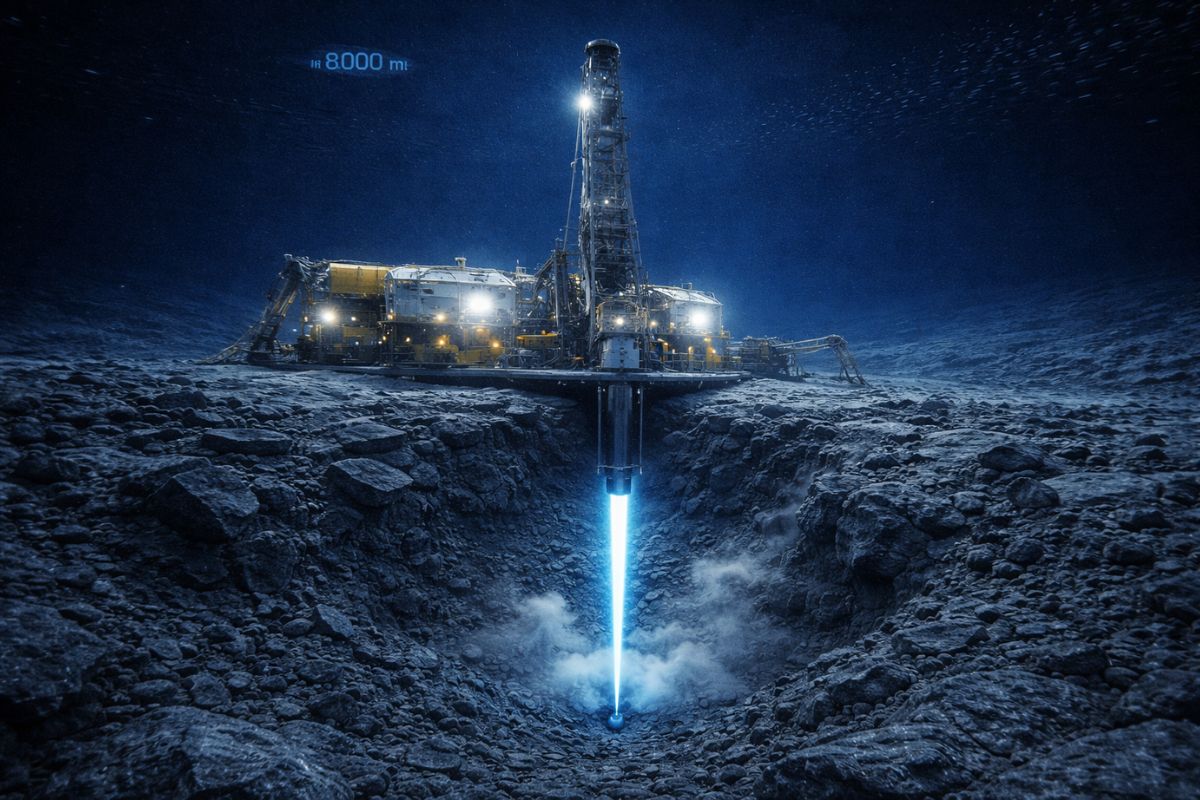
Scientists drilled nearly 8,000 meters into the ocean floor above the fault that caused the 2011 tsunami in Japan and discovered that a layer of clay 130 million years old was responsible for making the wave much worse than any model had predicted.

Satellites, radars, ocean buoys, airplanes, and weather stations operate 24 hours a day, measuring temperature, pressure, wind, and humidity.
These pieces of information create a detailed picture of the current state of the atmosphere, which is fundamental for any simulation.
Next, the data is sent to supercomputers that apply complex mathematical models based on the laws of physics and thermodynamics.
These models simulate the behavior of the atmosphere in the following hours and days, projecting the movements of cold fronts, cloud formations, and chances of rain.
Each update creates a new projection, constantly refined with new data.
The Human Role in Meteorological Analysis
Despite the capabilities of supercomputers, the final interpretation relies on the human eye.
Experienced meteorologists compare the different outputs of the models and choose the ones that best represent local behavior.
Regional knowledge is essential for adjusting forecasts and accurately communicating what may happen in each area.
This collaborative work between technology and experience is what transforms numbers into comprehensible forecasts.
It is also what prevents excessive generalizations, ensuring that the public receives useful and contextualized information.
Why Forecasts Are Sometimes Wrong
Even with advanced technology, the atmosphere is a chaotic and sensitive system to small changes.
Minimal variations in temperature, pressure, or wind can completely alter the outcome of a simulation in just a few days, a phenomenon known as the butterfly effect.
Moreover, localized phenomena, such as quick storms, are difficult to predict in advance.
Small errors in input data can also impact the final result, reducing accuracy.
Therefore, weather forecasting should be understood as an estimate based on probability, rather than an absolute certainty.
What Is the Accuracy Level of Weather Forecasting
In the short term, between one and three days, the accuracy rate exceeds 90%. During this period, atmospheric conditions tend to remain stable, making the forecast quite reliable.
Between four and seven days, accuracy drops to somewhere between 70% and 80%, being useful for general planning but subject to change.
For projections beyond seven days, the focus shifts from predicting specific events to indicating general climate trends, such as a warmer, drier, or wetter week.
On this scale, forecasts are more indicative of the average weather behavior than of specific occurrences.
Understanding the Probability of Rain
When the forecast indicates a 40% chance of rain, this means that there is a 40% probability of precipitation at some point in the forecasted area, and not that it will rain 40% of the time or over 40% of the territory.
This is one of the most misunderstood pieces of information by the public, but it is essential to understand the probabilistic nature of meteorology.
Uncertainty is not an error but a natural characteristic of the atmospheric system.
The shorter the forecast timeframe, the higher the chance of accuracy, precisely because there is less time for the variables to change.
Modern forecasting combines data, algorithms, and human experience in a global effort to understand and anticipate atmospheric behavior.
Each new observation improves the models, reduces uncertainty, and makes forecasts more reliable.
Even if it is not perfect, weather forecasting is one of the pillars of safety, agriculture, and aviation.
It does not promise the impossible, but delivers the best scientific portrait of the immediate future of the atmosphere.
Do you usually trust the weather forecast? Have you ever changed your plans because of it and were surprised? Share in the comments.








Seja o primeiro a reagir!