





 Portuguese
  English
  Spanish
  6 min of reading
  0 comments


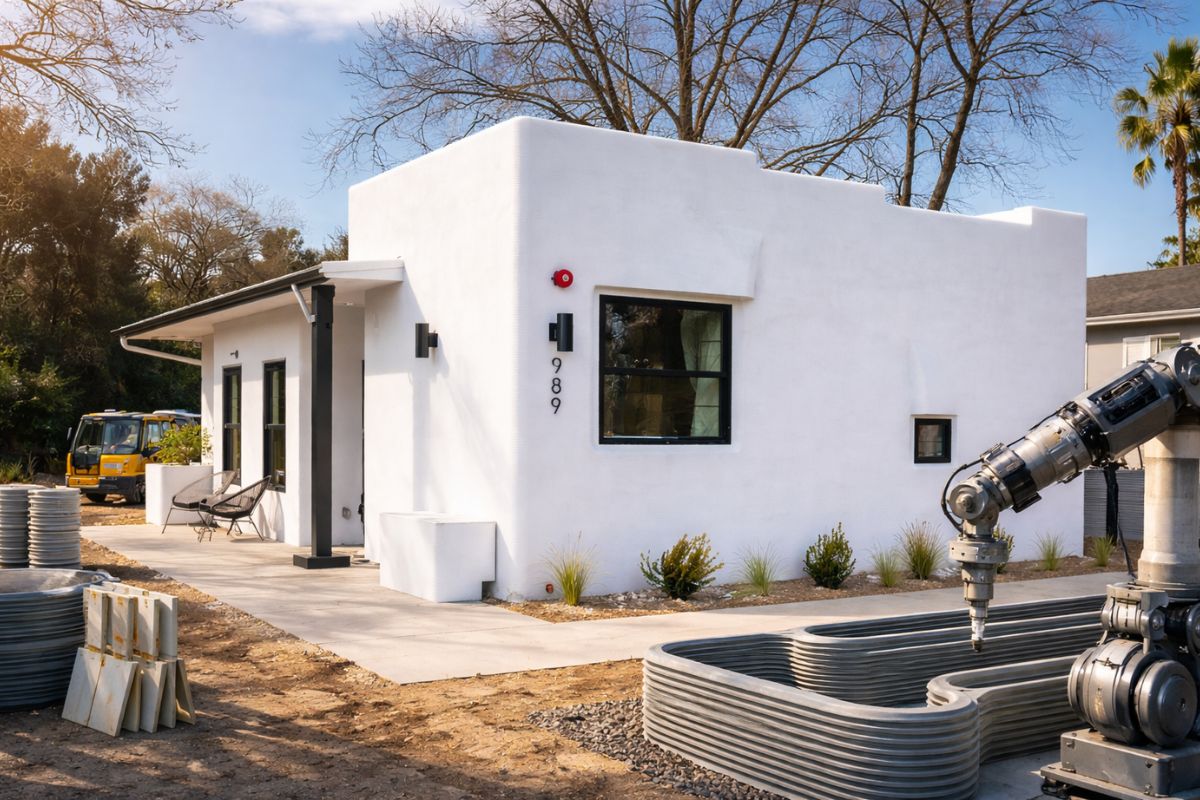
In the New 3D Printed Neighborhood Built in Yuba County, the First House Was Completed in Just 24 Days, Listed for Sale at a Price Below the Regional Average and Presented as an Example of Faster, More Accurate Automated Construction with Less Waste and Potential Future Cost Reduction.
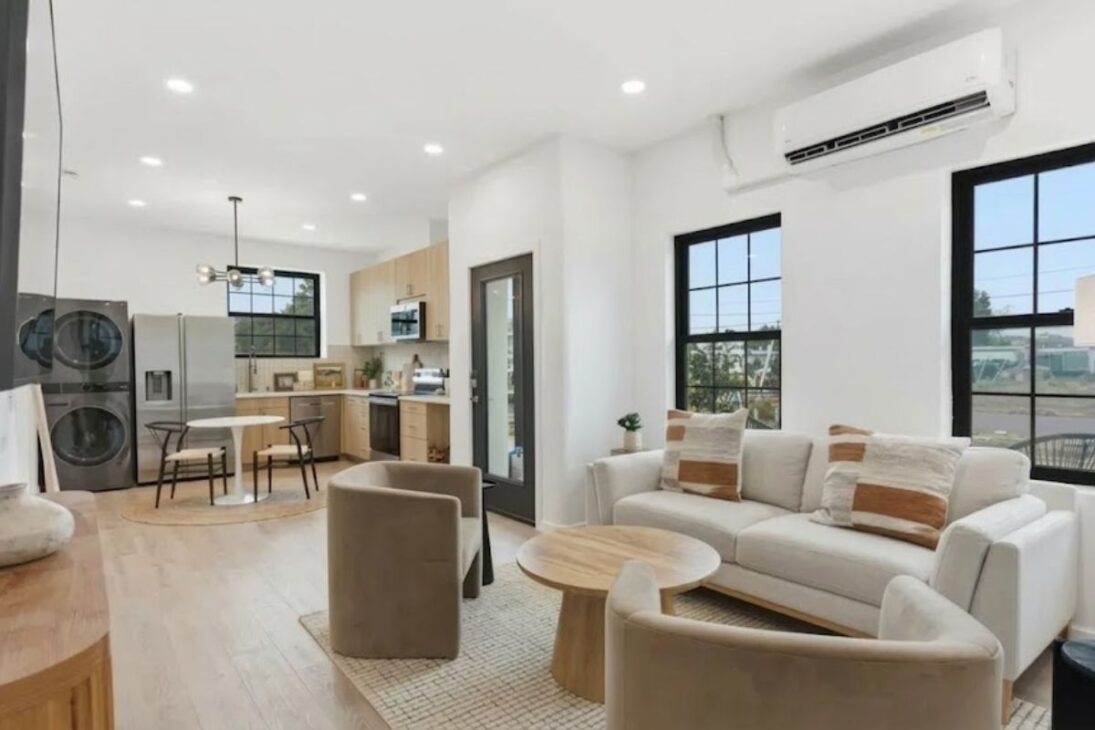
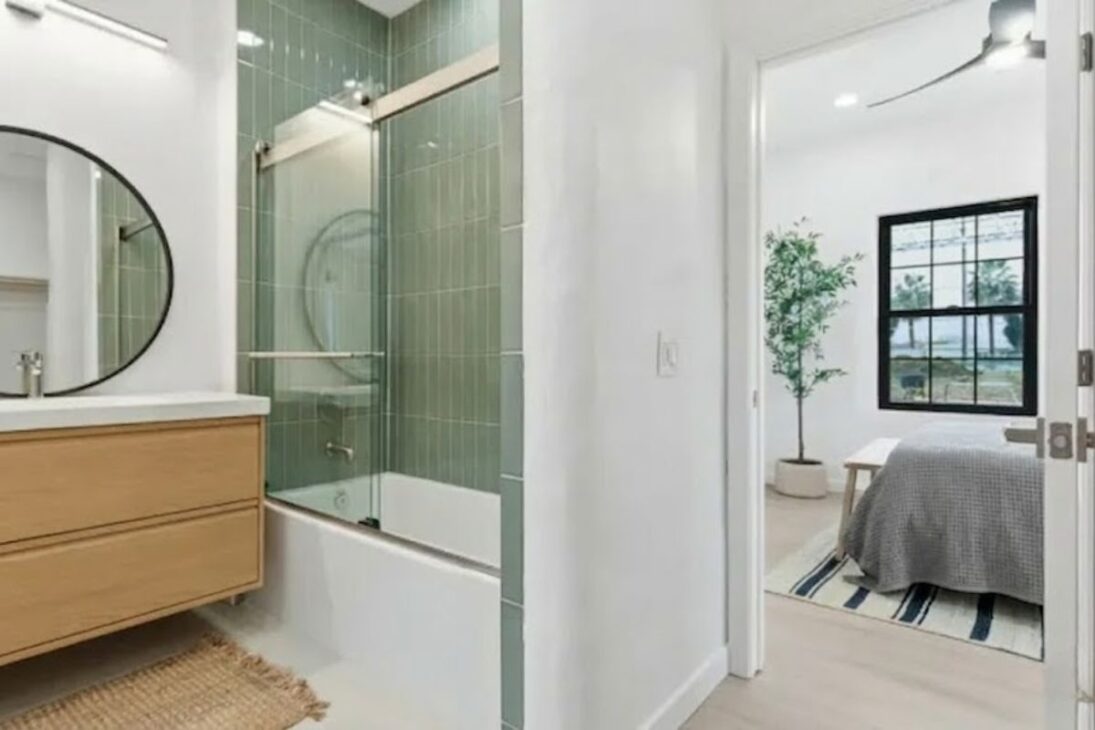
The 3D printed neighborhood began to materialize in California with a debut that draws attention for its pace and proposal. The project’s first residence, built in Yuba County, is about 1,000 square feet, was completed in just 24 days, and has already been listed for sale.
Behind this short timeframe is a system that forms the walls layer by layer, with a type of concrete printing guided by automation. For developers, the combination of speed, less material waste, reduction of manual steps, and the possibility of lowering costs helps to explain why this model has started to gain traction in the discussion about new housing.
How The Construction of The 3D Printed Neighborhood Works
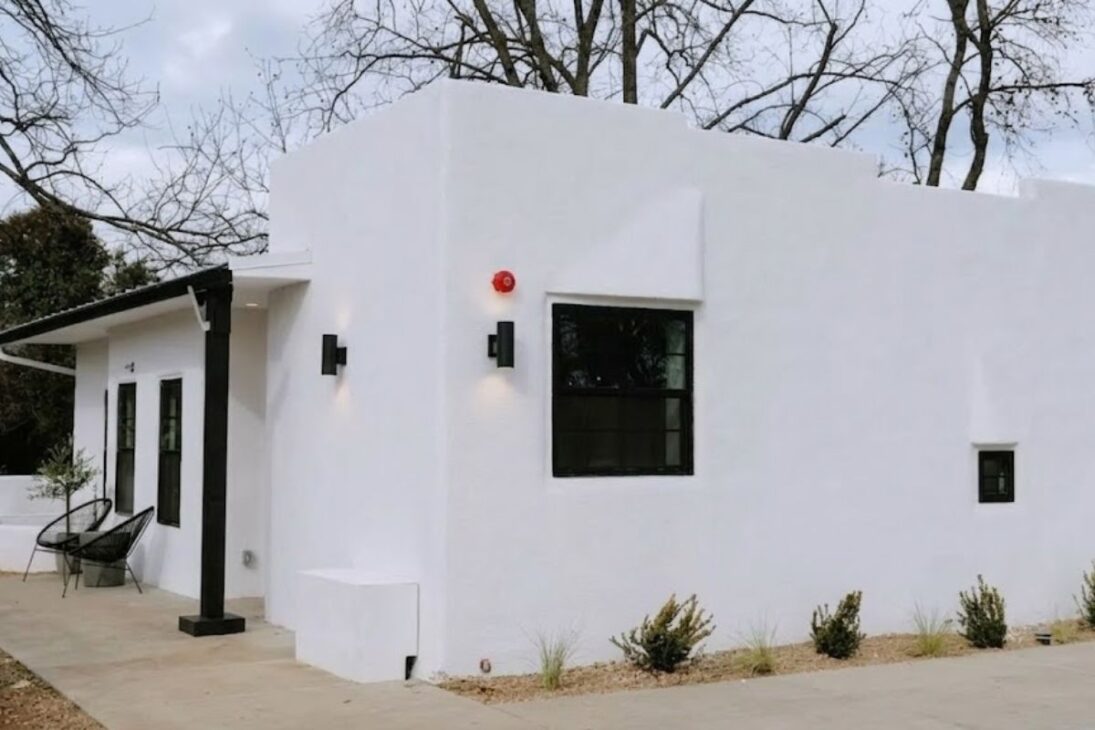
The proposal of the 3D printed neighborhood is to replace a significant part of the traditional construction process with an automated operation, where the structure of the walls is executed with robotic precision. Instead of relying on the same amount of manual labor required in a conventional construction, the system deposits successive layers of material to form the foundation of the residence, shortening the timeline right at the structural stage.
-
Abandoned house for 15 years disappears in the woods, shocks owner with unrecognizable scenery and is reborn in an intense transformation after almost 90 hours of work in just 10 days.
-
In just three hours, a natural stone floor transforms the entrance of the house with an organic effect, immediate drainage, and a sophisticated non-slip finish that doesn’t puddle water, dries quickly, and impresses with the final result.
-
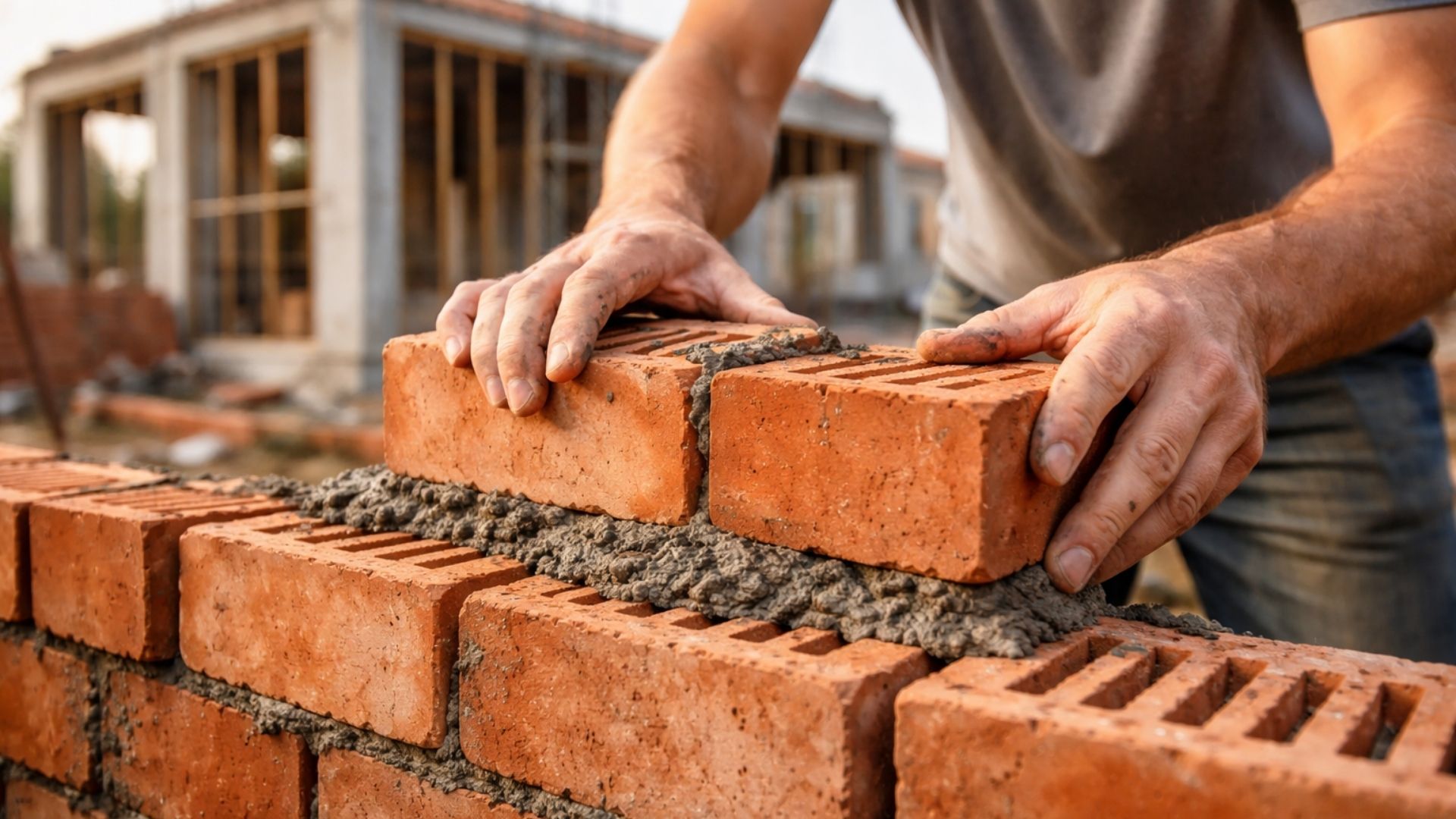
‘Interlocking brick’ made of earth arrives in the construction industry with cost reductions of up to 40% on the project.
-
Espírito Santo will receive the largest engineering project in its history with the duplication of BR 262, which will have 50 viaducts, 28 bridges, and 2-kilometer tunnels cutting through the most challenging mountainous region of the entire state.


This method does not eliminate all human involvement but reorganizes the construction site and reduces tasks that normally consume more time. In practice, this helps to understand why the first house of the project was able to be completed in such a short timeframe. When the gain in speed appears already at the foundation of the structure, the remainder of the construction tends to proceed with fewer interruptions and greater predictability.
In the case presented in California, the company 4Dify reported that five houses will be built on-site. The first unit served as a showcase for the project and also as a public test of the commercial viability of the model. This is important because the experiment is no longer just technological and starts to enter the real estate market, with the property listed, square footage defined, and direct comparison with regional prices.
The expectation of the responsible parties is to further accelerate this pace in the upcoming units. According to Nan Lin, the founder of the company, the following houses may be printed in just 10 days as the team gains practice with the system. If this timeframe is confirmed in the coming stages, the neighborhood could become an emblematic case of how automation can alter the timeline of residential construction.
What Explains the Promise of Less Waste and Lower Costs
One of the main arguments in favor of the 3D printed neighborhood is the reduction of material waste. Since the process is automated and works with programmed trajectories, the deposition of concrete tends to be more controlled. This means, in theory, less excess, fewer losses on-site, and less waste generated during construction, a significant point in a sector historically associated with material surplus and rework.
Developers also claim that the model requires less labor compared to traditional methods. This does not mean the absence of professionals, but rather a redistribution of roles and a reduction in the volume of repetitive and time-consuming activities. Fewer manual steps and more execution precision help to support the thesis that the final cost can be more streamlined, especially when the system begins to operate at scale.
This promise also appears in the price of the first house of the project. The property was listed for around US$ 280,000, a price that, according to published information, is approximately US$ 50,000 below the regional average. This difference reinforces the narrative that the technology does not only seek to impress with novelty but compete in a decisive field: the entry cost for those seeking housing.
At the same time, the project shows that automation requires high investment in equipment. The printers used in the project were valued at around US$ 1.1 million. This data reveals a central point of discussion: the promised savings depend on an expensive technological structure at the outset. The balance between investment in machines, production pace, and final price of houses will be crucial to assess whether the model can consolidate beyond pilot projects.
Wall Resistance and the Appeal for Durability
The speed of construction is not the only argument used to advocate for the 3D printed neighborhood. The project leaders state that the walls built by this system exhibit high resistance. Nan Lin declared that ballistic tests were conducted with 9 mm handguns, .45 caliber, 5.56 rifles, and even submachine guns, and that the walls proved to be bulletproof.
This type of assertion broadens the scope of discussion because it shifts the focus from rapid construction to structural performance. In other words, the project attempts to show that automated construction does not need to be seen as a simplified or fragile solution. The central message is that speed, in this case, would not necessarily mean a loss of robustness. Still, this point is presented based on what was reported by the project leaders themselves.
In addition to the ballistic resistance mentioned by the company, the houses were also presented as structures resistant to fire, pests, and mold. If these characteristics are confirmed in everyday practice, the impact would not be limited to the initial construction. There would also be repercussions on maintenance costs and even indirect expenses, such as insurance and recurring repairs over time.
This aspect helps to explain why technology has been presented as a standard-changing innovation, not just as an engineering curiosity. When a project combines execution speed, a promise of durability, and less maintenance needs, it starts to engage with a concrete market demand: housing that costs less to build and also less to maintain over the years.
What This Project Could Change In The Housing Market
The case in California draws attention because it combines three elements that rarely appear in the same package: technological novelty, real application, and a price below the regional average. This makes the 3D printed neighborhood observed not just as an architectural experiment but as a possible sign of change in the housing sector. Interest is growing because the project attempts to address both the construction timeline issue and the final cost issue simultaneously.
According to the company, robotic precision automation allows for a reduction in construction time of up to 75%. This estimate helps to gauge the ambition of the project. If such a gain can be consistently repeated, the effect could range from the delivery schedule to the financial predictability of builders and buyers. In a market pressured by costs, delays, and scarcity of supply, reducing time can be almost as important as reducing price.
The developers reported that the entire community is expected to be completed by June. If the model works as expected, the intention is to expand the use of the technology to other regions of California. This movement is important as it shows that the company does not treat the initiative as an isolated project but as a showcase for scaling the format larger.
In the end, the first house completed in 24 days serves as a concrete demonstration that automated construction has already moved beyond the realm of abstract promises.
What remains open is the real extent of this transformation. The big question now is not just whether the technology works, but how far it can reduce timelines, waste, and prices without compromising quality in the process.
The most relevant conclusion is that the 3D printed neighborhood combines speed, technological appeal, and a promise of efficiency at a time when the market seeks ways to build better and spend less. The first house completed in California does not end this debate but certainly expands the discussion about how housing will be built in the coming years.
And you, would you live in a house made using this model if it really delivered faster construction, less waste, and a lower price? Tell us in the comments what matters most to you: cost, resistance, delivery time, or trust in the technology.










-

Uma pessoa reagiu a isso.