





 English
  Francês
  Alemão
  Italiano
  Japonês
  Norueguês
  Portuguese
  Spanish
  2 min of reading


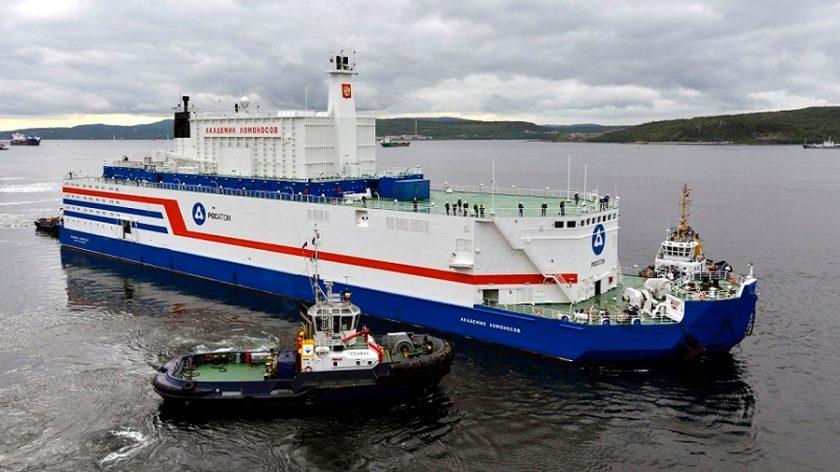
The Russian Floating Nuclear Power Plant Akademik Lomonosov; The First Of Its Kind To Be Built, Started Its Maiden Voyage Last Week To The Arctic.
The first floating nuclear power plant produced by Russia has been named Akademik Lomonosov, in honor of what the poet Alexander Pushkin described as the “first Russian scientist of global projection, Mikhail Lomonosov. Greenpeace calls it the “Floating Chernobyl.” In Brazil, we have the first floating solar power plant in the Northeast, a pioneering project in the country.
The Russian floating nuclear plant; the first of its kind to be built, began its maiden voyage last week, leaving the Murmansk port in the Northwest of the country, heading towards the Chukotka Peninsula, where it will begin operations in December.
-
Government unlocks R$ 554 million for a highway that has been requested for decades and accelerates the duplication of BR.

-
Without bricks, without cement, and without endless construction: the cardboard house that is assembled in modules and can be moved.

-
Billions of barrels on the equatorial margin could lead Amapá to double its oil production in Brazil — the state aims to enter the route of companies in the Campos Basin, attract investments, and boost jobs and businesses in the oil and gas sector.

-
Without bricks, without cement, and without endless construction: the cardboard house that is assembled in modules and can be moved.

A journey of 5,000 km to the eastern tip of the Russian Arctic coast, which has triggered alerts from ecologists. They see an “unnecessary” risk of a nuclear catastrophe.
With two reactors, it will supply a small town of 4,500 inhabitants in the Arctic, where gold and copper mining occurs.
The design and construction of the Akademik Lomonosov took a decade, but its journey began in April 2018, when it left St. Petersburg towards Murmansk.
The town is located less than 600 km from the remote military base where five people died after a test of a nuclear missile, the details of which are kept secret by the government and which triggered an increase in radiation levels in the area.
Rosatom, the Russian nuclear agency, insists that the Akademik Lomonosov will not sink under any circumstances, even in the event of a natural disaster, incorporating lessons learned from the Fukushima disaster in Japan in 2011.
The authorities try to avoid any comparison with the Chernobyl accident, the Soviet plant where, in 1986, the biggest nuclear accident in history occurred.
Moreover, the authorities emphasize the difference between the reactors: in the case of Lomonosov, there are two, each with 35 MW, capable of providing energy to a city of 100,000 inhabitants.
Greenpeace and other environmental advocacy organizations, on the other hand, insist on the threat surrounding the facility, which needs to be towed, making it vulnerable to terrorist actions.
They also question the necessity of sending floating nuclear stations to generate electricity in remote areas.
The Akademik Lomonosov will also need to replace its nuclear fuel in seven years, requiring it to be taken back to Murmansk, which will involve additional costs and the risk of contamination.
The construction of the Brazilian nuclear submarine marked another important advance this August








Seja o primeiro a reagir!