





 Portuguese
  English
  Spanish
  3 min of reading


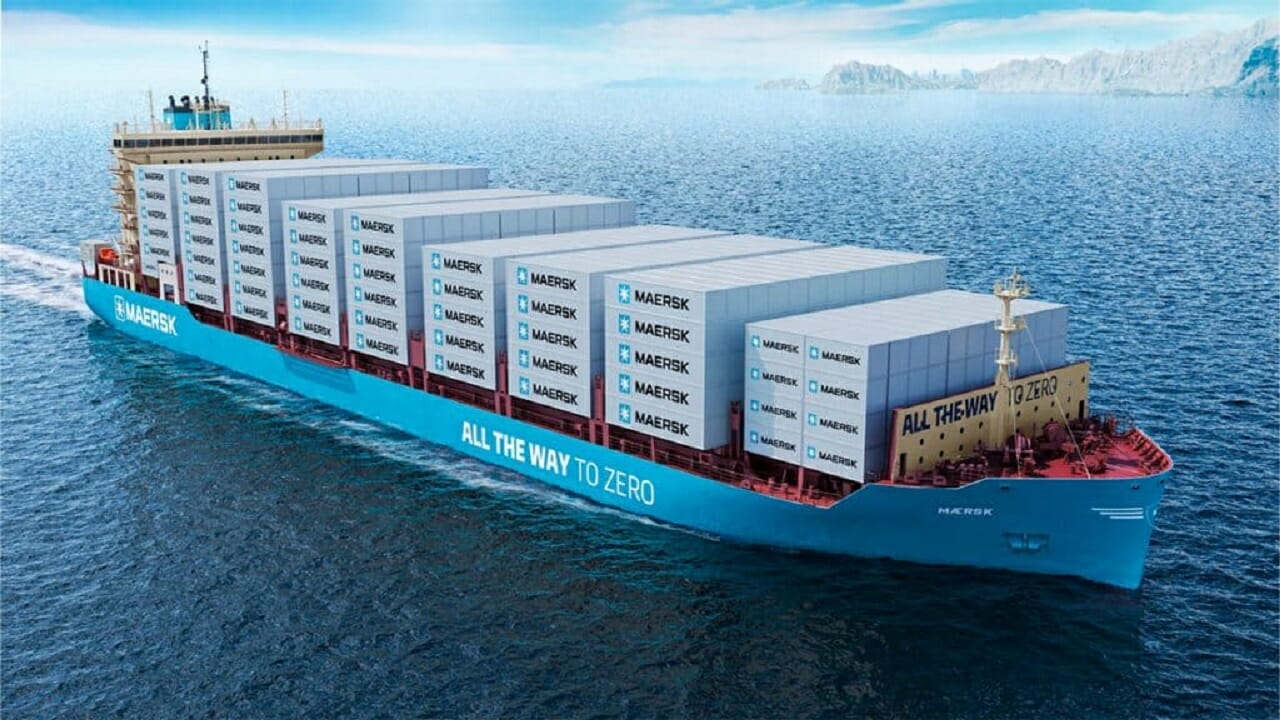
Maersk, A Giant Shipping Company, Will Receive Its First Methanol-Powered Ship This Week, Focused on Sustainability.
A new cargo ship, which was ordered by Maersk two years ago, will set sail this week, being the first to operate with eco-friendly methanol. This fuel is developed from methane captured from food waste in landfills.
Maersk Aims to Buy Only Vessels That Can Use Green Fuels
Maersk, one of the largest shipping companies in the world, ordered the methanol-powered ship two years ago as part of its commitment to buy only new ships that can utilize green fuels. While the vessel is making its first journey from South Korea to Denmark, Maersk already has another 25 methanol-powered ships on order and is also starting to retrofit older ships to use the same fuel. By the end of this decade, Maersk, which operates over 700 ships and has 300 of them, plans to transport a quarter of its maritime cargo using eco-friendly fuels. Green methanol, which can be generated from gas from plant sources, like food waste, or renewable electricity, can reduce a ship’s emissions by 65 to 70%.
-
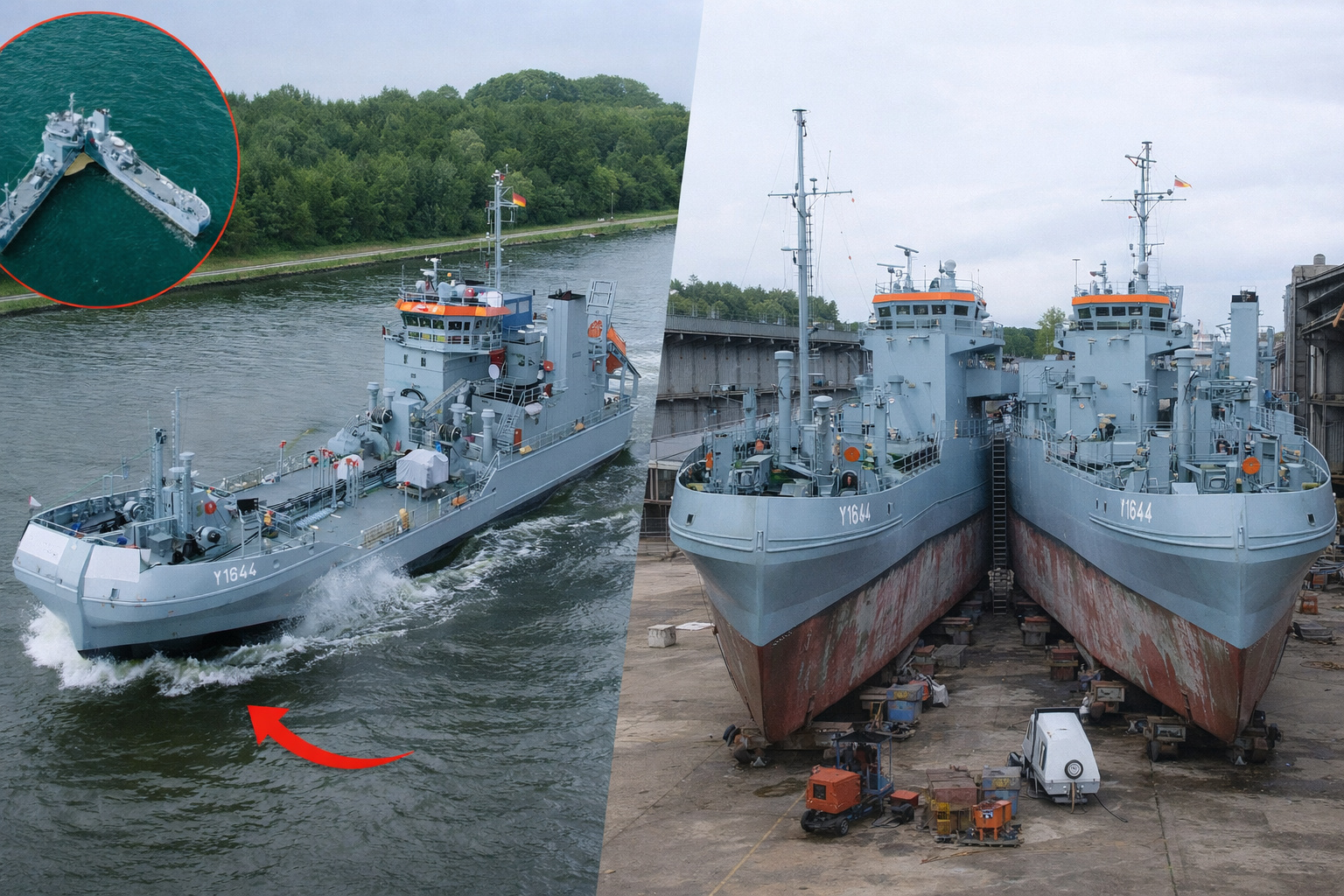
The German ship Bottsand splits its hull in two halves in the middle of the ocean to swallow spilled oil on the surface, separating the oil from the water inside a 790 cubic meter tank and then closing again. It is the only ship in the world factory-designed to split in half as part of normal operations, and the crew of six people who operate everything is civilian.
-
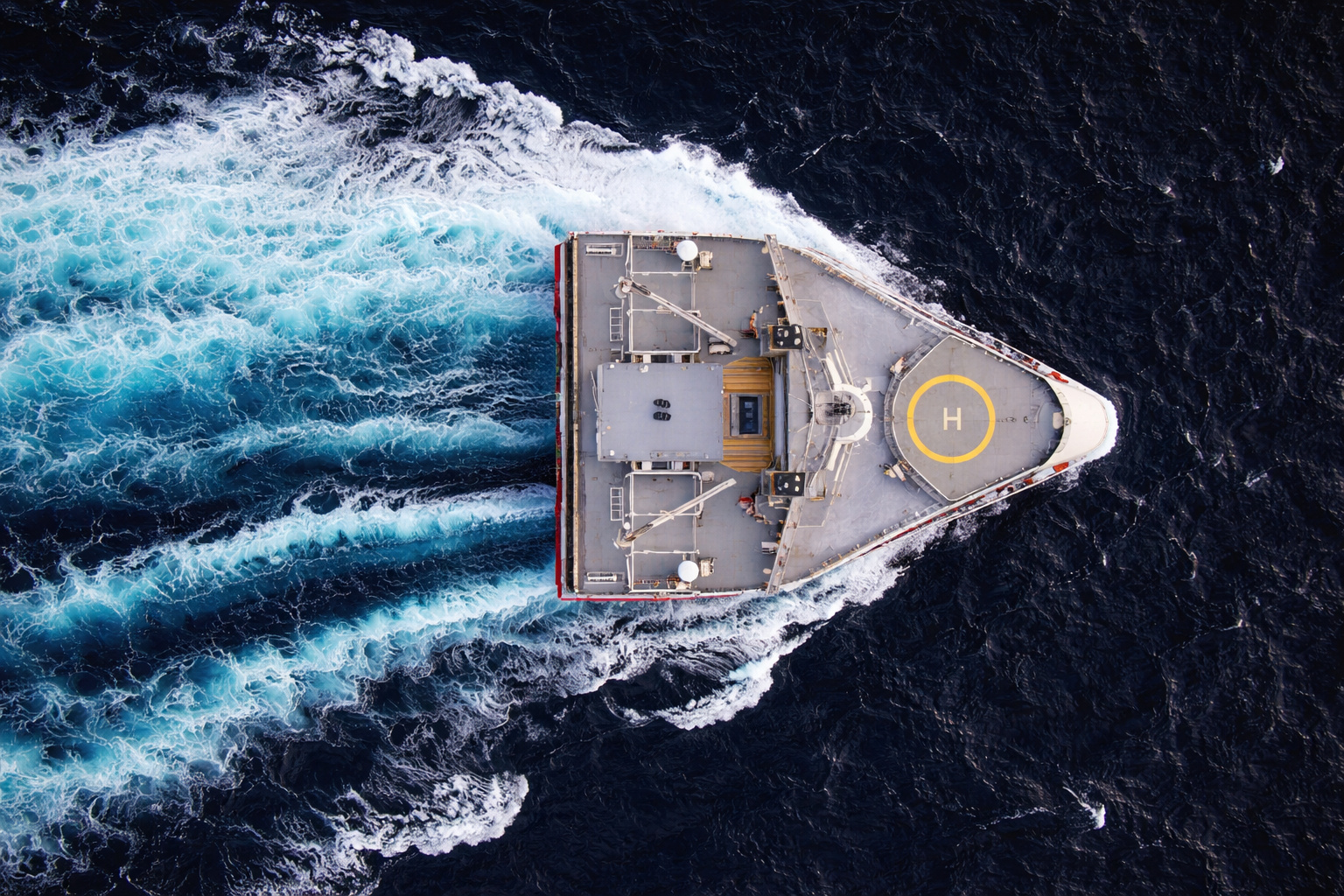
With almost 70 meters in width at the stern and a shape resembling a “giant slice of cheese,” the Ramform Titan tows up to 24 seismic cables to sweep the ocean floor in 3D and reveal oil reserves hidden beneath kilometers of sediment.
-
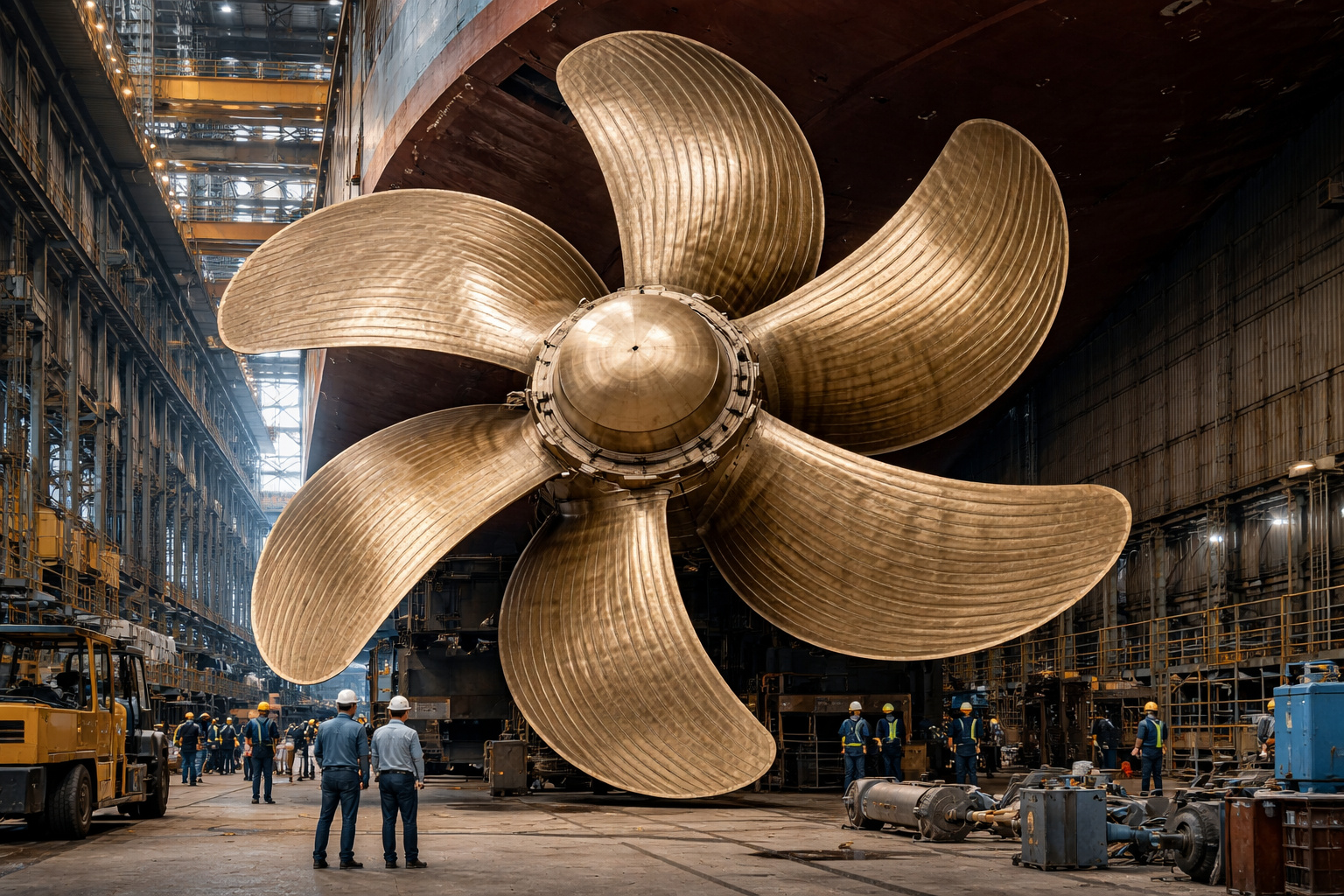
How a 131-ton, 11-meter propeller supports 90% of global trade and transforms the largest container ships on the planet.
-
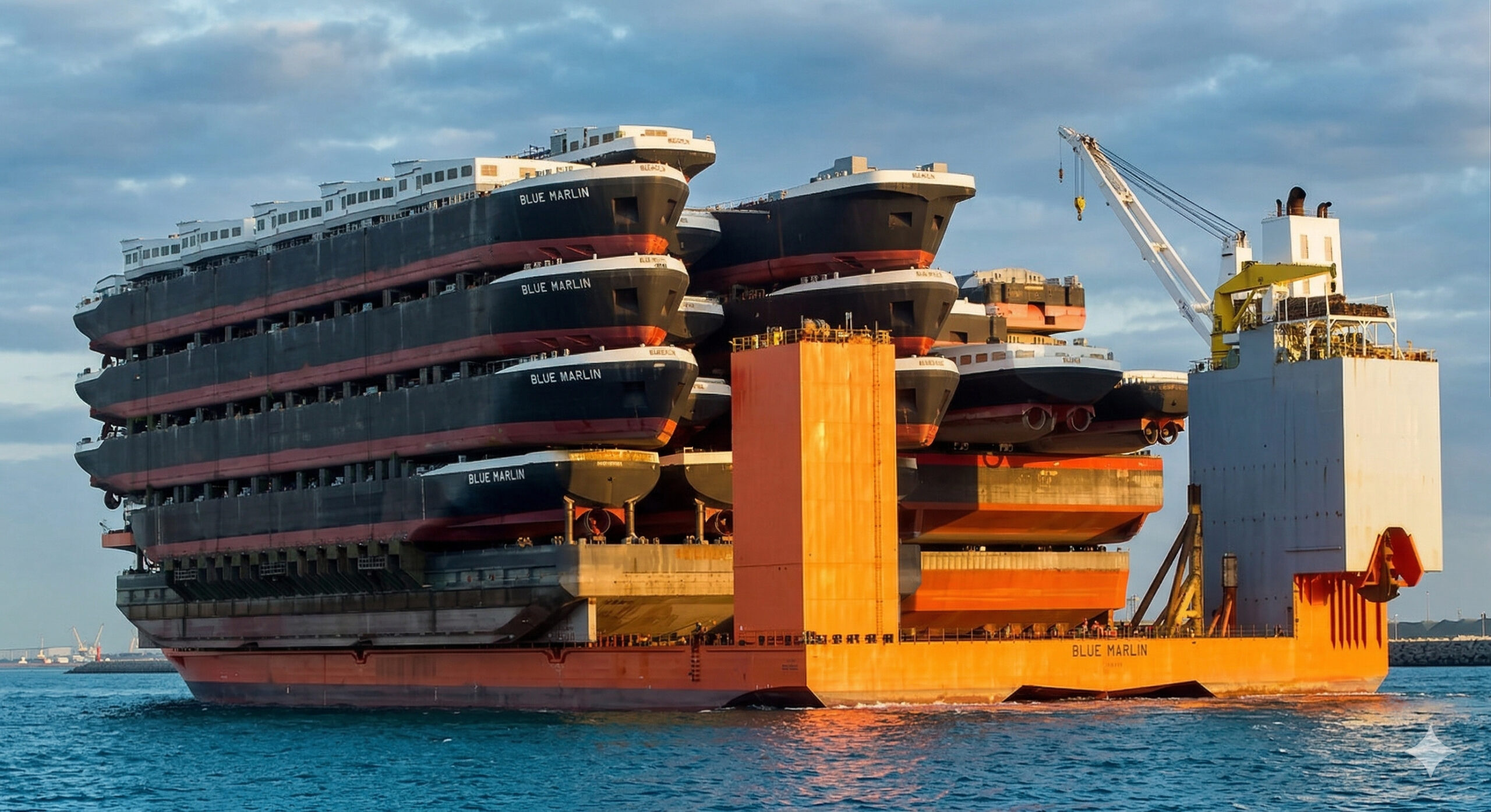
With a length of 225 meters and a capacity of 76 thousand tons, this ship “sinks” its own deck down to 28 meters deep to accommodate war destroyers, oil platforms, and giant radars floating above, and then emerges with everything intact on top like a colossal tray crossing oceans.

Globally, the maritime sector is responsible for emitting about one billion tons of greenhouse gas emissions per year, nearly the same as the aviation sector. Since it is not possible to eliminate emissions completely, eco-friendly methanol is not a perfect solution. Other technologies are being developed to focus on reducing emissions in ships, including ammonia, electrification, and liquid hydrogen among others. However, as the sector is a major polluter and following the right path to meet the Paris climate goals requires immediate action, Maersk has chosen to move forward with investments in green methanol because it sees significant viability.
Maersk Aims for Net Zero by 2040
According to Morten Bo Christiansen, who leads decarbonization at Maersk, there is a great fear of making the wrong bet or erring in some way, and of course, in an ideal world, it would be possible to spend a decade figuring out all the pros and cons of the methanol-powered ship and what is best. However, this problem needs to be solved now. The industry plans to achieve the net zero target by 2050, but Maersk aims to achieve it a decade earlier.
Christiansen states that three years ago, no ship of this type was ordered. Now, 5 other carriers are also acquiring them, with 120 ships already underway. The next challenge for the methanol-powered ship is to scale up production of the fuel and reduce the cost, which is currently two or even three times more expensive than conventional fuel. Still, he says, if the extra cost decreases, the impact could be relatively small. For a pair of sneakers crossing the ocean, for example, switching to eco-friendly fuel could mean paying 5 cents more.
Maersk Also Plans to Work on Ship Conversions
The company has plans to convert one of its ships to operate on methanol. The retrofit of the engine to biofuel is scheduled to take place in mid-2024, focusing on demonstrating the feasibility of modernizing existing vessels instead of creating new ships.
Maersk has made an agreement with Man Energy Solutions to convert the engine of the vessel. MAN ES specializes in maritime propulsion systems and will bring its expertise to adapt the ship’s engine to run on green methanol biofuel.








Seja o primeiro a reagir!