





 English
  Francês
  Alemão
  Italiano
  Japonês
  Norueguês
  Portuguese
  Spanish
  5 min of reading



Petrobras Holds A Dominant Position, Accounting For Approximately 74% Of National Oil Production, In Addition To Controlling The Main Oil Transportation Routes From Offshore To Onshore
According to Felipe Kury, former director of ANP, the external context continues to deteriorate, with signs of a slowdown in global growth and an environment of strong and persistent inflationary pressures due to excess liquidity, resulting from the fiscal and monetary response of countries to the Covid health crisis – all this, in addition to frequent increases in commodity prices and disruptions in supply chains. As a consequence, developed countries are accelerating monetary tightening with higher basic interest rates, leading to greater adversity in financial conditions with asset repricing and increased risk aversion, resulting in greater uncertainty and volatility, particularly in emerging countries like Brazil.
Petrobras Is A Mixed Economy Company, With A Dominant Presence In Various Segments Of National Supply – Thus, Holding A Public Utility Mission.
In this adverse environment, according to him, our country struggles to cushion the impacts of successive fuel price increases and, thus, in controlling inflation. Regarding Petrobras, its current governance model and pricing policies do not provide an effective response for the Government (majority shareholder and representative of society) to present a solution sensitive to the aspirations of Brazilians. It is important to highlight that Petrobras is a mixed economy company, with a dominant presence in various segments of national supply – thus, holding a public utility mission. Obviously, the company needs to be profitable, adequately compensate its investments, have the capacity to make new investments in strategic areas, and be competitive. However, being a state-owned company, it also needs to balance these interests with the aspirations of society, especially in this moment of crisis.
Many cards are in play with the most recent intention to accelerate the privatization of Petrobras amid a shock in fuel prices. On one hand, there are those who strongly repudiate the possibility, advocating for the continuity of the current model and, even more, promise to revisit what has already been privatized in favor of preserving jobs for the various categories involved, along with the preservation of national assets in support of maintaining the state model.
-
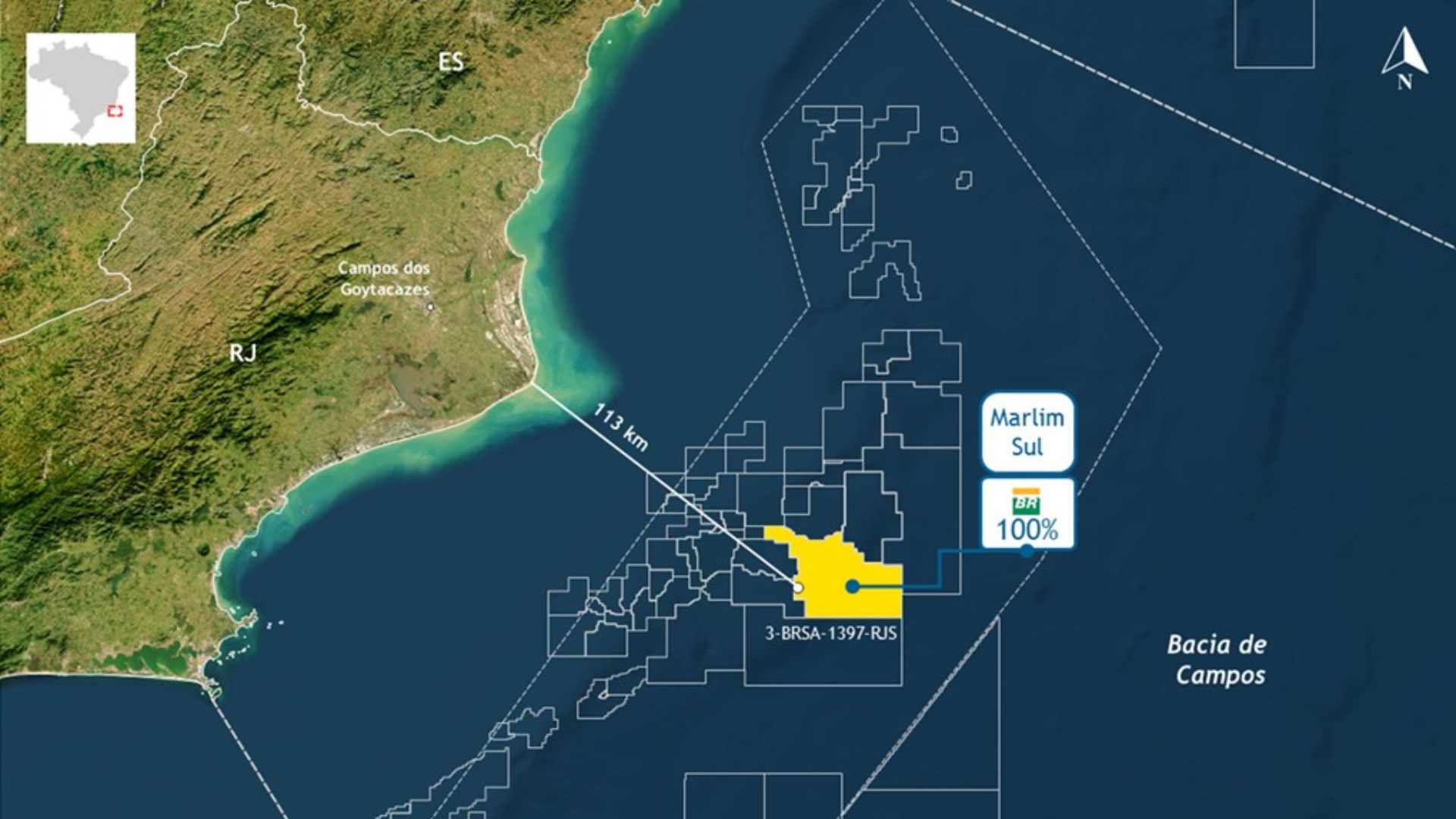
Petrobras finds high-quality oil in the pre-salt at 113 km from RJ and reignites expectations about strategic reserves in the Campos Basin.

-
Ocyan opens registrations for startups focused on innovation in the oil and gas sector and will select projects for Innovation Day with the support of Nexio.

-
Petrobras announces new oil discovery in the pre-salt of the Campos Basin and reinforces Brazil’s prominence with high-quality reserves that can increase production and energy revenues.
-
Alert in the fuel market: Analysts and a former director of ANP warn that oil prices may worsen in the coming months due to global instability.


On the other hand, there are those who advocate for privatization to develop a more dynamic, more open market with greater competition, which fosters new investments and socio-economic development – in addition to allowing more accessible derivative prices throughout the chain. Considering a medium to long-term horizon, privatization, if done in a planned, coordinated, and harmonious manner, can indeed bring significant socio-economic benefits to Brazil and certainly to the oil, natural gas, and biofuels sector.
State-Owned, Despite Not Being Directly Involved In Fuel Distribution And Resale, Continues As A Guarantor Of National Supply
Petrobras, despite not being directly involved in fuel distribution and resale, continues as a guarantor of national supply through a centralized and integrated management model, with daily monitoring of various sectors of the chain: Exploration/Production (Upstream), Refining/Natural Gas (Midstream), and Distribution/Resale (Downstream).
In Upstream, with the entry of several new operators in the pre-salt polygon region, in offshore conventional (areas outside the pre-salt polygon, new frontiers and mature fields), it still holds a dominant position, accounting for approximately 74% of national oil production (3.8 million barrels of oil equivalent/day), in addition to controlling the main oil transportation routes from offshore to onshore. It is expected that this participation will progressively be diluted with the entry of new operators and numerous exploration and production projects already contracted, results of the last five years of exploratory area auctions.
In Midstream, Petrobras’ divestment program seeks, although slowly, to broaden the diversity of players in the segment, mainly through the sale of 50% of its refining capacity (approximately 1,148,738 barrels/day), as well as in the natural gas segments, such as the sale of assets in transportation and distribution, in addition to increasing third-party access to essential infrastructures (UPGNs – Natural Gas Processing Units/Re-gasification Terminals). And finally, in Downstream, as already mentioned, where Petrobras no longer operates directly in distribution after the sale of BR Distribuidora, now Vibra Energia.
It Is Expected That With The Privatization Of The State Company, The New National Supply Model Is Not Necessarily “Centralized And Integrated”
The divestment movement of Petrobras was, in part, motivated by CADE – Administrative Council for Economic Defense, through the TCC (termination of conduct agreement) signed in mid-2019, and part due to changes in the company’s strategy, which are moving towards developing a more dynamic, competitive, and open market for oil, natural gas, and biofuels in all links of the chain: from the well to the gas station.
However, the process impacts the transformation of the market. It would be very important to accelerate Petrobras’ divestment program or even its privatization so that we can achieve a more efficient, dynamic, and competitive market in the next decade. It is important to highlight that, without a well-completed transition plan, which encompasses operational/logistical, competitive, and tax aspects, there may be risks to national supply, generating undesirable outcomes for the market and for Brazil. Additionally, it is important that there are changes in the current regulatory framework and implementation of new public policies to ensure an efficient transition, where the figure of a national supply manager should emerge, similar to the ONS (National Electric System Operator) in the electric sector, which would assume the role that is currently largely performed by Petrobras and the ANP.
After all, with Petrobras’ divestment program or its privatization, it is expected that the new national supply model, not necessarily “centralized and integrated” through the Petrobras system, can ensure national supply more efficiently – and, at the same time, create a market where society benefits from competitive prices, new investments, and innovation, resulting in job creation, increased income, and socio-economic development. Thus, as some say, where there is crisis, there is also opportunity. We are facing an opportune moment to reflect on the privatization process of Petrobras, where dialogue between the Government, Congress, Oversight Bodies, and Regulatory Agencies, in addition to various segments of society, can produce an important transformation for the oil, natural gas, biofuels sector, and for Brazil.
by – Felipe Kury former director of ANP.










Seja o primeiro a reagir!