





 Portuguese
  English
  Spanish
  5 min of reading
  0 comments


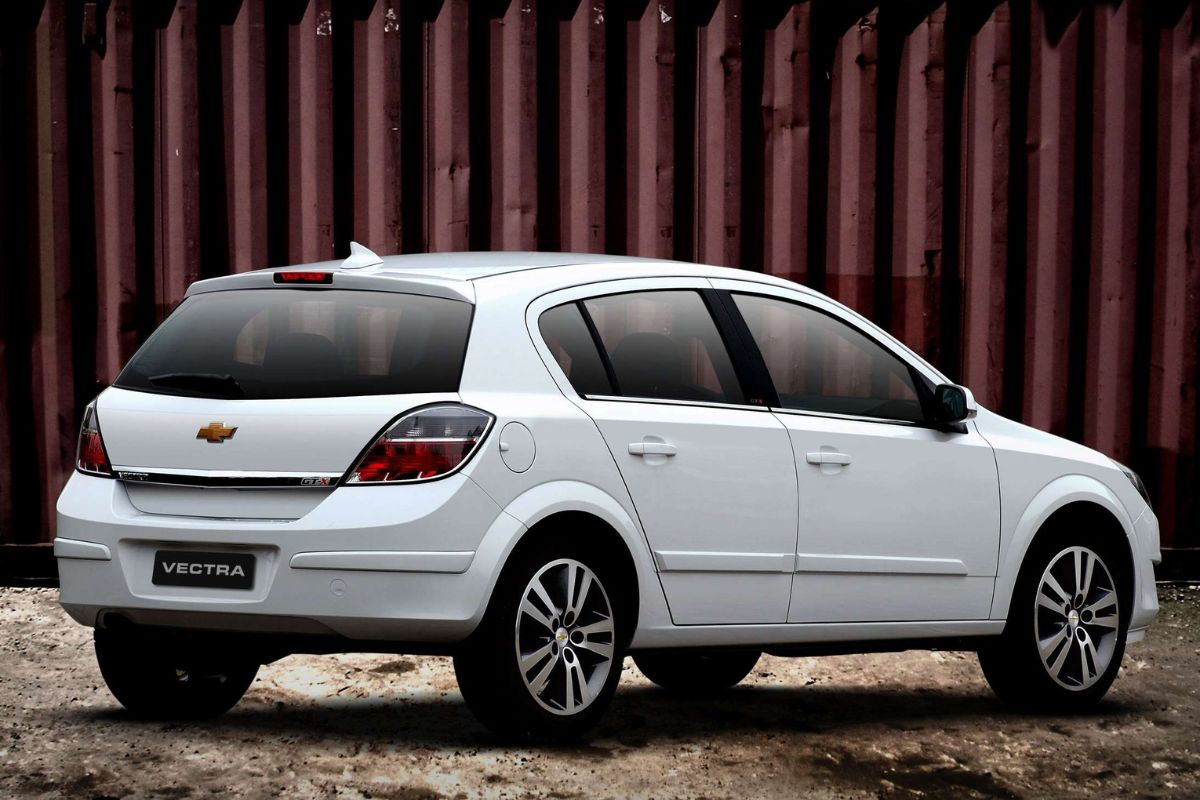
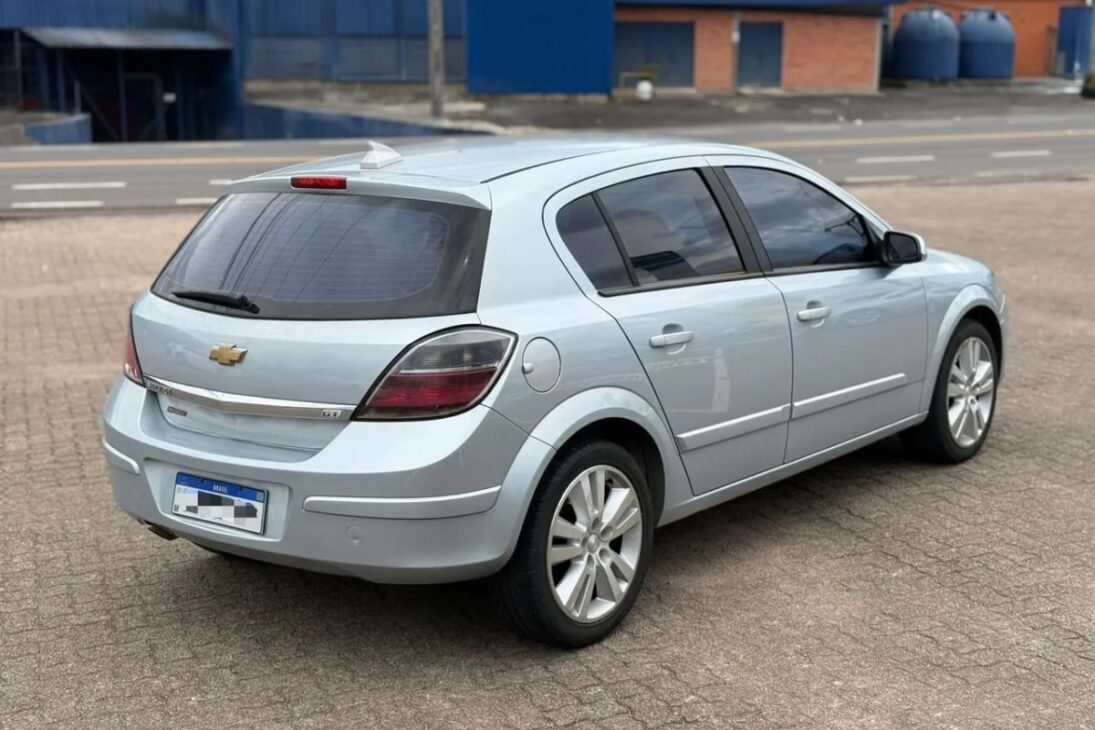
The Vectra GT 2010 Established Itself as an Option for a Mid-Sized Hatch for Those Who Prioritize Comfort, Consistent Finishing, Precise Manual Transmission, and a Collection of Parts That Are Truly Affordable. In Practice, It Delivers Comfortable Daily Use, Correct Ergonomics, and Low Maintenance Costs Even After Many Years in the Market, Which Explains the Renewed Interest Among Enthusiasts and First-Time Mid-Sized Car Buyers.
The Vectra GT 2010 derives from the mid-sized sedan and retains classic design qualities: low and firm driving position, solid dashboard, good insulation, and typical GM smoothness. The 4.24 m body combined with a wheelbase of around 2.61 m provides enough cabin space for four adults, while the trunk is declared to hold approximately 345 liters and can exceed one thousand liters with the folding of the split rear seat.
In driving, the tuning prioritizes comfort without losing control. The independent front suspension, with a torsion beam at the rear, filters rough surfaces effectively, and the five-speed manual transmission has short and well-defined shifts. The result is a hatch that feels “larger” in solidity and internal silence, but remains practical in urban traffic.
Design, Space, and Ergonomics
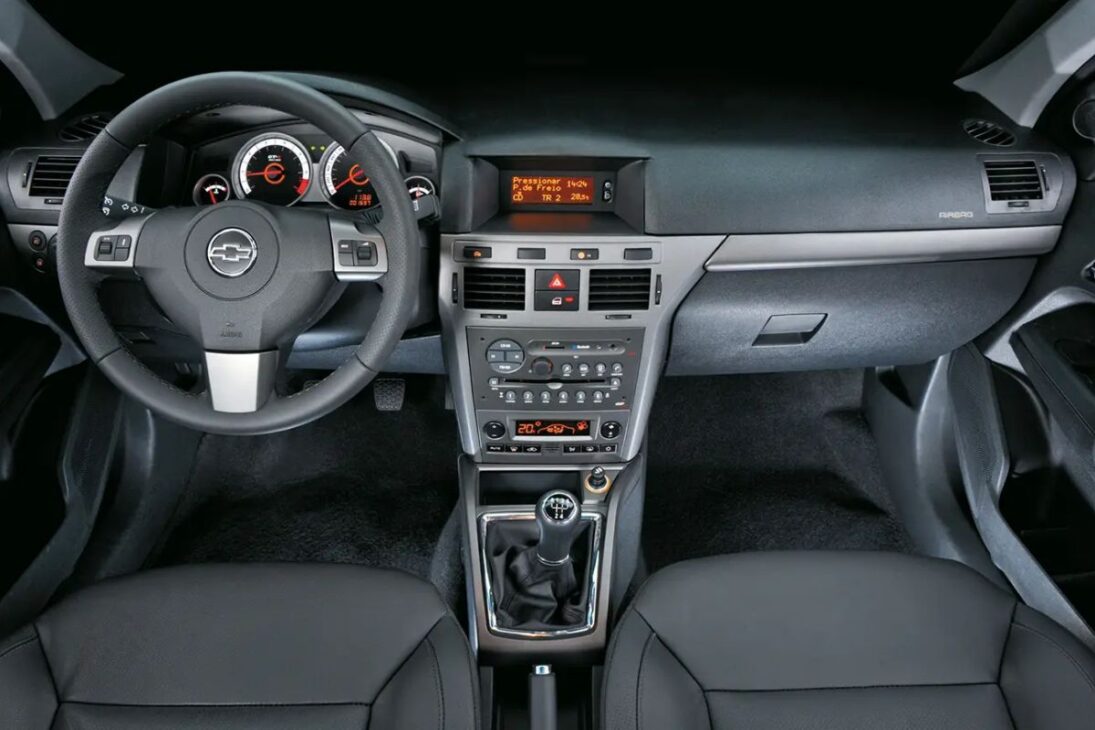
Inside, the Vectra GT values a solid and well-assembled dashboard, with soft-touch areas at key points and a sense of durability.
-
A French brand placed a car on four huge red balloons to prove that its suspension made the vehicle “float,” and the surreal scene became one of the most iconic and unusual images in automotive history.
-
Jeep Avenger begins production in Brazil, debuting as the brand’s new entry-level SUV and inaugurating an unprecedented phase by becoming the first national Jeep manufactured outside of Goiana, as part of a R$ 3 billion plan.
-
Costing R$ 12,490, the new Shineray Urban Lite 150 “cheap one” arrives in Brazil with a CVT transmission, digital dashboard, and LED lights, making it more affordable than the Biz and targeting those who want to abandon the bus.
-
Ducati brings to Brazil the Superleggera V4 Centenario: 228 hp that become 247 with a track kit, carbon fiber and carbon-ceramic brakes, estimated price between R$ 1.5 and 2 million, deliveries only in 2027.

The front seats offer multiple adjustments, including lumbar support and height, allowing for a quick find of the correct position.
In the back, three three-point seatbelts are present, but the headrests appear only in the outer seats.
The external design remains contemporary, with creased lines and a distinctive rear.
Even though it’s not the widest hatch in its category, the space utilization is honest and the well-lined trunk facilitates daily use.
For families, the absence of Isofix reflects the age of the design, but it does not compromise the basic active and passive safety of the period.
Mechanical Assembly and Manual Transmission
The 2.0 eight-valve engine from GM’s family is known for its low-rev torque delivery, which favors acceleration and speed recovery in urban use.
This elastic character combines with the five-speed manual gearbox, whose shifts are short and precise, bringing naturalness to heavy traffic and good predictability on the road.
With correctly calibrated hydraulic steering and brakes sized to the car’s dimensions, the assembly conveys confidence.
In some units, the rear brakes are drum, with the option of discs on all four wheels and ABS as period options.
The setup confirms the car’s focus: comfort with sufficient stability for the audience that does not seek a sporty drive.
Fuel Economy, Performance, and Driving Feel
In daily use, the 2.0 prioritizes response and smoothness.
Fuel consumption varies greatly with traffic and driving style: lower urban numbers can be seen when the route is congested, while on the highway the average rises comfortably while maintaining moderate revs.
the subjective sensation reinforces what owners report: smoother ride, silence, and minimal vibration for the age of the design.
The hydraulic steering is a positive point on the highway and still isolates impacts well on rough surfaces.
The car does not scrape easily in potholes, and the suspension calibration, typical of GM, offers a balance between comfort and control even on patched asphalt roads.
Low Maintenance Costs and Parts Availability
The maintenance cost is one of the great assets.
Routine and peripheral items come with affordable prices in the automotive retail market: an oil filter set for about R$ 230, shock absorbers between R$ 300 and R$ 600 per axle, spark plugs around R$ 100, coils for about R$ 200, complete trays between R$ 400 and R$ 700, radiators between R$ 600 and R$ 1,000, and a timing belt kit for approximately R$ 300, thermostat near R$ 100, and water pump around R$ 150.
Headlights and taillights in pairs can be found in the range of R$ 500 each set, depending on brand and model.
In addition to the price, availability is broad and labor does not require rare specialization.
Typical points of attention include valve cover sealing and cooling system due to age, but there are no reports of serious chronic issues when preventive maintenance is followed.
Equipment, Versions, and Comfort Features
Even in units without the maximum package, there are important conveniences: digital air conditioning with automatic function, original sound system with Bluetooth and media input, power windows on all four doors, power mirrors, and a photochromic rearview mirror in some configurations.
The finishing prioritizes consistent materials, with upholstery and fittings that help contain noise over time.
The difference to the most expensive configuration at the time, the GTX, included exclusive 17-inch wheels, finishing details, cruise control, and a multifunction steering wheel, as well as packages with rain and twilight sensors.
Even the standard GT can appear with options such as discs on all four wheels and ABS, something to verify car by car.
Insurance, Ownership Costs, and Real Use
The insurance quote strongly depends on the profile.
In a point simulation for a 35-year-old male profile in the southern zone of São Paulo, complete packages were around R$ 2,500, while simpler coverages ranged between R$ 1,200 and R$ 2,100.
In use, owners with predominantly urban routines report averages consistent with a naturally aspirated 2.0, and predictable maintenance costs are a differential compared to rivals of the same era.
In the used car market, the depreciation curve has already stabilized and liquidity has improved compared to previous years.
The price range usually revolves between R$ 25,000 and R$ 45,000, depending on condition, history, options, and mileage, with well-maintained, intact examples gaining appeal due to their cost-benefit ratio.
Strengths and What to Observe When Buying
Among the strengths, notable aspects include driving comfort, solid finishing, ergonomics, and the already mentioned low maintenance costs with a wide parts supply.
The precise manual transmission favors both urban use and short trips, and the cabin insulation helps reduce fatigue.
When evaluating an example, it is advisable to check the cooling history, possible leaks in the valve cover, condition of suspension and bushings, as well as the functioning of the digital air conditioning and the electrical part of conveniences.
In terms of safety, it is worth looking for units with ABS and discs on all four wheels when available.
For those looking for a mid-sized hatch with real comfort, solid interior, and low maintenance costs, the Vectra GT 2010 is a rational choice that has aged well where it matters.
It delivers a quiet ride, precise manual transmission, accessible parts, and a sufficient convenience package for day-to-day use, keeping ownership costs under control.
If you have had or tested a Vectra GT 2010, what weighed most in your decision: low maintenance costs, driving comfort, or the manual transmission setup?










-

-

-

-

16 pessoas reagiram a isso.