





 English
  Francês
  Alemão
  Italiano
  Japonês
  Norueguês
  Portuguese
  Spanish
  3 min of reading


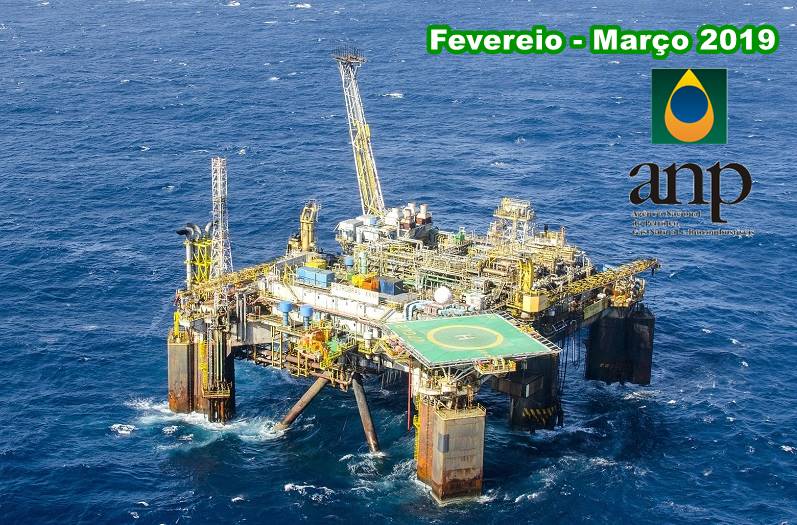
In March 2019, Oil and Gas Production in Brazil Grew Compared to Both the Previous Month and the Same Month in 2018. Both Totaled 3.261 Million Barrels of Oil Equivalent Per Day (Boe/d).
ANP 03/05/2019 – Oil production during the period was 2.56 million barrels per day (bbl/d), an increase of 2.8% compared to the previous month and 0.1% compared to the same month in 2018. Natural gas production was 111 million m³/d, growing 1.2% compared to the previous month and 4.2% compared to the same month in 2018.
The data for March production is available on the Monthly Production Bulletin page of Oil and Natural Gas (http://www.anp.gov.br/publicacoes/boletins-anp/2395-boletim-mensal-da-producao-de-petroleo-e-gas-natural )
Pre-Salt
Pre-salt production in March totaled 1.936 million boe/d, a growth of 6% compared to the previous month and 11% compared to the same month in 2018.
-
Government unlocks R$ 554 million for a highway that has been requested for decades and accelerates the duplication of BR.
-
Without bricks, without cement, and without endless construction: the cardboard house that is assembled in modules and can be moved.

-
Billions of barrels on the equatorial margin could lead Amapá to double its oil production in Brazil — the state aims to enter the route of companies in the Campos Basin, attract investments, and boost jobs and businesses in the oil and gas sector.

-
Without bricks, without cement, and without endless construction: the cardboard house that is assembled in modules and can be moved.

1.542 million barrels of oil per day and 62.7 million cubic meters per day of natural gas were produced through 91 wells. The share of pre-salt in total national production in March was 59.4%.
The pre-salt wells are those whose production is carried out in the geological horizon known as pre-salt, in fields located in the area defined in item IV of the caput of article 2 of Law No. 12.351/2010.
Utilization of Natural Gas
The utilization of natural gas in Brazil in March reached 94.7% of the total volume produced. 57.1 million cubic meters were made available to the market per day.
The gas flaring totaled 5.9 million cubic meters per day, an increase of 15% compared to the previous month and 76.9% compared to the same month in 2018.
The main justifications for the increase in gas flaring this month are the start of commissioning for the FPSO P-76 and P-77 platforms, both located in the Búzios field.
Producing Fields
The Lula field, in the Santos Basin, was the largest producer of oil and natural gas. It produced an average of 909 thousand bbl/d of oil and 38 million m³/d of natural gas. The offshore fields produced 95.7% of the oil and 82.4% of the natural gas. Production occurred in 7,254 wells, of which 684 were offshore and 6,570 onshore.
The fields operated by Petrobras produced 94.9% of the oil and natural gas.
Estreito, in the Potiguar Basin, had the largest number of producing wells: 1,125. Marlim Sul, in the Campos Basin, was the offshore field with the highest number of producing wells: 66.
The FPSO Cidade de Maricá platform, producing in the Lula field through six connected wells, produced 150 thousand barrels daily and was the installation with the highest oil production. The Polo Arara installation, producing in the fields of Arara Azul, Araracanga, Carapanaúba, Cupiúba, Rio Urucu and Sudoeste Urucu through 38 interconnected wells, produced 9 million m³/d and was the installation with the highest natural gas production.
Other Information
In March 2019, 308 granted areas, two areas under onerous assignment, and five under sharing, operated by 32 companies, were responsible for national production. Among these, 79 are offshore and 236 onshore. Of the total producing areas, 12 are related to contracts for areas containing marginal accumulations.
The average API degree was 27.6, with 39.7% of the production considered light oil (>=31°API), 48.9% medium oil (>=22 API and <31 API) and 11.4% heavy oil (<22 API).
The mature onshore basins (long-term fields/tests in the basins of Espírito Santo, Potiguar, Recôncavo, Sergipe and Alagoas) produced 110.5 thousand boe/d, with 85.9 thousand bbl/d of oil and 3.9 million m³/d of natural gas. Of this total, 103 thousand barrels of oil equivalent per day were produced by Petrobras and 7.5 thousand boe/d by concessions not operated by Petrobras, with 352 boe/d in Alagoas, 4,203 boe/d in Bahia, 21 boe/d in Espírito Santo, 2,712 boe/d in Rio Grande do Norte, and 186 boe/d in Sergipe.









Seja o primeiro a reagir!