





 English
  Francês
  Alemão
  Italiano
  Japonês
  Norueguês
  Portuguese
  Spanish
  2 min of reading


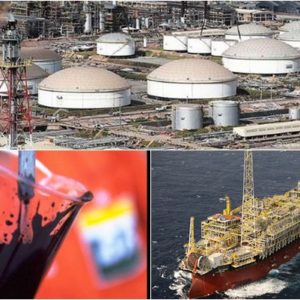
With the Integration of the New Pre-Salt Production Systems, Brazil Now Produces Light and Medium API Oil, But What Is Missing for National Self-Sufficiency?
The oil produced in Brazil is “heavy oil.” This statement, which is still heard and written out there, is no longer true. Today, national oil production consists of 80% medium and light API grade oil. Lula and Sapinhoá, the largest oil-producing fields in Brazil today, produce a high-quality light oil with low sulfur content, highly appreciated in the market. We can say that they are our “filet mignon” oil.
Why Mix Our Heavy Oil with Others?
-
Government unlocks R$ 554 million for a highway that has been requested for decades and accelerates the duplication of BR.
-
Without bricks, without cement, and without endless construction: the cardboard house that is assembled in modules and can be moved.

-
Billions of barrels on the equatorial margin could lead Amapá to double its oil production in Brazil — the state aims to enter the route of companies in the Campos Basin, attract investments, and boost jobs and businesses in the oil and gas sector.
-
Without bricks, without cement, and without endless construction: the cardboard house that is assembled in modules and can be moved.
The oil from the Peregrino field, for example, can only be used together with a mix of oils for refining because there are few refineries prepared for heavy oil in Brazil, and blending is the most viable way for distillation. Equinor transports the oil to Rotterdam in an Aframax with heated tanks and blends it with other oils, just like many other operators producing in national assets.
If the Oil Is Light and We Are the 9th Largest Producer, What Is Missing for Brazil to Be Self-Sufficient?
We are already self-sufficient in oil. We are just not self-sufficient in derivatives because we lack refining capacity.
If Our Oil Has Low Sulfur Content, Why Does RNEST Have the SNOx Unit as Its Differentiating Mark, Which is Sulfur Reduction?
Even if RNEST Used Light Oil, Which Is Not the Case, it is necessary to have a system for reducing sulfur emissions. Low concentration does not mean exempt; it requires treatment.
The production of heavy oil from Marlim and Albacora, which were once significant, has been declining over the years, which is normal for mature fields like they are.
By Marcelo Gauto – Specialist in Oil, Gas, and Energy. The questions were raised by professionals in the field.
[gs-fb-comments]









Seja o primeiro a reagir!