






 Portuguese
  Spanish


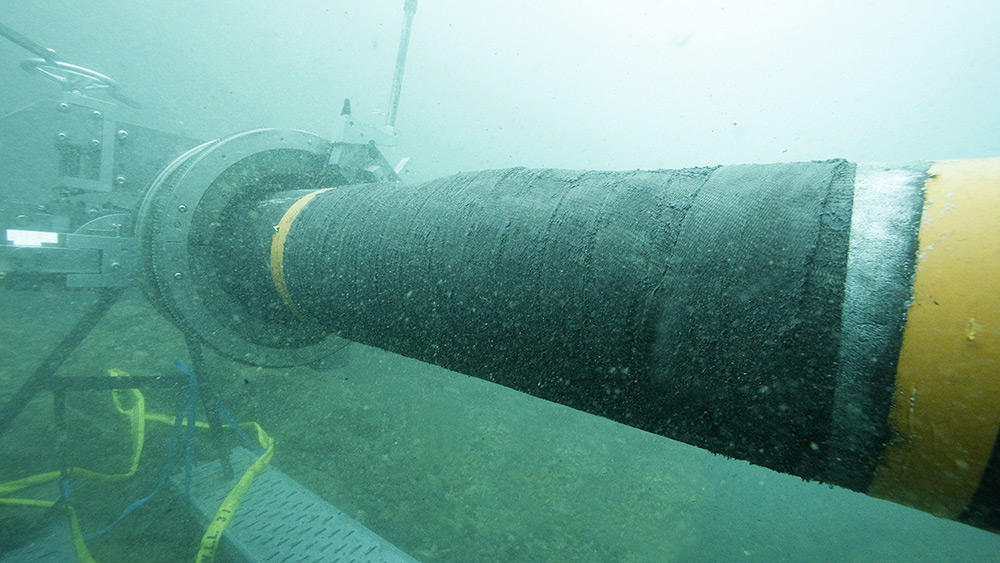

Wilson Fausto, Production Engineer and Experienced Technician in the Field, Briefly Explains the Characteristics and Applications of Subsea Pipelines in Subsea Operations
In offshore production, we have the flow of oil and gas from the Christmas Tree – ANM and/or manifold to the Floating Production Unit – FPU. Subsea pipelines are responsible for the movement of the fluids produced in the oil and gas field. They are also responsible for the conduction of injected fluids into the reservoir, which leave the FPU passing through the Manifolds and ANMs.
They can be classified as rigid pipes or flexible pipes, where rigid lines consist of carbon steel pipes that, depending on the fluid being transported, may be made of special alloys to inhibit corrosion, abrasion, and erosion, and may also have external coatings to maintain the fluid’s temperature, thus preventing the formation of hydrates and paraffins.
-
Real Estate Agent Buys Marvel Movie Subway Car for $5,000 and Converts It into Themed Airbnb
-
Real Estate Agent Buys Marvel Movie Subway Car for $5,000 and Converts It into Themed Airbnb
-
Former Roma and Fiorentina Player Filipe Gomes Returns to Brazil to Found Empório do Galeto, Aiming for $10 Million Revenue by 2026
-
Canada Builds 6.2-Hectare Containment Box to Trap 615,000 Cubic Meters of Toxic Sediment in Lake Ontario


Flexible lines, on the other hand, consist of different layers, each with distinct functions in their operation. Flexible pipes are made, from the inside out, of: an internal carcass of interlocked steel, an internal pressure barrier, pressure armor, an intermediate layer of plastic, tensile reinforcements, an external layer of plastic, and anti-abrasive protection.
Is Oil Found in a Pastelike or Mineral State? How is it Made to Follow Its Path?
In the production environment, there are methods for lifting oil, aiming to transport a specific fluid from a point of higher pressure to one of lower pressure; these methods are divided into natural and artificial; this method aims to displace the fluid to a specific location, through manual or automatic control, and typically uses GAS LIFT continuously or intermittently, centrifugal or mechanical pumping, or progressive cavity.
Gas lift, due to its low cost for production in deep wells, is widely used; it consists of continuously injecting high-pressure gas into the production column, aiming to gasify the fluid from the injection point to the surface!
By Wilson Fausto Lino – Production Engineering | Production Operator | Mechanical Technician





