





 English
  Francês
  Alemão
  Italiano
  Japonês
  Norueguês
  Portuguese
  Spanish
  4 min of reading


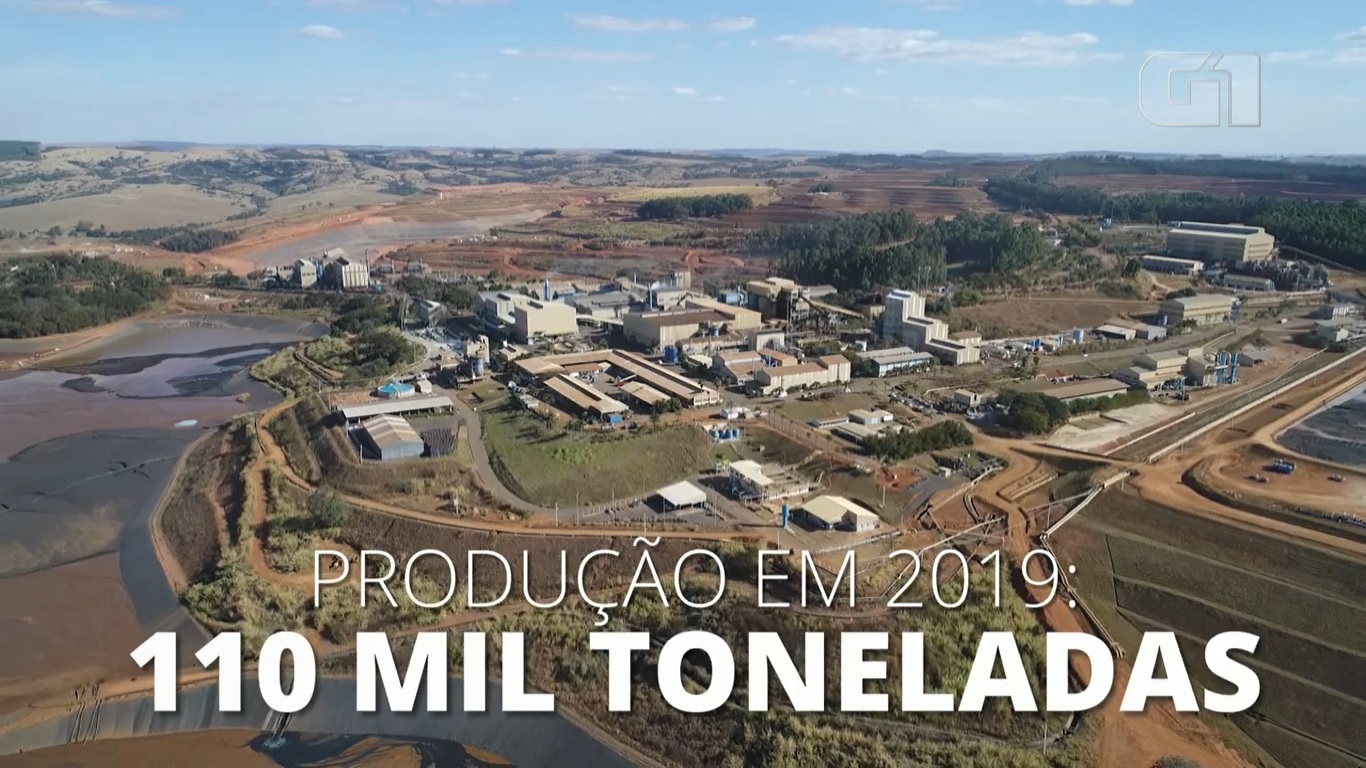
The Largest Niobium Reserve in Operation on the Planet is Located in Brazil’s Araxá City in Minas Gerais, Currently Operated by CBMM and Exported to Over 50 Countries.
In Brazil, the Brazilian Company of Metallurgy and Mining holds more than 90% of the active niobium reserves in the world. Although it controls 80% of the global supply, Brazil is not the only country with reserves of this metal. CBMM announced on November 21 the investment in a Singaporean company dedicated to graphene technology.
According to data from the National Mining Agency (ANM), in addition to Brazil, the other two countries participating in the global market are Canada and Australia. According to data from the Brazilian Mining Institute (Ibram), there are 85 quantifiable deposits in the world, including Canada, Australia, Russia, the United States, and several African countries.
-
Government unlocks R$ 554 million for a highway that has been requested for decades and accelerates the duplication of BR.
-
Without bricks, without cement, and without endless construction: the cardboard house that is assembled in modules and can be moved.

-
Billions of barrels on the equatorial margin could lead Amapá to double its oil production in Brazil — the state aims to enter the route of companies in the Campos Basin, attract investments, and boost jobs and businesses in the oil and gas sector.
-
Without bricks, without cement, and without endless construction: the cardboard house that is assembled in modules and can be moved.
On several occasions, our president Jair Bolsonaro proudly spoke about this much-desired mineral, showcasing a niobium necklace and cutlery in a video during a trip to Japan in the middle of the year. Despite the advertisements made by our president helping the metal gain fame, the market is still very restricted.
The largest niobium reserve in operation on the planet is located in the city of Araxá, in the Triângulo Mineiro and Alto Paranaíba region. Just in Araxá, the reserves are estimated at over 800 million tons of ore, a volume sufficient to guarantee more than 100 years of production, maintaining the current demand. However, if underground rock deposits are considered, the estimated exploration capacity is over 400 years.
But beyond the reserves of Araxá, there is niobium production in Goiás and in small quantities in Amazonas and Rondônia, as well as unexplored reserves in indigenous areas.
Currently, the niobium produced in Minas Gerais by CBMM is exported to over 50 countries, mostly to meet the needs of steel companies.
- Maritime transport company in RJ is hiring helpers and sailors
- Job openings for welder, rigger, painter, operator, mechanic, electrician, technicians, pump operators, and sailors
G1 visited the largest niobium reserve in operation on the planet. Understand below what it is used for, its importance to the economy, and how this mineral extracted in Minas Gerais is exploited and so abundant in our country.
The exploration is carried out entirely open-pit, with no use of explosives, only with excavators. Mining is just one of the 15 steps necessary to reach the final products, which also include concentration processes, refining (to reduce phosphorus and lead content), and metallurgy.
Of the material that is taken from the ground, only a fraction, around 2.5%, is niobium. For every 1 ton of ore extracted from the mine, only 15 kg of ferroniobium is produced. The remainder is sent to tailings dams.
About 300 tons of final products are produced daily, leaving the industrial complex in Araxá in bags, cans, and cylinders, varying from 10 kg to 2 tons. About 90% of all that is produced is destined for export.
The metal is used on a larger scale in the production of special steels and superalloys. Niobium has the function of “refining.” Only 400 grams per ton are needed to produce lighter and stronger steels.
Niobium is sold in the form of ferroniobium alloy (with about two-thirds niobium content and one-third iron) and is employed in automobiles, aircraft turbines, gas pipelines, ships, magnetic resonance imaging machines, particle accelerators, lenses, and even piercings and costume jewelry.
- TechnipFMC with job opportunities to work on PLSV vessels
- Elfe with updated offshore and onshore job vacancies for welder, electrician, technicians, and more
According to the National Mining Agency (ANM), in Brazil, exports of products associated with niobium generate about R$ 2 billion per year, although this amount is much lower than, for example, iron ore, representing less than 5% of metal substance sales to overseas, the business has proven to be quite profitable for CBMM.
In 2018, the company’s revenue grew by 55% and reached R$ 7.4 billion. The profit in 2018 was R$ 2.7 billion, which ensured that the 2,000 employees received a bonus of 6 extra monthly salaries in that year.
Although CBMM is the only company exploiting niobium in Araxá, the state of Minas Gerais owns part of the mine and receives a share of the profits from niobium production, which, in turn, faces cash flow difficulties and announced the intention to privatize Codemig.
This month, the government managed to approve a bill authorizing the sale of credits from niobium commercialization between 2020 and 2032 to ensure the payment of the 13th salary for employees and to put an end to the installment of salaries for some months.
CBMM states that it will close the year with a record production of 110,000 tons of niobium, compared to a volume of 89,000 tons last year, facing major challenges to expand the market and the number of customers worldwide and convince more clients to adopt a resource that is practically only produced in Brazil.
In addition to CBMM, the other 2 producers operating in the global market are the Canadian Niobec and the Chinese CMOC, responsible for niobium extraction at the Catalão mine (GO).









Seja o primeiro a reagir!