





 Portuguese
  English
  Spanish
  5 min of reading
  1 comment


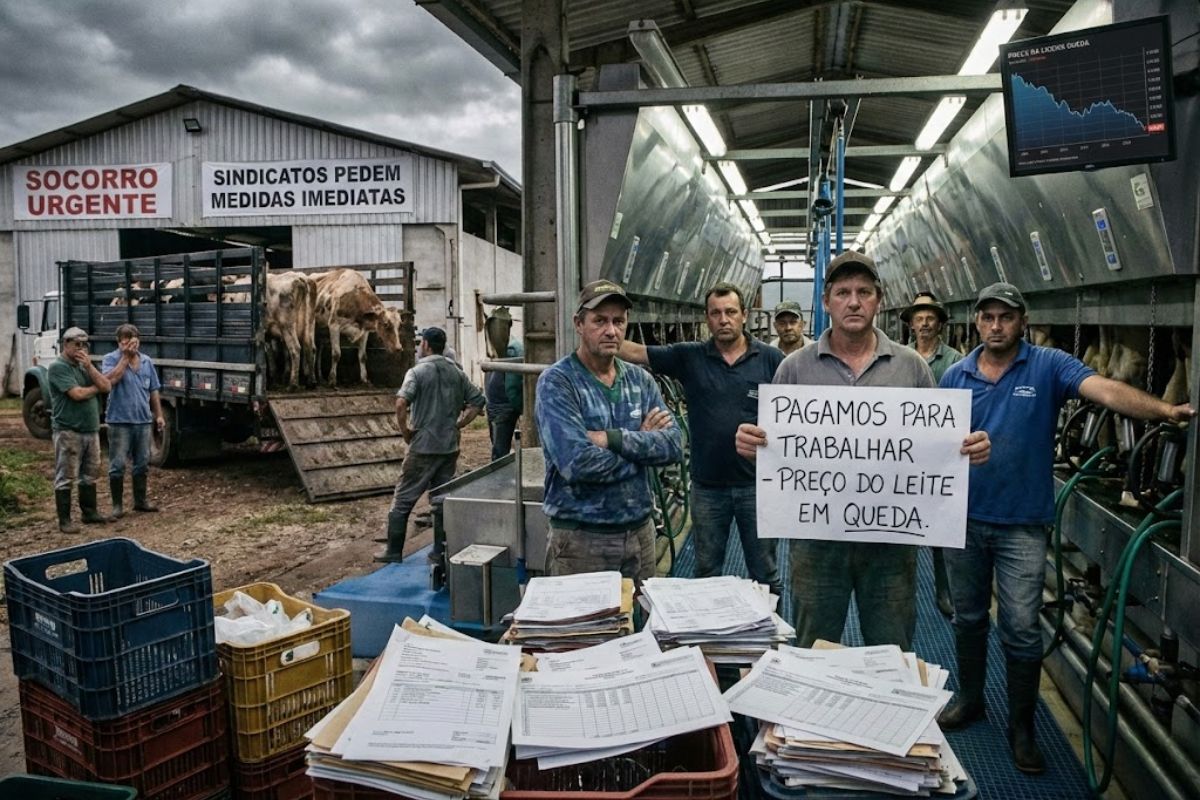


Official Letter Protocolled by Unions from the Central-West of Santa Catarina and Fetaesc Demands State and Federal Action to Protect Dairy Farmers After the Price Drop of Milk, Rising Costs, and Risk of Abandonment. Request Includes Minimum Price Above Cost, Credit of Up to R$ 50 Thousand, and Brake on Imports.
Dairy farmers in Santa Catarina are on high alert and say that the economics of their activity has become a cruel paradox: daily work, constant investment, and yet the feeling of “paying to work.” The mobilization gained strength after an official letter was submitted to state and federal governments requesting emergency measures.
The demand is led by the Association of Rural Workers and Family Farmers’ Unions of the Central-West Microregion, together with Fetaesc, which point to a critical scenario with a drop in the price paid to producers, rising production costs, and a real risk of abandonment of the activity by family farmers.
Who Asked for Help and Where the Crisis is Tightening
The mobilization involves unions and family farmers in a microregion where dairy farming is treated as a basis for income and also for the families’ permanence in the countryside. The association represents producers from Abelardo Luz, Faxinal dos Guedes, Lindóia do Sul, Passos Maia, Ponte Serrada, Seara, Vargeão, and Xaxim.
-
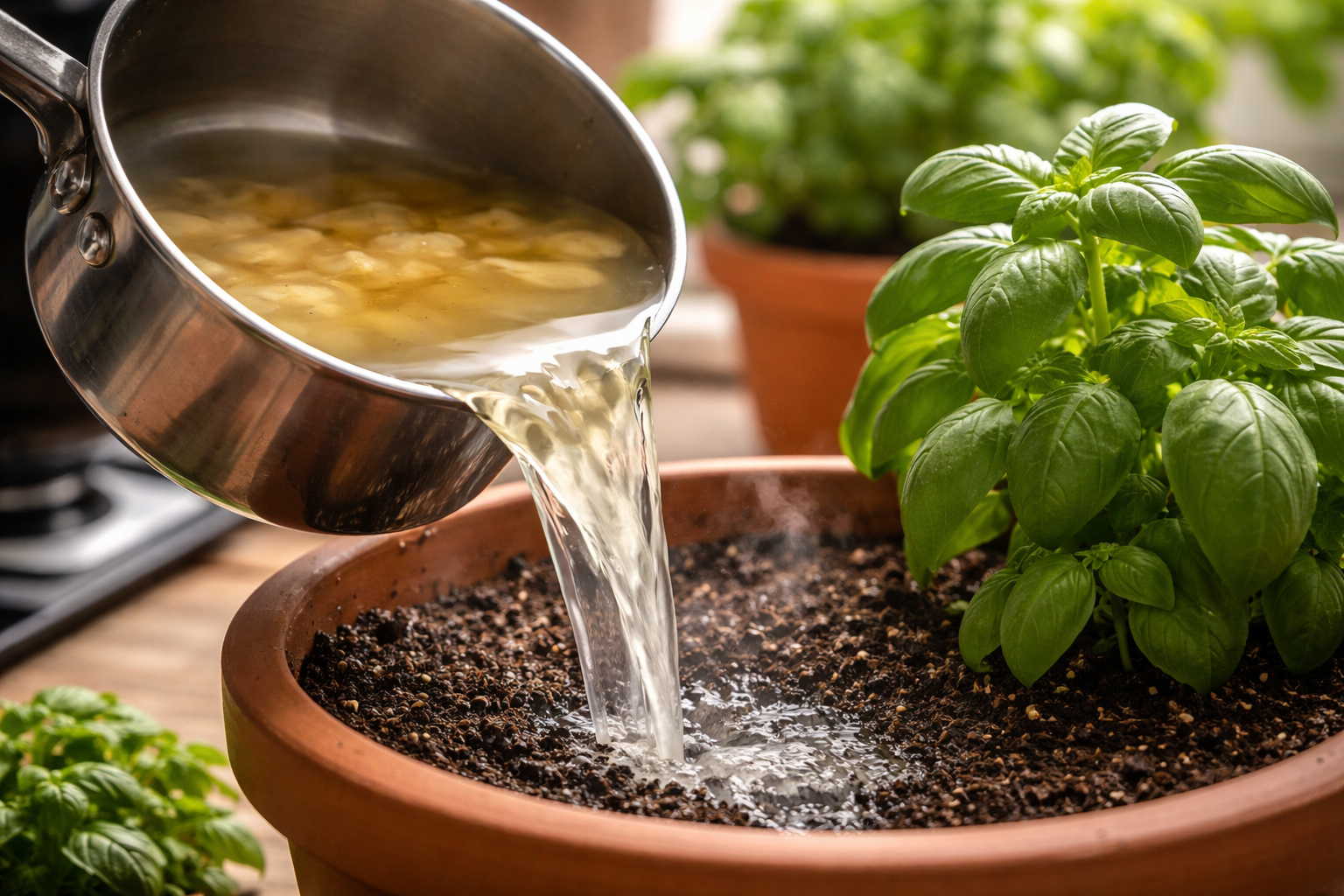
The water that almost everyone throws away after cooking potatoes carries nutrients released during the preparation and can be reused to help in the development of plants when used correctly at the base of gardens and pots, at no additional cost and without changing the routine.
-
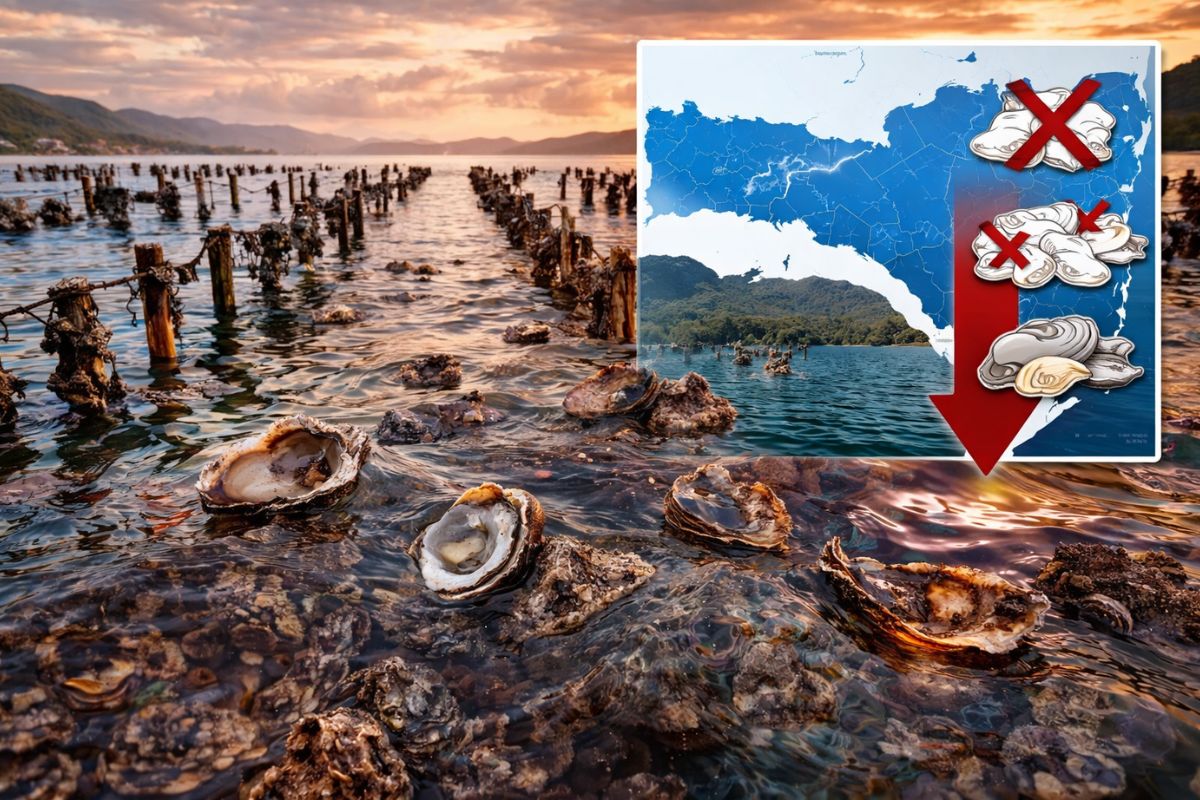
The sea water temperature rose from 28 to 34 degrees in Santa Catarina and killed up to 90% of the oysters: producers who planted over 1 million seeds lost practically everything and say that if it happens again, production is doomed to end.
-
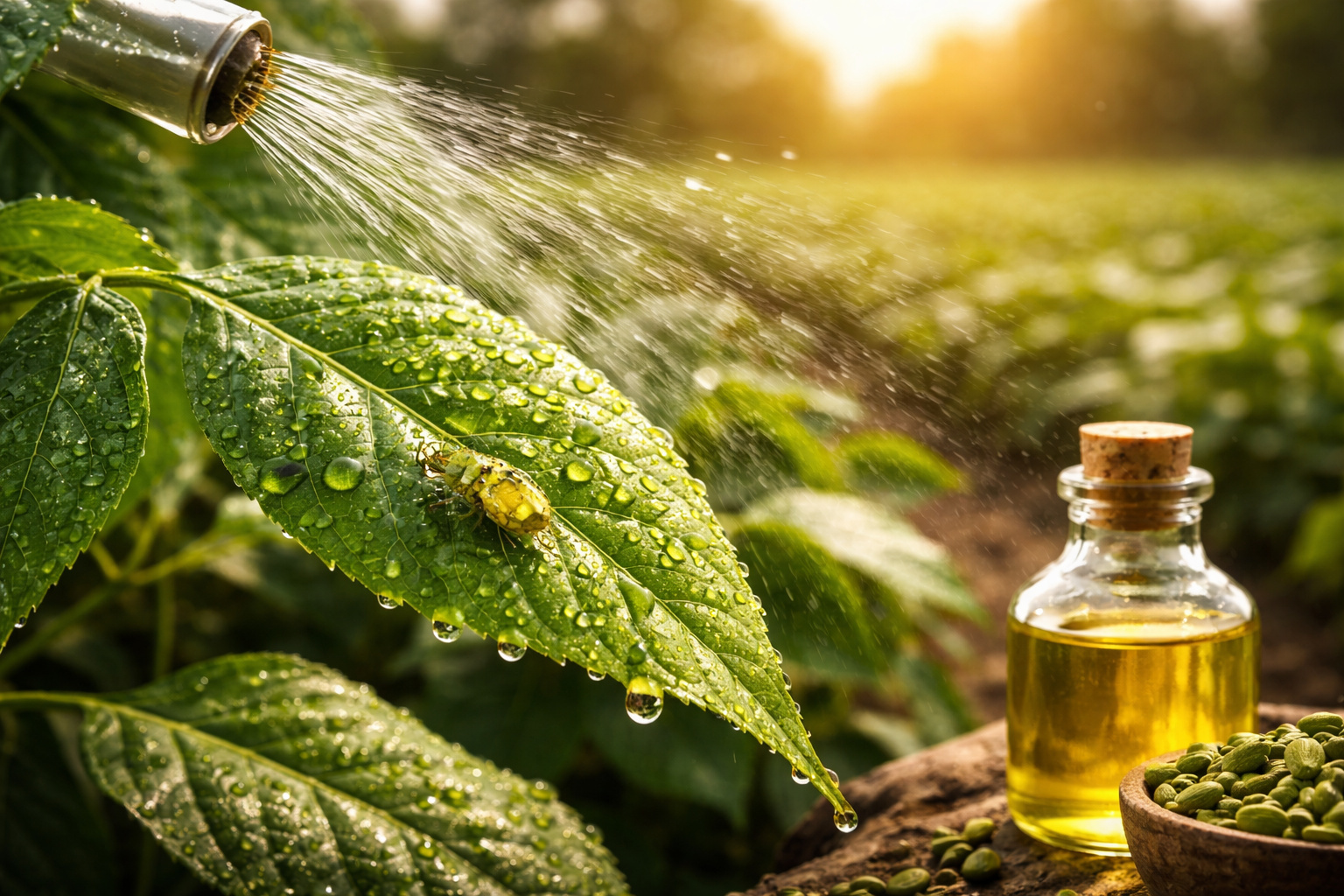
An Indian tree that grows in the Brazilian Northeast produces an oil capable of acting against more than 200 species of pests and interrupting the insect cycle, gaining ground as a natural alternative in soybean, cotton, and vegetable crops.
-
The rise in oil prices in the Middle East is already affecting Brazilian sugar: mills in the Central-South are seeing their margins shrink just as ethanol gains strength.

In these localities, milk production is seen as fundamental for the local economy and food security. Therefore, when the price drops and costs rise, the impact does not stay just behind the farm gate: it affects commerce, services, and the very stability of rural communities.
What is Bringing Down the Dairy Account
The entities describe a combination of factors that, together, compromise the continuity of dairy farming:
Devaluation of the price paid to producers, with successive declines over the months
Market concentration, which reduces negotiating power and increases pressure on producers
Rising costs, making it increasingly difficult to keep the price in the black
Milk imports at prices lower than the national cost, creating competition considered unfair for the local reality
According to the unions, this combination of pressures pushes producers to a dangerous limit: reduce investment, cut management, decrease the herd, and in many cases, consider quitting altogether.
Package of Measures Advocated by the Unions
In the document sent to governments, the list of requests is extensive and targets points that, according to the unions, address the crisis from multiple angles simultaneously. Among the requested measures are:
Strict inspection of imported milk by Anvisa
Reduction or exemption of ICMS on milk during crisis periods
Definition of a minimum price above the production cost
Expansion of milk purchases through public programs such as PAA, PNAE, and Conab
Permanent inclusion of milk in the state’s basic basket
Transparency in the formation of prices paid to producers
Credit of up to R$ 50 thousand, with interest subsidies and a five-year repayment period
Extension of financing and amnesty for state programs like Troca-Troca and Terra Boa
Incentive for the export of national dairy products
The strategy is clear: alleviate immediate cash flow, maintain prices at a viable level, and reduce external pressure when imports arrive at prices below internal costs.
Milk Price Falling and Debts Due
The president of the Rural Workers’ Union of the Central-West Microregion, Ledinho Curtarelli, states that the mobilization is the result of regional consensus and describes a continuous drop in prices since April of last year. He reports that month after month, producers have seen the value decrease, and now many are receiving 10 or 15 cents less.
At the financing end, the situation is also tightening. Ledinho warns of over-indebtedness in the field and the calendar of due installments, at a moment when the price of milk does not cover costs. The central concern is to prevent farmers from having to sell their assets just to settle payments, hence the request for extension of installments and emergency measures.
Fewer Cows, Less Production, Difficult Exit
According to Ledinho, the crisis is already manifesting on farms in the form of a reduced herd and, consequently, reduced production. The union points out that, if there were about 12 thousand milk cows before, today the number is just over 11 thousand.
This decline is viewed as a warning sign because, in his understanding, once someone stops, it’s hard to return to the activity. He describes this time as one of the worst crises faced by the sector, lasting almost a year, increasing the emotional and financial strain on those trying to keep the milk production going daily.
“We Are Paying to Work”: The Experience in the Field
The human dimension of the crisis is evident in the testimony of dairy producer Marilei Perin, who has over 20 years in dairy farming. She describes her discouragement and states that the price received does not cover costs. Today, Marilei operates with 10 milk cows and reports receiving R$ 1.73 per liter last month.
For her, the necessary price to cover the costs for a small producer would need to reach at least R$ 2.50 per liter. The difference between what is received and what is needed creates a constant gap in the budget, fueling the feeling of “paying to work” and making the idea of giving up come up repeatedly.
What Happens Now and Why It Matters
The entities are awaiting responses from state and federal governments regarding the official letter submitted last Friday (21). The union states that it intends to provide transparency to the process and publicly inform what measures will be adopted to support dairy producers.
In closing, Ledinho summarizes the main concern straightforwardly: if the farmer stops, everyone stops, because the activity supports families, local economy , and supply, and therefore the request is for investment and measures that keep these families in production.
In your region, have you seen dairy producers reducing their herds, cutting investments, or thinking about giving up the activity?









Esquecidos pela política e oprimidos pelo mercado polarizado. Via de fato, o Brasil precisa valorizar seus verdadeiros produtores e agricultores, que pagam e bancam sistema monetário. O povo na cidade precisa de artigos jornalísticos sobre o assunto e divulgar os perseguido do sistema brasileiros, e internacional o mesmo. A culpa sempre é do que cala e consente, pois atarefado e ciclo fechado do medo de avançar no meio, é persuadido pela imprensa e mídia, a normalização e silêncio.
Boa sorte agronegócio.
Lutando e marchando e vencendo.