





 Portuguese
  English
  Spanish
  5 min of reading
  9 comments


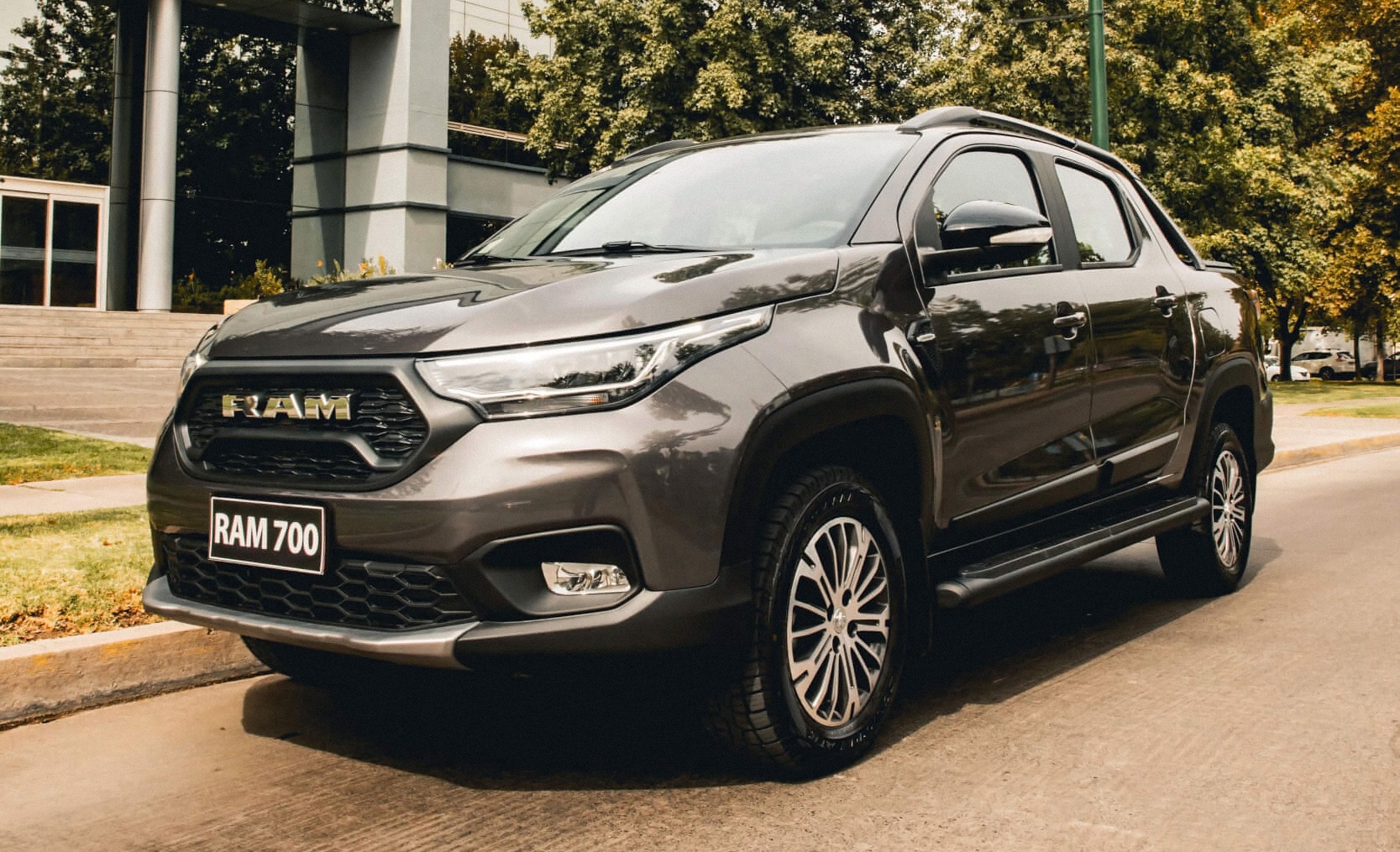


Even Produced in Minas Gerais, the Ram 700 Pickup Never Hit the Brazilian Streets. Understand the Reasons Behind Stellantis’ Decision, the Markets Where the Model Is Successful, and the Impact of This Choice on the National Consumer
The Ram 700 is a compact pickup produced at Stellantis’ factory in Betim (MG), widely praised in Latin American markets such as Mexico, Chile, and Colombia. Despite its efficient performance, attractive design, and modern engine, it is ignored in the Brazilian market, where it was born. In this article, we explore why the Ram 700 is not sold in Brazil, despite its national production and good international reception.
What Is the Ram 700 Pickup?
Based on the Fiat Strada, the Ram 700 is a rebranded version to cater to the international market under the Ram brand. It maintains almost the entire mechanical structure and design of the Strada but features a redesigned front grille, logo, and finishes.
Produced in Betim, it uses the 1.3 Firefly flex engine (converted to pure gasoline in external markets) and offers a CVT automatic transmission.
-
Furniture made with aluminum and glass does not warp and has become an alternative to replace MDF in Brazil.

-
Finland, the happiest country in the world, wants to hire 140,000 technology professionals and is eyeing Brazilians: visas are issued in just two weeks and salaries with a 37-hour workweek are surprising.

-
Mr. Mário reveals the technique of the caipira papaya: he cuts the fruit in half, discards the seeds from the tip, and plants the ones from the back to increase the chance of a productive female tree.

-
Few remember, but the submarine that disappeared in 1968 with 52 crew members was found after 51 years at the bottom of the sea at more than 2,000 meters, intriguing the entire world.


Its highlights include a robust appearance, comfort and safety features, and good fuel economy. In countries like Mexico, it leads the light pickup segment. The Ram 700 shares the same platform as the Strada but differs in visual identity and tuning aimed at the external market.
Why Doesn’t Stellantis Sell the Ram 700 in Brazil?
Despite being manufactured on national soil, Stellantis does not sell the Ram 700 in Brazil for three main reasons: brand strategy, cannibalization of the Fiat Strada, and the market positioning of Ram in the country.
The decision is strategic, aimed at preserving a well-segmented and commercially efficient brand structure.
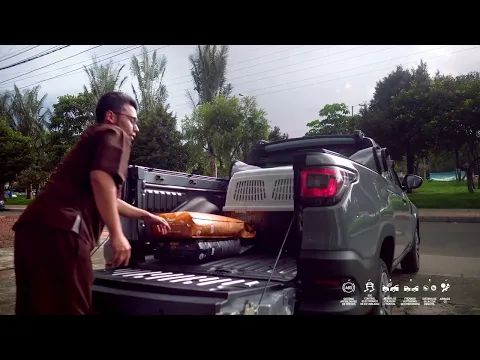

In the Brazilian market, the Ram brand is synonymous with luxury, robustness, and high performance. With models like the 1500, 2500, 3500, and Rampage, Ram operates in high-value niches. Introducing the Ram 700, a compact pickup with a popular proposal, into the same network would compromise this premium image.
This small pickup could generate noise in brand communication, confusing consumers who associate Ram with V6 or V8 engines, high torque, and cutting-edge technology. This is not the proposal of the Ram 700, which has an urban, practical, and economical profile.
Fiat Strada Leads the Segment and Blocks Space for the Ram 700
The Fiat Strada is the best-selling pickup in Brazil, with over 144,000 units registered in 2024 and around 700,000 produced since 2020. The model is an absolute success in retail and fleet markets, catering to different consumer profiles.
Launching the Ram 700 here could cannibalize the Strada, causing a division of sales and conflicts within the dealership network. The existence of two identical models with different logos would not make strategic sense, especially considering that both belong to Stellantis.
Ram 700 Is Successful Outside Brazil
In markets where Fiat has a lower share, the Ram 700 finds space as a versatile and reliable option. In Mexico, it is sold in SLT, Big Horn, and Laramie versions, with a 1.3 Firefly engine and CVT transmission. The pickup stands out for its robust style, in line with Ram’s visual identity.
Other countries such as Colombia, Peru, Chile, and Bolivia also receive the pickup, with variations in finishes and options for double cab. In these regions, the Ram name holds strength in the utility vehicle market, and the absence of Fiat promotes the adoption of the new identity.
Equipment, Engine, and Consumption
The Ram 700 pickup features equipment similar to the high-end Strada. Highlights include a 7-inch multimedia center with Android Auto and Apple CarPlay, rearview camera, stability and traction control, hill start assist, LED headlights, and 15-inch alloy wheels.
The 1.3 Firefly gasoline engine generates about 99 hp and 13 kgfm of torque, paired with a CVT transmission with seven simulated gears. According to tests conducted in Mexico, fuel consumption is 16.1 km/l in mixed cycle without load, and 8.7 km/l with load close to the limit.
Technical Specifications
| Specification | Details |
| Engine | 1.3 Firefly, 4 cylinders, gasoline |
| Power | 99 hp at 6,000 rpm |
| Torque | 13.0 kgfm at 4,000 rpm |
| Transmission | Automatic CVT (7 simulated gears) |
| Traction | Front |
| Load Capacity | 650 kg |
| Multimedia | 7″ screen, with Android Auto and Apple CarPlay |
| Wheels | 15-inch alloy wheels |
| Safety | 4 airbags, stability and traction controls, hill start assist |
| Average Consumption | 16.1 km/l (without load) |
| Origin | Produced in Betim (MG), exported to Latin America |
Why the Ram 700 Is Not Sold in Brazil: Positioning Choice
Stellantis’ decision to keep the Ram 700 out of the Brazilian market is consistent with its brand segmentation strategy. Fiat remains strong in the compact and medium pickup segments, while Ram focuses on the premium segment. Both brands have well-defined spaces and distinct audiences.

Introducing the Ram 700 in Brazil would create internal conflicts, not only in sales but also in communication and customer service at dealerships. The company aims to maintain consistency and efficiency in utilizing its structure.
The Absence of the Ram 700 in Brazil and Its Uncertain Future
Although produced in Brazil and celebrated in other countries, the Ram 700 remains outside the domestic market for clear reasons: to protect the leadership of the Fiat Strada, preserve the premium image of Ram, and avoid commercial conflicts within the Stellantis group.
The pickup continues to be an international success, which reinforces the competence of Brazilian engineering. For the national consumer, there remains curiosity and hope that, at some point, this pickup that is so successful abroad will also shine here.
Even though Stellantis’ current strategy seems unchangeable in the short term, changes in the market, new consumer demands, or a brand positioning restructuring could eventually open up space for the Ram 700 to be considered in Brazil.
The demand for well-equipped compact pickups remains high, and the international prestige of the Ram 700 might eventually influence a future reevaluation by the group. Until then, the Ram 700 remains an example of a national product that has conquered the world but still awaits recognition at home.









Motor de 99 CV não vale nada, joga fora!!!
É uma Fiat Strada com emblemas RAM não faz o menor sentido lançar aqui no Brasil já que competiria no mesmo segmento sem nenhum diferencial para ser atrativo que a deixasse competitiva…
Se lançassem na Brazuela a RAM seria desmascarada. Seu preço seria uns 300 mil reais.